Where Bass Go In The Winter
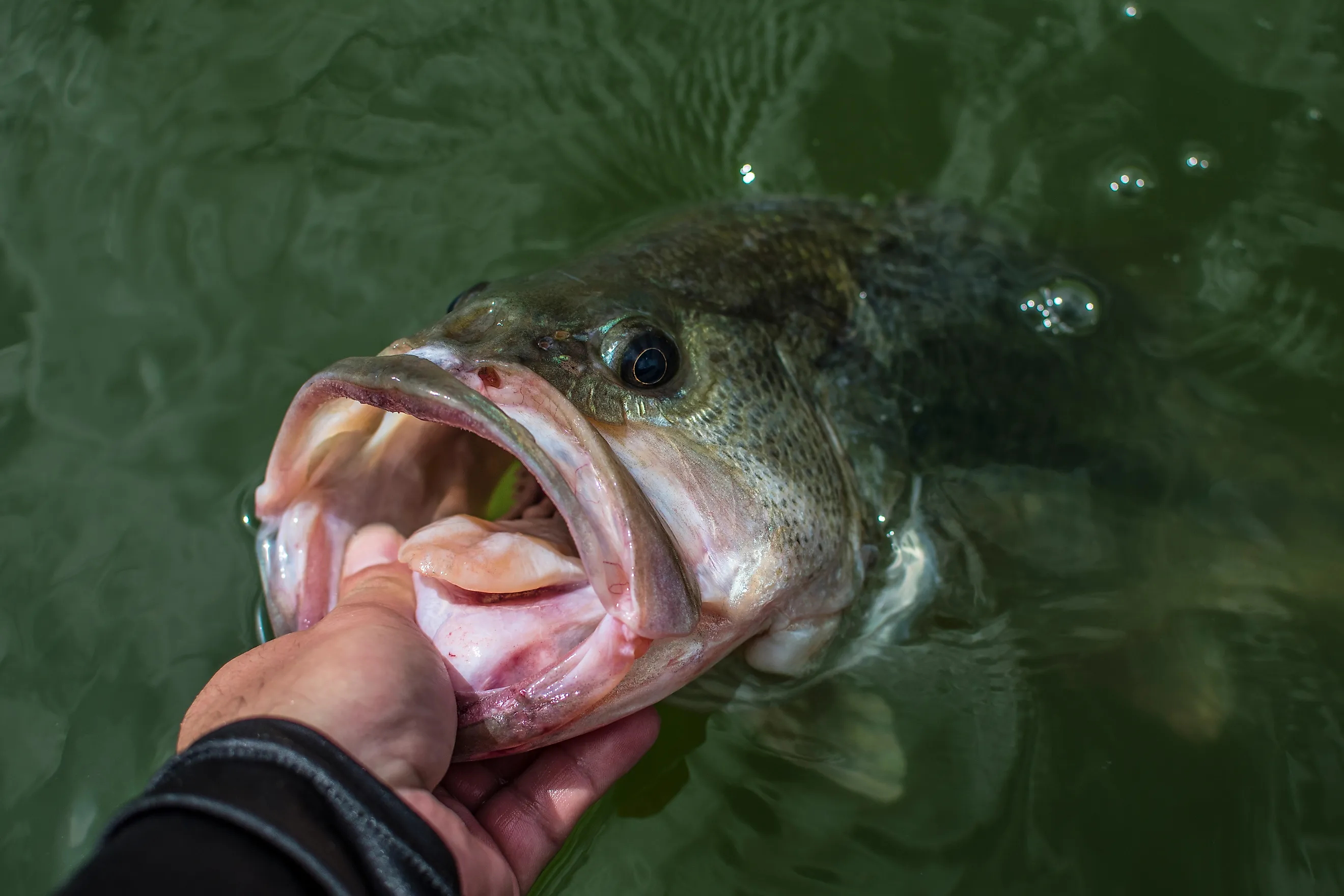
The bass you pulled off a dock in July does not disappear when the lake freezes. Most of the time it is still close by, within a short swim of where it spent the summer. Not always. One smallmouth bass tagged on the Mississippi River above Minneapolis swam 15.5 miles downstream before it stopped for the winter. Off North Carolina, striped bass spend the cold months so far out in the Atlantic that no one is legally allowed to catch them.
Below about 46°F, a largemouth turns sluggish, eats almost nothing, and barely moves. What it wants is the steadiest water it can reach, and where that water sits depends on the lake or river it lives in. For some bass it is a few feet down the same bank. For others it is miles away, or out at sea.
East Texas Bass Barely Leave Their Home Range

A common angling picture has bass running into the backs of creeks each fall. When Texas Parks and Wildlife Department biologists radio-tracked about 80 largemouth for two years at Toledo Bend Reservoir, on the Texas and Louisiana line, and at Lake Fork, in a study reported in 2024, not one fish made that run. The bass typically lived inside less than 120 acres all year, and in winter some pulled out a little deeper to a nearby channel or drain. Of all the times biologists located a fish, 98 percent were over bottom 30 feet deep or shallower, and their core areas averaged just over 10 acres. One Toledo Bend bass broke the pattern, turning up nearly 7 miles from where it had been found 11 days earlier.
North Carolina Largemouth Slide a Short Way Offshore

Bass in B. E. Jordan Lake, a 14,300-acre reservoir in North Carolina's Piedmont, did shift for winter, though not far. Researchers radio-tracked 11 adults in the lake's Little Beaver Creek arm, about 23 feet deep at most, as the water fell from about 69°F in late October to about 42°F by late December. The colder the water got, the farther from shore the bass held, and four of them moved their home ranges a quarter mile to nearly a mile toward bigger, deeper parts of the lake.
Between weekly checks, the bass moved an average of about 980 feet. They kept a daily rhythm, holding about 130 feet offshore in the afternoon and coming within about 30 feet of shore in the evening. On some days, with the water as cold as 43°F, they swam inshore into flooded ground.
Spotted Bass Follow the Shad Into Deep Water

Spotted bass, which share many Southern reservoirs with largemouth, spend the winter tied to their food. They follow large schools of shad through open water as the baitfish move around a reservoir, and in winter they often hold as deep as 35 or 40 feet. On Lake Martin, a reservoir in east-central Alabama, tracked spotted bass used deeper water than the lake's largemouth, and both species moved little through the winter months.
In the coldest part of winter, some spots slide up into water only 2 or 3 feet deep, along rock beside a sharp drop, where the deep water is a short swim away.
Ozark Smallmouth Gather in Spring Water

Smallmouth bass in the clear streams of the Missouri Ozarks get their winter warmth from the ground. When the Current River in Ozark National Scenic Riverways cooled below the temperature of Big Spring in late fall, five of 12 tracked smallmouth returned to winter in the spring's outflow, and one of them passed up another large spring to get there. They stayed in water at least 5 feet deep and left in late winter, once the river and the spring ran at about the same temperature. Across the Ozarks, stream water drops gradually into the 30s and 40s, and smallmouth settle into the deepest parts of pools among big boulders and downed trees, crowding into the warmer flow wherever a pool has a spring. They keep eating, less often and with less energy, and according to the Missouri Department of Conservation they do not travel great distances to reach a particular winter pool.
South Florida Bass Start Spawning in Winter

Farther south, the water in South Florida stays warm enough in winter for bass to spawn. Florida bass can spawn over as long as five months, typically between December and May, and build nests once the water reaches 65°F to 70°F. Lake Okeechobee can hit spawning temperatures as early as December. On the Winter Haven Chain of Lakes, spawning can start as early as January, and on Lake Istokpoga in mid to late January depending on the moon, with March and April the peak months statewide. For December, the Florida Fish and Wildlife Conservation Commission gives largemouth fishing in South Florida its top rating of excellent, while the state's three northern regions get its lowest.
Under Northern Ice, Bass Sink to the Deepest Basin

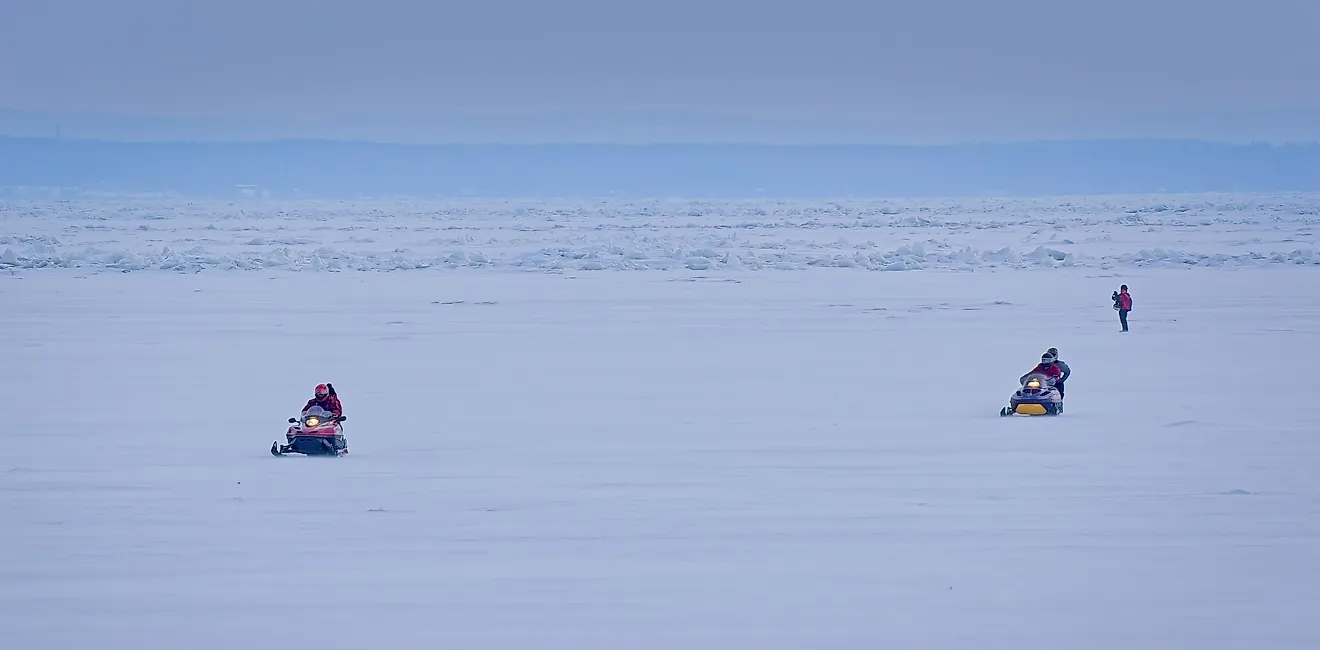
Far north of Florida, a frozen lake turns its deepest water into its warmest. Water is densest at about 39°F, so water at that temperature settles to the bottom while colder water lies against the ice. Smallmouth bass tracked in Ontario's Lake of Two Rivers used their deepest, farthest-offshore habitat in winter, in that 39°F bottom water. In Lake Opeongo, another Ontario lake, smallmouth went to their greatest depth once the water dropped below 50°F and held about 46 feet down through a 90-day stretch under the ice from December to February. They still made small movements, and researchers concluded they may need to feed when their energy demands run high.
For largemouth, oxygen sets a limit on how deep they can go. In eastern Ontario's Warner Lake, tracked largemouth stayed in the deeper basin and were rarely found in water with less than 2 milligrams of dissolved oxygen per liter. When oxygen in a frozen lake falls too low, fish die, and the Minnesota Department of Natural Resources ties these winterkills to low water levels, early ice-up, and late ice-out.
Mississippi River Smallmouth Swim Miles to Slack Water

A river keeps its current all winter, and on the Mississippi above Minneapolis, finding still water can take a long swim. In the fall of 2001, a smallmouth bass tagged by the Minnesota Department of Natural Resources left the area around the city of Elk River and traveled about 15.5 miles downstream to winter near Champlin and Coon Rapids. It was one of 30 smallmouth followed along 60 miles of river between the St. Cloud and Coon Rapids dams, and their fall migrations ran as long as about 17 miles. The last of those moves came on November 29, with the water at about 34°F.
The wintering spots were pools and big eddies with almost no current, and they were shallower than earlier studies had suggested, averaging about 6 feet deep from November through March. Bass wintering near St. Cloud and Becker kept to areas averaging about 1 and 3.5 acres.
Most held those spots through April 2002. After spawning runs of up to about 18 miles that spring, 23 of the bass returned to the places where they had been caught the year before, an average of about 480 feet from the original site.
Power Plant Outflows Hold Some Bass All Winter

The same stretch of the Mississippi has a heated outlet. The Monticello nuclear plant warmed a band of river 65 to 330 feet wide along the west bank, and smallmouth near it moved to their winter spots later in the fall than fish upstream. Its warm water drew bass from no more than a couple of miles away.
Largemouth near a power plant's thermal plume in northern Minnesota stuck even closer in the winter of 1975. Tracked yellow perch, northern pike, and walleye moved freely between heated and unheated water, while the largemouth bass never crossed over and held the warmest spots near the discharge. At Boomer Lake in Stillwater, Oklahoma, a plant warmed its cooling water by about 7°F to 12°F before releasing it into a small cove, and the extra heat was rarely detectable 160 feet outside. Florida-strain largemouth tagged there in the winter of 1977 and 1978 stayed mostly near the mouth of the outflow and made no regular trips in or out.
In salt water, a warm outflow from a power station in Northport, New York, on Long Island Sound, gathers striped bass in winter. Fish carrying ultrasonic transmitters there came and went freely, and they showed little sign of finding natural food.
Striped Bass Head Out to the Open Atlantic

Many of the Atlantic coast's migratory striped bass do the opposite of the Northport fish and leave sheltered water for the open ocean. Their wintering grounds run from offshore of New Jersey to North Carolina, and most of these fish come from spawning areas in the Chesapeake Bay. North Carolina's ocean waters, where the stripers stay from December through February, are the southern end of that range, and in recent years large schools there have held up to 30 miles offshore.
That distance puts them beyond legal harvest. Federal waters, from 3 to 200 miles offshore, have been closed to the harvest and possession of striped bass since 1990, and North Carolina's Division of Marine Fisheries reported in 2021 that the wintering fish had stayed outside the 3-mile line and in southern Virginia waters. Since 2011, the schools have wintered farther north and farther offshore than in earlier years. Biologists tag them on these grounds in January or February, usually near the Virginia and North Carolina border, and after spawning in spring, stripers travel north as far as Maine and Canada.
A bass usually winters in the closest steady water it can find. The heated outflow from the Monticello plant drew smallmouth from only a couple of miles away. Ozark smallmouth crowd into the spring-fed pools already near them, and the East Texas largemouth wintered inside the same small ranges they used all year. The long trips happen where nothing steady is close. A Mississippi smallmouth covered 15.5 miles of river to find slack water, and the Chesapeake's striped bass ride the coast as far as North Carolina to spend the winter at sea. The trips also run both ways. At Jordan Lake, four bass that had moved as much as a mile toward deeper water were back on their original ranges by early spring.