The Highest Waterfall On A Major American River
The Yellowstone River drops 308 feet in a single plunge at the Lower Falls, nearly twice the height of Niagara Falls. That makes it the tallest waterfall on any major river in the United States. A major river here means a long, main-stem river that carries water across a large region, not a mountain creek that spills off a cliff, like the record-setting falls of Yosemite. The Yellowstone qualifies easily. It runs about 692 miles before joining the Missouri River, and according to the National Park Service, it is the longest undammed river in the continental United States. Its Lower Falls is the most dramatic moment along the way.
The Lower Falls Of The Yellowstone

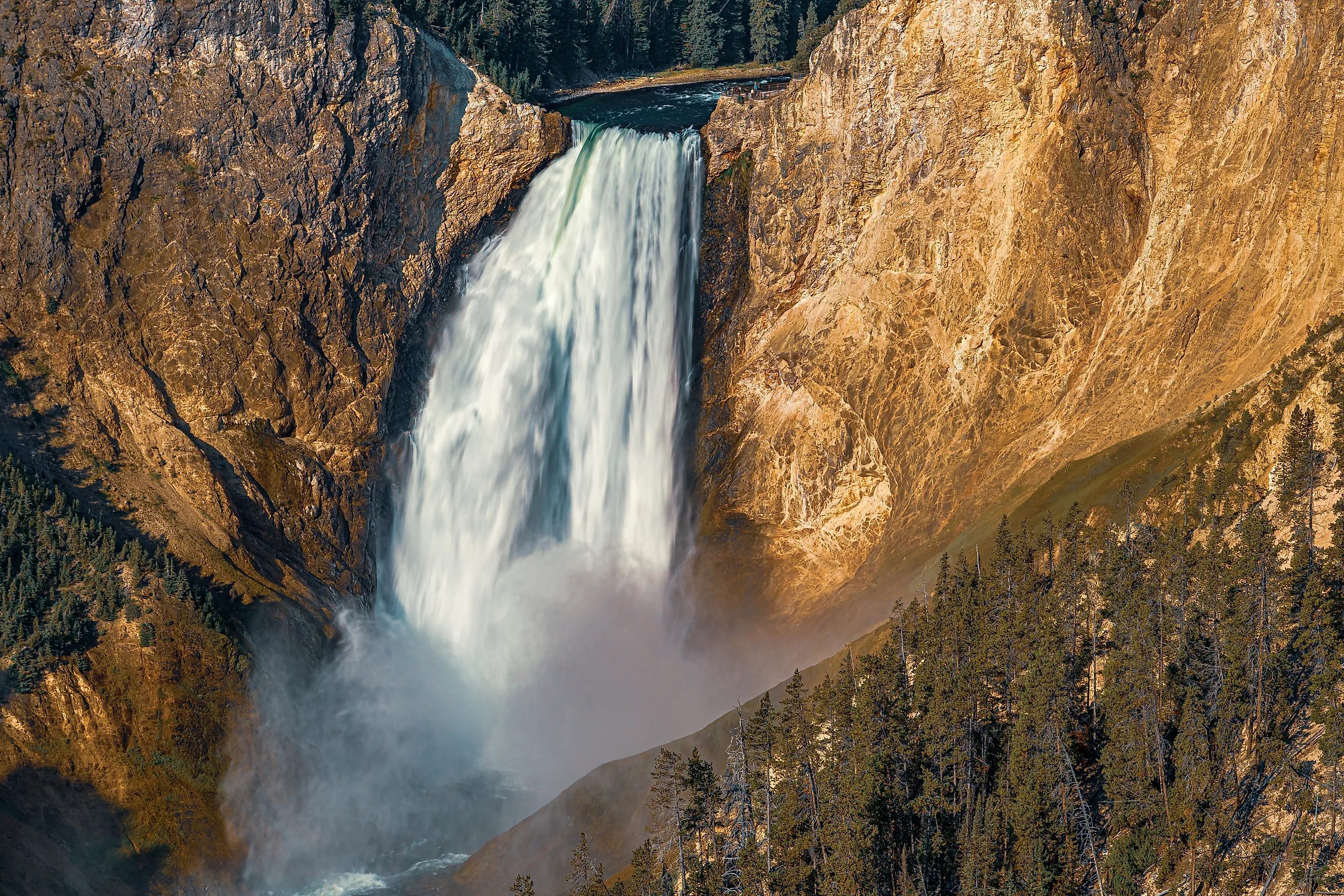
Panoramic of Lower Falls in the Grand Canyon of Yellowstone.
As the Yellowstone River flows north out of Yellowstone Lake, inside Yellowstone National Park in Wyoming, it crosses the open meadows of Hayden Valley, then picks up speed and pours over two waterfalls a short distance apart. The Upper Falls drops 109 feet (33 m). About a quarter-mile downstream, the river narrows to only about 70 feet (21 m) wide and plunges over the Lower Falls into the Grand Canyon of the Yellowstone, a gorge of yellow, orange, and pink rock up to 1,000 feet (300 m) deep. The falls tumble over a hard lava flow called the Canyon Rhyolite, which formed about 590,000 years ago and resists erosion better than the softer rock downstream.
Visitors can see the falls from several viewpoints along the canyon rims, including Artist Point, Lookout Point, and Red Rock Point. The Brink of the Lower Falls Trail drops down a steep set of switchbacks to a platform at the very edge of the falls, where the roar of the water shakes the air. The best time to visit is late spring and early summer, when snowmelt swells the river.
Twice As Tall As Niagara, But Not As Big

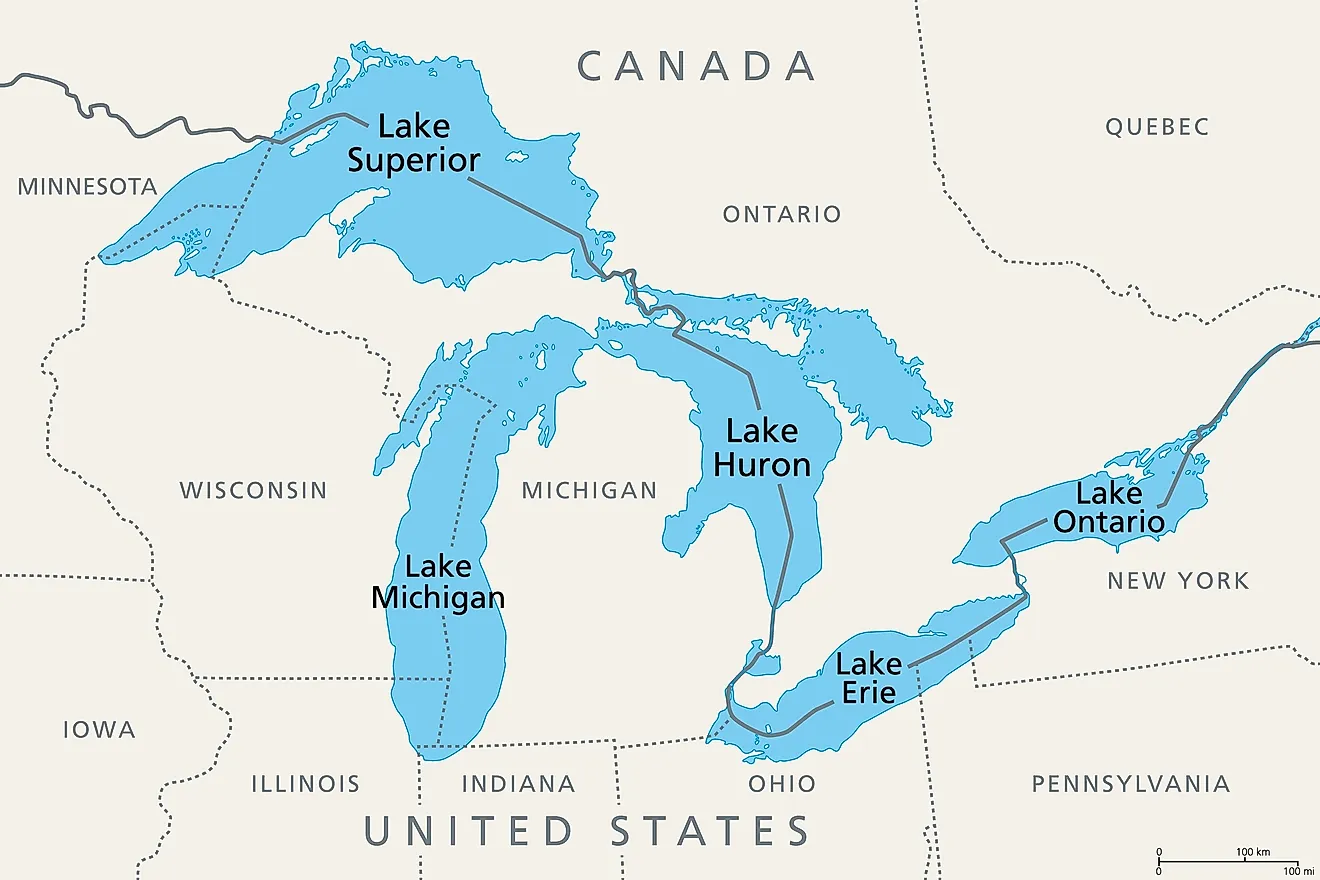
The Lower Falls is often compared with Niagara Falls, and the comparison comes with an important catch. The Lower Falls is far taller, but Niagara carries vastly more water. At Horseshoe Falls, the Niagara River is about 2,600 feet (790 m) wide, more than 35 times the width of the Yellowstone at its brink. Niagara is also on a short river, only about 36 miles long, that connects Lake Erie to Lake Ontario. As the National Park Service puts it, the Lower Falls is twice the size of Niagara only in height, not in the volume of water.
The Runner-Up: Shoshone Falls On The Snake River

The second-tallest waterfall on a major American river is Shoshone Falls, on the Snake River near Twin Falls, Idaho. The Snake is even longer than the Yellowstone, flowing more than 1,000 miles to the Columbia River, and at Shoshone Falls it spills over a horseshoe-shaped rim 212 feet (65 m) high, about 45 feet taller than Niagara. That has earned it the nickname "the Niagara of the West." Unlike the Yellowstone, though, the Snake is heavily dammed and tapped for irrigation, so by late summer, the falls can shrink to a trickle.
The Great Falls Of The Missouri

On the Missouri, the longest river in the United States, the largest drop comes at the Great Falls in central Montana, a series of five waterfalls spread over about 10 miles of river. In 1805, they forced the Lewis and Clark Expedition into a grueling portage that took nearly a month. The tallest of the five, the Great Falls itself, drops about 87 feet (27 m). Today, hydroelectric dams sit at or near each of the falls, and much of their power has been harnessed to produce electricity, though the falls still roar to life during high spring flows.
Why Yellowstone Wins
The Lower Falls stands above the rest for a simple reason. The hard volcanic rock at its lip has held firm while the river carved away the softer rock below, creating a single, towering drop. Combined with the fact that the Yellowstone remains undammed, it is the rare place where a major American river still makes one of its biggest leaps entirely on its own. For anyone standing at Artist Point, watching the river vanish into the canyon below, it is easy to see why the view became one of the most famous in the national park system.