What Dead Pool Actually Means At Hoover Dam
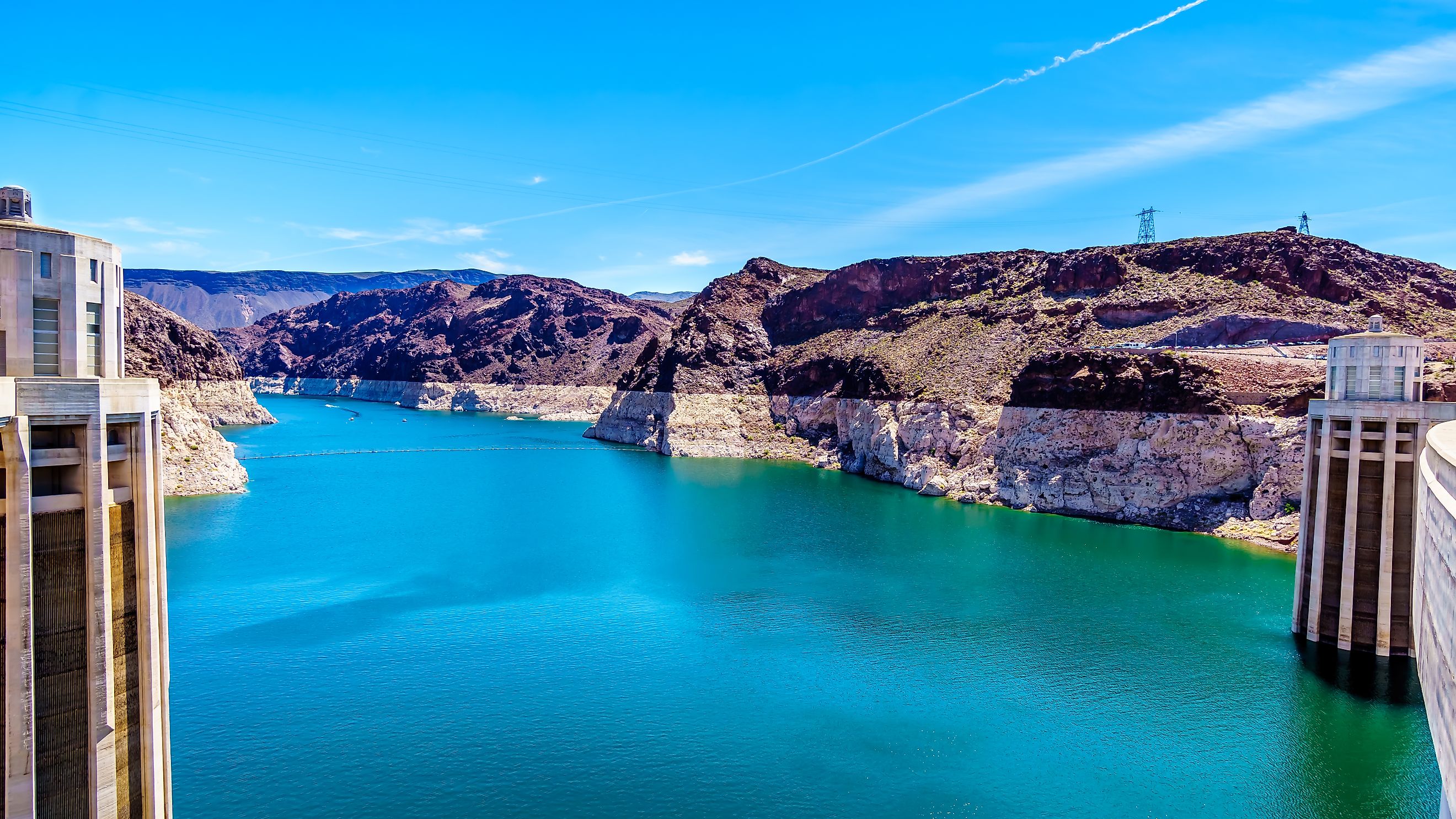
Dead pool is an engineering measurement, not a description of an empty lake, and the distinction matters because the phrase gets used to mean something far more dramatic than it does. At Lake Mead, dead pool is elevation 895 feet, the level of the lower gates on Hoover Dam's intake towers. Below that, water cannot reach the dam's release works by gravity and nothing goes downstream. What it does not mean is that the reservoir is dry, because at 895 feet roughly 2.4 million acre-feet would still be sitting behind the dam, about 780 billion gallons of water that simply has no way out. There are also four other thresholds above and below it that regularly get collapsed into this one.
Here is the actual ladder, in order, and what fails at each rung. Reading it in sequence explains why almost every headline about Lake Mead reaching dead pool is describing the wrong elevation.
The Five Elevations
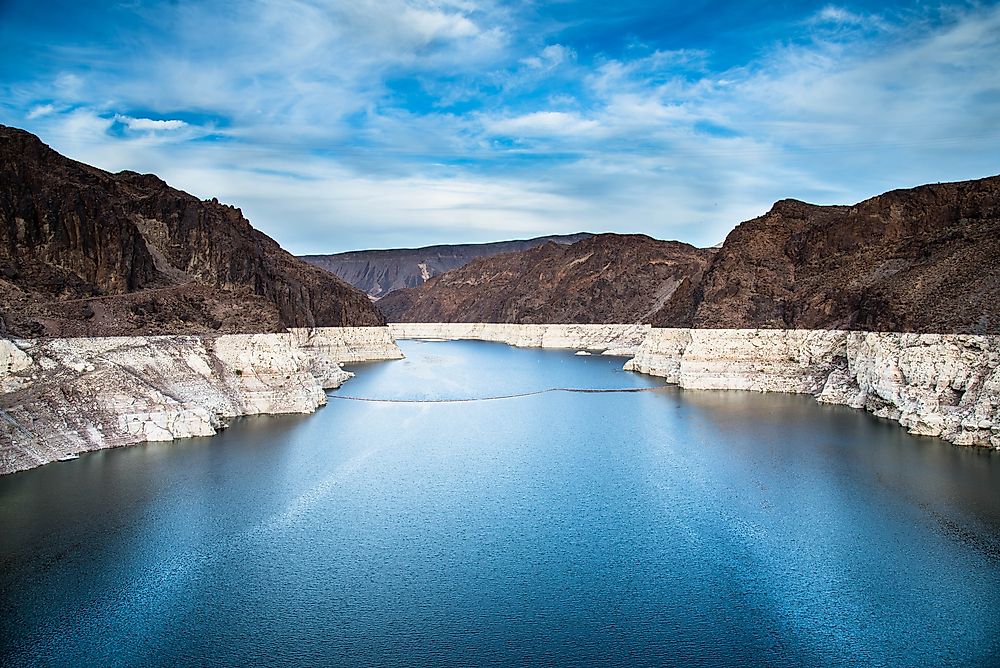
The National Park Service publishes the Bureau of Reclamation's operational elevations for Lake Mead, and reading them in sequence explains most of the confusion around this topic. The top of the dam is 1,229 feet and full pool is 1,219. Southern Nevada's original intake and the dam's upper intake gates sit at 1,050. Minimum power generation is 950. Dead pool is 895. Dead storage is 849.
Live storage capacity, the number Reclamation reports every week, is measured between 895 and 1,219.6 feet. Everything below 895 is outside the operating system entirely, which is exactly why that elevation is the one with a name people recognize.
950 Feet: The Turbines Stop
The first thing to fail is electricity, and it fails a full 55 feet before deliveries do. At 950 feet, about 8 percent of live capacity, there is no longer enough hydraulic head to drive Hoover Dam's turbines.
That threshold is not a cliff edge either. Generating capacity declines steadily as the reservoir falls, because each foot of lost elevation means less pressure behind the water hitting the turbines, so output drops long before the lake reaches 950. Reclamation installed wide-head turbines during retrofits in 2015 and 2016 specifically to keep generating at lower elevations than the original equipment could manage.
Hoover currently supplies power to roughly 1.3 million people. That is the first thing a declining Lake Mead takes away, and it goes gradually rather than all at once.
950 To 895 Feet: The Inactive Pool
This 55-foot band is the part almost everyone misses, and it is genuinely important. Reclamation calls it the inactive pool, and in that range Hoover Dam cannot generate any power but can still release water downstream through its river outlet works.
So there is a substantial interval where the dam is delivering water to Arizona, California and Mexico while producing no electricity at all. The lake is not at dead pool, the system still functions as a water supply, and the hydropower revenue that helps fund the whole operation has stopped.
Anybody who describes 950 feet as dead pool has skipped this band entirely. It is 55 vertical feet deep and it is the difference between a reservoir that has stopped paying for itself and one that has stopped working.
895 Feet: Dead Pool

Dead pool is a physical location rather than a volume of water. Reclamation puts the bottom of Hoover Dam's intake towers at elevation 895 feet and identifies that as both dead pool and the top of dead storage.
Below it, water in Lake Mead is still there and still liquid, but it sits beneath the lowest opening in the structure and gravity cannot lift it into the release works. Deliveries to Arizona, California and Mexico through Hoover stop, not because the water ran out but because it is below the plughole.
That is the whole concept in one line. Dead pool is the elevation of a set of gates, and the reservoir is only dead relative to the plumbing attached to it.
849 Feet: Dead Storage
There is one more line below dead pool and it rarely appears in coverage at all. The Park Service lists 849 feet as dead storage, described as the point at which no water can be released downstream of Hoover Dam under any arrangement.
The distinction between 895 and 849 is technical and concerns what could theoretically be moved under any configuration rather than the existing one. For practical purposes 895 is the operative number, which is why it is the one Reclamation and the states negotiate around.
Las Vegas Can Pump Below Dead Pool
The most counterintuitive fact about dead pool at Hoover Dam is that the city most associated with Lake Mead would carry on drawing water after it happened.
The Southern Nevada Water Authority built a third intake, universally called the Third Straw, which required drilling a three-mile tunnel through rock largely beneath the reservoir to reach an intake at 860 feet, some 35 feet below dead pool. It began delivering water in September 2015 after construction started in 2008.
An intake near the lakebed is only useful if you can lift water out of it, which is the job of the Low Lake Level Pumping Station, completed in 2020, fully operational by April 2022, and delivered under budget at around $522 million. Together the two facilities let Southern Nevada withdraw near an elevation of 875 feet.
So at dead pool, Arizona, California and Mexico receive nothing through Hoover Dam and Las Vegas keeps pumping. That asymmetry was deliberate, expensive and is now one of the more consequential pieces of water infrastructure in the West.
Why It Is Not Called Empty

At 895 feet Lake Mead would still hold approximately 2.4 million acre-feet, which is roughly 780 billion gallons. For scale, that is a larger volume than most American reservoirs hold when completely full.
That water is in dead storage, meaning physically present and operationally unavailable. It cannot be released through the dam, it cannot generate power, and the only way to use it would be to pump it out, which is precisely what Las Vegas spent half a billion dollars preparing to do.
Dead pool therefore describes a relationship between a water level and a piece of infrastructure. Change the infrastructure and you change the elevation, which is not true of a reservoir that is genuinely empty.
The Same Thresholds At Glen Canyon
Lake Powell has its own version of this ladder, and the numbers are worth knowing because the two reservoirs are discussed together constantly.
Glen Canyon Dam's minimum power pool sits at 3,490 feet and its dead pool near 3,370 feet. The gap between them is about 120 feet, more than twice the interval at Hoover, so Powell has an even longer stretch where it delivers water while generating nothing.
In both cases the sequence is identical. Power fails first, deliveries fail second, and the reservoir still contains an enormous quantity of water when both of those things have already happened.
Where Lake Mead Is Now
As of early September 2026, Lake Mead sits near 1,039 feet, roughly 26 percent of capacity. That is about 89 feet above minimum power pool and 144 feet above dead pool.
It is also below the 1,050-foot elevation of Southern Nevada's original intake, which is why the deeper infrastructure was built in the first place. The reservoir has already dropped past a threshold that mattered enormously fifteen years ago and now passes without comment.
Reclamation's post-2026 operating guidelines and the shortage tiers now in force exist specifically to keep the lake away from the lower rungs of this ladder, and the negotiations over them are still unresolved.
What The Term Is Good For
Dead pool is a useful number precisely because it is a hard physical limit rather than a policy choice. Allocations get renegotiated, shortage tiers get adjusted and states argue endlessly about priority, but 895 feet is the height of a set of gates in a concrete structure finished in 1936, and it does not care about any of that.
It is also frequently misused. It does not mean the lake is empty, it does not mean Las Vegas loses its water, and it is not the elevation at which the lights go out, because that happened 55 feet higher up.
What it means is that below 895 feet the Colorado River stops passing through Hoover Dam, and everything the Lower Basin has been built around for ninety years stops with it.