6 Most Snake-Filled Bodies Of Water In Arkansas
Arkansas is known for its mountains and rivers. These landscapes provide habitats for 39 species of snakes. Six of them are venomous.
The rivers, hot springs, and reservoirs of Arkansas are home to many of these snakes. Some are semi-aquatic like the cottonmouth. Others are land snakes that use the water to travel or hunt. Human activity has sometimes drawn snakes closer to people. Efforts to bring fish into shallower water for anglers have lured in the snakes that prey on them. Wildlife viewers and anyone hoping to avoid an encounter should be aware of these 6 most snake-filled bodies of water in Arkansas.
Arkansas River

The Arkansas River cuts through the entirety of Arkansas before draining into the Mississippi River. The river goes for 1,469 miles from Arkansas through Oklahoma, Kansas, and Colorado, making it the sixth-longest river in the United States. The river is known for having large trout populations, especially in Colorado, which draws in many fishers. However, slithering creatures are also known to swim through this vast river.

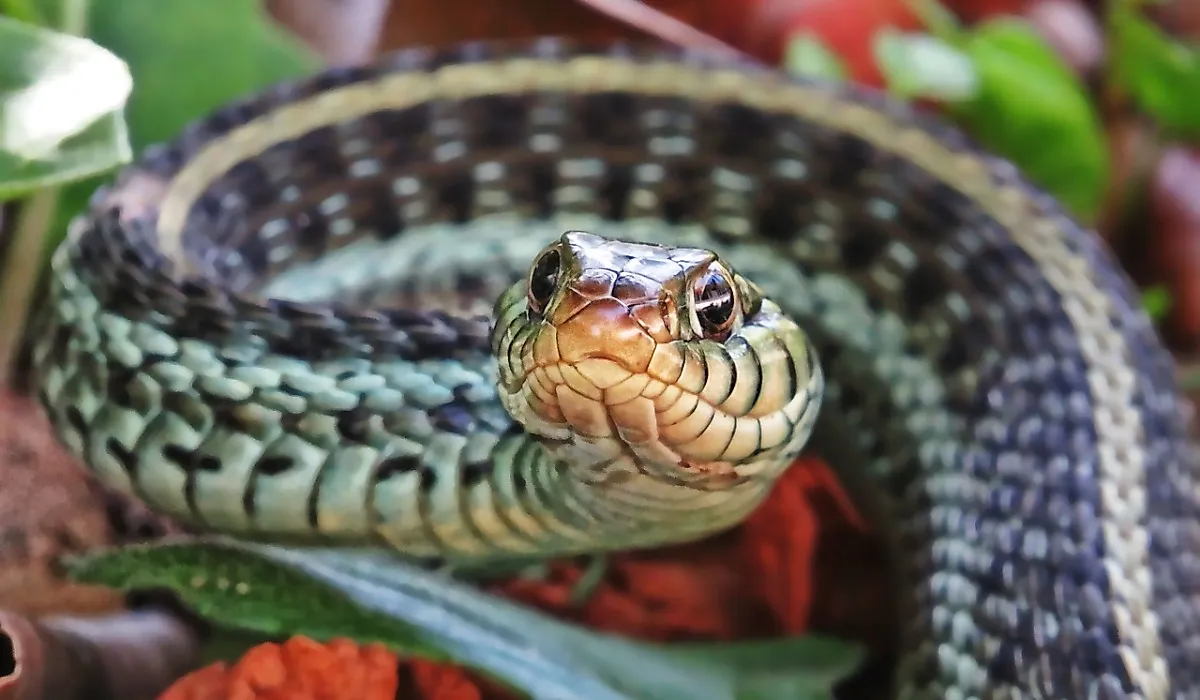
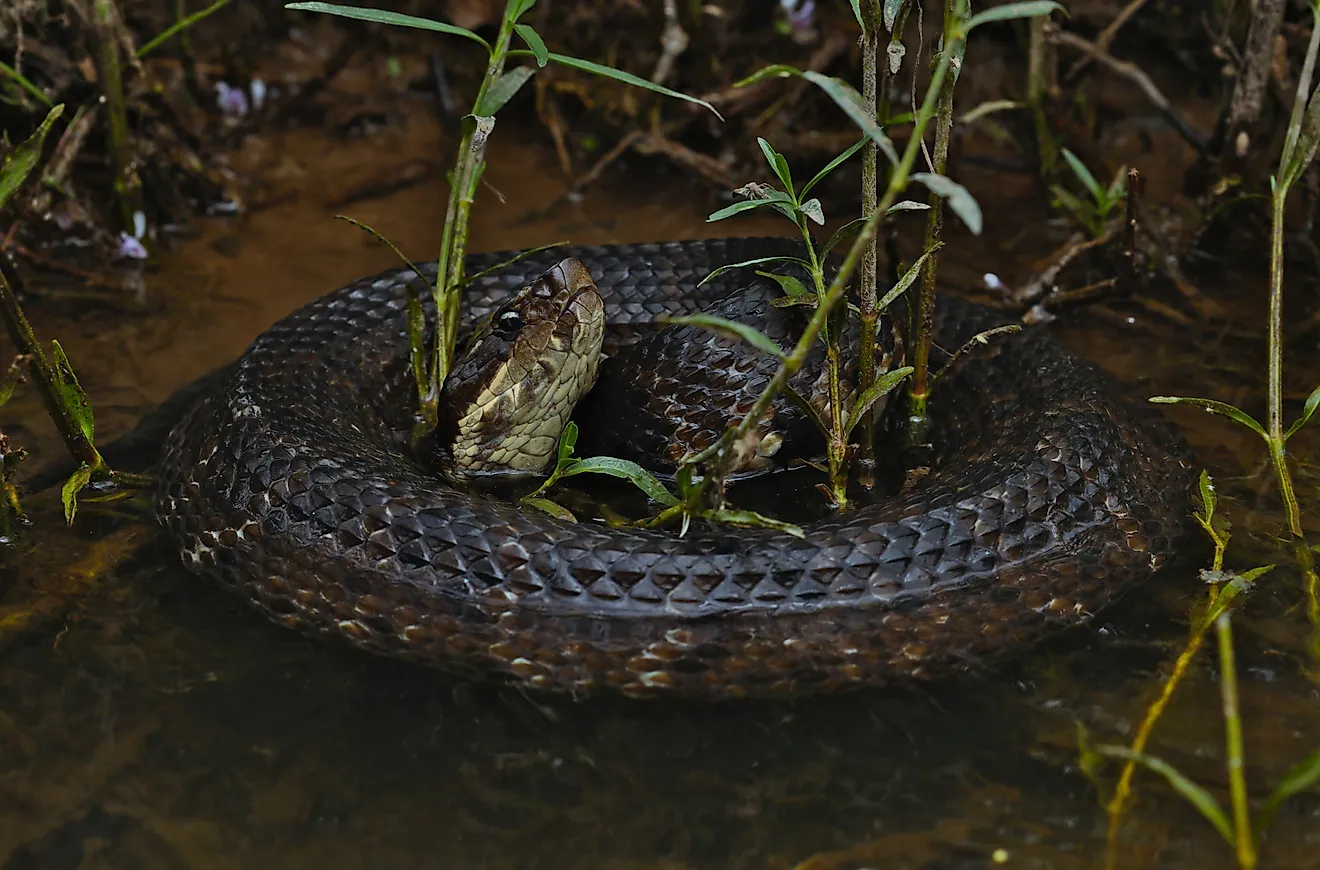
The vast majority of the snakes in this river are harmless, such as several varieties of watersnakes like the yellow-bellied watersnake and broad-banded watersnake. Both of these snakes stand out from common watersnakes with their colors. The yellow-bellied water snake has a yellow belly which contrasts with its dark brown or green front, while the broad-banded watersnake has a reddish head, with yellow and red bands criss-crossing on its dark body. They are often confused with a venomous snake that can be found in the Arkansas River, the northern cottonmouth. They often have similar colors to other watersnakes, such as brown, black, or dark green, with a green or yellow tail. Their eyes are slanted, and they are known to open their mouths wide as a defensive mechanism to warn humans of their venomous nature.
Millwood Lake

Millwood Lake is a 29,500-acre reservoir that was established by a 3.3-mile-long earthen dam on the Little River in southwestern Arkansas, which was constructed in 1966. Ten years later, Millwood State Park was opened to allow fishing, wildlife viewing, and other outdoor activities. Fishers especially appreciate this park as it has timber strands by the shore, which lure in fish to the shallower water, making them easier to catch. These easily accessible fish draw in other predators as well, such as alligators and snakes.

On the nonvenomous side, there's the northern diamond-backed watersnake, which gets its name from its diamond-shaped pattern of alternating dark and lighter scales. For venomous snakes, cottonmouths can be found hiding in the waters, and copperheads as well. Younger cottonmouths may feed on amphibians, but full-grown members will eat fish as they swim by. Although copperheads prefer hiding under leaves or in underbrush, they are known to swim through water in search of prey. Due to these snakes sharing similar habitats, they can interbreed, creating a hybrid snake known as a cottonhead.
Lake Ouachita

Lake Ouachita is the largest lake in the state, at more than 40,000 acres long, with its deepest point at 200 feet. It was formed by the damming of the Ouachita River and today sits in the remote Ouachita National Forest, with most of the shoreline being undeveloped wilderness. Due to this, the water is crystal clear and beautiful, and it provides habitats for many types of snakes.

For example, various species of watersnakes live here, such as the midland watersnake, which comes in many shades of brown and red. Hikers have taken photos of these watersnakes along with cottonmouths hiding in the gentle waters. With the lake's mountainous landscape in the larger Ouachita National Forest, some hikers might find timber rattlesnakes. These rattlesnakes prefer rocky hills, hardwood forests, and marshes. At times, they may be found climbing up trees.
White River

The White River flows for 722 miles from northwestern Arkansas into Missouri before turning southeast and gradually meandering to the Mississippi River. The river varies in speed, with the upper White River flowing quickly while the lower is slower, such as at the White River National Wildlife Refuge. This refuge is home to the tallest tree in Arkansas, a 120-foot-tall champion bald cypress, which is surrounded by marshes. These slow waters provide cover and prey for all types of snakes.
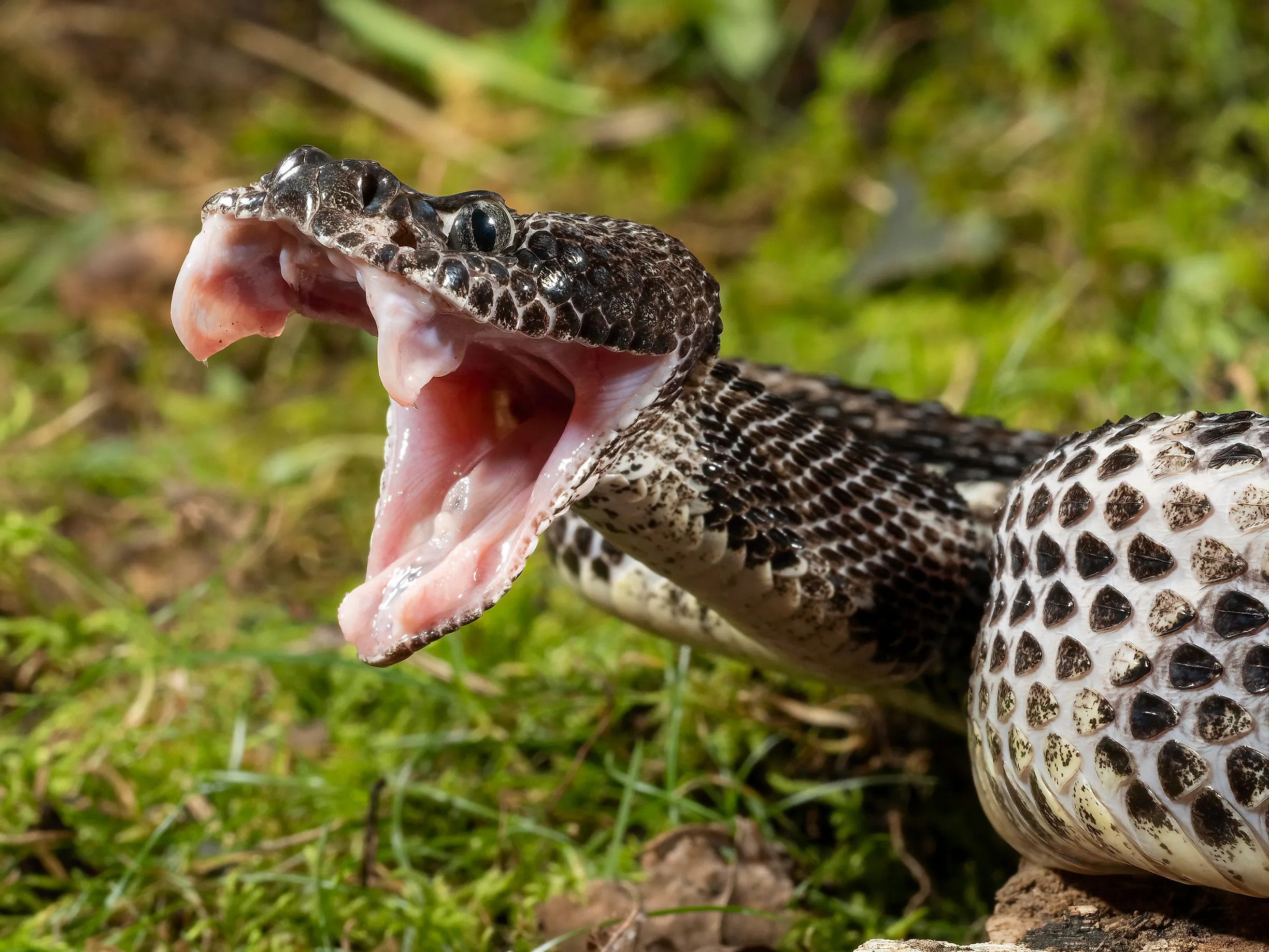
The most common venomous snake in the White River is the cottonmouth, which is far more mobile in the water than outside of it. Timber rattlesnakes can also be found swimming through the slower waters, especially as they go off in search of prey. On the northwestern section of the river, one might also find the tiny pygmy rattlesnake. This venomous creature prefers marshlands, and is known both for its small size at around 2 feet on average and its tiny rattle that often breaks off. Because of this, it often lacks the normal warning sign that other rattlesnakes have to warn off humans.
Lake Conway

At 6,700 acres, Lake Conway is the largest lake made by the Arkansas Game and Fish Commission in the state. It sits just to the southeast of Conway and to the northwest of Little Rock. The lake is the most popular outdoor destination from Conway, with kayakers and boaters exploring the lake and creeks around it. Due to its close proximity to human settlements, fishers, hikers, and boaters often report seeing snakes in the lake, including in unexpected places.

Visitors have reported seeing western rat snakes up in trees above the lake, as these black snakes are strong climbers. They are nonvenomous, but venomous snakes from the lake are known to wander out of it into residential areas, including copperheads and cottonmouths. Copperheads in particular can live in residential areas as they can find a crack in a house or leaf debris to hide under in search of prey. Residents are encouraged to contact animal control if they encounter a venomous snake on their property, as it is illegal to harm snakes, even venomous ones.
Hot Springs National Park

This park is located in the town of Hot Springs in the Ouachita Mountains of Arkansas. It is named after the thermal spring waters, which were utilized for bathhouses in the 19th century due to their curative properties. Hot Springs National Park includes many of these thermal springs along with creeks and ponds, all located in the center of Hot Springs, Arkansas. The woods, springs, and streams support 28 of Arkansas' 39 snake species. The vast majority of these are harmless nonvenomous creatures, such as a bright green nonvenomous snake, but six venomous snakes are known to frequent the park.

Of these, the largest are the western diamondback rattlesnake and timber rattlesnake. These rattlesnakes can swim, but the timber rattlesnake is more likely to be found hiding in rock outcroppings or underbrush waiting for prey. Cottonmouths are the main semiaquatic venomous snake that is found in the park. The rarest venomous snake in the park is the Texas coral snake. This snake is mainly nocturnal and tends to live in moist wood or under logs. They are highly elusive and rarely bite humans, but when they do, they can release a powerful neurotoxin.
A Few Notes On Safety
None of the venomous or nonvenomous snakes on this list is aggressive to humans. If they strike, it is out of a defensive instinct, if they feel cornered, or if a human steps on them or disturbs them. To stay safe, wear close-toed shoes as snakes are most likely to bite on the foot, do not handle a snake, or reach under debris or in holes. Most importantly, do not attempt to throw anything at snakes or attack them. Not only are such actions illegal, but they also increase the risks of a snake striking out in defense.