The Lakes That Disappear and Come Back Every Year
Some lakes fill with water for part of the year and then drain away completely. At Oregon's Lost Lake the water pours into open lava tubes on the lakebed. In Slovenia the Cerknica basin empties through sinkholes in a matter of weeks. Loughareema in Northern Ireland can vanish between morning and afternoon. Each one returns on its own timing once rain or snowmelt outpaces the drain.
Lost Lake

Lost Lake sits in the Willamette National Forest in Oregon, near Santiam Pass along Highway 20 and about 18 miles southwest of Mount Jefferson. The name fits the place, because for part of the year the water is there and then it is gone. The reason is a pair of lava tubes, geologic channels left behind by volcanic activity in the Cascades thousands of years ago.
These openings in the lakebed act as permanent drains, funneling water into the porous volcanic rock below. So how does the lake ever hold water? Snowmelt and winter rain.
Winter temperatures at the lake average around 27 degrees Fahrenheit, and the area collects roughly 55 inches of snow. When the surrounding slopes thaw, the meltwater feeds streams that flow into the basin. Through fall and winter the inflow arrives faster than the lava tubes can drain it, so the lake fills. Once the streams dry up in summer, the drains win out and the lake empties into a meadow until the next wet season.
Lake George

Lake George in New South Wales, Australia, disappears for a different reason than lava tubes. Drought empties it. The lake covers around 77 square miles (200 square kilometers) when full, but it has no significant outflow, so its level rises and falls with the balance between rainfall and evaporation. During a long dry stretch the water retreats until the bed becomes a grassy plain, and a run of wet years brings the lake back.
Lake Cerknica

Lake Cerknica in Slovenia owes its vanishing act to the ground beneath it. It lies on a karst field, a landscape shaped by the slow dissolution of carbonate rocks such as limestone. That geology is riddled with drainage channels, which is why the water has so many ways to escape.
The lake sits at roughly 1,804 feet (550 meters) above sea level and usually covers 7 to 11 square miles (20 to 30 square kilometers). Fed by tributaries, it can also empty in about three to four weeks once a dry period sets in.
The rapid drainage is not evaporation but the karst plumbing. Large sinkholes lie near the western edge, and two more sit in the center of the lakebed, pulling water underground. There are also estavelles on the bottom, karstic openings that run as springs during rain and reverse into sinkholes when the weather turns dry.
People have long gathered to watch the lake come and go, and that history left a mark. Because the water flooded local farmland, some sinkholes were deepened to drain it faster. As a result, the lake now rarely lasts into summer.
Mirror Lake

Mirror Lake in Yosemite National Park in California draws hikers who want to see its still surface. When the water is calm it reflects the surrounding cliffs and creates the mirror image that gives the lake its name. That view is only available for part of the year.
The lake is fullest in spring and early summer, when Tenaya Creek carries snowmelt down from the high country. As the melt slows and summer heat builds, the water in Mirror Lake evaporates and drops until the following year. What remains is a meadow.
Lake Mackay

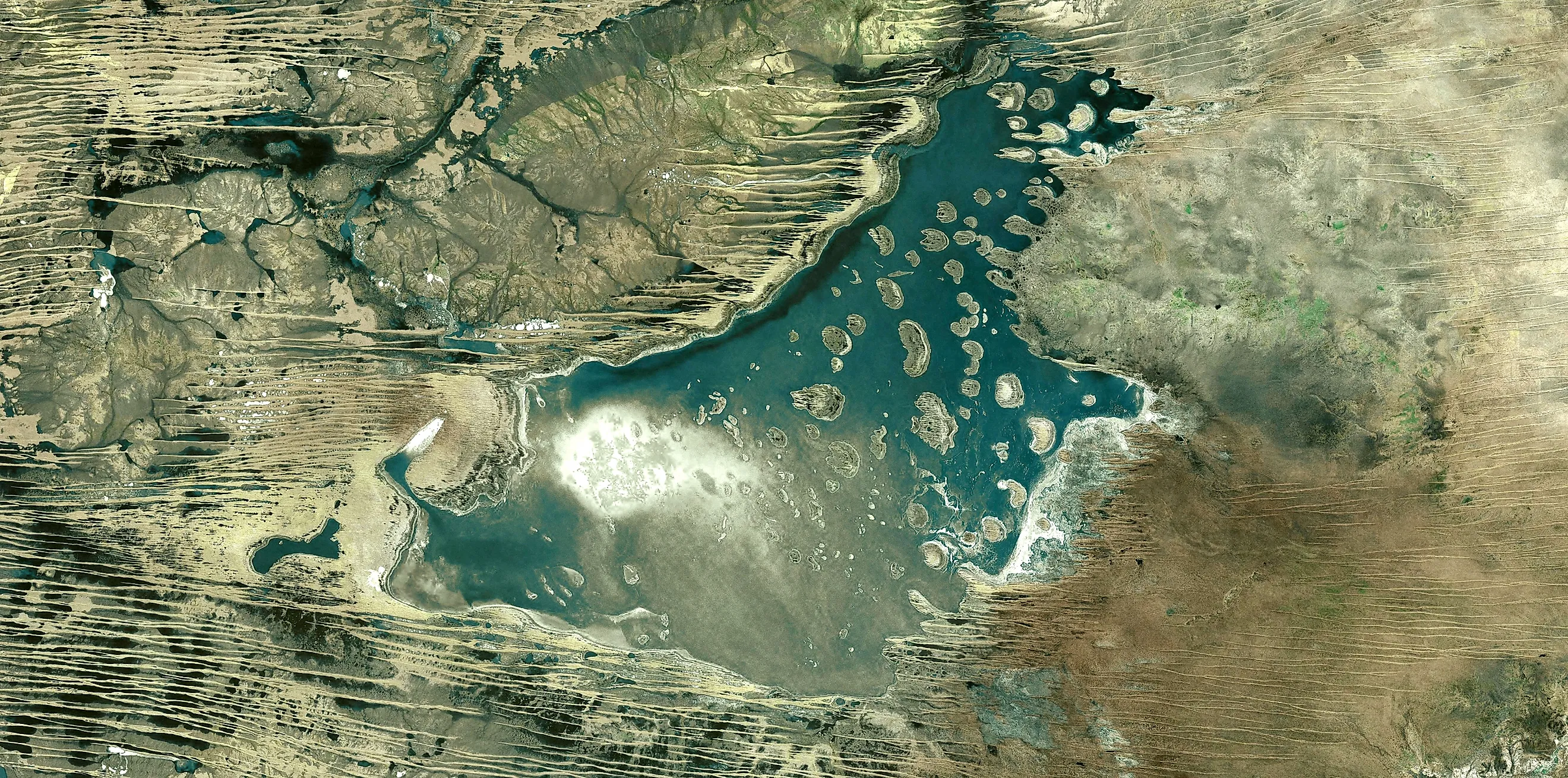
Lake Mackay is one of Australia's largest lakes when it holds water, straddling the border between Western Australia and the Northern Territory. It can span around 1,829 square miles (4,737 square kilometers) at its fullest. After a flood the water may linger for about six months.
Where does it go? The desert climate does the work, and evaporation lifts the water back into the air. While the lake is present, it becomes a breeding ground for shorebirds and waterbirds, which makes it an important site for the region's ecosystem.
Lençóis Maranhenses Lagoons

Lençóis Maranhenses National Park in Maranhão State, Brazil, covers over 570 square miles of white sand dunes. Between January and June, roughly 2,000 millimeters of rain falls across the park and pools in the valleys between the dunes, creating thousands of temporary lagoons.
The ground is a mix of clay and sand that slows the water's escape and stretches out how long the lagoons last. They begin to shrink from October into early January, as the rains stop and evaporation takes over.
Vanishing Lake

Loughareema, known as the Vanishing Lake, lies in County Antrim, Northern Ireland. It fills and empties within days rather than seasons. With water arriving and draining that quickly, and fog often hanging over the site, the lake has collected its share of local ghost stories.
The speed comes from its plumbing. Three streams flow into the lake, but none flow out. Instead, a natural drain sits beneath the surface and pulls the water underground, where it travels to a spring in the Carey River about a mile and a half (2.5 kilometers) away.
Honorable Mention

Some lakes stay away for years or even decades before returning, rather than following a yearly cycle.
In California, Tulare Lake was historically the largest freshwater lake west of the Mississippi River. Farmers diverted its tributaries in the late 1800s and the lake dried up. It has resurfaced only during exceptional wet years, including 1938, 1983, 1997, and again in the winter of 2022 to 2023, when atmospheric rivers dumped record precipitation on California.
Evaporation and water management are already shrinking the lake again, though another heavy rain could bring it back.
Fleeting But Everpresent
A vanishing lake can feel unsettling, because water is one of the features people count on to define a place. Yet these disappearances are ordinary events driven by lava tubes, sinkholes, drought, and evaporation. The water has simply moved underground or into the air, held there until the next rain or snowmelt tips the balance and the lake returns.