How Many Lakes Are There in the United States?
Lakes in the United States are essential to life, sustaining ecosystems and supplying the nation with freshwater. The Great Lakes alone supply drinking water for nearly 40 million Americans and Canadians. Still, these five famous water bodies only represent a fraction of the vast number of lakes found across the US.
The EPA’s 2012 National Lakes Assessment used probability-based sampling to estimate that the 48 contiguous states contained 159,652 lakes, reservoirs, and ponds. Conversely, researchers at Michigan State University cataloged 479,950 lakes in the lower 48 states in 2021. Because the scientific community lacks a universal definition for a lake, the total number of lakes in the United States remains a broad-ranging estimate. The count depends on a researcher’s criteria for what defines a lake.
What Makes A Lake?

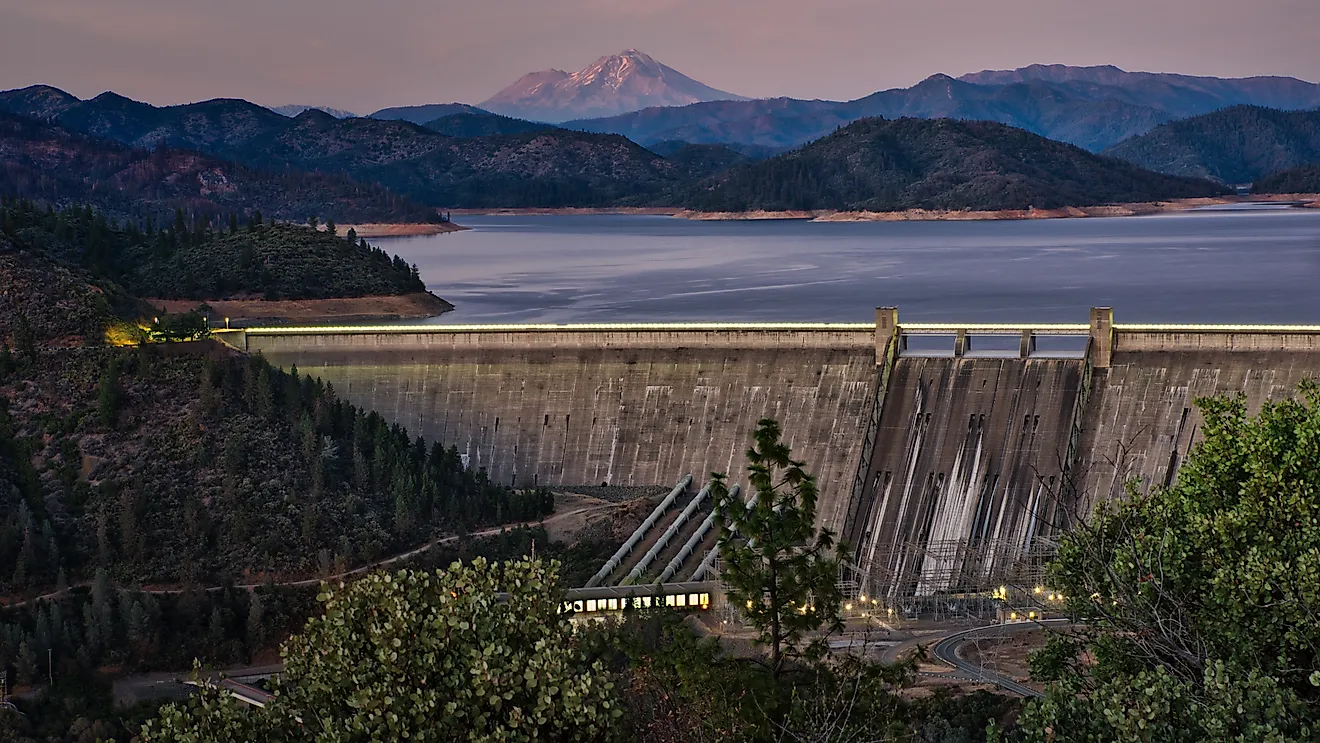
Plainly, a lake is a body of water surrounded by land. Lakes generally form where water accumulates in a persistent basin or depression on Earth’s surface. Natural lake basins can form through glacial erosion, tectonic movement, volcanic activity, landslides, river processes, or sinkhole collapse. That being said, basins can also be human-made. Lakes created by humans are known as reservoirs, primarily formed by damming rivers.
There is no single size requirement to scientifically define a lake. However, there are common ways to differentiate lakes from other bodies of water. For instance, rivers are considered lotic (habitats characterized by actively flowing water), whereas lakes are lentic (still or slow-moving).

When comparing lakes to ponds, this distinction blurs due to subjectivity. Nonetheless, the United States National Park Service poses a general guideline: if sunlight can penetrate an entire body of water, it is considered a pond. Comparatively, a lake generally has sections of depth where sunlight cannot reach the bottom.
160,000 US Lakes Or Half A Million?

While the EPA estimated a target population of nearly 160,000 qualifying water bodies from a sample-based assessment, MSU compiled a geospatial database containing 479,950 lakes, ponds, and reservoirs in the lower 48 states. This broad range is largely due to the different definitions used. For its 2012 assessment, the EPA used survey-eligibility criteria for permanent lakes, reservoirs, and ponds larger than one hectare rather than proposing a universal definition of a lake. Eligible assessment sites also had to satisfy depth and open-water criteria used by the EPA’s field survey.

MSU used the same one-hectare minimum area but drew from a more comprehensive geospatial compilation and applied different inclusion and screening rules. MSU defined a lake as a permanent, relatively still body of water at least 2.47 acres (1 hectare) in size. MSU included permanent, relatively still water bodies with or without dams, but that alone does not explain the difference because the EPA assessment also included reservoirs and ponds. A water body included in MSU’s database might fall outside the EPA assessment because of differences in source data or eligibility criteria.
The State With The Most Lakes

Factoring in non-contiguous states, Alaska has the highest number of lakes by far. The 49th state has over 40% of the nation’s total surface water, widely represented in its estimated 3 million lakes. The state’s immense size, glacial history, and thawing permafrost are some of the forces behind these tremendous numbers.
3,197 of Alaska’s lakes have official names. Iliamna Lake is Alaska’s largest lake, measuring about 77 miles long, up to 22 miles wide, and roughly 1,000 square miles, or 2,600 square kilometers, in area. The waterbody and its connecting waterways are vital spawning grounds for salmon. The lake is also home to the only freshwater seals in the United States. The Iliamna seals are one of only five known seal populations worldwide that live year-round in freshwater.
The Only State With No Natural Lakes

Maryland is home to about 100 lakes, yet none of them are natural. Research shows that lakes once existed here. Approximately 19,000-14,000 years ago, a naturally occurring 160-acre periglacial lake called Buckel’s Bog occupied part of the region. However, the majority of natural lakes in the United States were carved by glacial activity. Maryland lies south of the continental ice sheets, so it lacked the widespread glacial scouring that created many northern lakes, while its other geologic processes produced few lasting natural lake basins.
Maryland’s human-made lakes and reservoirs are still significant sources of drinking water, hydroelectric power, and outdoor recreation. Covering nearly 4,000 acres, Deep Creek Lake is the state’s largest reservoir. Its hydroelectric dam has been in operation since 1925, and it is also a popular recreation site. Tourism officials report that the broader Deep Creek Lake and Garrett County area receives more than 1 million visitors annually for recreation, including boating, swimming, hiking, and sightseeing.
The total number of lakes in the United States depends on which limnologist you ask. Lake classification remains subjective and is complicated by differences in size, depth, permanence, and whether human-made reservoirs are included. Terminology also remains a point of contention, with some scholars arguing there is no distinction between “lake” and “pond,” while others maintain a division. A water body included in MSU’s database might fall outside the EPA assessment because of differences in source data or eligibility criteria. Still, the reality remains that US lakes and ponds of all sizes are lifelines for the country's ecosystems, including the humans who rely on them.