The Oldest Lakes in the World Still in Existence
A lake earns the label "ancient" only after existing for more than one million years without drying up, filling with sediment, or draining away. In other words, it must continuously hold water throughout that time. Glaciers carved the vast majority of the world's modern lakes, but true ancient lakes are rage geological gems.
Among the roughly 20 lakes on Earth considered truly ancient, iconic waters such as Lake Baikal and Lake Tanganyika stand out for their fascinating ecosystems. Isolated for millions of years, many of these lakes have produced fish, snails, and crustaceans found nowhere else on Earth. Ten of the oldest lakes, ranked by age based on sediment core studies and geological dating research, provide more than stunning views.
10. Lake Prespa

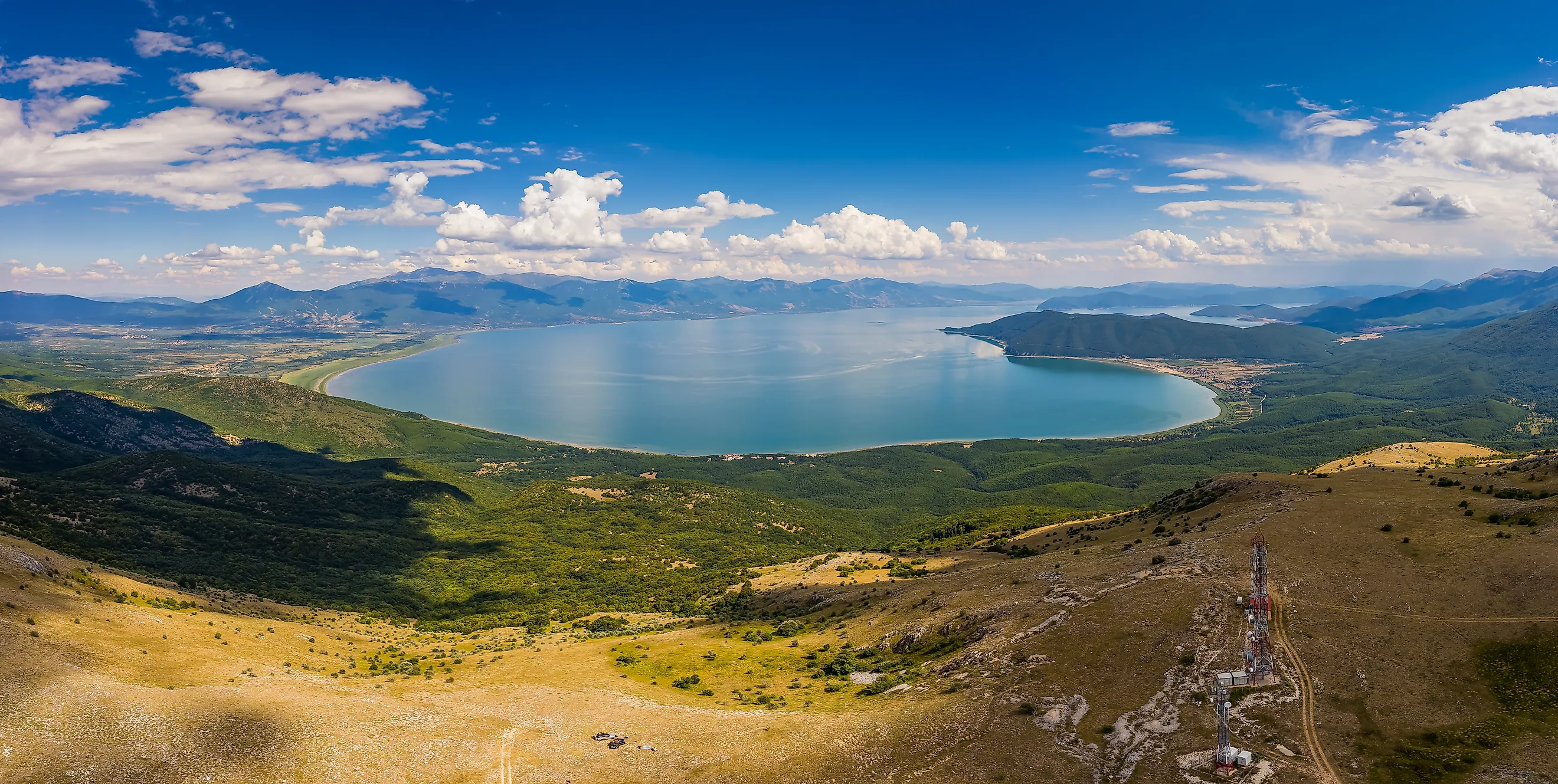
Lake Prespa, shared by North Macedonia, Albania, and Greece, has persisted for at least one million years, according to research by the NASA Earth Observatory. The lake owes its long existence to ongoing tectonic sinking that keeps it from filling with sediment. Though Prespa is considered shallow, it has a mean depth of 46 feet (14 meters).
About 20 percent of Prespa's water drains downhill into the neighboring Lake Ohrid through underground karst channels carved through the limestone separating the two lakes, a rare hydrological link between two ancient bodies of water. That connection has not spared Prespa from modern pressures: a nearly four-decade analysis of satellite imagery found the lake lost seven percent of its surface area and half of its total volume between 1984 and 2020. This shrinking occurred largely due to increased water withdrawals for agriculture.
9. Lake Poso

Lake Poso, in the central highlands of Sulawesi, Indonesia, formed about two million years ago when shifting tectonic plates carved out a basin 1,640 feet (500 meters) deep in the middle of the island. Environmental journalists at Mongabay, an environmental news nonprofit, report that isolation from other lakes and waterways allowed the lake to evolve dozens of species found nowhere else on the planet.
Researchers describe Lake Poso as an oligotrophic, low-nutrient lake with exceptional water clarity. An oligotrophic environment means the water contains very low levels of dissolved nutrients (like phosphorus and nitrogen), which limits algae growth and keeps the water clear. This scarcity of resources forces organisms to specialize, creating hyper-specific ecological niches that drive the diversification of unique, localized species.
These conditions have made it a global hotspot for the evolution of freshwater shrimp, snails, and fish. The lake's endemic species, meaning they only exist there, include multiple Caridina shrimp species first described only within the last two decades. They exist alongside critically endangered endemic fish such as the duck-billed buntingi (Adrianichthys kruyti) and the Poso bungu (Mugilogobius amadi).
Lake Poso holds status as an Alliance for Zero Extinction site due to the concentration of endemic species. The Alliance for Zero Extinction is a global conservation initiative that maps and protects epicenters containing species on the brink of extinction that exist nowhere else. Today, Lake Poso's delicate biodiversity is severely threatened by hydroelectric dam operations, which alter natural water level fluctuations, flood shoreline ecosystems, and disrupt the migratory pathways of native species
8. Lake Ohrid

Lake Ohrid, shared by North Macedonia and Albania, has existed continuously for between two and three million years, according to UNESCO, which lists the lake as a World Heritage Site for both its natural and cultural significance. About half of the lake's water arrives through underground springs rather than surface rivers. NASA researchers note that this spring-fed system filters out much of the sediment that normally turns a lake into a bog within hundreds to thousands of years.
Over 200 endemic species have evolved in Lake Ohrid's isolated ecosystem, including the famous Ohrid trout (Salmo letnica) and the round-bellied sponge (Ohridaspongia rotunda), alongside a range of unique snails. Scientists sometimes refer to Ohrid by its nickname, the "European Galápagos," as a result. NASA researchers point to the same ongoing tectonic sinking, called graben formation, to explain why Ohrid and its smaller neighbor, Lake Prespa, have both persisted for over one million years.
7. Lake Titicaca

Lake Titicaca, straddling the border of Peru and Bolivia at 12,507 feet (3,812 meters) above sea level, formed about two to three million years ago as tectonic activity in the Andes created a deep basin later filled by glacial melt and rainwater. This massive lake is over 120 miles (193 kilometers) long and 50 miles (80 kilometers) wide. Its elevation also makes this ancient lake the highest large lake in the world navigable by vessels. Over 25 rivers feed into the lake. The largest is Ramis, which drains about two-fifths of the Titicaca Basin.
More than 25,000 years of sediment have settled at the bottom of the lake, according to NASA Earth Observatory researchers, preserving a long climate record that scientists still study for clues about historical rainfall and other climate patterns in the high Andes. The lake sustains more than 530 aquatic species and over 12 percent of these species are endemic. Endemics include the Titicaca grebe (Rollandia microptera) and the giant Titicaca water frog (Telmatobius culeus).
Lake Titicaca also holds immense cultural and spiritual significance for some of the Andes peoples who have ancestrally lived near the lake for thousands of years. According to Incan origin myths, the sun, named Inti, sent two of his children, Manco Capac and Mama Ocllo, to Earth to bring order and agriculture to humanity. It is said that these divine children of Inti emerged from Lake Titicaca.
6. Lake Biwa

Lake Biwa, located on the island of Honshu in Japan's Shiga Prefecture, traces its origins back about four millions years, though the lake did not always sit where it does today. According to the Lake Biwa Museum, an ancestral version of the lake formed near what is now Iga City before gradually migrating north over hundreds of thousands of years. It arrived at its current location 400,000 years ago. This northward migration occurred due to continuous tectonic faulting. Aactive seismic plates shifted the bedrock basin over time, causing older parts of the lake to fill in with sediment while new, deep faults opened up further north, dragging the body of water along with the shifting landscape. That long, continuous history makes Biwa the only ancient lake in Japan.
Researchers have documented more than 3,100 species living in and around the lake, including 62 confirmed endemics and another 84 suspected to be. Of the 46 native fish species living in the lake, about 11 are endemic. One of the endemics is the lake's largest fish species, the Lake Biwa catfish (Silurus biwaensis), which can exceed three feet (one meter) in length.
Lake Biwa is designated as a Ramsar Site, Wetland of International Importance. It was also designated by the Japanese government as a wildlife sanctuary in 1971.
5. Lake Malawi

Lake Malawi, also called Lake Nyasa in Tanzania, has existed for an estimated 4.5 million years, according to researchers who study East African rift lakes. It ranks as the ninth-largest lake in the world by surface area, and holds more fish species than any other lake on the planet. Over 700 species of cichlid alone survive here, most found nowhere else.
That explosion of biodiversity happened because the lake's steep underwater slopes and rocky shorelines create countless isolated microhabitats, letting closely related fish populations evolve into separate species without ever leaving the lake. Mozambique protects its portion of the lake as a nature reserve, and a section of the Malawian shoreline forms Lake Malawi National Park.
Deep-drilling paleolimnological data recovered from the lake's core reveals that its water levels have dropped and rebounded by thousands of feet several times throughout its history. Research demonstrates that during severe arid intervals between 145,000 and 60,000 years ago, the lake's total volume collapsed by more than 95 percent. This loss of water volume trapped fish populations in tiny, hyper-isolated evolutionary pockets before expanding back out when humid conditions returned about 70,000 years ago.
4. Caspian Sea

Despite its name, the Caspian Sea is also technically a lake, one that has been around for more than five million years when tectonic uplift and a drop in global sea level cut it off from the ocean permanently. It's also the largest inland body of water on Earth. According to NASA Earth Observatory researchers, the Caspian is a direct remnant of the ancient Paratethys Sea, a much larger body of water that once stretched across Europe and Central Asia before shrinking to the Caspian, Black, and Aral Seas. It is geographically located between Europe and Asia, bordered by Russia, Kazakhstan, Turkmenistan, Iran, and Azerbaijan.
Its brackish water, about one third as salty as the worlds open ocean, is a leftover signature of that marine origin. The Caspian's southern basin plunges more than 3,300 feet (1,000 meters) deep. Its shallow, northern end measures just 16 to 20 feet (five to six meters). Millions of years of isolation has produced over 300 endemic species, such as the Caspian seal (Pusa caspica), which has been listed as Endangered by the IUCN since 2008.
Modern international climate research reveals that the Caspian's ecosystem is under extreme stress due to rapid evaporation driven by rising regional temperatures. Climate monitoring models indicate that the northern, shallow basin is facing unprecedented hypoxia (severe oxygen depletion) below depths of 1,200 feet (400 meters). This hypoxic environment is forcing endemic species out of their historic bottom-dwelling habitats and disrupting the food chain.
3. Lake Tanganyika

Lake Tanganyika formed between nine and 12 million years ago along the western branch of the East African Rift, making it one of the oldest lakes on the continent. Stretching 410 miles (660 kilometers) from north to south, Tanganyika ranks as the longest freshwater lake in the world. Its maximum depth of 4,832 feet (1,470 meters) makes it the second-deepest lake on Earth. The lake holds roughly 16 percent of the planet's available fresh surface water. Four countries share its shorelines: Burundi, the Democratic Republic of the Congo, Tanzania, and Zambia.
Its prolonged isolation has produced more than 250 species of cichlid fish found nowhere else. Beyond its cichlids, the lake’s massive age has allowed unique families of endemic spiny eels, freshwater crabs, and catfish to undergo their own explosive bursts of evolution. This deepwater wilderness is strictly divided by a permanent lack of oxygen below 787 feet (240 meters) forcing nearly all of its highly specialized aquatic life to live in the oxygen-rich upper layer of the lake.
Unlike lakes with rapid water turnover, Tanganyika has a highly restricted hydrology. Its primary outflow is the Lukuga River, which drains into the Congo River system, but this channel clears so little volume that water sits inside the lake basin for an average of 7,000 years.
2. Lake Issyk-Kul

Lake Issyk-Kul, located within the Kyrgyzstan's Tian Shan mountains, began forming roughly 20 million years ago during the early Miocene when intense tectonic folding created an isolated mountain basin that gradually filled with water. The International Lake Environment Committee's World Lake Database traced this timeline through a 9,842-feet-thick (3,000 meter) layer of lake sediment recovered beneath the lakebed. Issyk-Kul stretches 113 miles (182 kilometers) long, making it the second largest mountain lake on Earth. It is a Ramsar Wetland Site of globally significant biodiversity and forms part of UNESCO's Issyk-Kul Biosphere Reserve.
It never freezes despite sitting at 5,272 feet (1,607 meters) in elevation, thanks to mild salinity and geothermal springs on the lakebed. Divers have recovered pottery, bronze tools, and building foundations from at least three ancient civilizations along its shores. These tools have been preserved for centuries in the lake's cold, low-oxygen water. The lake provides critical sanctuary to rare cold-water species, including the endemic Issyk-Kul marinka (Schizothorax pseudoaksaiensis issykkuli) and the Issyk-Kul dace (Leuciscus bergi).
1. Lake Baikal

Lake Baikal in southeastern Siberia holds the title of the oldest lake on Earth, with sediment records dating its origin to between 25 and 30 million years ago. The lake formed inside an active continental rift, a widening crack in Earth's crust that keeps deepening rather than filling in with silt. This process explains how it has persisted tens of millions of years while most lakes vanish or transform into bogs within a few thousand. Lake Baikal reaches a maximum depth of 5,387 feet (1,642 meters), the deepest of any lake in the world.
It holds about 20 percent of the planet's unfrozen surface fresh water, more than all five Great Lakes combined. Its isolation for millions of years has produced more than 1,300 endemic species. This includes the Baikal seal, one of the only seal populations in the world that exclusively lives in fresh water. UNESCO designated Lake Baikal a World Heritage Site in 1996, citing its unmatched value to evolutionary science.
Deep-drilling operations on Baikal's bottom sediment cores have provided paleoclimatologists with an uninterrupted, ultra-high-resolution climate record of Central Asia spanning tens of millions of years, which serves as a vital baseline for tracking global warming and cooling events. Concurrently, biological studies research Baikal’s unique Gammarus amphipods to model how living organisms adapt to extreme, high-pressure deepwater environments.
The World's Oldest Lakes: Millions of Years in the Making
Each of these ancient lakes owes its continued existence to the same underlying processes: active tectonic rifting or sustained subsidence that keeps carving out space faster than sediment can fill it in. That shared origin has produced some of the most biologically unique ecosystems on the planet, each shaped by over one million years of isolation rather than by the glacial melt that formed nearly every other lake on Earth. From the Baikal seal to Malawi's cichlids and Poso's shrimp, much of the wildlife found in these ancient waters exist nowhere else. They serve as a living record of evolution that most lakes can't exist long enough to write.