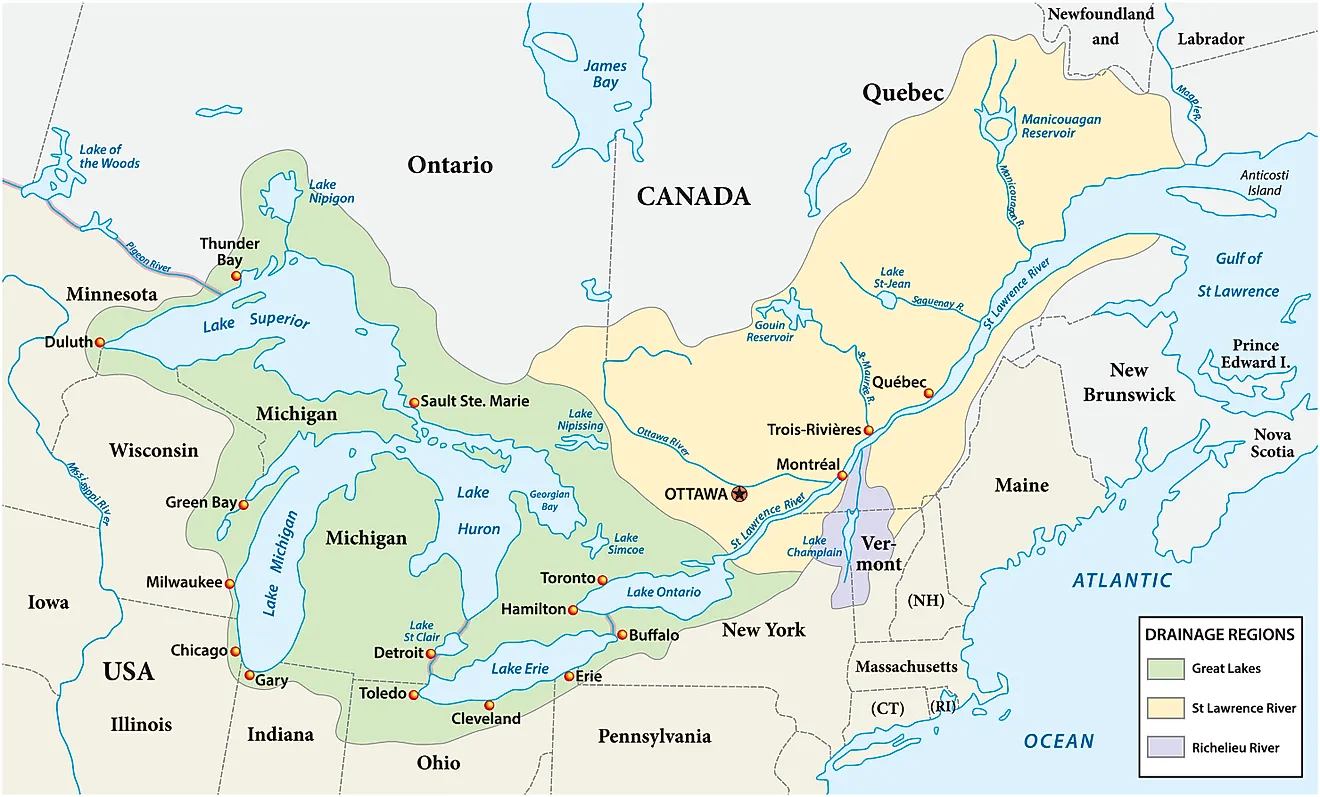
Freshwater lakes in the United States support rich fish communities and a wide range of other wildlife, while also supplying water, food, and recreation for surrounding communities. Whether the cold, deep waters of the Great Lakes or the warm, vegetation-rich shallows of Florida’s large inland lakes, these systems sustain biodiversity on a scale that rivals many terrestrial habitats.
Lakes like Caddo Lake, Flathead Lake, and Lake Superior are especially notable for their well-documented fish communities and native freshwater diversity. Learn more about some of the most biodiverse lakes in the country, what types of fish and wildlife to expect, and where you can see these ecosystems up close.
Lake Superior
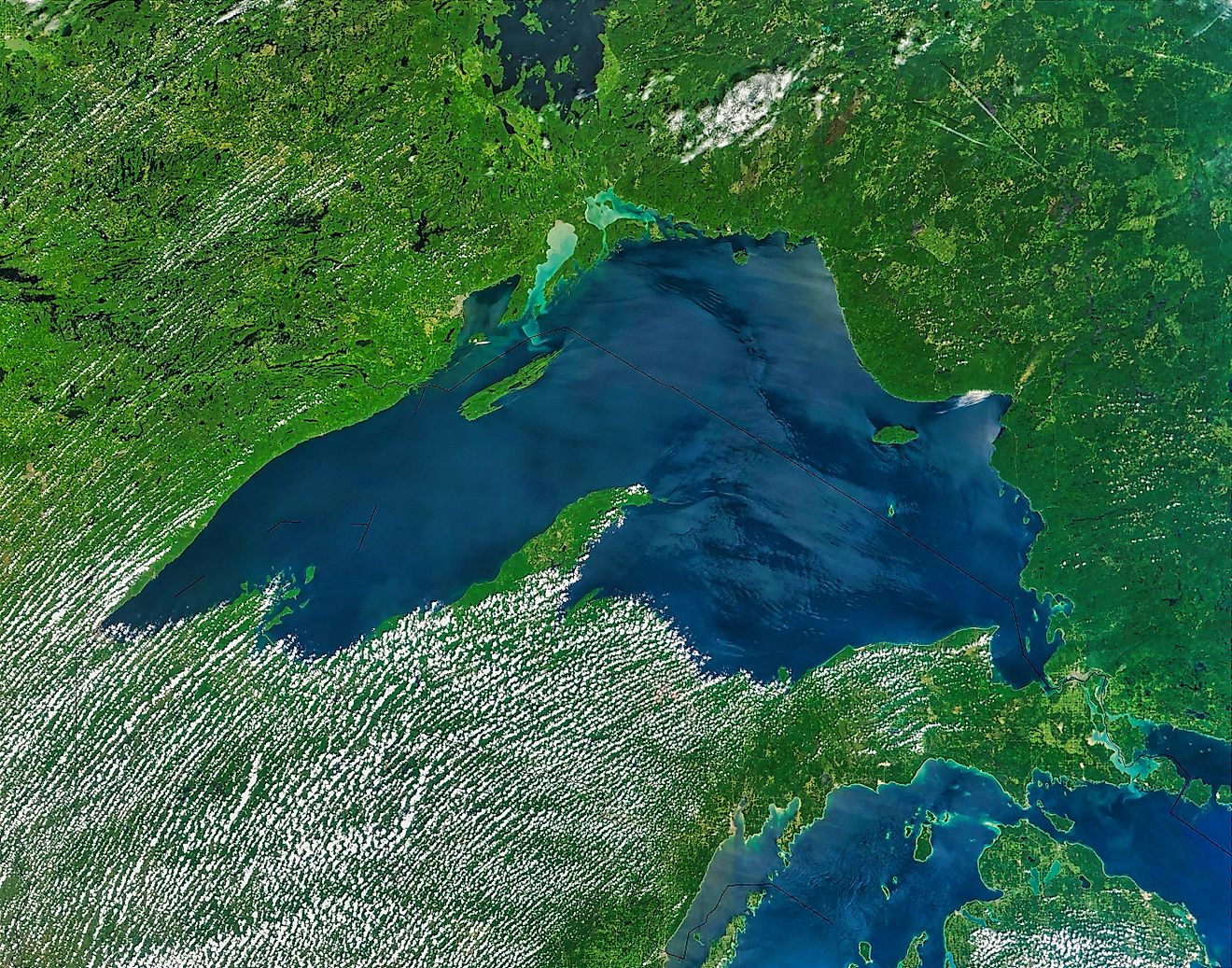
Overlooking Lake Superior.
Cold, deep, and immense, Lake Superior holds a mix of nearshore, offshore, and deepwater habitats that support a remarkably diverse native fish community. With a surface area of 31,700 mi² (82,100 km²), Lake Superior is the largest freshwater lake by surface area in the world. Despite its cold, oligotrophic waters, Lake Superior supports about 88 fish species, including several dozen native species such as lake trout (Salvelinus namaycush), lake whitefish (Coregonus clupeaformis), deepwater sculpins, and several cisco species.
"The Coves" on Lake Superior at Pictured Rocks National Lakeshore.
Superior’s fish community reflects its immense size, varied shoreline, deep basins, and cold tributary mouths. Rocky reefs and deep basins reaching 1,332 ft (406 m) create varied conditions for both pelagic and bottom-dwelling fish.
Lake Michigan
Lighthouse on Lake Michigan in Grand Haven, Michigan. Image credit Dennis MacDonald via Shutterstock
Dunes, river mouths, and offshore waters combine to create one of the most habitat-diverse lake basins in the US. Covering 22,400 mi² (58,000 km²), Lake Michigan contains one of the most studied freshwater fish assemblages in North America. Lake Michigan is part of the Great Lakes basin, where researchers have documented many native fish species across connected lakes and tributaries. Its long shoreline, river mouths, dunes, and nearshore wetlands create a variety of habitats within the same basin.
This view of Lake Michigan is between Petoskey and Charlevoix, Michigan.
Lake Michigan’s diversity is easiest to understand by looking at how quickly the shoreline changes. Long dune-backed beaches, wetland pockets near river mouths, and rocky stretches create different nearshore conditions within short drives of each other. Those transitions support a wide mix of fish habitats. There are many ways to experience the lake, from beach towns and coastal parks to tributary fishing access points, with species and activity shifting by season and location.
Lake Erie
Lake Erie in Ohio, United States.
Shallow and sunlit compared to the other Great Lakes, Lake Erie is the southernmost of the Great Lakes, and is widely described as the warmest and most productive. At 9,910 mi² (25,700 km²), it is the fourth-largest, but shallowest of the Great Lakes, with an average depth of about 62 ft (19 m).
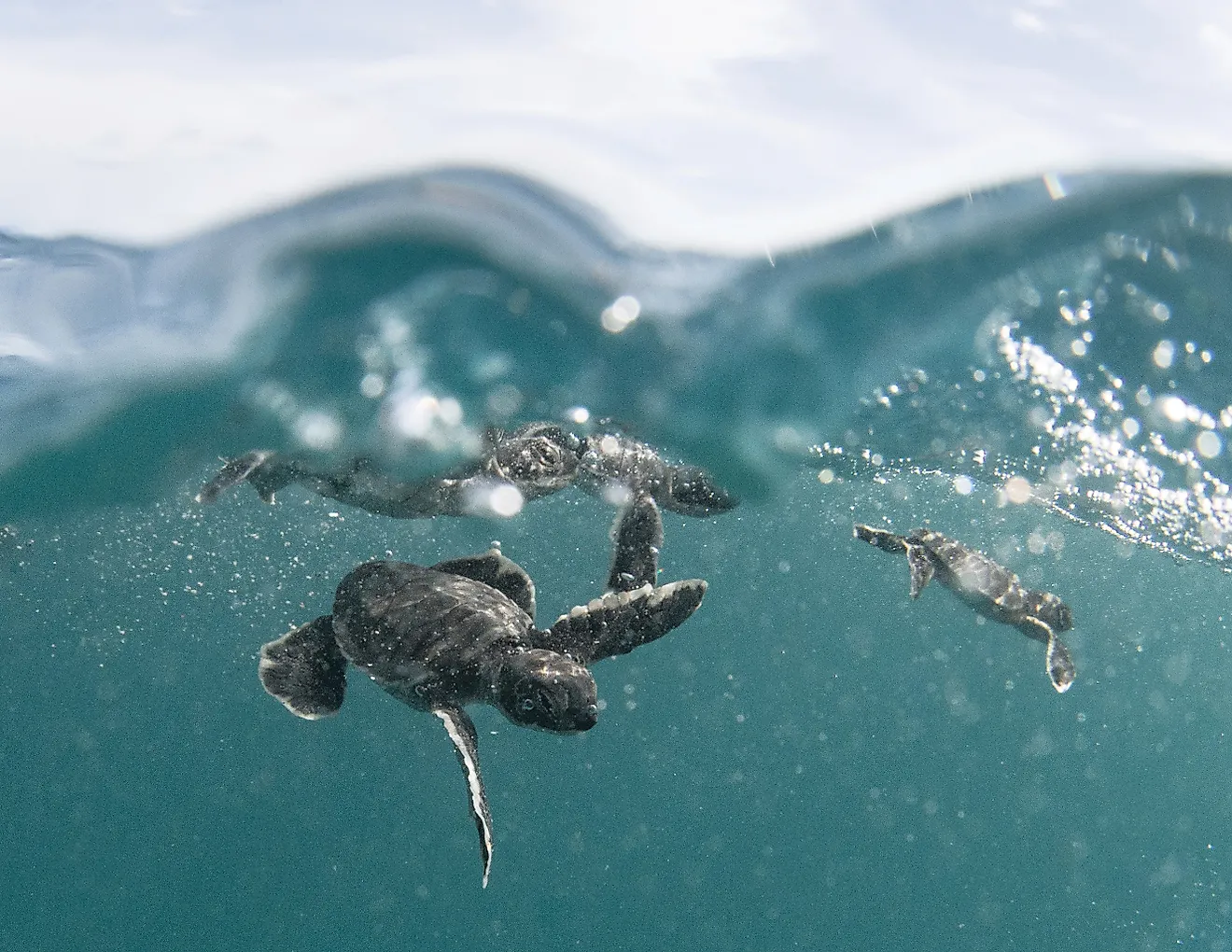
A turtle in Lake Erie.
Lake Erie is home to more than 130 fish species, including walleye (Sander vitreus) and yellow perch (Perca flavescens), which support major recreational and commercial fisheries. Lake Erie also supports diverse wildlife beyond fish, including large populations of migratory waterfowl, breeding bald eagles, and coastal wetland amphibians.
Flathead Lake
The serene beauty of the Flathead Lake State Park.
Flathead Lake spans about 197 mi² (510 km²) and reaches a maximum depth of about 370 ft (113 m), making it one of the deepest lakes in Montana.
The spectacular Flathead Lake in Montana.
Native bull trout (Salvelinus confluentus), westslope cutthroat trout (Oncorhynchus clarkii lewisi), mountain whitefish, and several sculpin species represent coldwater assemblages adapted to northern, high-elevation systems. Tributary inlets, varied depth zones, and seasonal temperature layering add habitat diversity. Flathead Lake is home to 11 native fish species, including bull trout and westslope cutthroat trout. For outdoor-minded readers, the lake’s clarity and mountain views are a top draw.
Lake Champlain
Aerial view of Lake Champlain in Vermont.
Long, narrow, and ecologically varied, Lake Champlain’s mix of wetlands and deep channels supports a broad native fish community. Stretching 120 mi (193 km) north to south, Lake Champlain is a narrow but long basin, home to 93 fish species, including 78 native species. Its location between the Atlantic and Great Lakes drainages allows for overlapping species distributions, elevating biodiversity.
Small fish caught in Lake Champlain.
Rocky shorelines, wetland bays, and deep basins reaching 400 ft (122 m) create a mosaic of habitats. Native lake trout, walleye, smallmouth bass, and multiple forage species occupy different zones throughout the seasons and at different depths, making it an excellent spot for fishing and boating.
Reelfoot Lake
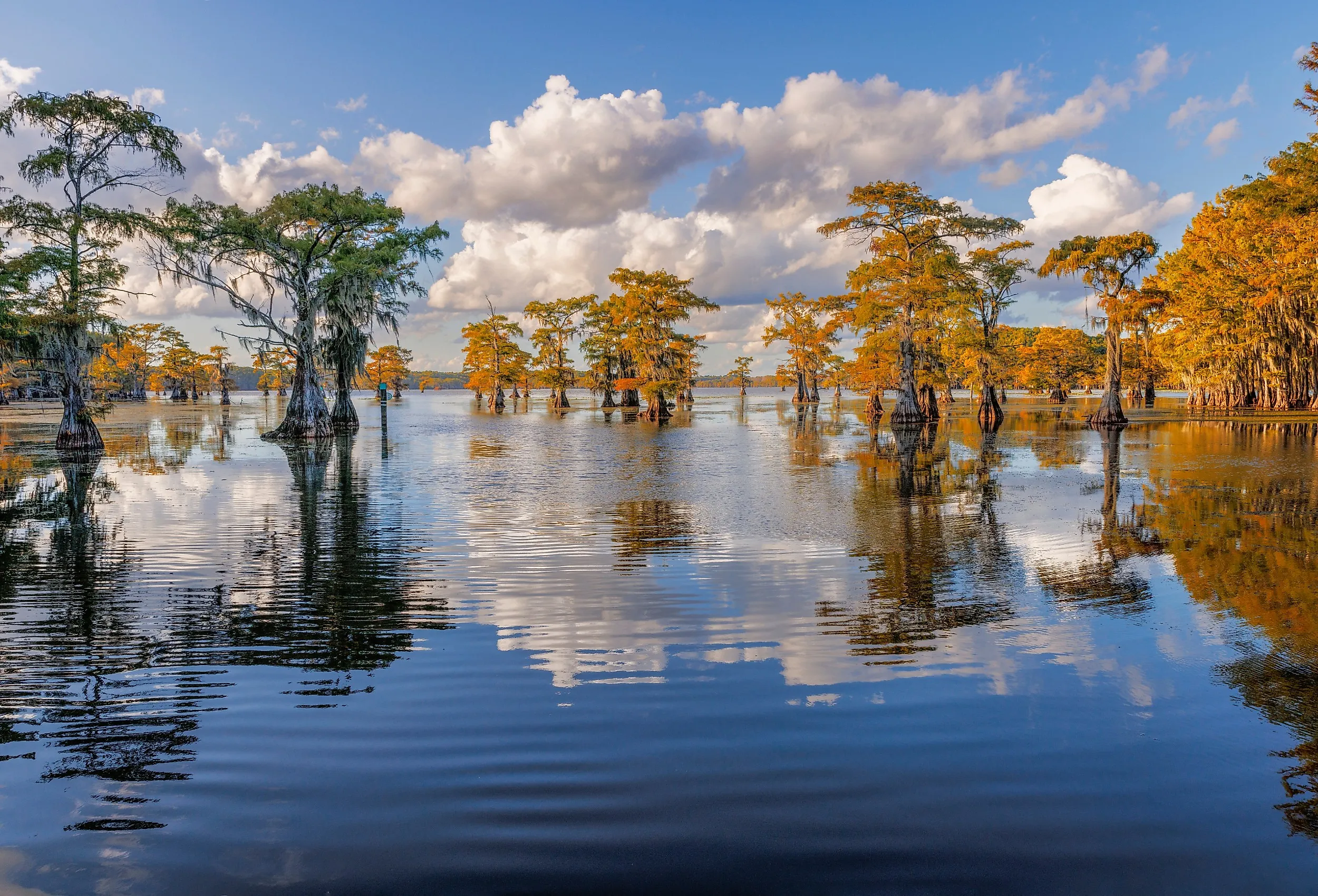
Sunset over Bald Cypress from Grassy Island on Reelfoot Lake National Wildlife Refuge in Tennessee.
Formed by earthquakes and characterized by flooded timber, Reelfoot Lake covers about 15,000 acres (23 mi² / 59 km²). Despite its modest size and shallow water, it and its connections to the Mississippi River basin support a diverse warmwater fish community.
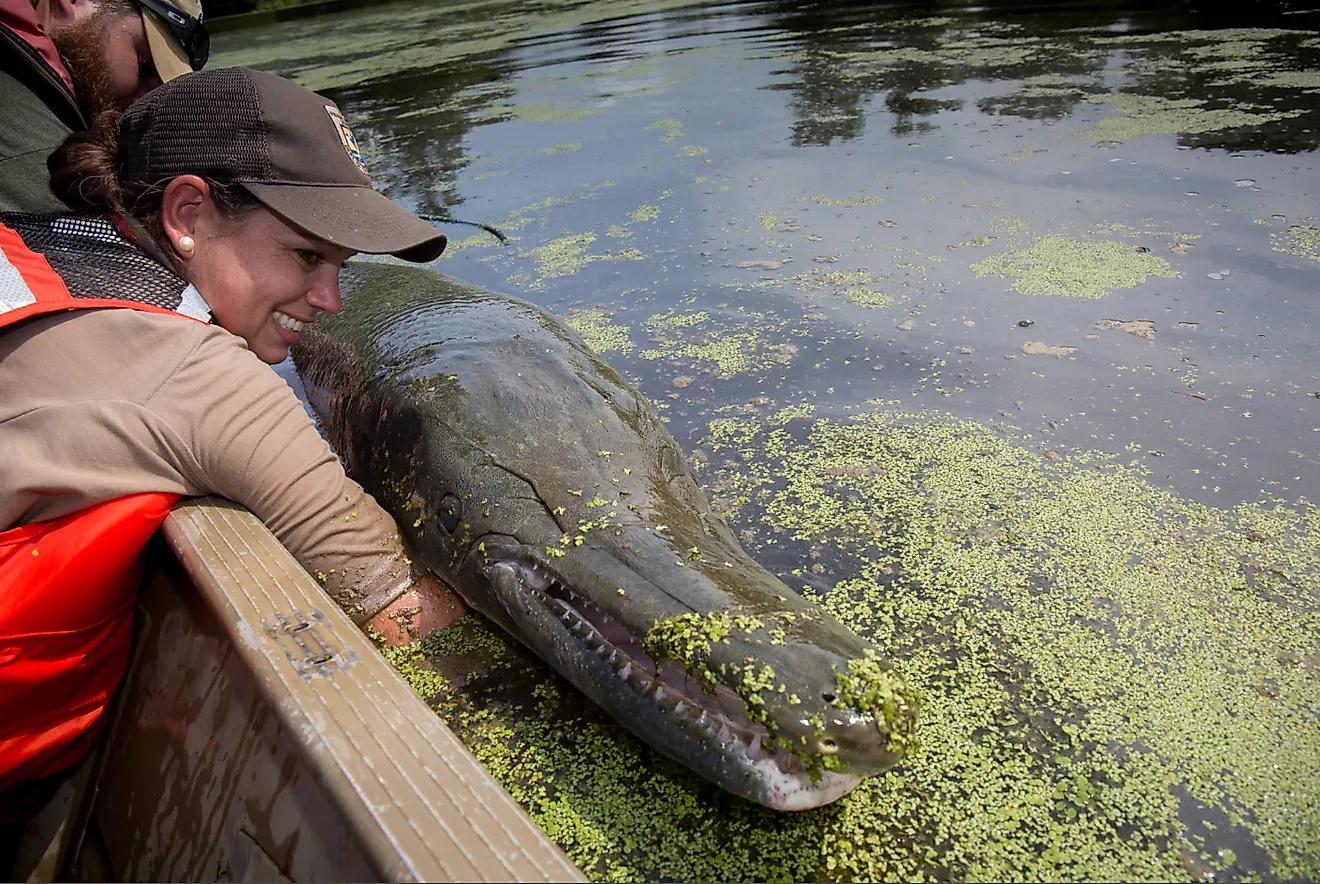
Cypress stands, submerged vegetation, and slow-moving channels provide habitat for sunfish, crappie, catfish, gar, and a range of minnows and shiners. Reelfoot Lake is also home to abundant wildlife beyond fish, including wading birds, turtles, amphibians, and wintering bald eagles that use its cypress stands and shallow backwaters.
Caddo Lake
Wading white heron at Caddo Lake State Park, Texas.
Wetlands, sloughs, and forested floodplains combine to create one of the most habitat-rich natural lake systems in the southern US. Caddo Lake spans approximately 25,400 acres (40 mi² / 103 km²) across the Texas-Louisiana border. It is one of the largest natural freshwater lakes in the southern United States and is renowned for its cypress wetlands.
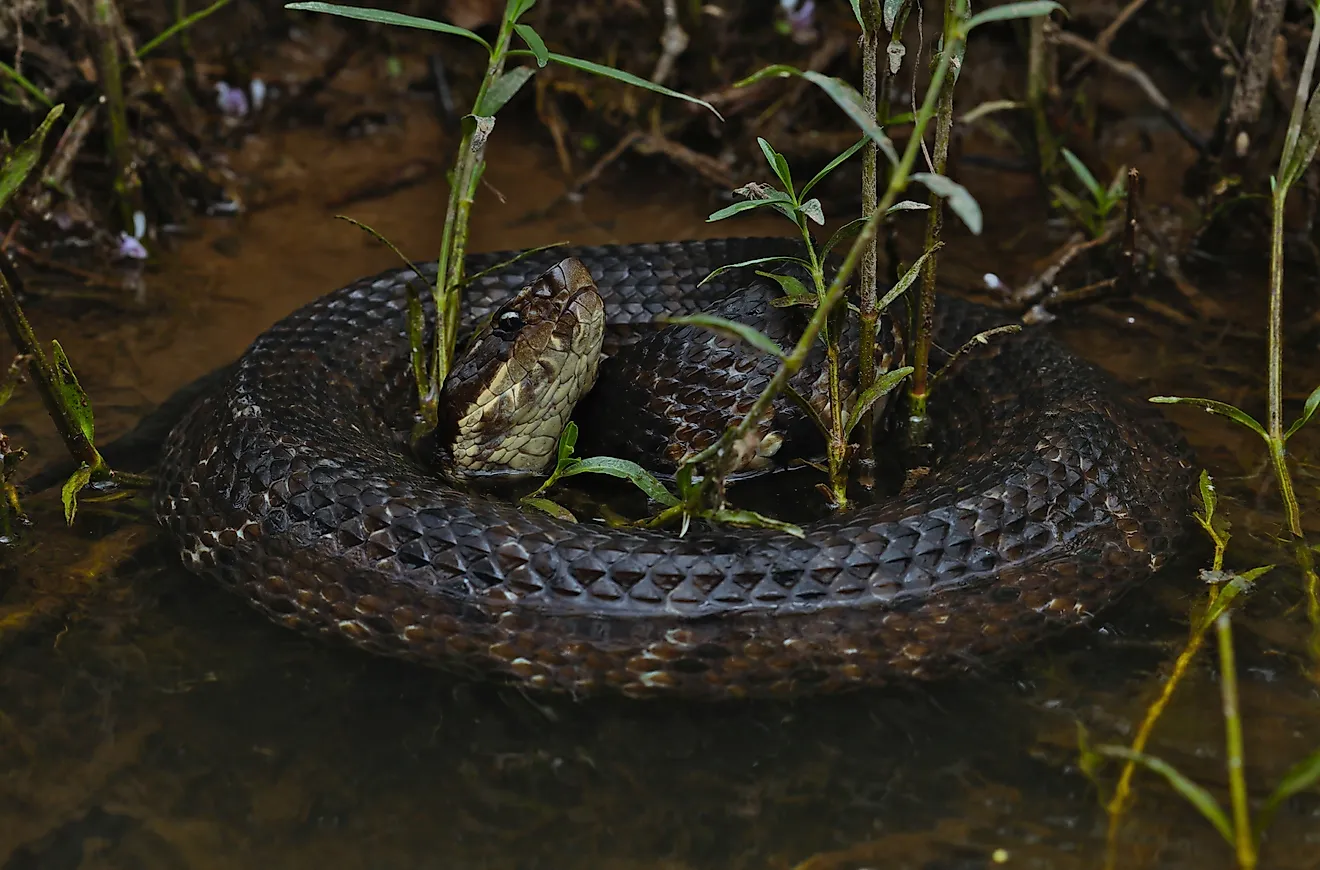
The lake is a maze of bays, sloughs, and quiet corridors, creating extensive edge habitat where vegetation and submerged cover concentrate fish activity near the surface. For visitors, touring the lake by kayak, canoe, or small boat is a magical experience and one of the best ways to get up close with the wildlife. Caddo Lake supports more than 70 fish species, including largemouth bass, crappie, and catfish, along with a wide range of wildlife such as river otters, turtles, and American alligators.
Lake Okeechobee
American alligator in Lake Okeechobee.
Shallow, warm, and vegetation-rich, Okeechobee’s subtropical conditions support high freshwater fish diversity on a large scale. Lake Okeechobee covers about 730 mi² (1,900 km²) and is the largest freshwater lake in Florida and one of the largest lakes contained entirely within the contiguous US. With an average depth of nine feet (2.7 m), it supports expansive vegetated shallows and supports a diverse native fish community.
Aquatic vegetation beds function as nurseries for juveniles, while open-water areas support schooling fish and feeding corridors. The warmwater conditions allow bass, sunfish, and crappie populations to thrive, and for anglers, the lake is renowned for its largemouth bass. Visitors will also want to watch out for alligators, which are common in Lake Okeechobee and use its marsh edges, canals, and vegetated shallows for basking, nesting, and hunting.
High native fish species richness often reflects habitat diversity, watershed connectivity, and long-term ecological stability. Biodiverse lakes tend to support stronger recreational fisheries, more resilient food webs, and better capacity to recover after environmental stress.
From the cold depths of Lake Superior to the warm shallows of Lake Okeechobee, freshwater biodiversity varies widely across the US, shaped by geography, climate, and watershed structure. Species counts can change with new surveys and taxonomic revisions, but each of these lakes has well-documented fish and wildlife habitats.