The Deepest Lake In Every US State
The gap between the top and bottom of this list is close to absurd. Oregon's Crater Lake drops 1,949 feet, deep enough to swallow One World Trade Center with 173 feet to spare. Hawaii's deepest is reportedly seven feet, and Delaware's is nine. More than half of American states have no lake deeper than 300 feet at all, and Maryland has no natural lakes whatsoever. Along the way you will find that the deepest water in several states is a flooded mine pit, that the biggest lake in a state is often nowhere near the deepest, and that a handful of these answers are genuinely disputed between the agencies who measure them.
Three notes on method, because they matter here more than usual. Great Lakes states get both answers, the Great Lake and the deepest inland lake, since one of those is far more useful than the other. Where a state's deepest water is a reservoir or a quarry, we say so and name the natural alternative first where one exists. And where sources conflict, both figures appear rather than one being quietly picked.
Every state below is a jump link. Depth is given where a survey figure is settled and marked otherwise, because several of these are genuinely contested.
| State | Deepest Lake | Max Depth | Type |
|---|---|---|---|
| Alabama | Lewis Smith Lake | 264 ft | Reservoir |
| Alaska | Lake Clark | 1,056 ft | Natural |
| Arizona | Roosevelt Lake (in state); Lake Powell 583 ft (shared) | Disputed | Reservoir |
| Arkansas | Lake Ouachita | 406 ft (200 ft disputed) | Reservoir |
| California | Lake Tahoe | 1,645 ft | Natural |
| Colorado | Grand Lake | Not settled | Natural |
| Connecticut | Lake Wononscopomuc | 102 ft | Natural |
| Delaware | Unnamed | About 9 ft | Impoundment |
| Florida | Deep Lake | About 90 ft | Natural sinkhole |
| Georgia | Carters Lake | Not settled | Reservoir |
| Hawaii | Lake Waiau / Halali'i / Kauhako | Disputed | Natural |
| Idaho | Lake Pend Oreille | 1,150-1,158 ft | Natural |
| Illinois | Lake Michigan 923 ft; Devil's Kitchen Lake inland | 923 ft | Natural / Reservoir |
| Indiana | Lake Michigan 923 ft; Tippecanoe Lake inland | 923 ft | Natural |
| Iowa | West Lake Okoboji | Not settled | Natural |
| Kansas | Milford Lake (tied with Wilson Lake) | Not settled | Reservoir |
| Kentucky | Herrington Lake | Not settled | Reservoir |
| Louisiana | No deep lake; Pontchartrain 65 ft | 65 ft | Estuary |
| Maine | Sebago Lake | 316 ft | Natural |
| Maryland | Deep Creek Lake | 75 ft | Reservoir |
| Massachusetts | Quabbin Reservoir | Not settled | Reservoir |
| Michigan | Lake Superior 1,332 ft; Torch Lake inland | 1,332 ft | Natural |
| Minnesota | Lake Superior 1,332 ft; mine pit lakes inland | 1,332 ft | Natural / Mine pit |
| Mississippi | Lake Okhissa | Not settled | Reservoir |
| Missouri | Table Rock Lake | Not settled | Reservoir |
| Montana | Tally Lake | 495 ft | Natural |
| Nebraska | Lake McConaughy | About 142 ft | Reservoir |
| Nevada | Lake Tahoe | 1,645 ft | Natural |
| New Hampshire | Lake Winnipesaukee | Not settled | Natural |
| New Jersey | Merrill Creek Reservoir | Not settled | Reservoir |
| New Mexico | Navajo Lake | Not settled | Reservoir |
| New York | Lake Ontario 802 ft; Seneca Lake 618 ft inland | 802 ft | Natural |
| North Carolina | Fontana Lake | 440 ft | Reservoir |
| North Dakota | Lake Sakakawea | 180 ft | Reservoir |
| Ohio | Lake Erie 210 ft; Caesar Creek Lake inland | 210 ft | Natural / Reservoir |
| Oklahoma | Broken Bow Lake | Not settled | Reservoir |
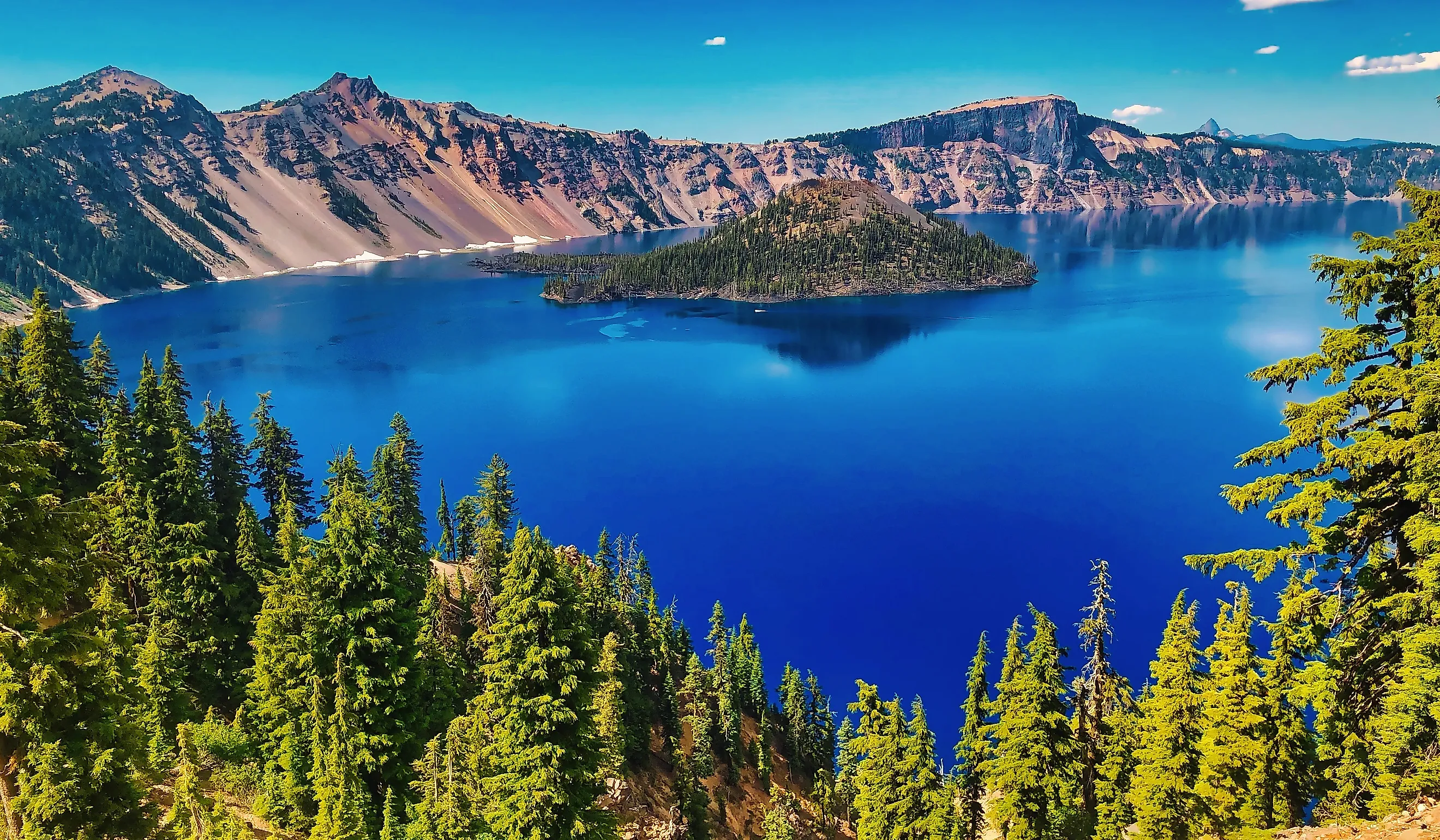
| Oregon | Crater Lake | 1,949 ft (NPS 1,943) | Natural caldera |
| Pennsylvania | Lake Erie 210 ft; Raystown Lake inland | 210 ft | Natural / Reservoir |
| Rhode Island | Scituate Reservoir | Not settled | Reservoir |
| South Carolina | Lake Jocassee | Not settled | Reservoir |
| South Dakota | Lake Oahe | 205 ft | Reservoir |
| Tennessee | Watauga Lake | Not settled | Reservoir |
| Texas | Lake Travis | At full pool only | Reservoir |
| Utah | Bear Lake 208 ft natural; Lake Powell 583 ft | 583 ft | Natural / Reservoir |
| Vermont | Lake Willoughby | 300-340 ft | Natural |
| Virginia | Smith Mountain Lake | Not settled | Reservoir |
| Washington | Lake Chelan | 1,486 ft | Natural |
| West Virginia | Summersville Lake | Not settled | Reservoir |
| Wisconsin | Lake Superior 1,332 ft; Wazee Lake inland | 1,332 ft | Natural / Mine pit |
| Wyoming | Fremont Lake | About 600 ft | Natural |
Alabama
Lewis Smith Lake reaches 264 feet at the dam, making it the deepest water in Alabama. It is a reservoir rather than a lake, created by Alabama Power on the Sipsey Fork of the Black Warrior River when Lewis Smith Dam entered service in September 1961. The dam is one of the largest earthen structures in the eastern United States at 300 feet high. The reservoir covers 21,000 acres across three counties with more than 500 miles of shoreline, and Alabama has no natural lake in the same class.
Alaska

Lake Clark hits roughly 1,056 feet, sixth deepest in the country and the deepest in Alaska. It is a natural glacial lake running about 40 miles between steep ice-carved mountains at the wild heart of Lake Clark National Park and Preserve. Alaska holds more lakes over 300 feet than any other state, and every one of them is natural. Nearby Iliamna is the largest lake wholly inside the United States after Lake Michigan, but Clark is deeper.
Arizona

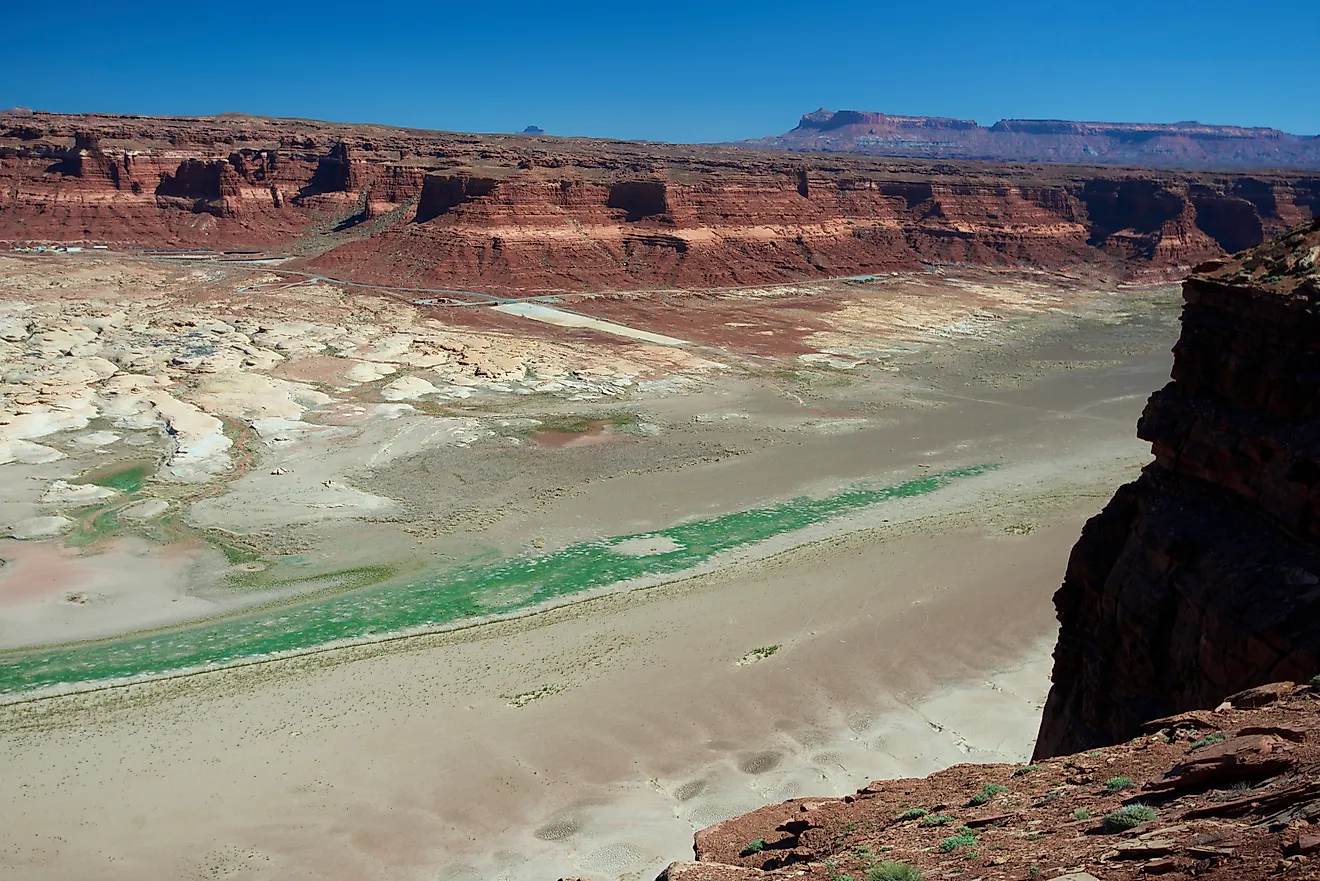
This one is genuinely contested. The deepest water touching Arizona is Lake Powell at 583 feet, and its deepest point at Glen Canyon Dam is physically in Arizona, but the reservoir is shared with Utah and most of it lies there. Lake Mead is deeper than anything else at 532 feet per the Park Service, and its deepest point sits on the Nevada line. For a lake wholly inside the state, Roosevelt Lake is usually named, though published depths for it vary enough that no single figure is settled.
Arkansas

Lake Ouachita is the deepest and largest lake entirely within Arkansas, and the depth figure is disputed. Wikipedia's infobox gives 406 feet at the deepest point near Blakely Mountain Dam; other outlets put it at 200. It is a reservoir, built by the Army Corps between 1948 and 1953 on the Ouachita River, and the entire 40,000-acre shoreline sits inside Ouachita National Forest with no residential development, which is why the water is unusually clear.
California

Lake Tahoe reaches 1,645 feet, the second deepest lake in the country and the deepest in California. It is natural, sitting in a fault-block basin on the Nevada line, and it is deep almost everywhere rather than in one hole, with an average depth around 1,000 feet. That is why it never freezes over. It holds enough water to cover the whole of California to a depth of about 14 inches.
Colorado

Grand Lake is the deepest natural lake in Colorado, glacially formed in the north-central mountains at the western entrance to Rocky Mountain National Park. For a state defined by its high country, Colorado has surprisingly few deep lakes, because glaciers here carved valleys rather than the long deep troughs that produced Tahoe and Chelan. Its deeper water is almost all in reservoirs, including Blue Mesa on the Gunnison.
Connecticut
Lake Wononscopomuc reaches 102 feet, the deepest natural lake in Connecticut. It sits in the Lakeville section of Salisbury in the state's northwest corner, and it is a marl lake, meaning a hard-water lake precipitating calcium carbonate, which supports an unusually diverse aquatic plant community. The name is Mahican and translates roughly as rocks at the bend in the lake. Average depth is a much shallower 36 feet.
Delaware
The deepest lake in Delaware is about nine feet, which is a foot shallower than the deep end of a standard swimming pool and the second lowest figure on this page. Delaware is the second smallest state, sits almost entirely on the flat Atlantic coastal plain, and was never glaciated in a way that gouged basins. What it has instead are millponds and shallow impoundments, none of them deep enough for the state's entry to be widely reported by name.
Florida

Deep Lake reaches about 90 feet, making it the deepest in Florida and the deepest anywhere south of Lake Okeechobee. It is a natural sinkhole in Big Cypress National Preserve, formed where limestone dissolved and collapsed. The contrast with the state's famous water is the point: Lake Okeechobee covers 730 square miles and averages only about nine feet, bottoming out near 12. Florida has enormous lakes and almost no deep ones.
Georgia
Carters Lake is the deepest in Georgia and is regularly described as the deepest lake in the American South. It is a reservoir, impounded on the Coosawattee River in the Blue Ridge foothills by an Army Corps dam, and Georgia's better-known water bodies are all shallower. Lake Lanier gets the traffic and the headlines. Carters, tucked into the mountains northwest of it, gets the depth.
Hawaii
This is the most disputed entry on the page, and the answers are not close. TopoZone lists Lake Waiau at seven feet as the deepest and only lake in Hawaii, a tiny alpine pool near the summit of Mauna Kea. Other lists name Halali'i Lake on Ni'ihau, an ephemeral lake whose depth rises and falls with rainfall and which is only Hawaii's deepest in wet years. A crater lake at Kauhako on Molokai is also reported far deeper than either. Volcanic islands drain vertically through porous basalt, which is why standing water is so scarce.
Idaho

Lake Pend Oreille reaches between 1,150 and 1,158 feet depending on the survey, fifth deepest in the country and the deepest in Idaho. It is natural, 43 miles long, filling a steep trench carved by ice and reshaped by the Missoula Floods. The US Navy operates an acoustic research range here, testing submarine technology, because the depth and quiet make it the closest thing to open ocean available inland.
Illinois
Lake Michigan gives Illinois access to 923 feet of water off Chicago, and that is the honest answer to the deepest water in the state. Inland, the deepest is Devil's Kitchen Lake in the Crab Orchard National Wildlife Refuge in the far south, a reservoir built in a rocky Shawnee Hills valley. Illinois is glacial till plain almost everywhere else, flat and shallow, which is why the state's deep water is either borrowed from a Great Lake or dammed.
Indiana
Lake Michigan again supplies the deepest water touching Indiana at 923 feet, along a short northwestern shoreline. The deepest natural inland lake is Tippecanoe Lake in Kosciusko County, a kettle lake left by retreating ice in the state's northern lake country. That distinction matters here, because northern Indiana's lakes are genuinely natural glacial features while almost everything in the southern two thirds of the state is impounded.
Iowa
West Lake Okoboji is the deepest in Iowa and one of relatively few genuinely deep natural lakes in the Corn Belt. It sits in the Iowa Great Lakes region in the northwest corner, a glacially carved blue-water lake that has been a resort destination since the nineteenth century. Iowa is otherwise a state of shallow prairie potholes and river impoundments, which makes Okoboji's clear deep basin a regional anomaly worth the drive.
Kansas
Milford Lake is the deepest in Kansas, and it is tied with Wilson Lake, which is unusual enough to note. Both are reservoirs. Milford is also the state's largest by surface area, which is rare on this list, since the biggest lake in a state is usually not the deepest. Kansas has no significant natural lakes at all, so every candidate here was created by an Army Corps dam in the mid-twentieth century.
Kentucky
Herrington Lake is the deepest in Kentucky, formed in 1925 by damming the Dix River, which makes it one of the older large reservoirs in the South. It is long, narrow and steep-sided, filling a limestone gorge in the Bluegrass region. Lake Cumberland is far larger and better known, but Herrington's tight gorge geometry gives it the depth, which is a pattern repeated across the Appalachian and Ozark reservoirs.
Louisiana
No lake in Louisiana is deep by any national standard, and the state is the clearest illustration of why. Louisiana's water bodies are deltaic: oxbows, backswamps, brackish estuaries and coastal lagoons sitting on soft sediment barely above sea level. Lake Pontchartrain covers 630 square miles and averages only 12 to 14 feet, bottoming out around 65. The deepest water in the state is a dammed reservoir in the northern hill country rather than anything in the delta.
Maine

Sebago Lake reaches 316 feet, the deepest and second largest in Maine. It is natural and oligotrophic, meaning nutrient-poor and therefore very clear, with an average depth of 107 feet and a residence time above five years. It supplies drinking water to greater Portland, largely unfiltered, which is only possible because the lake is deep and clean enough to meet federal standards without treatment.
Maryland

Deep Creek Lake reaches 75 feet, the deepest in Maryland, and it is artificial because it has to be. Maryland is the only state with no natural lakes at all. It has more than 100 impoundments and every one was created by damming a river. Deep Creek was built in Garrett County in the far western mountains for hydroelectric power in the 1920s and covers 3,628 acres at 2,461 feet of elevation.
Massachusetts
Quabbin Reservoir is the deepest in Massachusetts, and it exists because Boston needed water. Four towns were disincorporated and flooded in the 1930s to create it, and it now supplies most of metropolitan Boston. Public access is deliberately restricted to protect water quality, so this is a deep lake most residents of the state have never swum in and never will. Wachusett Reservoir, also built for Boston, is the other contender.
Michigan

Lake Superior at 1,332 feet is the deepest water touching Michigan, and Michigan is the only state bordering four Great Lakes. Inland, the deepest is Torch Lake in the northwest of the Lower Peninsula, a long narrow glacial lake famous for turquoise water produced by a pale limestone bottom. The gap between the two answers is enormous, which is exactly why both belong here.
Minnesota
Lake Superior gives Minnesota the same 1,332 feet off the North Shore. Inland, the answer is not a lake at all in the usual sense. Minnesota's deepest inland water is a flooded mine pit, variously reported as Portsmouth Mine Pit Lake in the Cuyuna Country State Recreation Area or the Embarrass and St. James pits on the Iron Range, the last of which is around 380 feet. Deepest natural inland is Lake Saganaga on the Ontario border. In a state with 10,000 lakes, the deep water is a byproduct of iron mining.
Mississippi
Lake Okhissa is the deepest in Mississippi, a 1,100-acre reservoir built by the Forest Service in the Homochitto National Forest and opened in 2002, which makes it one of the newest entries on this page. Bass fisherman Bill Dance sanctioned it as his first signature lake. Mississippi's natural water bodies are oxbows of the Mississippi River, all shallow, so the state's deep water is recent and deliberate.
Missouri

Table Rock Lake is the deepest in Missouri, a White River reservoir in the Ozarks near Branson impounded by Table Rock Dam in 1958. The steep-walled Ozark valleys are what produce the depth, the same geometry that gives Kentucky and Arkansas their deep reservoirs. Missouri's natural lakes are river oxbows in the Bootheel and are shallow, so every deep-water candidate in the state is a dam project.
Montana
Tally Lake reaches 495 feet according to a 2011 Montana Fish, Wildlife and Parks bathymetric survey, making it the deepest lake in Montana. It is natural, glacially formed, and only 1,211 acres, sitting ten miles west of Whitefish where almost nobody looks for it. The conflict is worth stating: the Corps lists Hungry Horse Dam at 515 feet of hydraulic height, which exceeds Tally, but that is a dam-engineering figure rather than a lake sounding and the pool draws down more than 100 feet seasonally. Lake McDonald is 472 feet, and Flathead, the largest natural lake west of the Mississippi, only 370.
Nebraska

Lake McConaughy is the deepest in Nebraska at about 142 feet at the dam. Known locally as Lake Mac, it is a reservoir on the North Platte River formed by Kingsley Dam, running roughly 20 miles long and four miles wide at capacity. Nebraska's natural water is Sandhills lakes, which are shallow groundwater-fed pans, so a state with thousands of them needed a dam to get past 100 feet.
Nevada
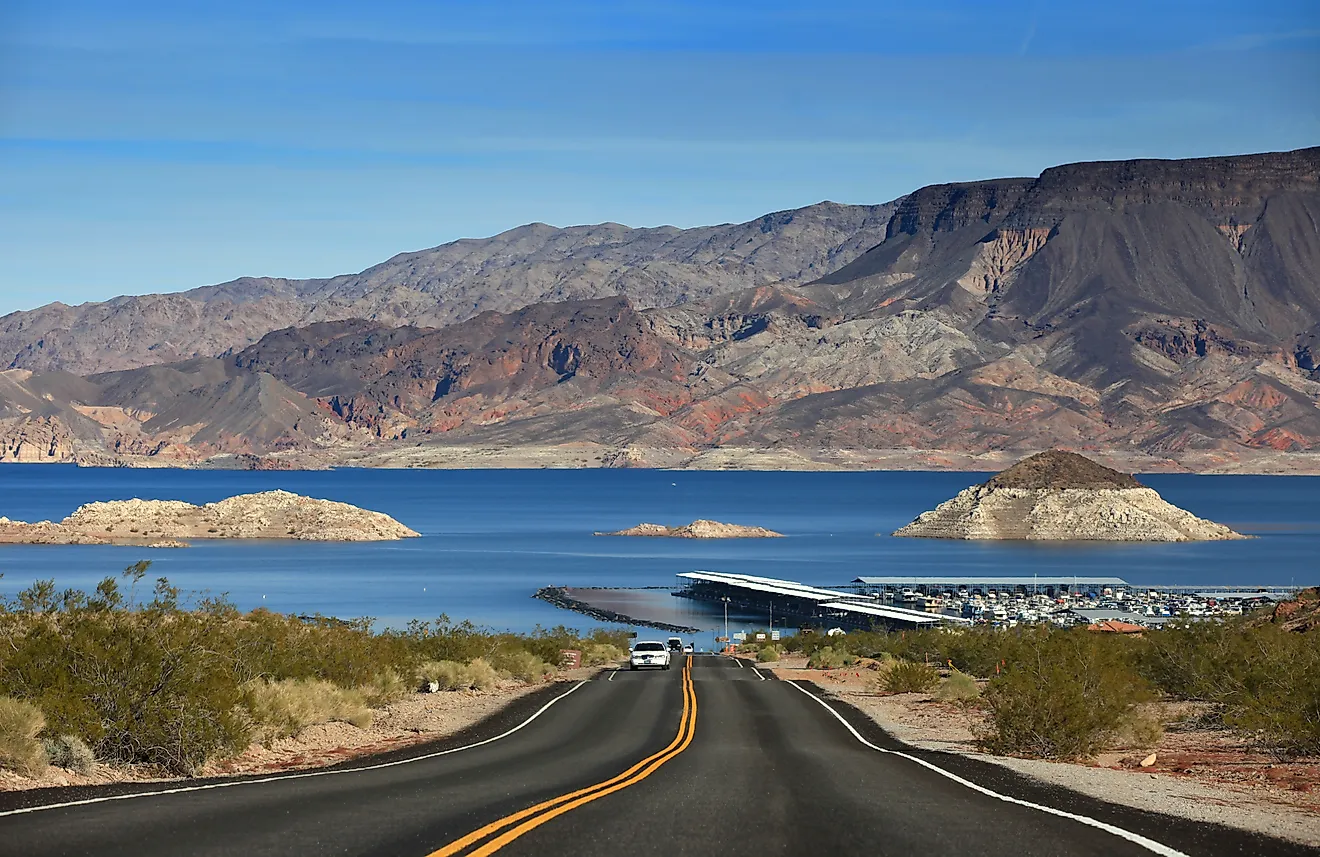
Lake Tahoe at 1,645 feet is the deepest water in Nevada, shared with California along the state line. For water wholly inside Nevada the picture drops sharply, and Lake Mead at 532 feet is deeper than any natural Nevada lake but is itself a Colorado River reservoir shared with Arizona. Pyramid Lake, the state's great natural desert lake and a Lahontan cutthroat fishery, reaches around 350 feet.
New Hampshire

Lake Winnipesaukee is the deepest and by far the largest in New Hampshire, a natural glacial lake of 44,586 acres scattered with more than 250 islands. The Abenaki name is usually translated as smile of the Great Spirit or beautiful water in a high place. Newfound Lake, considerably smaller, is sometimes cited as deeper depending on the survey, which is worth knowing before anyone settles an argument with it.
New Jersey
Merrill Creek Reservoir in Warren County is the deepest in New Jersey, and it was built for an unusual reason: to store water for release into the Delaware River to offset evaporation losses from power plants. The state's deepest natural lake is Lake Hopatcong, a glacial lake enlarged by damming for the Morris Canal. So New Jersey's answer is artificial, but its natural runner-up was itself made bigger by nineteenth-century engineering.
New Mexico
Navajo Lake is the deepest in New Mexico, a reservoir on the San Juan River in the northwest corner, shared with a portion in Colorado and protected as Navajo Lake State Park. The tailwater below its dam is one of the most famous trout fisheries in the American West. The state's better-known deep water is a misnomer worth flagging: the Bottomless Lakes near Roswell, New Mexico's first state park, bottom out at about 90 feet.
New York

Lake Ontario at 802 feet is the deepest water touching New York, with Lake Erie also on the state's western edge. Inland, Seneca Lake reaches 618 feet, the deepest of the Finger Lakes and among the fifteen deepest lakes in the country. Its cold deep water column simulates open-ocean conditions well enough that the Navy has tested sonar there. It is also the self-declared lake trout capital of the world.
North Carolina

Fontana Lake reaches 440 feet, the deepest in North Carolina. It is a reservoir impounded on the Little Tennessee River by Fontana Dam, completed in 1945 and still the tallest dam east of the Rocky Mountains at 480 feet. More than 240 miles of its shoreline is undeveloped and most of it borders Great Smoky Mountains National Park. Appalachian Trail hikers walk directly across the top of the dam.
North Dakota

Lake Sakakawea reaches 180 feet, the deepest water entirely inside North Dakota. It is a reservoir, created by Garrison Dam on the Missouri, and it runs 180 miles. Two caveats belong here. Lake Oahe is deeper at 205 feet but its deepest point is on the South Dakota side. And the deepest naturally forming lake in the state is Stump Lake in Nelson County, which bottoms out at roughly 73 feet.
Ohio
Lake Erie at 210 feet is the deepest water touching Ohio, and Erie is the shallowest Great Lake by a wide margin, which makes Ohio's Great Lake answer unusually modest. Inland, the deepest is Caesar Creek Lake in Caesar Creek State Park in the southwest, an Army Corps flood control reservoir completed in the 1970s. Ohio's natural lakes are small glacial kettles in the northeast, none of them deep.
Oklahoma
Broken Bow Lake is the deepest in Oklahoma, a reservoir in the southeastern Ouachita Mountains impounded on the Mountain Fork River and popular with visitors from Texas and Arkansas as much as Oklahomans. The state has essentially no natural lakes, so this is a dam answer by necessity. The steep forested Ouachita terrain is what allows the depth, in the same way it does across the line in Arkansas.
Oregon

Crater Lake reaches 1,949 feet, the deepest lake in the United States and the deepest anywhere whose basin sits entirely above sea level. The Park Service gives 1,943. It fills the caldera left when Mount Mazama collapsed roughly 7,700 years ago, and no river flows in or out, so everything in it arrived as rain and snow. That closed system is why the water is as clear as it is, and why Oregon holds this list's ceiling.
Pennsylvania
Lake Erie at 210 feet is the deepest water touching Pennsylvania, along a short shoreline at Presque Isle. Inland, Raystown Lake is the deepest, an Army Corps reservoir on the Raystown Branch of the Juniata River and the largest lake entirely within the state. Most of the surrounding land is federally owned and closed to development, which is unusual for a reservoir this close to the eastern population centers.
Rhode Island
Scituate Reservoir is the deepest in Rhode Island, and like Quabbin in Massachusetts it exists to supply a city rather than to be visited. It provides drinking water to Providence and most of the state, and public access is restricted accordingly. Rhode Island's natural ponds are glacial and shallow, so the smallest state's deepest water is a protected municipal supply nobody swims in.
South Carolina

Lake Jocassee is the deepest in South Carolina, a Duke Energy reservoir in the Blue Ridge Escarpment northwest of Greenville, accessed through Devils Fork State Park. It is fed by cold mountain rivers that keep it unusually clear for the Southeast, and it supports a trout fishery well south of where trout should be viable. Submerged beneath it are an old resort, a cemetery and a Revolutionary War-era site.
South Dakota
Lake Oahe is the deepest in South Dakota, reaching 205 feet at Oahe Dam near Pierre. It is the fourth largest reservoir in the country by capacity and stretches all the way north to Bismarck, North Dakota. That cross-border geometry is why it appears in two entries on this list with the depth credited here: the deepest point sits on the South Dakota side of the line.
Tennessee
Watauga Lake is the deepest in Tennessee, a TVA reservoir in the far northeastern corner surrounded by Cherokee National Forest. It was created in 1948 by damming the Watauga River, and the town of Butler was relocated to build it, earning the flooded original the nickname Old Butler. The steep Appalachian valley walls are what deliver the depth, and the Appalachian Trail runs along the shoreline.
Texas

Lake Travis is the deepest in Texas at full capacity, and that qualifier does real work. It is a flood control reservoir on the Colorado River of Texas above Austin, impounded by Mansfield Dam, and it is designed to fluctuate dramatically. Its depth swings by tens of feet between drought and flood, so unlike a natural lake the figure is a design maximum rather than a stable measurement. Texas has essentially one significant natural lake, Caddo, and it is shallow.
Utah

Bear Lake at 208 feet is the deepest natural lake in Utah, a turquoise limestone-bottomed lake shared with Idaho and old enough to host several endemic fish. The deeper answers are all reservoirs: Lake Powell reaches 583 feet and Flaming Gorge 436, both on the Colorado system and both drawn down heavily in dry years. And the state's most famous lake is a red herring, because Great Salt Lake averages around 14 feet and bottoms out near 33.
Vermont
Lake Willoughby is the deepest lake entirely within Vermont, with estimates ranging from 300 to 340 feet, and it may be the deepest lake wholly contained in New England. Its fjord-like basin is squeezed between Mount Pisgah and Mount Hor in the Northeast Kingdom. The conflict is worth naming: Lake Champlain reaches about 400 feet and forms Vermont's western border, but it is shared with New York and Quebec rather than contained in the state.
Virginia
Smith Mountain Lake is the deepest in Virginia and also the largest lake lying entirely within the state. It is a reservoir, impounded on the Roanoke River in 1963 for hydroelectric power, and its depth comes from the steep Blue Ridge foothill valleys it flooded. Virginia's only substantial natural lake is Mountain Lake in Giles County, a rare non-glacial natural lake that has partially drained more than once.
Washington

Lake Chelan reaches 1,486 feet, third deepest in the country and the deepest in Washington. It is a natural glacial trough 50 miles long and rarely more than two miles wide, running back into the North Cascades, and its floor lies well below sea level even though the surface sits above 1,000 feet. Lake Crescent in Olympic National Park is the state's second at 624 feet, and its water is bright blue because low nitrogen prevents algae.
West Virginia
Summersville Lake is the deepest in West Virginia, an Army Corps reservoir on the Gauley River known for water clear enough to make it a serious scuba destination, which is unexpected in Appalachia. Its northern shore became a state park in August 2023. West Virginia has almost no natural lakes because it was never glaciated and drains steeply, so every deep-water candidate in the state is impounded.
Wisconsin

Lake Superior at 1,332 feet is the deepest water touching Wisconsin. Inland, the deepest is Wazee Lake, and it is not a lake in any natural sense: it sits in a former taconite mining quarry in Jackson County, flooded after the mine closed. The deepest natural inland lakes are Green Lake and Big Green in the state's kettle country. Like Minnesota, Wisconsin's deep inland water is a mining leftover.
Wyoming
Fremont Lake is the deepest in Wyoming, a natural glacial lake in the Wind River Range near Pinedale, largely undeveloped and reported at around 600 feet in most accounts. Jackson Lake in Grand Teton National Park is far better known and shallower, at about 438 feet, though it was enlarged by a dam. Fremont is the rare entry on this list that is both genuinely deep and genuinely natural.
What The List Actually Shows

Three patterns run through all fifty entries.
Glaciation and volcanism did the work. Every lake past 1,000 feet on this list was carved by ice or blown out by an eruption, which is why the deep water clusters in the Pacific Northwest, the northern Rockies, New England and Alaska, and why the entire South relies on dams.
Big does not mean deep, and the examples are relentless. Great Salt Lake bottoms out at 33 feet. Lake Okeechobee at 12. Lake Pontchartrain at 65. The Salton Sea at 40. New Mexico's Bottomless Lakes at 90.
And in a large minority of states the deepest water is not natural at all. Maryland has no natural lakes. Kansas, Oklahoma and West Virginia have nothing natural in the running. Minnesota and Wisconsin, the two states most identified with lakes in the American imagination, both have flooded mine pits as their deepest inland water. Which is a strange and slightly wonderful thing for the Land of 10,000 Lakes to have to admit.