How Much Great Lakes Water Passes Over Niagara Falls Every Second
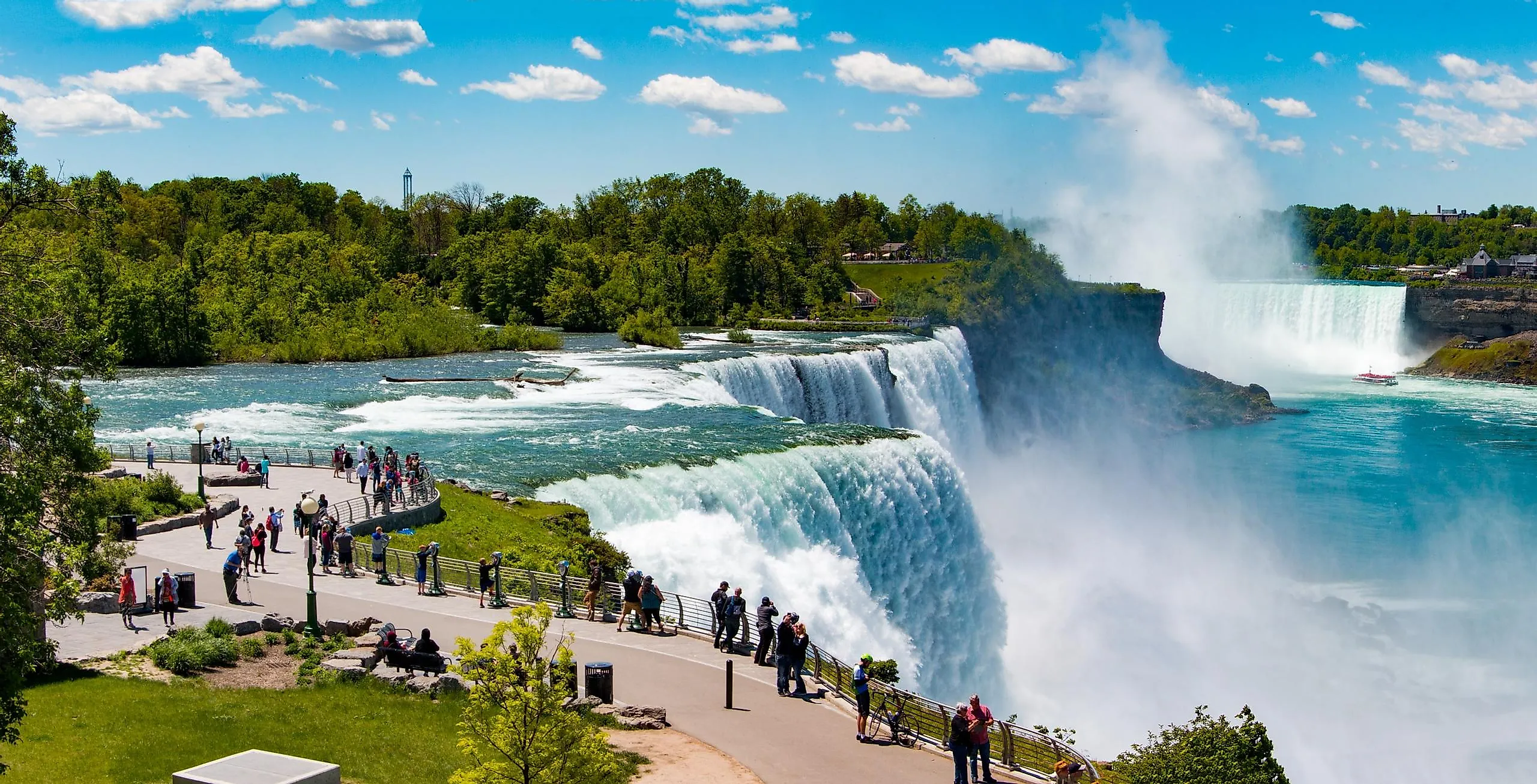
All of the water that flows over Niagara Falls comes from the Great Lakes and the rivers that connect them, and the sheer amount of water that makes the plunge every second is truly impressive. During peak daytime tourist hours, about 100,000 ft3 (2,832 m3) of water per second flows over the falls, equal to roughly 750,000 gallons (2.8 million liters) every second. That is enough to fill an Olympic-size swimming pool a little more than once every second. The amount of water passing over the falls is not entirely up to Mother Nature, however. Canada and the United States regulate the Niagara River's flow to enhance the appearance of the falls, hydroelectric power generation, and other uses of the river.
Source of the Falls

Niagara Falls is part of a natural waterway that directly connects two of the Great Lakes, and forms a section of the chain that ties together all five lakes. The Niagara River runs approximately 36 miles (58 kilometers) from Lake Erie to Lake Ontario, carrying water through the upper Niagara River, over the falls, and into the lower Niagara River. Some of Lake Erie's water does bypass the falls due to the Welland Canal, first built in 1829 to facilitate waterborne commerce.
The falls exist because the Niagara River's short journey includes a dramatic change in elevation between the two lakes. Lake Erie sits about 326 feet (99 meters) higher than Lake Ontario. Roughly half of this elevation difference occurs at Niagara Falls, while much of the rest is spread across the upper Niagara River's rapids. After plunging over the falls, the water continues north through the lower Niagara River before entering Lake Ontario.
Water Flow Facts

During peak daytime tourist hours, approximately 100,000 ft3 (2,832 m3) of water per second passes over Niagara Falls. The table below shows what that flow amounts to over one second and one minute.
| Measurement | Water per 1 Second | Water per 1 Minute |
|---|---|---|
| ft3 | 100,000 ft3 | 6 million ft3 |
| m3 | 2,832 m3 | 169,920 m3 |
| U.S. gallons | 750,000 gal | 45 million gal |
| Liters | 2.8 million L | 170 million L |
| U.S. tons | 3,124 tons | 187,440 tons |
| Metric tons | 2,832 tons | 169,920 tons |
Uneven Falls
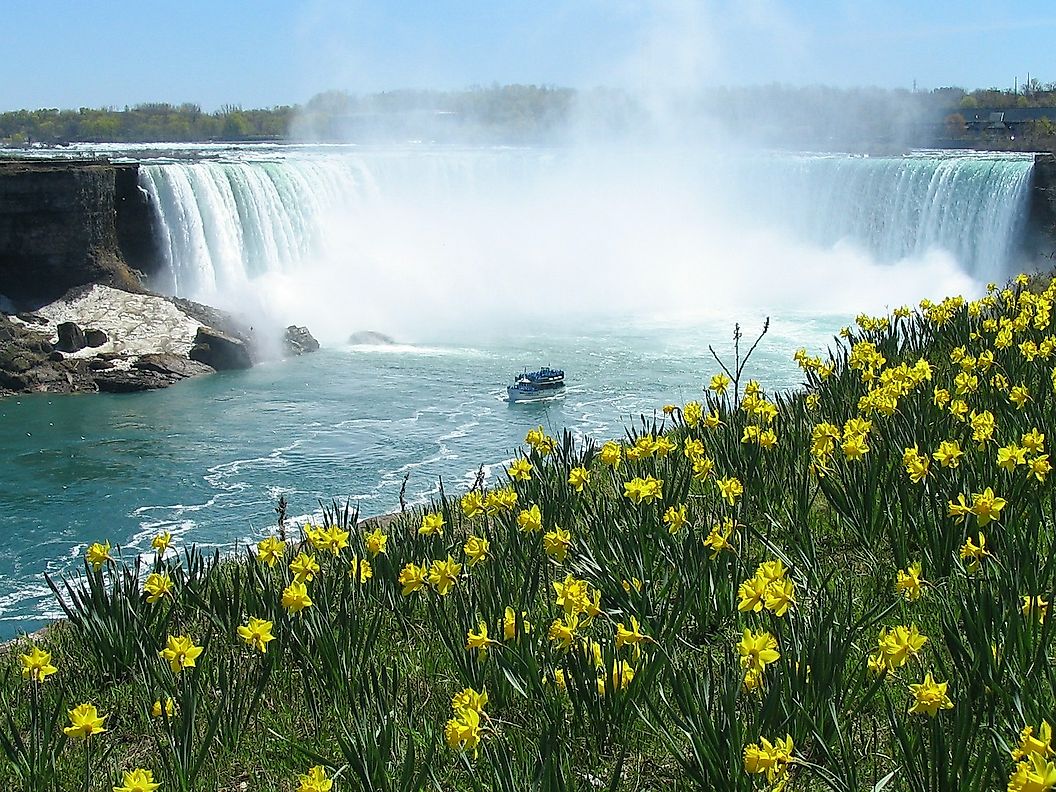
The Niagara River splits off into three separate falls at Niagara Falls—Horseshoe Falls, American Falls, and Bridal Veil Falls. The curved Horseshoe Falls, which spans the Canadian side of the river, stretches approximately 2,200 feet (670 meters) across and has an average drop of about 188 feet (57 meters). On the U.S. side of the river, American Falls has a crest approximately 850 feet (260 meters) wide, while the much smaller Bridal Veil Falls sits immediately beside it; these paired falls drop an average of 70 to 110 feet (21 to 34 metres) (70-110 ft.) into the piled boulders below.
Due to their significantly smaller spans and rocky obstructions, the American Falls and Bridal Veil Falls carry only a fraction of the water that flows over Horseshoe Falls. In fact, during times of peak flow, it is estimated that 90 percent of the water—around 680,000 gallons (2.6 million liters) per second—plunges over Horseshoe Falls.
Water Flow Controls

The amount of water passing over Niagara Falls is artificially controlled during the day and throughout the year, both to support power generation and to keep the falls looking their best for tourists. During designated daylight hours of the tourist season, regulations require at least 100,000 ft3 per second (2,832 m3 per second) to pass over the falls. At other times, the minimum flow is 50,000 ft3 per second (1,416 m3 per second), equivalent to roughly 375,000 gallons (1.4 million liters) per second.
These minimum water flow guidelines date to a 1950 agreement between Canada and the United States governing the use of the Niagara River. Water that is not required to maintain the specified flow over the falls is diverted for hydroelectric power generation. The arrangement allows the falls to retain their characteristic appearance while making extensive use of the river's enormous energy potential.
The Falls Are Moving

The immense flow of water continues to reshape Niagara Falls, regardless of human interventions. The falls have moved approximately seven miles (11 kilometers) upstream during the past 12,500 years as erosion gradually carries the edge of the falls toward Lake Erie. The current rate of recession is estimated at about 1 foot (0.3 meters) per year, although the rate varies over time.
A process called cavitation is a key driver of erosion at the falls. As water rushes over the falls and encounters sudden changes in pressure, bubbles form and collapse against the underlying rock. While it is hard to imagine air bubbles eroding rock, countless billions of them slowly but surely wear away the rocks and send the debris over the falls. Therefore, many thousands of years from now, Niagara Falls will likely work its way all the way back to Lake Erie.
A Great Lakes Showcase

Niagara Falls is one dramatic point along a much larger freshwater pathway that stretches all the way back to the rivers feeding Lake Superior. Water from the entire Great Lakes Basin moves through the interconnected lakes and rivers, with Lake Erie feeding the Niagara River. After plummeting over Niagara Falls and flowing to Lake Ontario, the water continues into the St. Lawrence River and ultimately reaches the Atlantic Ocean. Roughly 750,000 gallons (2.8 million liters) of water can pass over the falls every second during peak tourist hours, making Niagara Falls one of the most spectacular symbols of the Great Lakes water system.