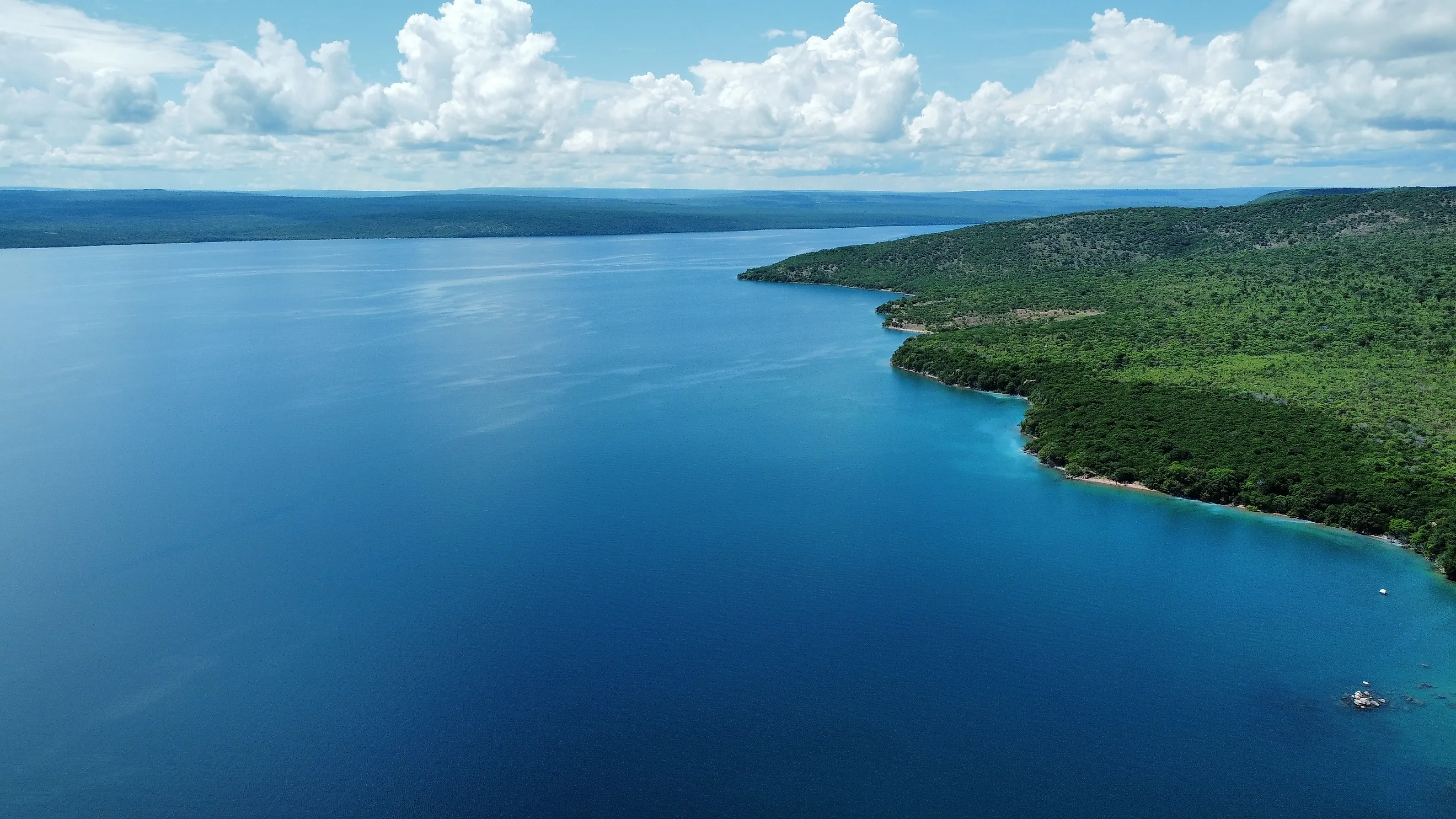
How Deep Lake Tanganyika Is Compared To America's Deepest Lakes
America is home to some remarkably deep lakes. Crater Lake in Oregon is so deep that you could fit the Eiffel Tower, the Washington Monument, and the Statue of Liberty inside, with about a hundred feet of water remaining above Lady Liberty's torch—an analogy the National Park Service often uses because it effectively illustrates its depth. Lake Tahoe and Lake Chelan are also quite deep, while Lake Superior contains more water than the other four Great Lakes combined. Additionally, Lake Tanganyika in Africa reaches a depth of 4,823 feet—deeper than what the combined depth of America's three deepest lakes would be if they were emptied and stacked end-to-end.
Here is how the numbers actually line up, working upward from the deepest Great Lake.
Lake Superior

Maximum depth: 1,332 feet, or 406 meters.
Superior is the world's largest freshwater lake by surface area, holding about 3 quadrillion gallons—more than all the other Great Lakes together. Despite its size, it's not very deep. With its volume spread over 31,700 square miles, the average depth is approximately 483 feet.
Its deepest point sits off the Keweenaw Peninsula. Put Tanganyika next to it and Superior reaches barely a quarter of the way down.
Lake Chelan

Maximum depth: 1,486 feet, or 453 meters.
Chelan, the third deepest gorge in the U.S. and largely unknown to Americans, is a glacial trough in Washington. It spans 50 miles in length and is seldom wider than two miles, extending into the North Cascades.
The most intriguing aspect is its shape. The lake is extremely narrow and deep, with its bottom far below sea level, although its surface is over 1,000 feet above. This makes Chelan structurally similar to the African rift lakes, albeit on a much smaller scale.
Lake Tahoe

Maximum depth: 1,644 feet, or 501 meters.
Tahoe is the second deepest lake in the United States and the most visited among them. Located in a fault block basin on the California-Nevada border, it contains enough water to cover all of California to a depth of approximately 14 inches.
What makes it unusual is its average depth of about 1,000 feet. Unlike most lakes, which have a single deep hole and many shallows, Tahoe is deep nearly everywhere. This extensive depth is also the reason it rarely freezes over.
Crater Lake
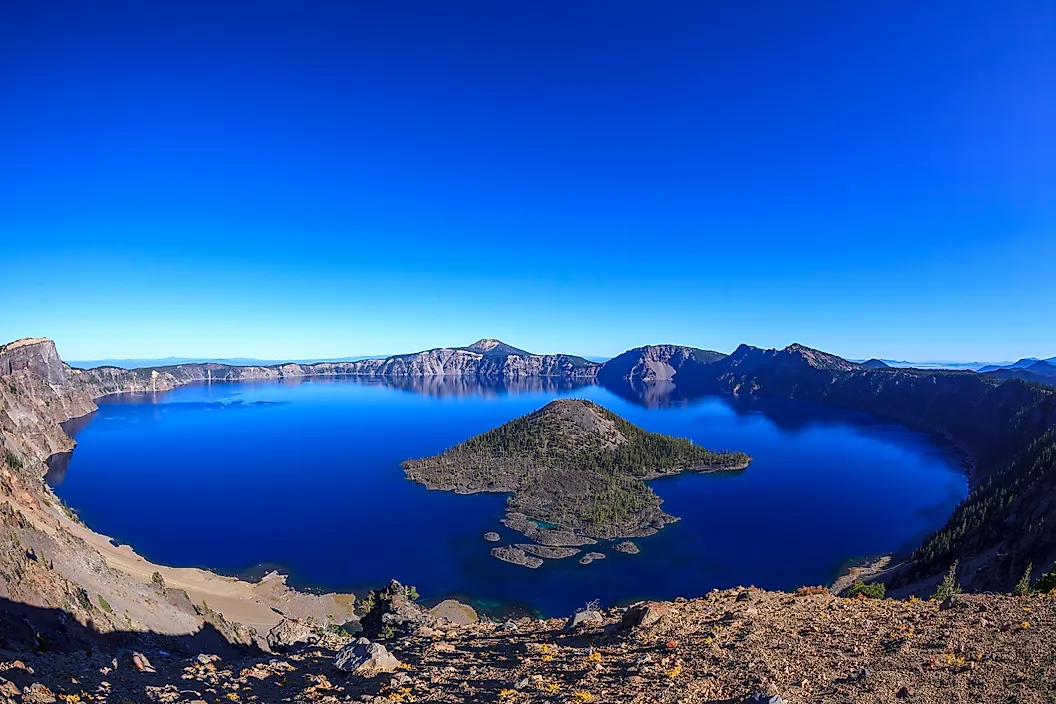
Maximum depth: 1,943 feet, or 592 meters.
Crater Lake is the deepest lake in the United States and the deepest anywhere whose basin sits entirely above sea level. It fills the caldera left when Mount Mazama collapsed roughly 7,700 years ago.
The measurement history is short. In 1886, a survey team used a lead pipe on piano wire to sound the lake at 168 locations, recording 1,996 feet. When multibeam sonar mapped the lake in 2000, the actual measurement was 1,943 feet, indicating less than a 3% difference between the two methods.
No river flows in or out. Everything in it arrived as rain and snow, which is why the water is as clear as it is.
Lake Tanganyika

Maximum depth: 4,823 feet, or 1,470 meters.
Tanganyika is approximately two and a half times deeper than Crater Lake. If you stack Crater Lake, Tahoe, and Superior end to end, their combined depth is 4,919 feet, just surpassing Tanganyika. Removing Superior from the comparison, America's two deepest lakes combined are about 1,200 feet shallower than Tanganyika.
The lake is located in the Western Rift of the Great Rift Valley, spanning Tanzania, the Democratic Republic of the Congo, Burundi, and Zambia, with DRC and Tanzania possessing most of it. The rift walls function as natural dams. Steep mountains surround the lake, capturing tropical rainfall that provides approximately 90 percent of its water.
Depth is not even its most extreme dimension. At 673 kilometers, roughly 418 miles, Tanganyika is the longest freshwater lake in the world, and it averages only about 30 miles wide. It holds around 18,900 cubic kilometers of water, second only to Baikal, and mean depth alone is 570 meters, deeper than the maximum depth of every American lake on this list.
Age is another significant difference. Crater Lake formed about 7,700 years ago, a time when people were present and saw the eruption. In contrast, Tanganyika is between 9 and 12 million years old, making it one of the oldest lakes on Earth. Its depth results from the rift it lies in, which has been widening for that entire period and continues to do so, causing the lake floor to drop faster than sediment can accumulate. While most American lakes here were created quickly by ice or volcanic activity, Tanganyika is forming gradually and is still evolving.
One more number puts it in perspective. The surface sits 773 meters above sea level, so the bottom of Tanganyika lies roughly 2,300 feet below sea level. Crater Lake's floor is still comfortably above it.
Most Of Lake Tanganyika Is Dead Water

Here is where the comparison stops being about numbers.
Crater Lake and Tahoe supply oxygen to their depths, unlike Tanganyika. Below about 200 meters, the water remains permanently anoxic because the lake's equatorial location prevents surface cooling and overturn. As a result, the layers do not mix.
Approximately 85 percent of Africa's deepest lake, Tanganyika, is uninhabitable. All aquatic life, including its unique cichlid species found only there, is concentrated in a narrow band near the surface. The remaining lake area consists of fossil water that has remained undisturbed for thousands of years, sitting above roughly 4,500 meters of sediment.
Tanganyika is two and a half times deeper than any American lake but has less of its depth inhabited. Crater Lake is shallower but fully habitable to its floor. Meanwhile, Tanganyika features a very deep water with a sparse layer of life on top.