Why Some Invasive Species Fail To Survive In The Great Lakes
The Great Lakes have a well-earned reputation as one of the most invaded freshwater systems on the planet. More than 180 non-native species have made it into the basin over the past two centuries, and a handful of them, from sea lamprey to zebra mussels, have rewritten the entire food web. Yet here is the part that rarely makes headlines: most species that arrive in the Great Lakes simply fail. They show up, struggle, and quietly disappear without ever building a lasting population. Successful invasion is actually the exception, not the rule. Understanding why so many would-be invaders wash out tells us a lot about how these lakes work, and about how to keep the next damaging species from getting a foothold.
Most Invaders Fail, Even Here
It is worth starting with the numbers, because they are surprising. Of the roughly 180-plus non-native species recorded in the Great Lakes basin, only about a third are considered truly invasive, meaning they built abundant populations that harm the existing ecosystem. The rest either never established at all or settled in so quietly that almost no one notices them. Invasion biologists have a rough rule of thumb, sometimes called the "tens rule," which holds that only around one in ten introduced species manages to establish, and only about one in ten of those goes on to become genuinely invasive. In other words, for every headline-grabbing zebra mussel, there is a long, silent list of species that tried to move in and could not make it work. The Great Lakes are heavily invaded, but they are also a graveyard of failed invasions. Consider the killer shrimp (Dikerogammarus villosus), a voracious shrimp-like amphipod from the same Ponto-Caspian region that produced the mussels and gobies. Scientists have flagged it for years as a prime candidate to invade next, and it has every trait of a successful colonizer. Yet despite all the worry, it has not established in the lakes, a reminder that even a textbook-perfect invader often never arrives in sufficient numbers, or never arrives at all.
The Ballast-Water Gauntlet

For most of the twentieth century, the main door into the Great Lakes was ballast water, the water that ocean-going ships pump into their tanks for stability and then release when they take on cargo. Countless organisms rode along. But since the 1990s, regulations have required vessels to exchange or treat that ballast water in the middle of the ocean before entering the lakes, and this turns out to be a brutal filter. Most freshwater organisms cannot survive a sudden dunk in saltwater. The osmotic shock of going from fresh to salty water ruptures their cells and kills them outright. Only species with a broad salinity tolerance, many of them from the brackish Ponto-Caspian region around the Black and Caspian Seas, can survive the crossing. For everything else, the journey itself is fatal, and new ballast-driven invasions have slowed dramatically since the rules took full effect.
You Need a Crowd to Survive

Even if a species arrives alive, a few scattered individuals are rarely enough. Establishing a new population requires what ecologists call propagule pressure, essentially the number of individuals that arrive and how often they keep arriving. Show up in tiny numbers and a would-be invader runs into the Allee effect, a nasty bit of math for small populations: individuals cannot find mates, reproduction stalls, and the limited gene pool leaves the group vulnerable to disease and bad luck. A single pregnant female or a dozen larvae usually is not enough to conquer a lake the size of an inland sea. This is a big reason the ballast rules work so well. By slashing the sheer number of organisms delivered, they push most arrivals below the threshold needed to get a population off the ground in the first place.
Winter Is a Ruthless Filter

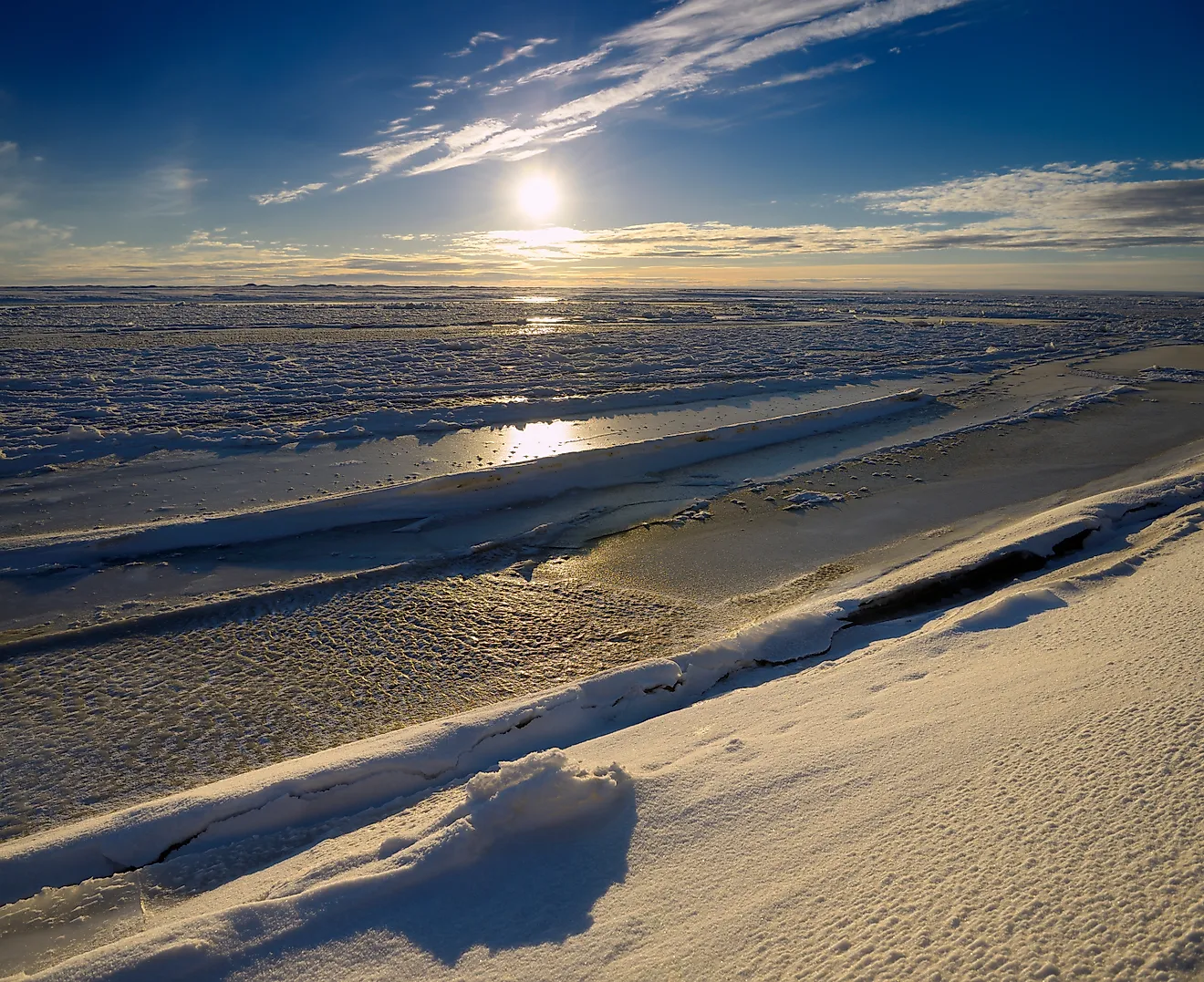
The climate of the Great Lakes does a lot of the ecosystem's defensive work for free. These are cold, northern lakes that ice over in winter and stay chilly well into spring, and that seasonal cold is lethal to a huge category of potential invaders. Tropical and subtropical species, in particular, tend to die off the moment the water temperature drops. Aquarium owners who dump unwanted pet fish into local waters accidentally prove this every year, as warm-water species that might thrive in a Florida canal perish in their first Great Lakes autumn. Released goldfish and a few hardy exotics can hang on in warm, sheltered backwaters, but the truly tropical castoffs rarely see a second season. The same goes for floating tropical plants like water hyacinth and water lettuce, which can choke southern waterways but cannot survive a northern freeze. For anything adapted to warm water, the Great Lakes are less a new home than a cold trap.
The Calcium Problem, and Why Lake Superior Fights Off Mussels

The single best illustration of a failed invasion is happening inside the Great Lakes themselves. Zebra and quagga mussels have overrun Lakes Erie, Michigan, Huron, and Ontario, carpeting the bottom in numbers that reach into the quadrillions and starving the food web of plankton. But the open waters of Lake Superior, the largest of the five, have stayed almost entirely mussel-free. The reason is chemistry and temperature. Mussels need dissolved calcium to build their shells, and studies show they struggle badly when calcium levels fall below roughly 12 to 15 parts per million. Superior's water is notably low in calcium, and it is also very cold, which hampers mussel reproduction.

Add in Superior's relative isolation and lower boat traffic, and the same organism that devastated its sister lakes cannot gain a real foothold in its open water. It is a striking lesson: two lakes in the same connected system can have completely opposite fates, purely because of water chemistry. The caveat, and it is an important one, is that this defense is not absolute. Mussels have recently appeared in warmer, calcium-richer harbors like Duluth, and scientists worry that a warming climate could eventually weaken Superior's natural armor.
The Locals Push Back

A new arrival does not land in an empty lake. It lands in an ecosystem full of residents that may eat it, outcompete it, or infect it, a phenomenon ecologists call biotic resistance. To succeed, an invader generally needs an unoccupied niche, a food source no one else is using, or an edge that lets it beat the locals. Many fail precisely because that opening is not there. Native predators discover that the newcomer is edible, or established competitors already claim the same food and space. Even invasive species prey on one another: round gobies, themselves unwelcome invaders, feed on young zebra mussels and put a small dent in their numbers. A newcomer that cannot find a gap in this web of eaters and competitors tends to be quietly absorbed and eliminated before it can spread.
Some Just Can't Finish the Life Cycle
Survival is not the same as establishment. To truly take over, a species has to complete its entire life cycle in its new home, and this is where many invasions quietly collapse. A fish might tolerate the water but fail to find the specific gravel beds or spawning temperatures it needs to reproduce. A parasite might arrive without the particular host species its larvae require. And an entire class of would-be invaders is ruled out from the start: marine animals like European green crabs or ocean fish simply cannot live in freshwater at all, no matter how they arrive. An organism that can survive as an adult but cannot breed is an evolutionary dead end. It may linger for a while as scattered individuals, but without a next generation, the invasion ends with it.
The Ones We Forced to Fail

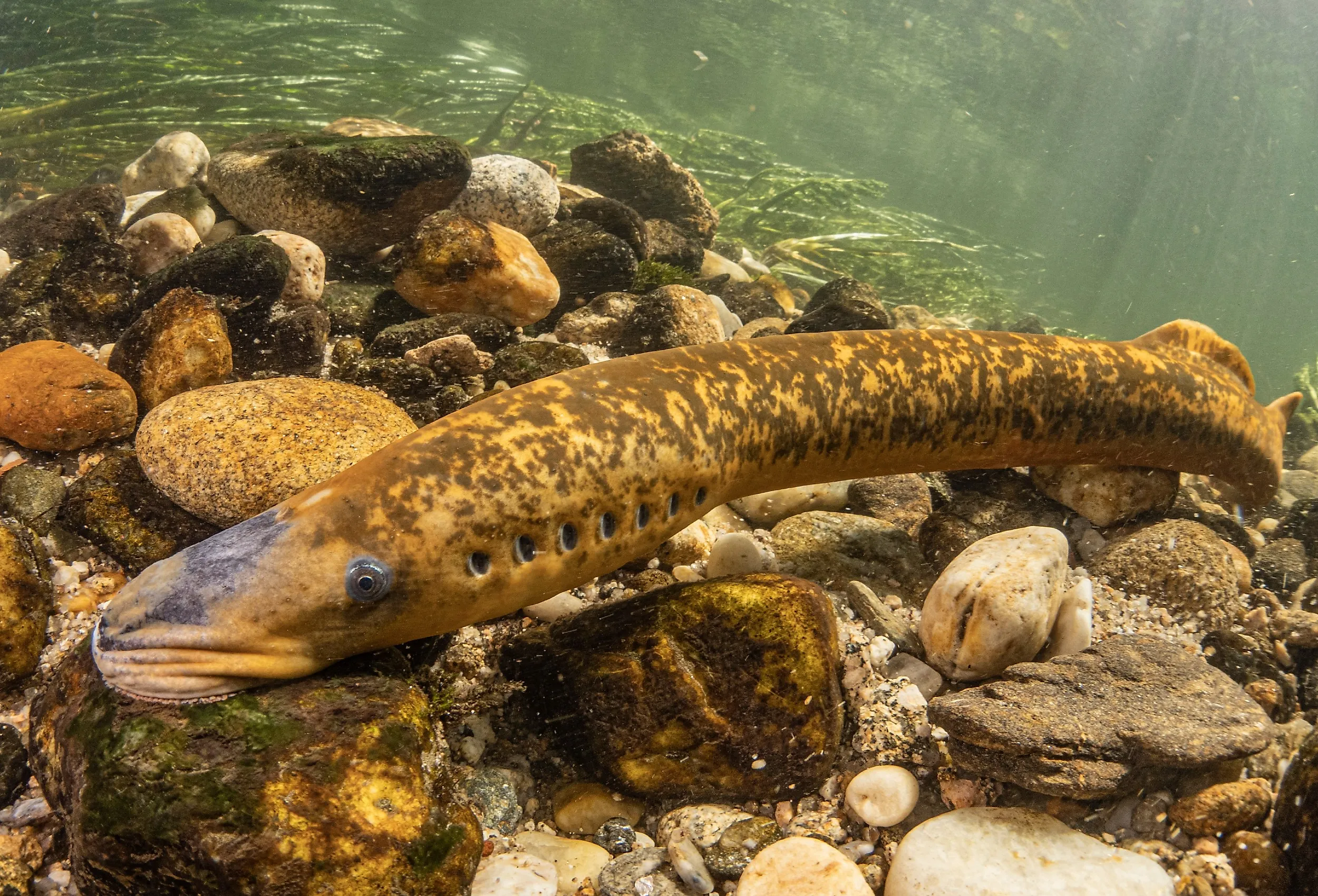
Not every failed invasion fails on its own. Some are actively defeated. The sea lamprey, a blood-feeding parasite that nearly wiped out the lakes' native trout, is the classic case. It established successfully and did enormous damage, but a decades-long control program combining a selective lamprey-killing chemical, pheromone-baited traps, and barriers on spawning streams has knocked its population down by roughly 90 percent in most areas. It is an invasion that people forced into permanent retreat.

Prevention is the other half of the story. Invasive carp, which have surged up the Mississippi River system, have been kept out of the Great Lakes largely by electric barriers in the Chicago waterways that connect the two basins. Rapid-response teams also race to eradicate newly detected species before they can spread. These are not natural failures, but they are failures all the same, and often the cheapest kind, since stopping an invasion early costs far less than fighting an established one forever.
Why the Failures Matter
Every invasion that fizzles is a disaster quietly avoided. The Great Lakes support drinking water for tens of millions of people, along with major fishing, shipping, and tourism economies, and each species that fails to establish is one less threat to all of it. That is exactly why scientists study the failures as closely as the successes. Knowing that cold water stops tropical fish, that low calcium starves mussels, that saltwater flushing kills freshwater stowaways, and that small numbers doom a population lets managers predict which future arrivals are dangerous and which are not. The sobering flip side is that a warming climate is slowly loosening some of these natural filters, potentially opening doors that have been closed for thousands of years. For now, though, the lakes' quiet, invisible defenses are still doing an enormous amount of work, one failed invader at a time.