10 Largest Islands Countries In The World
Stare at a world map long enough and the pattern jumps out: a lot of countries are simply land the ocean never got around to swallowing. Some of these island nations are enormous. Others you could stroll across before lunch. Even a few mainland giants spill out into the water, which is how the United States ended up running Hawaii halfway across the Pacific. Most island countries are stitched together from more than one island, and a couple even share an island with a neighbor. Ranked by total area across the World Ocean, here are the ten biggest, from an archipelago of thousands down to a volcanic loner near the Arctic.

10 Largest Island Countries In The World
- Indonesia
- Madagascar
- Papua New Guinea
- Japan
- Malaysia
- Philippines
- New Zealand
- United Kingdom
- Cuba
- Iceland
1. Indonesia - 1,904,569 km2 (735,358 miles2)

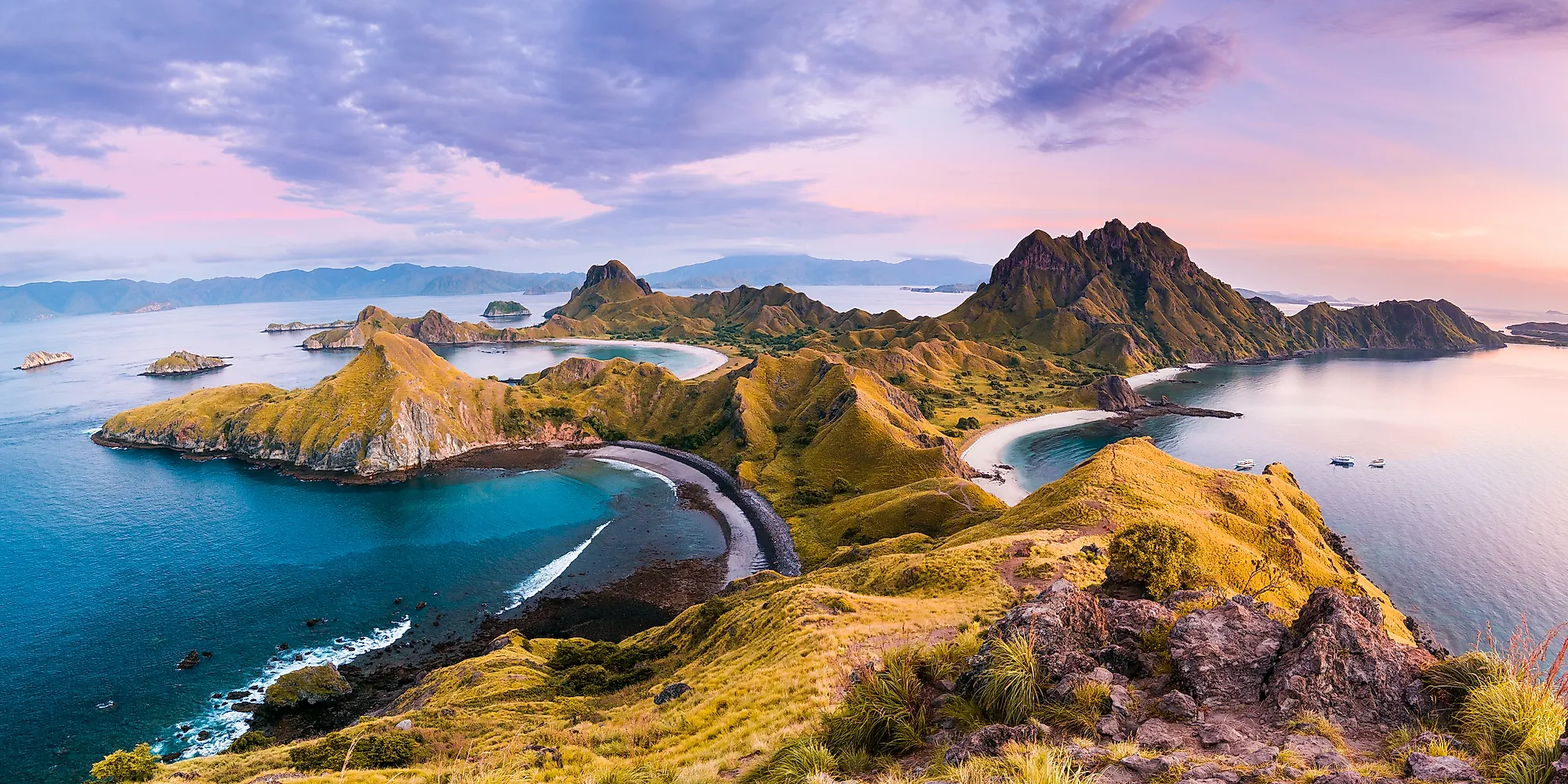
Indonesia is the undisputed heavyweight here, and the 14th-largest country on Earth by any measure. It is built from over 17,000 islands, of which the United Nations officially recognizes 16,056, and only about 6,000 are inhabited. The country sprawls roughly 5,120 km from west to east, far enough to need three time zones. Try to visit one island a day and you would be at it for close to half a century.
Sumatra is the giant of the bunch, the world's sixth-largest island at 443,066 km2, while neighboring Java is the most crowded island on the planet, home to more than half of all Indonesians. Indonesia also owns slices of two shared giants: Kalimantan, its portion of Borneo, and Western New Guinea. With one foot in Asia and the other in Oceania, it is technically a transcontinental country too.
2. Madagascar - 587,041 km2 (226,658 miles2)

Coming in second is almost a one-island show. Madagascar sits about 400 km off the East African coast, and the main island, the world's fourth-largest, accounts for nearly the country's entire 587,041 km2. A handful of smaller islands and Indian Ocean neighbors round it out, including Comoros, Mayotte, Réunion, and Mauritius.
What makes Madagascar special is what happened after it broke away from the Indian subcontinent roughly 88 million years ago. Left alone for that long, its wildlife went its own way entirely, and today around 90% of its species, from lemurs to baobabs, live nowhere else on Earth. It is one of the planet's great biodiversity hotspots, essentially an 88-million-year experiment that nobody supervised.
3. Papua New Guinea - 462,840 km2 (178,704 miles2)

Papua New Guinea takes the eastern half of New Guinea, the world's second-largest island at 785,753 km2. Indonesia holds the western half, leaving PNG with about 365,213 km2 of it, and a string of smaller islands, including New Britain, Bougainville, and New Ireland, pushes the total to 462,840 km2. The whole lot sits within the Pacific region known as Melanesia.
Here is the jaw-dropper: Papua New Guinea is the most linguistically diverse country on Earth, with more than 800 living languages, roughly a tenth of every language humans currently speak. Mountains and dense rainforest kept communities walled off from one another for so long that people in neighboring valleys often cannot understand a word their neighbors say.
4. Japan - 377,915 km2 (145,913 miles2)

Japan is a long chain of islands in the Pacific Ocean off the edge of East Asia, separated from China and Russia by the Sea of Japan and bracketed by the East China Sea and the Sea of Okhotsk. Honshu is the big one, the world's seventh-largest island at 225,800 km2 and about 60% of the country's land, and Tokyo sits right on it. Hokkaido, Kyushu, Shikoku, and Okinawa fill out the five main islands.
Now for the fun part. For 36 years Japan officially had 6,852 islands. Then in 2023 its mapping agency recounted using digital surveys and landed on 14,125, meaning the country had quietly misplaced more than 7,000 islands. Crucially, it did not gain a single square kilometer of land in the process. Same country, twice the islands, zero new beachfront.
5. Malaysia - 329,847 km2 (127,355 miles2)

Malaysia is a country in two pieces, split by the South China Sea. Peninsular Malaysia (about 132,265 km2) shares the lower Malay Peninsula with Thailand, while East Malaysia (about 198,447 km2) occupies the northern quarter of Borneo, the world's third-largest island, alongside Indonesia and Brunei. The two halves sit roughly 600 km apart, so "the other side of the country" means a flight across open water.
Despite all that coastline, the island count is smaller than you might guess: 878 islands by the official survey, plus another 510 rocks, sandbanks, and ridges that do not quite make the cut. It is also one of the few places where you can find skyscrapers and wild orangutans within the same borders.
6. Philippines - 300,000 km2 (115,831 miles2)

The Philippines is an archipelago in the western Pacific Ocean made up of 7,641 islands, a number that actually grew when a 2016 satellite survey turned up 500-odd islands the old maps had missed. They fall into three groups: Luzon in the north, the Visayas in the middle, and Mindanao in the south.
Luzon is the main event, the world's 15th-largest island at 109,965 km2, home to Manila and well over half the population. The Visayas cluster in the center at about 71,503 km2, and Mindanao anchors the south as the second-largest island at 97,530 km2. With this many islands, the grand total has a little wiggle room depending on who is counting.
7. New Zealand - 268,838 km2 (103,798 miles2)

New Zealand scatters more than 700 islands across the southwestern Pacific, but two of them do almost all the work. The South Island is the country's largest and the world's 12th-largest island at 150,437 km2, holding wide regions like Canterbury, Southland, and the West Coast. The North Island ranks 14th in the world at 113,729 km2.
Here is the twist: the South Island is bigger, yet the North Island won the population contest, with Auckland and Wellington pulling in most of the people. And the old cliché still checks out, because sheep continue to outnumber New Zealanders by roughly five to one.
8. United Kingdom - 243,610 km2 (94,058 miles2)

The list's lone European entry is built around Great Britain, the world's ninth-largest island and the largest in Europe. Three countries split it: England (130,279 km2), Scotland (77,933 km2), and Wales (20,779 km2). The English Channel and the North Sea keep it at arm's length from mainland Europe.
Add Northern Ireland, perched on the island of Ireland (Europe's third-largest), and the whole arrangement becomes the United Kingdom. It is one island, three countries, and an entire genre of disagreement over what to call the place. Wherever you stand on Great Britain, the sea is never much more than 70 miles away.
9. Cuba - 110,860 km2 (42,804 miles2)

Cuba is the biggest island in the Caribbean, planted right where the Caribbean Sea meets the Atlantic Ocean and the Gulf of Mexico. The country bundles together two main islands, Cuba and Isla de la Juventud, plus a confetti of smaller ones. The main island alone covers 104,556 km2, making it the world's 17th-largest.
Cubans nicknamed it "el cocodrilo," the crocodile, and one look at the long, low, snout-shaped outline on a map and you will see why. Florida lies just to the north across the Straits of Florida, close enough to make Cuba one of the most strategically watched islands anywhere.
10. Iceland - 103,000 km2 (39,769 miles2)

Iceland is the smallest country on the list and Europe's second-largest island, with the main island ranking 18th in the world at 101,826 km2. It sits closer to Greenland than to mainland Europe, with the Scandinavian Peninsula and Norway about 970 km to the east.
It is also one of the emptiest countries anywhere, at roughly four people per km2, with about two-thirds of them packed into the greater Reykjavík area and the rest of the island left gloriously to itself. Stranger still, Iceland straddles the boundary between two tectonic plates, so the island is slowly splitting apart, about as fast as your fingernails grow. It is, very politely, coming apart at the seams.
The Ten Largest Island Countries, By The Numbers
| Rank | Country | Area (km2) | Area (miles2) |
|---|---|---|---|
| 1 | Indonesia | 1,904,569 | 735,358 |
| 2 | Madagascar | 587,041 | 226,658 |
| 3 | Papua New Guinea | 462,840 | 178,704 |
| 4 | Japan | 377,915 | 145,913 |
| 5 | Malaysia | 329,847 | 127,355 |
| 6 | Philippines | 300,000 | 115,831 |
| 7 | New Zealand | 268,838 | 103,798 |
| 8 | United Kingdom | 243,610 | 94,058 |
| 9 | Cuba | 110,860 | 42,804 |
| 10 | Iceland | 103,000 | 39,769 |