This Quiet North Dakota City Is Hiding In Plain Sight
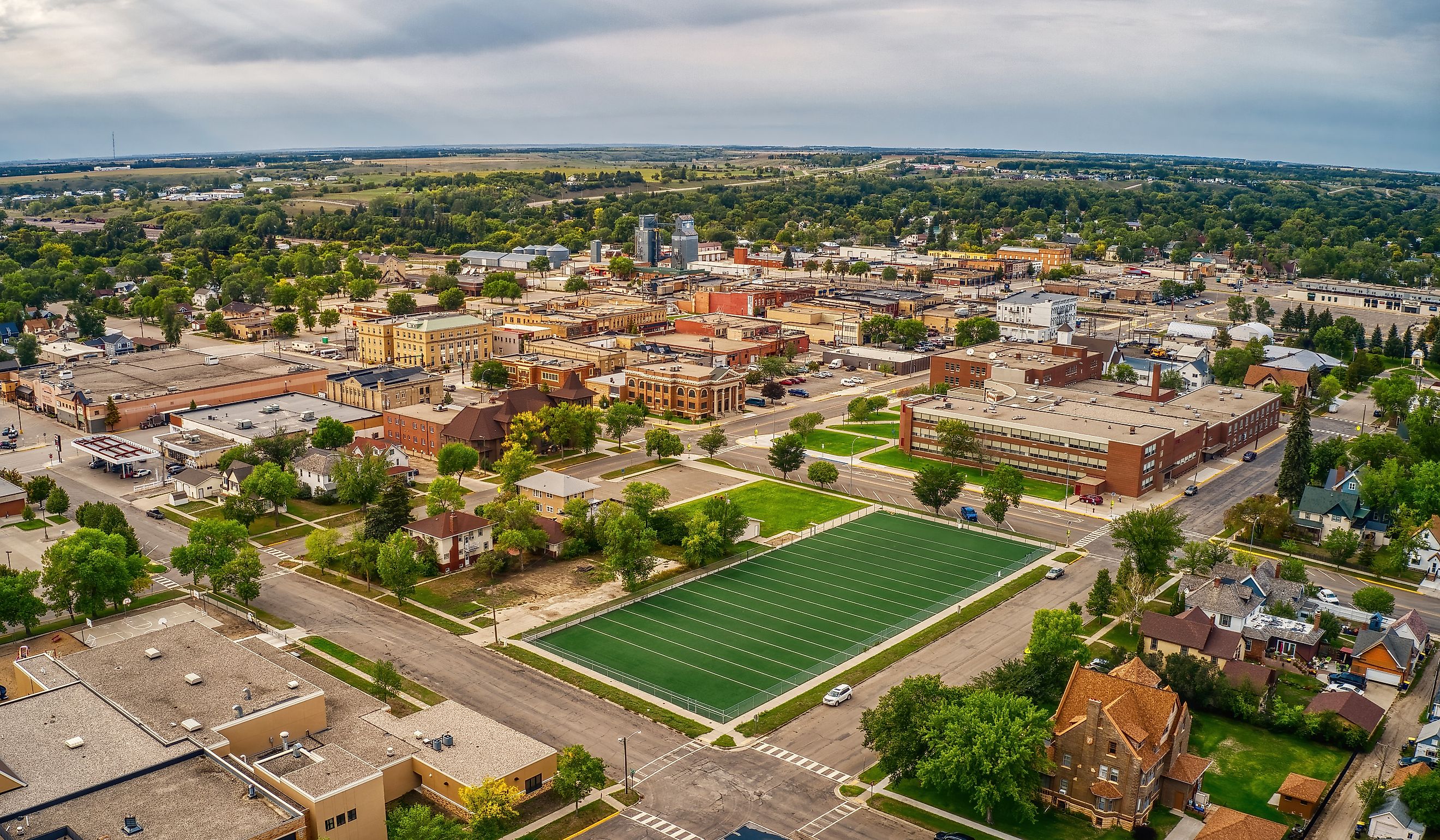
It is not uncommon for Interstate 94 drivers to see the gigantic 60-ton concrete bison statue on the hill as they continue on the drive to Bismarck. But not stopping off would be a big mistake, because Jamestown is not a town to skip over. If you actually take the exit, you find a land defined by the James and Pipestem Rivers carving deep into the North Dakota landscape. The ground gives way to rolling hills and massive reservoirs. It is a hub of the Great Plains that manages to feel both exposed to the elements and hidden by the terrain.
Town History

Northern Pacific Railroad crews reached the James River in 1871. In 1872, the U.S. Army opened up Fort Seward over on the bluff near the river to guard the railroad crews. General Thomas Rosser, acting as the railroad's assistant chief engineer, got the official job of picking the exact townsite and naming the new settlement.

A. W. Kelley operated the first post office from a simple frame structure. The town organized as a village in 1881 and incorporated as a city in 1883, and in the same year, a big brick courthouse rose over present-day Third Avenue, signaling that this rail hub on the northern plains was built to last. As time went on, in the mid twentieth century, the Jamestown Dam reshaped the river valley and created the reservoir that now frames the city’s north side.
The Star Attraction: Bison

Everyone knows you cannot talk about Jamestown without bringing up wild bison. Dakota Thunder, a massive 60-ton concrete bison statue, has been planted on the hill by the town since 1959. The attraction stands 26 feet high, close to the Frontier Village entrance, and gazing down over the highway and the town. The statue is next to one of the premier bison centers in this part of the country. Once called the National Buffalo Museum, the North American Bison Discovery Center acts as the backbone of Frontier Village, sitting on the south side of town.

While the center is dedicated to the animal's history, it also cares for two real bison herds, totalling around twenty to thirty animals, wandering across 200 acres of space within secure fencing. For nearly twenty years, the primary attraction was White Cloud, an albino bison, who lived with the herd until her death in 2016. In the center of the museum, her full-body mount continues as a major draw. The entire center is a reflection of just how close this animal was to disappearing from the plains forever.
Around Town: Historic Sites

After checking out the bison, it is time to see the town. The Stutsman County Courthouse on 5th Street is a massive brick building from 1883. It is the oldest courthouse still standing in the state, built to replace less sturdy buildings typical of the early rail camp days. Inside, you will see the walls showing off pressed tin, a careful fire-safe move from when any spark could have wiped out whole blocks.
If you climb up to the bluff above the river, you will find the exact spot where Fort Seward sat. It is marked by original stone foundations and a towering flagpole where the 20th Infantry once stood guard over the rail bridge. Back in town, twin brick towers and Romanesque arches define the St. James Basilicas. Lastly, over on Second Avenue, the beautiful Grace Episcopal Church uses deep, local stone and slim windows to keep out the prairie winds.
The Reservoirs and Valley Trails

The Jamestown and Pipestem Reservoirs are north of town, and they have miles of trails winding through those river breaks. Lots of people stick to the Beaver Dam Trail, a mellow route snaking through trees and brush, with parts of it located right by the water’s edge. If you want a better view, the White Cloud and Overlook Trails scale those sharp embankments, and the elevation splits up the horizon that frames the wheat fields. These aren't your average city paths. We are talking about a bit more difficult ascents, plus winding trails.
Pelican Point docks works as your doorway for fihsing for northern pike and walleye from the reservoir, and over at Nickeus Park, you can grab a kayak rental and paddle right into those snug little spots on the James River. For something maybe a bit new and different, over at the reservoir, the Island Disc Golf Course stretches across the hills with up to 27 holes, getting players to sling discs over tall prairie grass and beside steep ravines.
Jamestown shows a side of North Dakota that people just passing through on the interstate might miss. The heart of this place sits right in its steep river valleys, and of course, the bison are a sight you will not soon forget. You find brick courthouse walls and paths looping the reservoirs, making it clear the town has not lost touch with its railroad history. Once you drop into the valley, you will realize this town is an American classic.