Where The World's Gallium Comes From
Almost every modern semiconductor relies on gallium. It's in your phone, and almost certainly any other device you're reading this on. And it's equally crucial for miitary radar, satellite systems, and LED lighting. A soft, silvery metal that melts just above body temperature, gallium is difficult to replace, globally scarce, and almost entirely produced by China, which banned exports of it to the United States in December 2024. The countries that hold large gallium reserves but lack the refining capacity to exploit them are now at the center of an intensifying scramble for supply chain independence.
What Is Gallium?

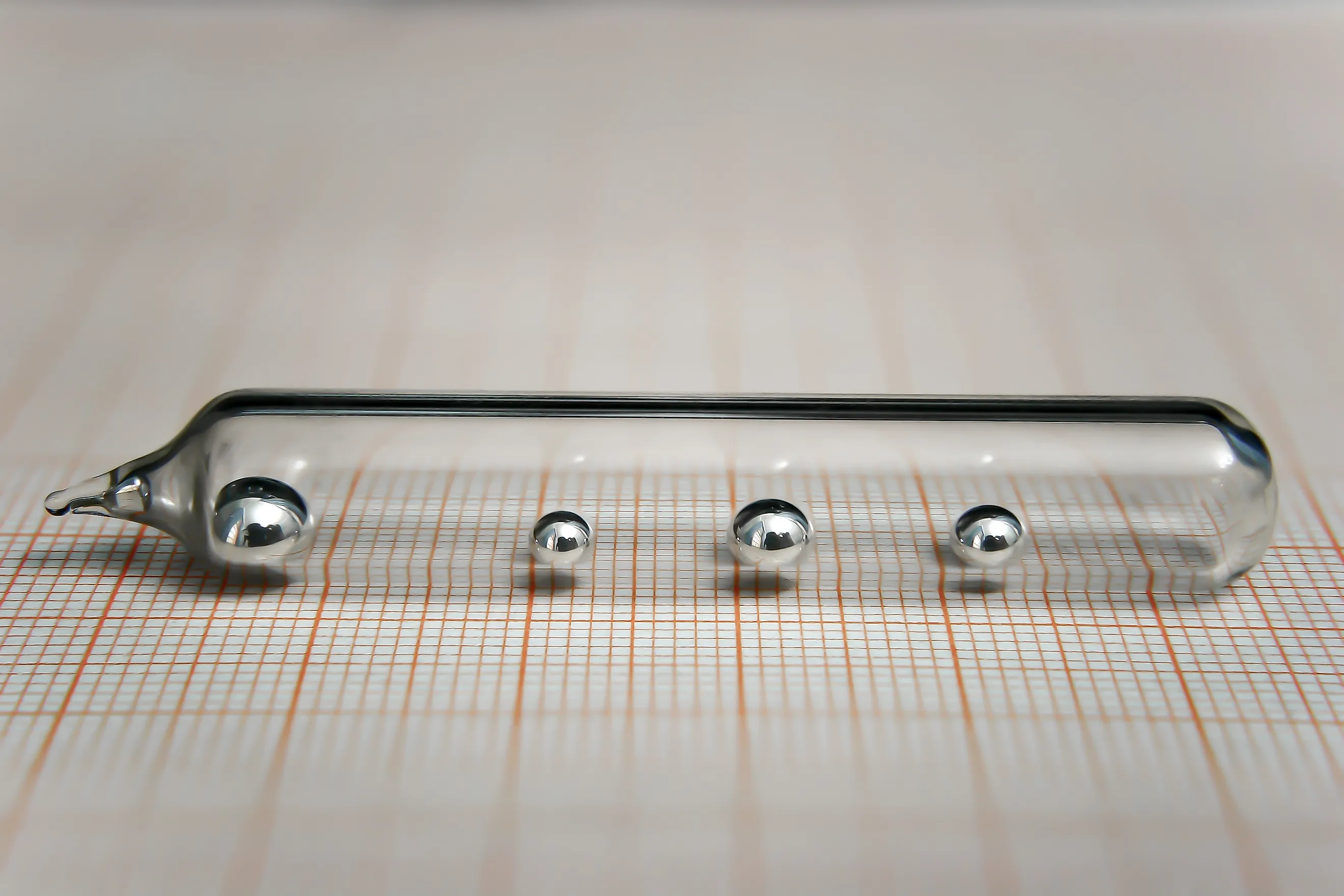
Gallium (Ga) is a soft, silvery-white metal that almost never appears on its own. It hides in trace amounts inside other minerals, chiefly bauxite, zinc blende (also known as sphalerite), iron pyrites, and germanite, typically at concentrations of just 20 to 80 parts per million in bauxite ore. It is most often recovered as a byproduct of aluminum production: dissolving bauxite in hot caustic soda (sodium hydroxide) allows gallium to be captured from the resulting solution. Zinc smelting and coal fly ash from gallium-rich seams provide secondary sources, and recycled semiconductor scrap rounds out global supply.
A few properties are worth knowing. Gallium expands as it solidifies, unlike most metals, and can remain liquid well below its melting point under the right conditions. It is soft enough to cut with a blunt knife. It also aggressively attacks aluminum, seeping past its protective oxide layer and causing the metal to weaken and crumble, so the two need to be kept well apart in any facility handling both.
Pure gallium has limited industrial use. The valuable forms are its compounds. Gallium arsenide (GaAs) is the workhorse of the semiconductor world, used in microwave circuits, satellite solar cells, and infrared LEDs. Gallium nitride (GaN) is increasingly important for high-efficiency power electronics and next-generation communications. Glass coated with a thin gallium layer also becomes highly reflective, useful in specialty optics.
Medical Promise

Gallium's chemistry has attracted serious attention in medicine. Because gallium ions closely mimic iron ions, rapidly dividing cancer cells, which consume iron at high rates, tend to absorb gallium readily. This makes it toxic to tumors while largely sparing healthy tissue. Gallium nitrate (Ga(NO₃)₃) is FDA-approved for treating cancer-related hypercalcemia, a dangerous elevation of blood calcium levels in cancer patients. Research has also documented clinical activity against non-Hodgkin's lymphoma and bladder cancer, and radioactive gallium isotopes (gallium-67 and gallium-68) are used as imaging agents to detect tumors and track treatment progress.
A Tiny Market, Enormous Leverage

Global gallium production is surprisingly small. According to the USGS Mineral Commodity Summaries (January 2025), worldwide high-purity refined gallium production was approximately 320,000 kilograms in 2024, against a production capacity of around 340,000 kilograms per year. Total low-purity primary production reached around 760 metric tons globally that year. For context, the entire global market's nominal value at current prices amounts to a few hundred million dollars, tiny by commodity standards, but irreplaceable in the industries that depend on it. That small scale is part of what makes China's position so consequential.
China: The Dominant Force

In 2024, China produced 98 percent of the world's low-purity gallium, according to the USGS, a share that climbed to 99 percent in the most recent estimates. This dominance comes not from having the world's largest gallium reserves, but from China's vast aluminum refining infrastructure, which makes recovering gallium at scale economically viable in a way no other country has replicated.
Beijing has used this position as leverage. China's export controls evolved from a licensing requirement in July 2023, to a full export ban to the United States in December 2024, to restrictions on core gallium extraction technologies in January 2025, followed by crackdowns on smuggling and transshipment in May 2025. The price effects have been significant: by May 2025, the Rotterdam price of gallium had risen more than 150 percent over pre-control levels, while gallium prices inside China fell due to domestic oversupply that Beijing chose not to export despite surging overseas demand. A November 2024 USGS report estimated that a total cessation of China's gallium exports could result in a $3.1 billion reduction in U.S. GDP.
Where the Reserves Are

The raw material picture looks very different from the production picture, and that gap is central to any discussion of gallium's future.
Guinea
Guinea holds the world's largest bauxite reserves, estimated at approximately 7.4 billion metric dry tons as of 2023, and was the world's largest bauxite producer in 2024 at 130 million metric tons. The country has the raw material in abundance but lacks downstream refining capacity. New investment is aimed at closing that gap.
Vietnam
Vietnam holds the second-largest bauxite reserves, estimated at 5.8 billion metric dry tons, but remains a very small producer. Outdated mining and smelting equipment has limited its ability to exploit these deposits, though the government has committed to development plans targeting a larger share of the global gallium market by 2034.
Australia
Australia is a major bauxite producer with substantial gallium potential. The Mount Ridley deposit alone is reported to contain resources of 838.7 million tons grading 29.3 parts per million gallium, roughly 24,584 tons of contained gallium, and the economics of developing it are looking more attractive as supply concerns mount.
Brazil
Brazil produced approximately 30 to 33 million metric tons of bauxite per year as of 2024 from reserves estimated at 2.7 billion tons, making it another significant potential source if processing infrastructure is developed.
Smaller Producers
Among smaller producers, South Korea holds an estimated 16,000 tons of gallium reserves, while Russia and Japan hold approximately 10,000 tons each. Japan has made recycling central to its strategy, recovering gallium from used semiconductors and other scrap to compensate for limited primary production.
The United States: A Significant Gap

The United States produces negligible amounts of domestic gallium. Bauxite resources are limited and underdeveloped, and while high-purity gallium refining does occur at a facility in New York, the country has depended heavily on imports. In December 2024, China banned all gallium exports to the United States, cutting off a significant source of supply and pushing the question of alternative sourcing to the top of the policy agenda.
Status as of Early 2026
China's export controls remain in place, overseas prices remain elevated, and efforts to develop alternative supply chains in Australia, Canada, Guinea, and elsewhere are moving faster than they were two years ago, though nowhere near fast enough to replace Chinese output in the near term. Gallium's obscurity served as a kind of camouflage for a long time. That is no longer the case.