Is Hawaii a Part of Oceania or North America?
Hawaii is the only American state that sits outside the North American continental landmass. It lies in the central Pacific Ocean about 2,300 miles southwest of California and 2,800 miles south of Alaska, roughly the same distance from Los Angeles as Madrid is from Boston. The state has been politically part of the United States since 1959, but its geological, biological, and cultural relationships are all with the islands of the Pacific rather than with the continent it formally belongs to. Whether Hawaii counts as part of Oceania or North America depends on which classification system is being applied: politics gives one answer, plate tectonics another, and ethnography a third.
Where Hawaii Actually Sits
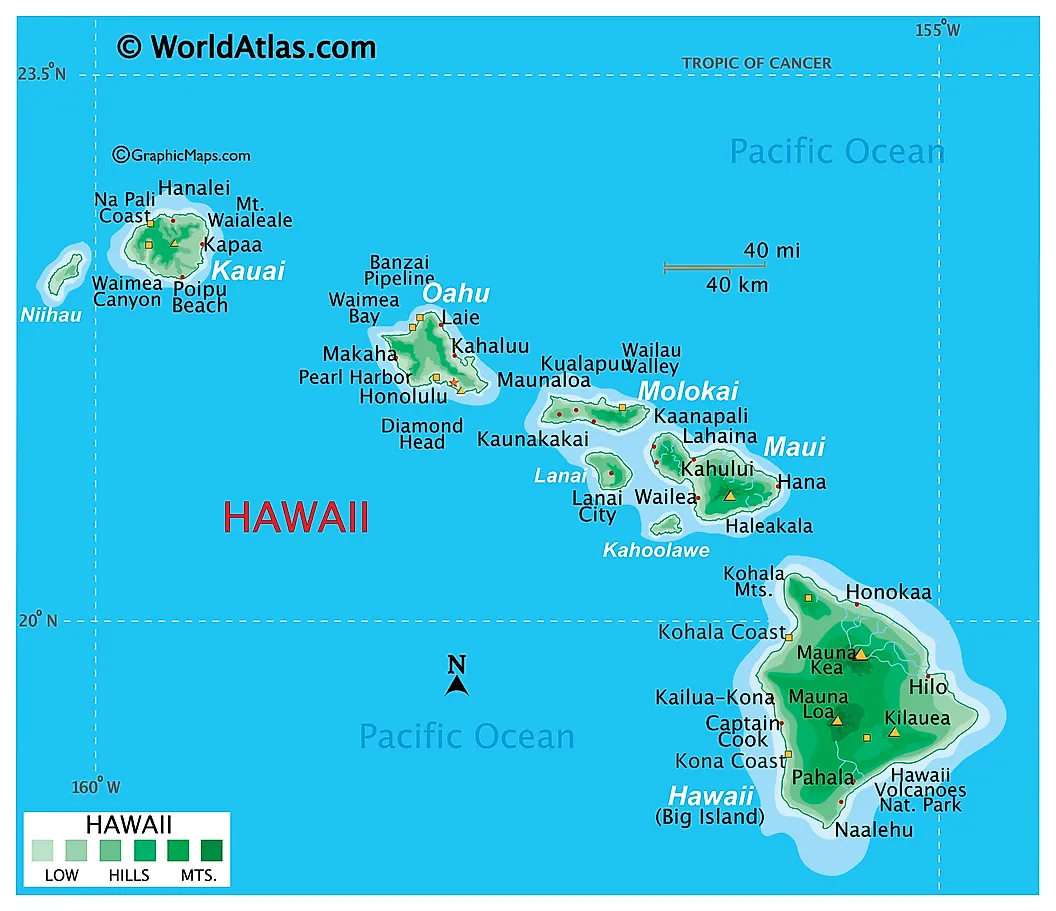
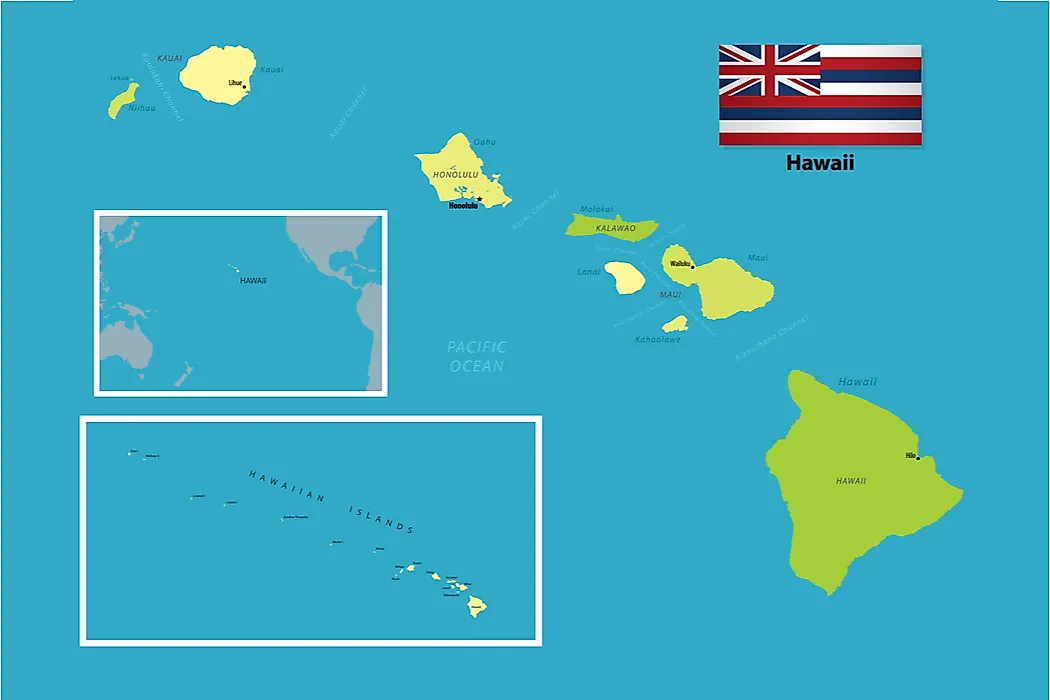
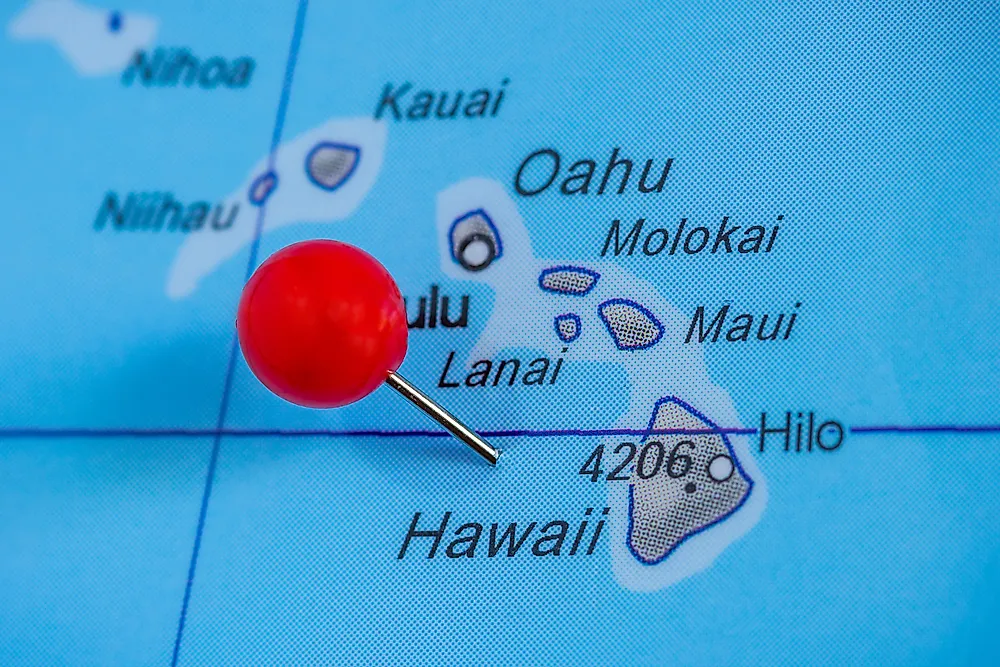
The Hawaiian archipelago consists of 137 islands, islets, and reefs strung along roughly 1,500 miles of ocean, of which eight are major inhabited islands: Niʻihau, Kauaʻi, Oʻahu, Molokaʻi, Lānaʻi, Kahoʻolawe, Maui, and the island of Hawaiʻi (the Big Island). The state covers 10,932 square miles of land area, making it the eighth smallest US state and a little larger than Albania. Just over 4,500 square miles of that total is water rather than land.
Honolulu, the capital, sits on the southeastern coast of Oʻahu at 21°18'N, 157°51'W. It is the most isolated major city in the world. The nearest large continental settlements are 2,392 miles east in San Francisco, 2,550 miles east-northeast in Los Angeles, 3,900 miles west in Tokyo, and 4,536 miles southwest in eastern Australia. By contrast, Honolulu is only about 2,600 miles north of Tahiti and 2,400 miles east of the Marshall Islands, both of which are in Oceania. Measured by simple geographic distance, Hawaii has more Pacific Island neighbors than continental ones.
The Geology: A Pacific Plate Hotspot

Hawaii is not geologically part of North America at all. The North American continent ends at the Pacific Plate boundary off the west coast of California, several thousand miles east of Hawaii. The Hawaiian Islands sit on the Pacific Plate, the largest of Earth's tectonic plates, and were created by a process unrelated to any continent: a stationary hotspot in the mantle that has been melting through the moving Pacific Plate for at least 80 million years.
The result is the Hawaiian-Emperor seamount chain, a roughly 3,800-mile track of progressively older volcanic peaks running from the active Big Island in the southeast, northwest to Kure Atoll, and then bending north toward the Aleutian Trench off Alaska. The Pacific Plate slides northwest over the fixed hotspot at about 7 to 9 centimetres per year, so each island in the chain is older than the one to its southeast. Kauaʻi, the oldest of the major islands, formed about 5 million years ago; Hawaiʻi Island, the youngest, began emerging less than a million years ago and is still growing. Kīlauea volcano on the Big Island has erupted continuously or near-continuously since 1983, and a new island, Kamaʻehuakanaloa (formerly Lōʻihi), is currently building on the seafloor about 22 miles southeast of Hawaiʻi Island; it will reach the surface in roughly 10,000 to 100,000 years.
Two of the world's tallest volcanoes are on Hawaiʻi Island: Mauna Kea at 13,803 feet above sea level and Mauna Loa at 13,679 feet. Measured from their bases on the Pacific seafloor, both exceed 30,000 feet, making them taller than Mount Everest by total elevation. Nothing about this geology is North American in character.
The Polynesian Triangle

Culturally, Hawaii sits at the northern apex of the Polynesian Triangle, the largest cultural region of Oceania. The three apex points are Hawaii in the north, Rapa Nui (Easter Island) in the east, and Aotearoa (New Zealand) in the southwest. The triangle encloses roughly 10 million square miles of ocean and contains over a thousand inhabited islands. Within it are the modern states and territories of Samoa, American Samoa, Tonga, Tuvalu, Niue, the Cook Islands, French Polynesia (including Tahiti and the Marquesas), Wallis and Futuna, Tokelau, and Pitcairn. The triangle is a useful approximation: a small number of Polynesian settlements (including outliers in Melanesia and Micronesia) sit slightly outside its edges, but the triangle captures the great majority of historic Polynesian territory.
Polynesia is one of four traditional ethnographic regions of Oceania along with Melanesia, Micronesia, and Australasia. The boundaries between the regions were standardized in 1831 by the French navigator Jules Dumont d'Urville, who divided the Pacific Islands by physical appearance and language family in a now-dated nineteenth-century framework. The modern division is closer to a linguistic one: Polynesian languages, including Hawaiian, Samoan, Tongan, Tahitian, and Māori, form a single closely related branch of the Austronesian language family. They are mutually intelligible to varying degrees and share a common ancestor language spoken approximately 3,000 years ago in the region of Tonga and Samoa.
Native Hawaiians (Kānaka Maoli) are Polynesian people who reached the Hawaiian archipelago by ocean voyaging canoe from the Marquesas Islands, 2,200 miles to the southeast, in two main waves of settlement around 400 to 1200 CE. The voyages crossed open ocean using stellar navigation, swell patterns, and observation of seabird flight paths, without instruments or written records, and represent one of the most ambitious maritime expansions in human history. The Hawaiian language, Hawaiian religion, traditional governance under aliʻi (chiefs), and ahupuaʻa land division all derive directly from Polynesian sources.
The Political Layer: Hawaii as a US State

On August 21, 1959, the United States Congress admitted Hawaii to the Union as the 50th state under the New States Clause of the US Constitution (Article IV, Section 3, Clause 1), which empowers Congress to admit new states with all rights equal to the original thirteen. Hawaii had been an independent kingdom from 1795 (when Kamehameha I unified the islands by conquest) until the American-backed overthrow of Queen Liliʻuokalani on January 17, 1893; a brief Republic followed until US annexation in 1898 made it the Territory of Hawaii. Statehood thus came 61 years after the territorial phase began and 66 years after the overthrow.
The statehood vote in the islands was overwhelming: 94 per cent of voters approved the June 1959 referendum, the highest margin for any state admission vote. Hawaii became the only US state located outside the North American continent and the only one composed entirely of islands. The 44th US President, Barack Obama, was born in Honolulu on August 4, 1961, less than two years after statehood, the only president born outside the contiguous United States.
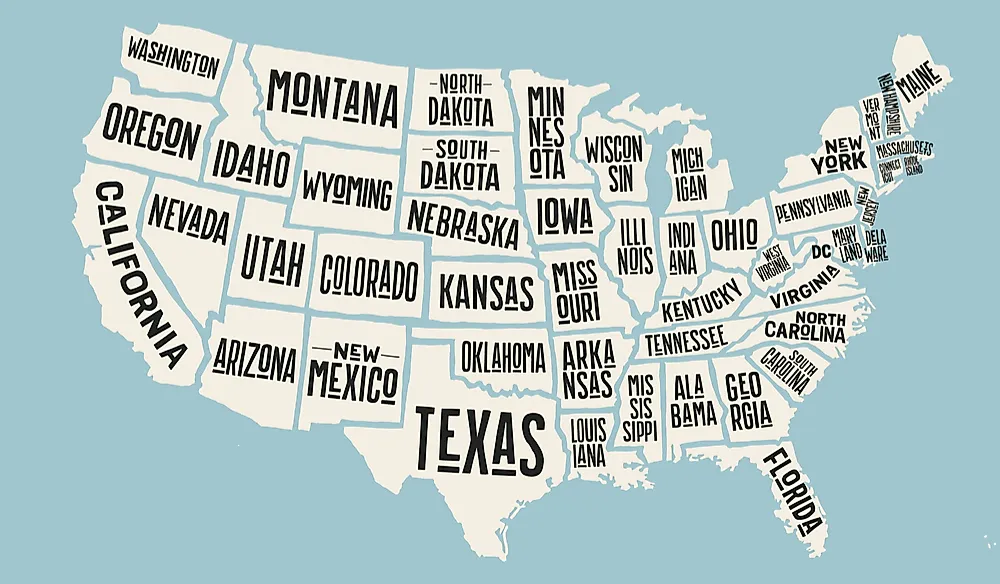
The political effect of statehood is that Hawaii is administered as part of the United States federal system. Its residents vote in presidential elections, send two senators and two representatives to Congress, and use US currency and federal courts. For administrative and economic purposes, Hawaii is grouped with the other US states; this is the basis for the common claim that Hawaii is "in North America."
The Actual Answer
The cleanest way to resolve the question is to separate the three different senses of "where is Hawaii":
Geographically and tectonically, Hawaii is in Oceania. It sits on the Pacific Plate, more than 2,000 miles from any continental shelf, and the United Nations Statistics Division's M49 standard (the most widely used international geographic classification) places Hawaii under Polynesia, a subregion of Oceania. The United States Census Bureau also categorizes Native Hawaiians and Pacific Islanders as a separate racial group rather than grouping them with mainland populations.
Culturally and ethnographically, Hawaii is firmly Polynesian. The Hawaiian language, traditional religion, navigation tradition, hula, and pre-contact governance systems are all Polynesian in origin and share recognizable continuities with Tahitian, Maori, and Samoan equivalents. The 2020 US Census recorded approximately 156,000 Native Hawaiians in the state (about 10 per cent of Hawaii's 1.46 million residents), plus a larger population of mixed Hawaiian-and-other ancestry, with an additional 370,000 Native Hawaiians scattered across the US mainland.
Politically and administratively, Hawaii is part of the United States, which is a North American country. For the purposes of federal law, citizenship, currency, sports leagues, postal service, and most everyday institutional life, Hawaii functions as part of the North American political bloc. In that sense, Hawaii is in North America.
The two answers are not contradictory because they answer different questions. A common shorthand is that Hawaii is geographically in Oceania (specifically Polynesia) and politically in North America. Both halves are correct, and either is misleading on its own.
Why the Distinction Matters
The classification has practical consequences. Native Hawaiian organizations consistently identify with the broader Pacific Islander world rather than with mainland minority groups, and Hawaii participates in Pacific regional bodies such as the Pacific Islands Forum (as a US-related observer) and the Festival of Pacific Arts. Hawaiian language revitalization, taught in immersion schools since the 1980s, draws on connections to other Polynesian language communities. Biological classifications follow the same pattern: Hawaii's endemic species, including the Hawaiian honeycreepers, the nēnē goose, and the now-extinct flightless ibises, are Pacific island species whose closest relatives are elsewhere in Oceania or Asia, not in continental North America.
Conversely, in any context where political jurisdiction matters (federal taxation, electoral votes, military deployment, postal codes), the relevant continent is North America. International soccer and basketball tournaments classify Hawaiian-born athletes as American; the National Basketball Association, Major League Baseball, and the National Football League all group Hawaiian teams or college programmes with their American conferences. American academic geography textbooks generally place Hawaii on North American political maps while noting the underlying Polynesian classification.
The dual identity is not a confusion to be resolved but a feature of Hawaii's location and history. Asked plainly whether Hawaii is part of Oceania or North America, the most defensible answer is: geographically it is in Oceania (Polynesia), politically it is in North America, and culturally it is Polynesian. Anyone giving only one of those answers is leaving something important out.