Why Are So Many Countries Called Guinea?
Four countries carry the name Guinea: the Republic of Guinea, Guinea-Bissau, and Equatorial Guinea in western and central Africa, and Papua New Guinea, on the far side of the world in the southwestern Pacific. They share no common language, government, or modern history, and the Pacific nation lies on the opposite side of the globe from the African three. What links them is a single place name coined on the West African coast in the 15th century, one that Portuguese traders, a Spanish navigator, and generations of mapmakers carried around the world. Tracing how it spread explains the whole strange coincidence.
A Name Born On The West African Coast
The word entered European use through Portuguese, which adopted Guine in the mid-15th century as the explorers of Prince Henry the Navigator worked their way down the African coast. It named the lands of the Guineus, the Portuguese catch-all for the Black African peoples living south of the Senegal River, as distinct from the Sanhaja Berbers to the north. The chronicler Gomes Eanes de Zurara was already using the term by 1453, and in 1483 King Joao II of Portugal added Lord of Guinea to his royal titles. The Portuguese had borrowed the word from the Berbers in turn: terms such as Ghinawen and aginaw, rendered in Arabic sources as Genewah, meant roughly "the burnt people" or "the land of the Blacks." A rival theory, first proposed by the geographer Leo Africanus in 1526, traces Guinea instead to Djenne, the great medieval trading city on the Niger River that controlled much of the regional gold and salt trade. Scholars have never fully settled the question, and it is possible the city and the region took their names from the same Berber root.
Three Guineas Out Of Colonial Africa
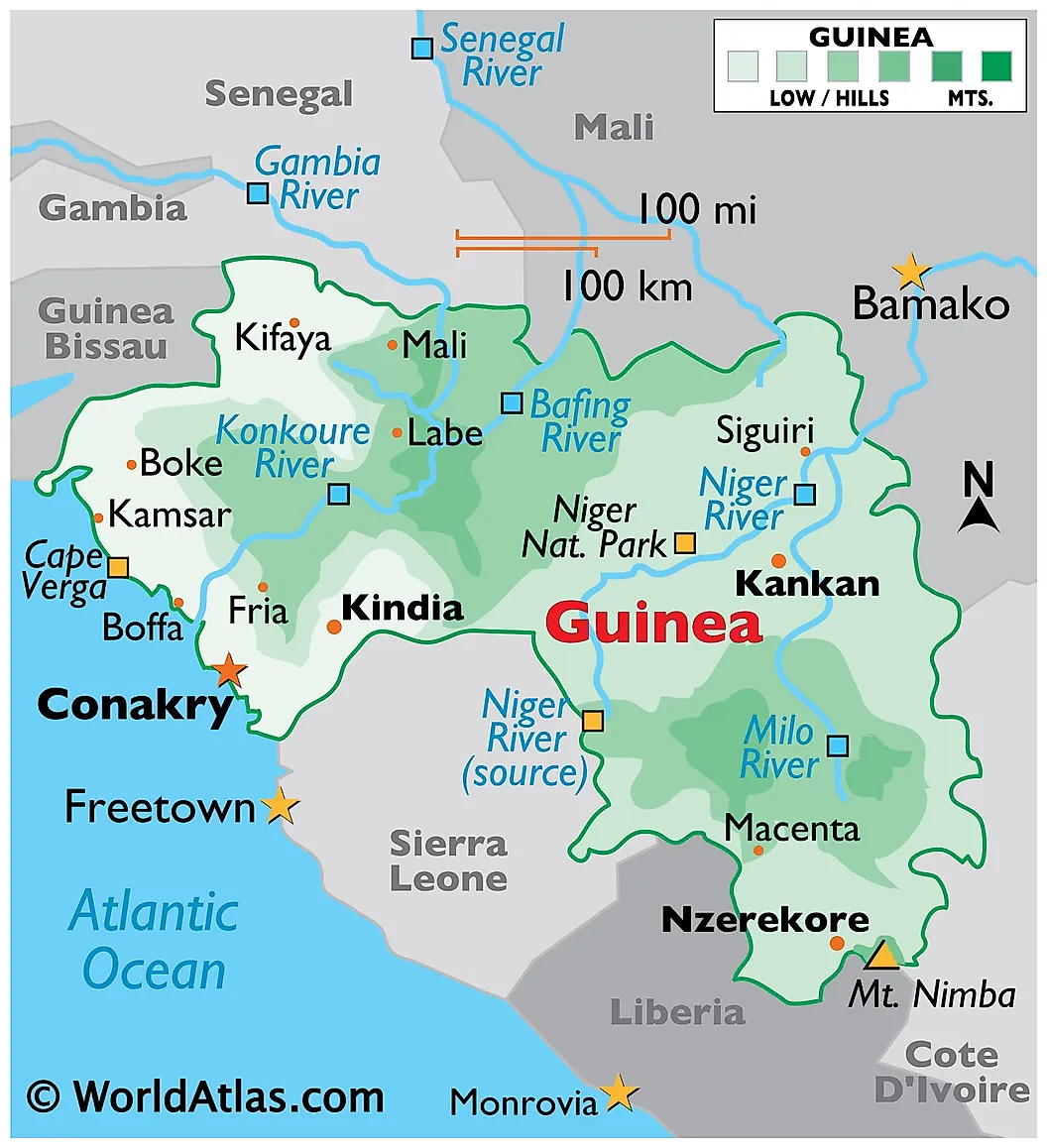
For four centuries Guinea was a loose label for a long stretch of the West African coast, and as European powers carved up the continent in the 19th century they pinned it to their own territories. Portuguese Guinea, the oldest foothold, became Guinea-Bissau, which tacked on the name of its capital to set itself apart from its neighbor; it broke from Portugal after a long liberation war, declaring independence in 1973 and winning recognition in 1974. French Guinea became simply Guinea when it cut ties with France in 1958, the only French colony in Africa to reject Charles de Gaulle's proposed community and vote for immediate independence. Spanish Guinea took the name Equatorial Guinea at independence in 1968, a nod to its setting near the equator on the Gulf of Guinea, with its capital, Malabo, on the island of Bioko. The name even reached English pockets: the gold guinea coin, first struck in 1663, was named for the West African region that supplied the gold, and early ones carried a small elephant to mark the source. One colonial Guinea is a myth, though. Germany's West African colonies were Kamerun and Togoland, never a German Guinea; the German territory that did carry the name lay in the Pacific, which is the thread that leads to the fourth country.
The Guinea On The Far Side Of The World
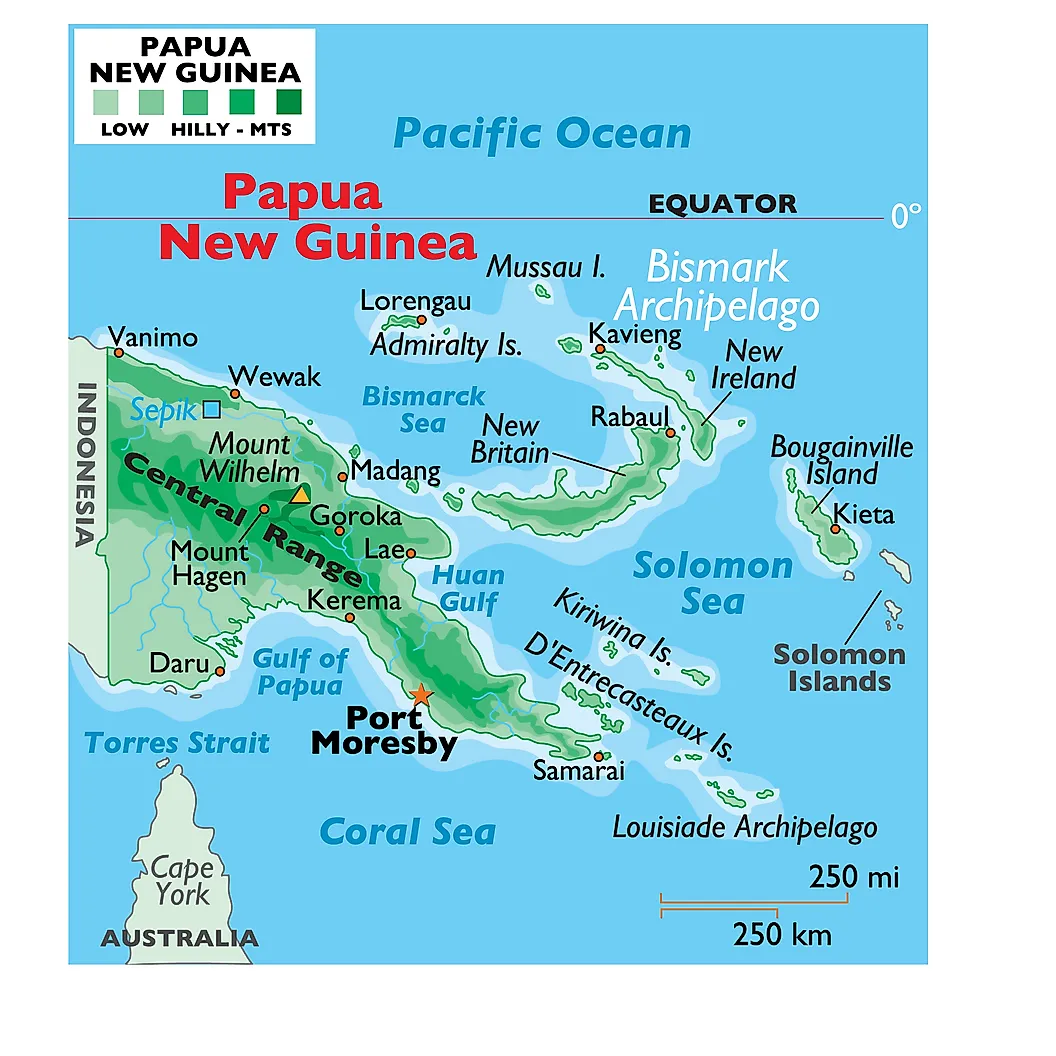
The fourth Guinea owes its name to a single moment in 1545. The Spanish navigator Ynigo Ortiz de Retez, charting the northern coast of the enormous island that sits north of Australia, decided its people resembled those he had seen on the Guinea coast of Africa, and on June 20 he claimed the land for Spain as Nueva Guinea, New Guinea. The other half of the country's name is older and local in inspiration: Papua is usually traced to a Malay word for frizzy hair, applied to the island's Melanesian inhabitants by Portuguese sailors in the 1520s, though some scholars link it instead to a Biak phrase meaning the land toward the sunset. The modern country was assembled from two colonies. Germany claimed the northeastern quarter of the island as German New Guinea in 1884, while Britain took the south as British New Guinea, which passed to Australia and was renamed Papua. Australia seized the German half during World War I and eventually governed both halves as one territory until they gained joint independence as Papua New Guinea in 1975. Despite sitting just east of Indonesia, the country belongs to Oceania, within the island region of Melanesia, rather than to Southeast Asia.
Guinea Is Not Guyana
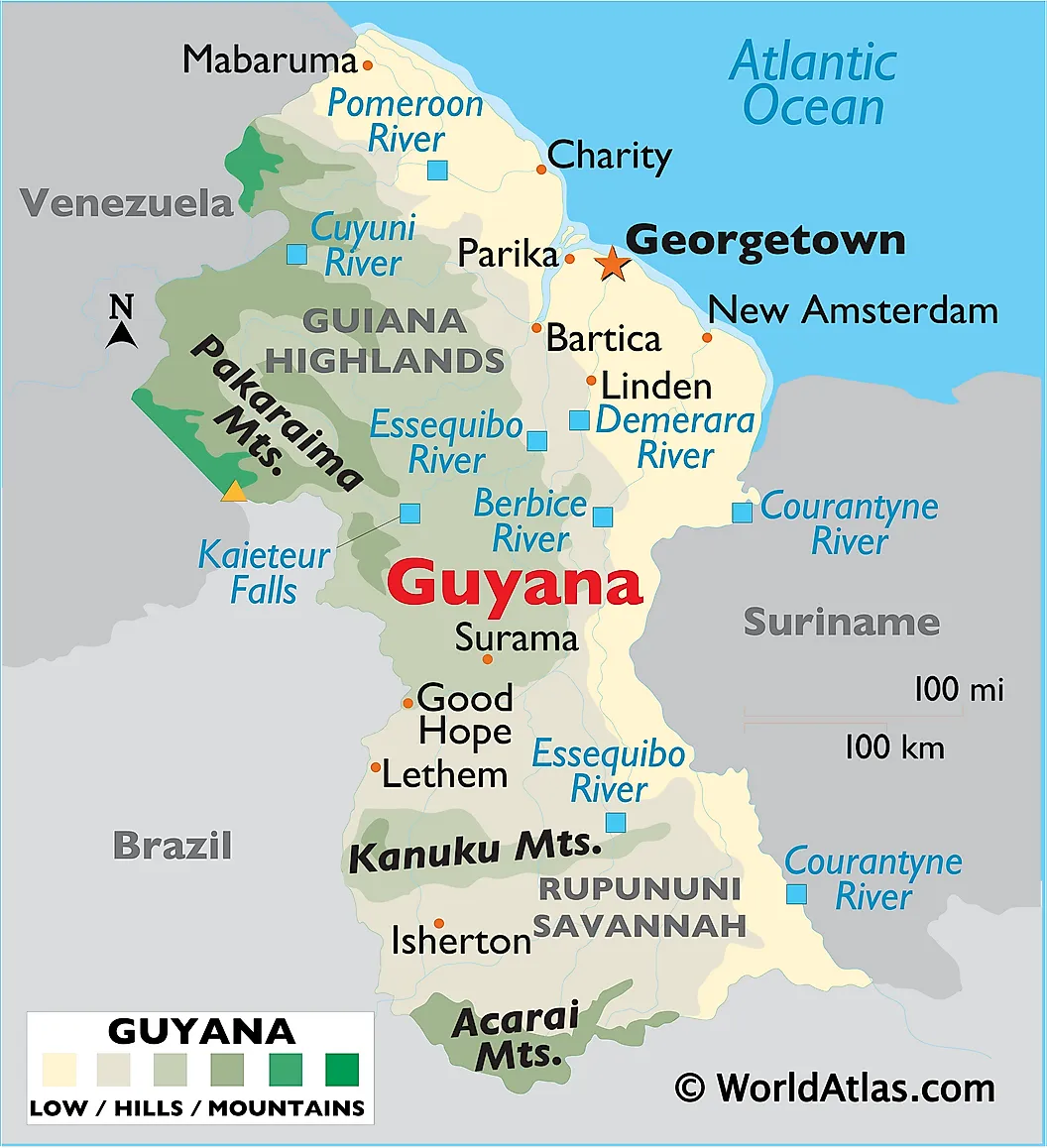
One more name regularly gets tangled with all of this. Guyana, on the northern coast of South America, and the wider region of the Guianas that once included Dutch Guiana, now Suriname, and French Guiana, sound like Guinea and follow a parallel pattern: coastal strips parceled out among rival European powers. The resemblance is a coincidence. Guyana comes from an Indigenous Amerindian word usually translated as "land of many waters," a reference to the rivers of the Guiana Shield, and has nothing to do with the African coast or its name.
One Word, Two Continents
The puzzle has a tidy answer. A label that medieval Berber traders used for the lands of Black Africa was picked up by Portuguese mariners, fixed to a stretch of coast, and then scattered by the machinery of European exploration and empire: onto three African colonies that kept the name after independence, onto a British coin, and, by way of one navigator's passing comparison, onto an island on the opposite side of the world. The four Guineas are not related to one another. They are all related to a single word, and to the centuries of seafaring that carried it so far from where it began.