Effects Of Earthquakes
- Ripple effects from earthquakes can cause lasting damage to the geographic landscape in the area, know as ground surface deformation, which often results in other shifts in nearby rivers and lakes.
- Earthquakes can often induce other natural disasters such as land slides, tsunamis, fires or floods
- Though earthquakes that happen below the ocean tend to be less destructive to human infrastructure, they can result in tsunamis, which in turn can be devastating
Earthquakes are among nature's most devastating events. They damage the land at the moment they strike, sending seismic waves through the ground, and they can leave lasting marks on the landscape as the earth shifts, tilts, or drops without warning.
When seismic energy ripples up through the layers of the Earth and reaches the surface, it is felt as an earthquake. Usually this means the planet's crust has been displaced in some way. Sometimes the ground folds or buckles; in other cases, blocks of earth lift or drop along fault lines and fissures. The movement itself causes immediate danger, but the way it reshapes the landscape can also set off slower, longer-lasting consequences. Whether short term or long term, earthquakes affect the land, wildlife, and human life of an impacted area in a variety of ways.
Ground Surface Deformation

The shifting of the Earth's crust during seismic activity is often called ground surface deformation, or ground rupture. It refers to the changes, fractures, and ruptures that appear on or within the surface after an area is exposed to severe shaking. The severity depends not only on the magnitude of the earthquake, meaning the intensity of its seismic waves, but also on an area's distance from the epicenter and the geology and shape of the local landscape.
Different types of seismic waves affect the ground in different ways. Surface waves come in two main forms, Rayleigh waves and Love waves, and these do most of the damage at the surface. Rayleigh waves roll across the ground in an elliptical motion, much like swells moving over the ocean, lifting and dropping whatever sits above them. Love waves move the ground side to side in a horizontal, shearing motion, perpendicular to the direction the wave travels. That sideways whipping is especially hard on building foundations and is a frequent cause of cracking and fracturing at the surface.
Buildings and Infrastructure Damage

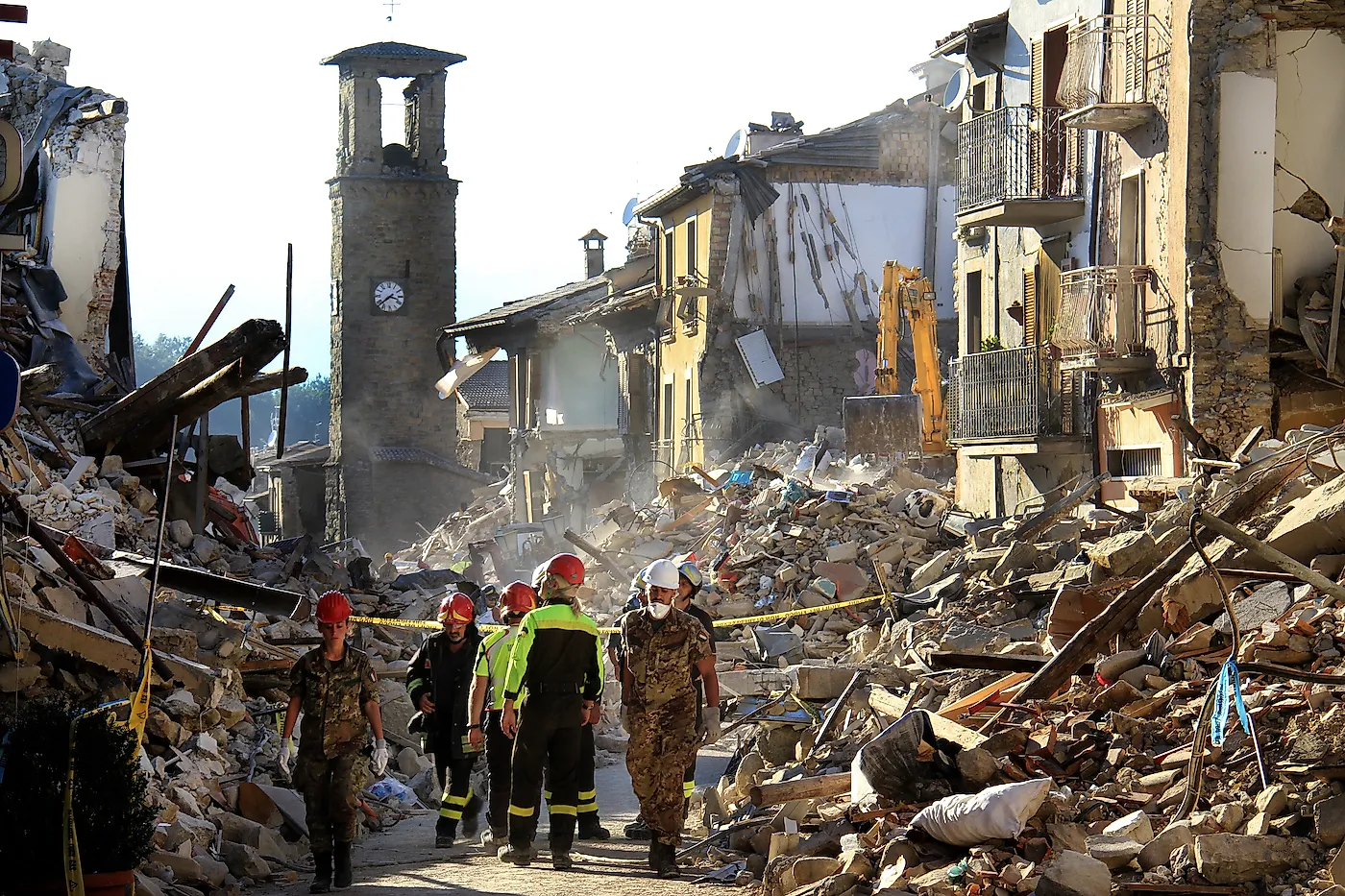
Most obviously, earthquakes threaten human life and man-made structures. As the ground shakes and shifts, the greatest risk often comes from debris and collapsing buildings. Some structures are engineered with seismic activity in mind, but few can withstand the strongest quakes, and many buckle, crack, or fall. The result is heavy property damage to homes, offices, roads, bridges, transit lines, and other infrastructure. That damage endangers people and animals and creates enormous financial burdens for the companies and governments that must rebuild afterward.
Landslides

Earthquakes do not only damage the surface directly through shaking and faulting; that movement can also trigger other destructive events. One of the most common is a landslide. As shock waves shake hillsides, mountains, and cliffs, soil and rock break loose and tumble to lower ground. In severe cases, an entire slope, sometimes with the settlements or buildings on it, can give way, causing loss of life, injury, and widespread property damage.
This has played out repeatedly through history. In October 2019, a series of strong earthquakes struck the Cotabato region of the Philippines within weeks of one another, triggering deadly landslides across the area.
Tsunamis

Tsunamis are another of the planet's great natural disasters, and they often go hand in hand with earthquakes. Though the word earthquake brings to mind shifting land, seismic activity also occurs in the crust beneath the sea. Most of this energy dissipates harmlessly through the ocean, but when a strong quake strikes near a shoreline or in shallower water, it can displace enough water to generate giant, highly destructive waves. Tsunamis almost exclusively follow earthquakes of magnitude 7.5 or higher.

Tsunami waves cross great distances at remarkable speed. In the open ocean a tsunami can travel between 500 and 800 kilometers per hour, then slow as it nears the shore. That slowing offers no safety, because the wave grows in height as it loses speed. In the most extreme events, run-up can exceed 100 feet (30 meters) as the wall of water reaches land with tremendous force, overwhelming coastlines and drowning everything in its path.
Two of the deadliest tsunamis in recorded history have struck within the last 25 years. On December 26, 2004, a magnitude 9.1 earthquake off the coast of Sumatra sent waves across the Indian Ocean; in the hardest-hit areas, run-up heights reached roughly 50 meters. The disaster killed an estimated 230,000 people across more than a dozen countries and caused well over $10 billion in damage. In a grim echo, a magnitude 9.0 earthquake struck offshore of Japan on March 11, 2011, driving a wave that reached about 10 meters at the coast and moved as fast as 800 kilometers per hour. It left nearly 20,000 people dead or missing, triggered the Fukushima nuclear plant accident, forced the evacuation of more than 450,000 people, and caused damage estimated at over $235 billion, making it one of the costliest natural disasters ever recorded.
Flash Floods

Floods can follow an earthquake much as landslides and tsunamis do. While tsunamis flood coastlines and harbors with seawater, inland flash floods are often the result of failing dams. Whether the dam is man-made or natural, the outcome is the same: when it is damaged by a quake, large volumes of water can be released at once, flooding residential areas with the contents of held reservoirs.
Earthquakes can also disrupt rivers and other bodies of water, pushing them across natural floodplains. Drops, cracks, or breaks in the ground can force water onto new paths, and debris can block a river's natural course entirely, forcing it to spill over and flood elsewhere. This is destructive not only to human settlements but to natural landscapes, ecosystems, and wildlife.
When earthquakes cause landslides, water from the underground water table or nearby sources can mix with soil and mud to create dangerous landslide-and-flood combinations, which can wipe out settlements, submerge roads, and flood other infrastructure.
Fires

Fire is another major aftereffect of earthquakes. Historically, earthquake-induced fires drove high death tolls as household flames from fireplaces, candles, and gas lamps were knocked loose and readily available fuels ignited.
In the United States, the most striking example came in 1906, when an earthquake set off fires that destroyed much of San Francisco. More than a century later, the hazard has been greatly reduced and firefighting technology has improved, but the risk remains. Today the dangers come more from electrical wiring, industrial furnaces, gas leaks, and reactors.
Fires after an earthquake are also unusually hard to fight. Water pipelines can crack or burst during the quake itself, and even when water is available, crews and trucks may be unable to reach the flames because roads are torn up or blocked by debris. Together, the greater number of potential fires and the difficulty of reaching them can deepen the damage in an already stricken area.
The Lasting Reach of an Earthquake
What makes earthquakes so dangerous is rarely the shaking alone. A single rupture can set off a chain of secondary hazards: landslides on unstable slopes, tsunamis across an entire ocean, fires in a broken city, and floods behind a failed dam, each capable of causing more harm than the quake that started it. Engineering, early-warning systems, and disaster planning have lowered the toll in many regions, but the reach of a large earthquake still extends far beyond the moment the ground stops moving.