The Last American Elms Left Standing
Dutch elm disease arrived in the United States in the early 1930s and devastated American elm (Ulmus americana) populations across the country. By the 1980s, the disease had killed an estimated 77 million American elms, according to the USDA. The National Park Service estimates that between 50 million and 100 million trees were lost during the first five decades of the outbreak. Although many historic elm-lined streets have disappeared, mature specimens survive in select parks, historic districts, and college campuses, while younger trees continue to grow amid the ongoing threat of Dutch elm disease. In places like New York's Central Park and a small coastal town in Maine, these surviving elms preserve a piece of the American landscape that once seemed nearly impossible to lose.
What Is Dutch Elm Disease?

Dutch elm disease is a fungal infection that has devastated American elm populations since the early 20th century. First identified in the Netherlands in 1921, the disease reached the United States in the early 1930s, likely through imported timber. It spreads primarily through elm bark beetles, which carry fungal spores between trees, and can also travel through interconnected root systems. Once inside an elm, the fungus interferes with the movement of water through its vascular tissues, causing leaves to wilt, branches to die, and eventually the entire tree to perish. Preventive fungicide treatments can protect selected trees, while prompt pruning may help manage some early infections. However, advanced infections are generally fatal.
Central Park, New York

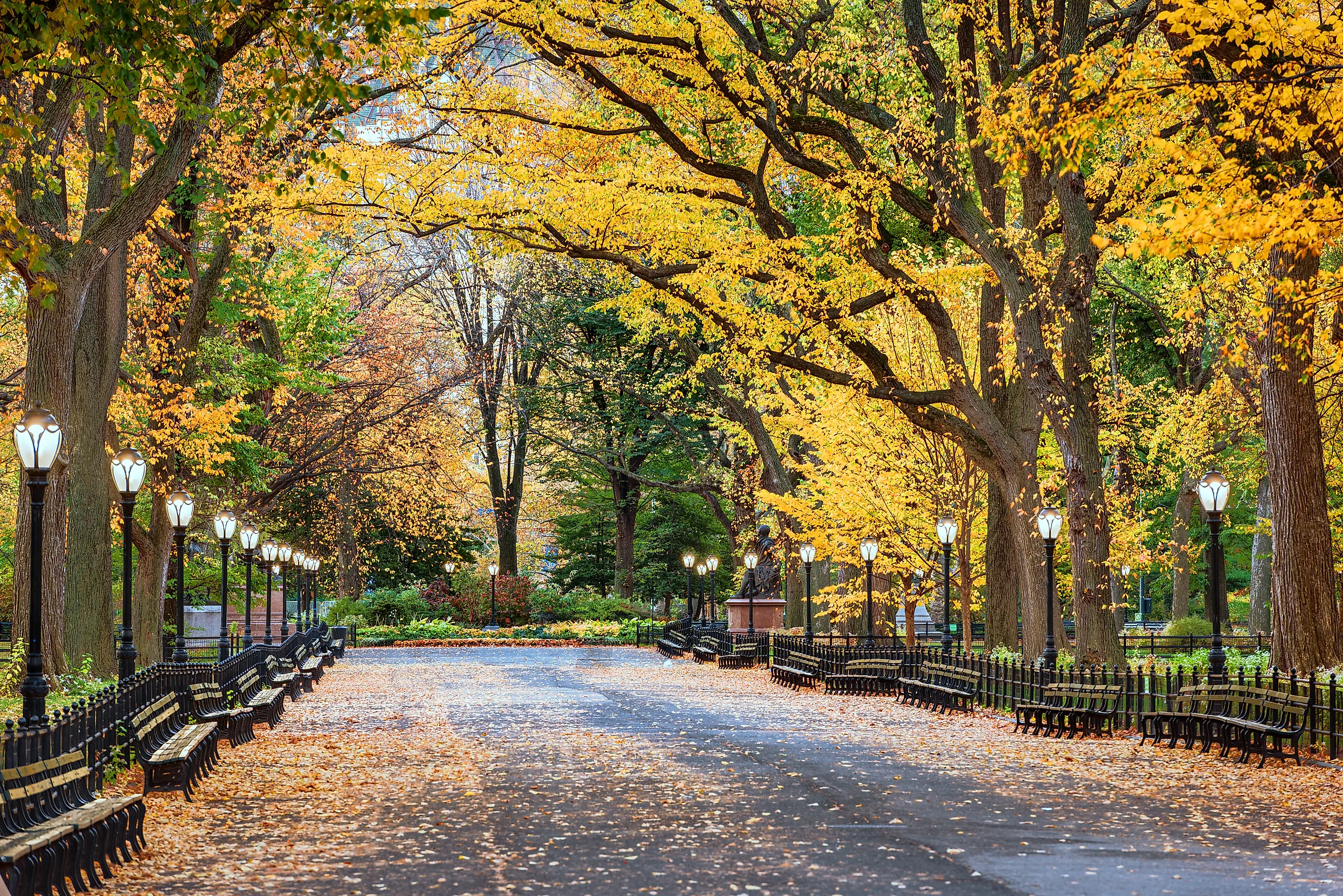
Central Park contains one of the country's most celebrated collections of American elms, with around 2,500 in total. The Mall and Literary Walk are especially notable, with rows of towering trees forming an arching canopy above the broad pedestrian promenade. Designed by Frederick Law Olmsted and Calvert Vaux, the park features a walkway that demonstrates why American elms became so popular in urban landscaping. Their spreading branches create a natural vaulted ceiling, framing a view that has become one of the park's defining features.
The Central Park Conservancy protects the trees through regular inspections, preventive fungicide treatments for selected specimens, and careful management of the surrounding soil. Dutch elm disease remains a constant threat, killing approximately 15 to 30 trees per year in the park, so the collection's continued survival depends on sustained maintenance.
Castine, Maine

The coastal town of Castine has preserved a notable collection of approximately 250 American elms, including historic specimens more than 170 years old that recall the traditional streetscapes of New England. These trees survived decades of disease pressure that eliminated much of the elm canopy in neighboring communities. Their continued presence reflects active preservation efforts rather than immunity to Dutch elm disease.
Castine's tree-care program includes preventive fungicide injections for more than 75 legacy elms, along with monitoring and other maintenance. Additional elms grow on private properties throughout the town. These measures cannot guarantee survival, as trees continue to be lost to the disease, but they can prolong the lives of vulnerable specimens and help preserve Castine's historic canopy.
Boston, Massachusetts

The American elm is the state tree of Massachusetts, and Boston was long renowned for its stately elms, most notably the giant Great Elm that stood at the center of Boston Common until 1876. The arrival of Dutch elm disease devastated Boston's classic urban canopy, yet American elms are far from extinct in the city. In fact, nearly 400 elms of various types remain in several of its most prominent public landscapes, including Boston Common, the Public Garden, and the Commonwealth Avenue Mall.
Maintaining Boston's remaining elms requires considerable investment. Arborists monitor their condition, remove infected branches when appropriate, and use preventive fungicide treatments on selected specimens. This dedicated preservation work helps maintain the historic character of some of the city's best-known public spaces.
Rutgers University, New Jersey

In the early 1900s, colleges throughout the eastern United States planted American elms to beautify their campuses, only to have Dutch elm disease wreak havoc a few decades later. Some universities have chosen to replace fallen elms with other species. The University of Pennsylvania, for example, replaced its historic Quad Elm with oak trees, while Pennsylvania State University has repurposed wood from fallen campus elms and planted more disease-resistant replacements.
Other universities continue the difficult task of maintaining their iconic American elm canopies. Rutgers University's campus in New Brunswick, New Jersey, has preserved a notable collection of mature American elms on Voorhees Mall. In 2010, the university documented 54 mature elms in the area, although that figure should not be treated as a current inventory. Along with ongoing maintenance for older trees, disease-resistant replacements have been planted to help preserve the mall's historic appearance.
Winnipeg, Manitoba

The largest remaining urban population of American elms in North America is found in Canada, in Winnipeg, Manitoba. Dutch elm disease was first detected in the city in 1975, when its American elm population was estimated at approximately 275,000. Despite decades of losses, more than 194,000 American elms remained, according to figures reported in 2026. Winnipeg's elm canopy is especially visible in established neighborhoods such as Wolseley and River Heights, where mature trees arch over residential streets and sidewalks.
Winnipeg still has thousands of American elms because it had such a large population to begin with, and the decline has been slowed by the city's extensive disease-management program. Officials inspect trees for signs of infection, remove diseased specimens, and educate residents on preventing the spread of the fungus. Nevertheless, thousands of elms continue to be lost annually to disease and other pressures. Winnipeg's efforts show that the devastating impacts of Dutch elm disease can be reduced, even if eliminating the threat remains out of reach.
A Future for American Elms
The American elm has not disappeared, but Dutch elm disease transformed its place in the North American landscape. The mature trees that remain in historic parks, university grounds, and small communities are valuable both for their natural beauty and for what they can teach researchers about disease resistance. Preventive treatments can prolong the lives of selected specimens, while breeding programs and resistant cultivars offer hope for future plantings. Protecting the surviving elms while planting new generations may allow the species to reclaim some of the prominence it once enjoyed across the continent.