The County That Grows Most Of America's Winter Lettuce
The lettuce sold in American grocery stores comes from various growing regions as the seasons change. However, during winter, Yuma County, Arizona, becomes a primary source for the romaine, iceberg, and leaf lettuce filling produce aisles and restaurant kitchens. Roughly 90% of the leafy vegetables grown in the United States between November and March come from there. That seasonal role makes Yuma a useful place to understand how America maintains a year-round supply of fresh vegetables, and why the origin of such a familiar food changes with the calendar each year.
Where the Lettuce Grows

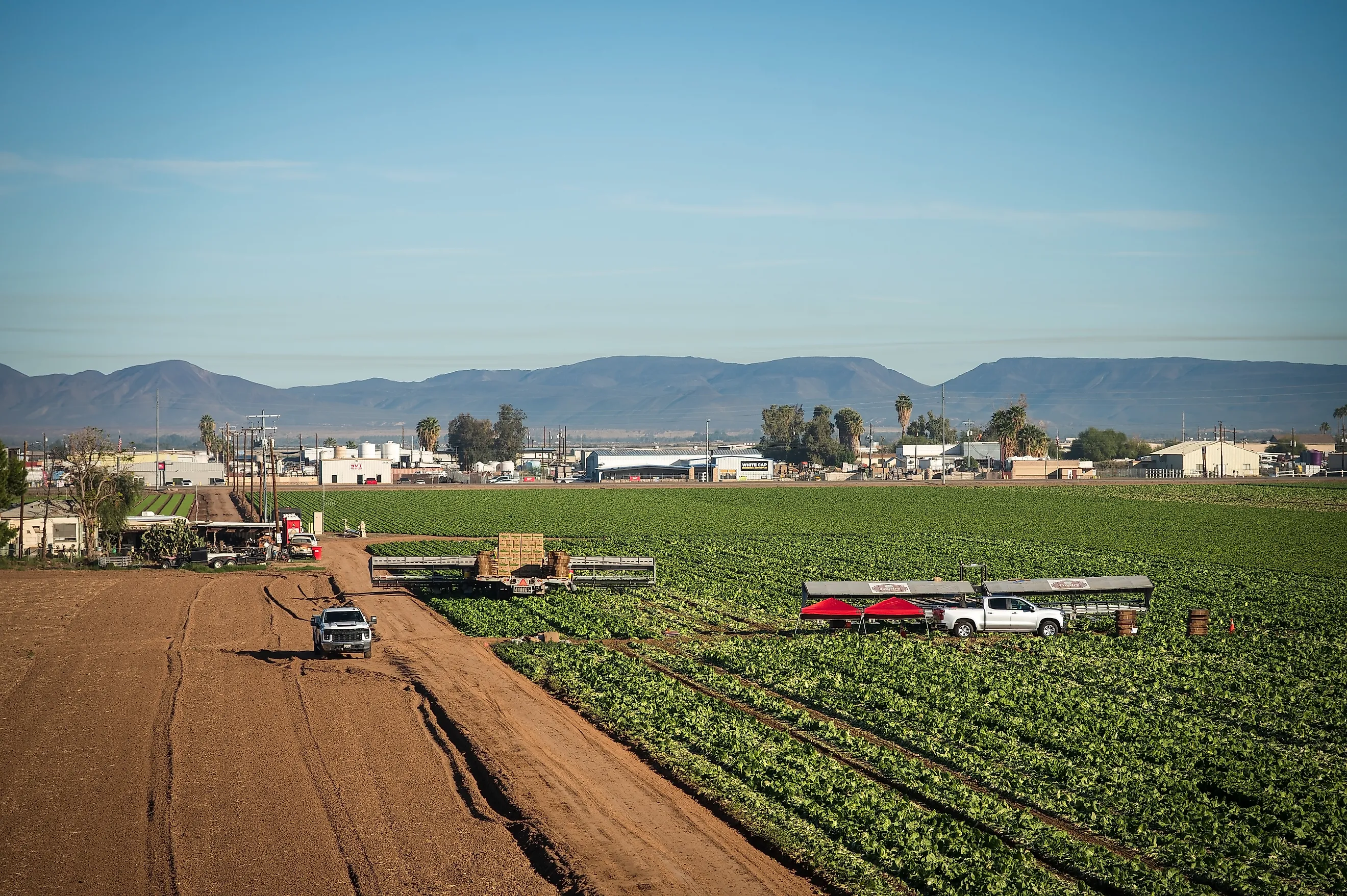
Yuma County occupies Arizona's deep southwestern corner, where the Colorado River separates the state from California before flowing into Mexico. Its abundant agricultural fields spread across the Yuma Valley, south of the city of Yuma, and the Gila Valley to the east.
River deposits have created exceptionally fertile soils in these lowlands, while irrigation supports cultivation despite the surrounding desert's sparse rainfall. This contrast is visible along local roads, where rows of green lettuce extend toward dry mountains and sandy terrain.
Local farms also occupy the Yuma Mesa, although citrus is more closely associated with that higher ground, and much of the county beyond these agricultural areas consists of desert plains, rugged mountains, and federally managed land.
Why Winter Growing Works Here So Well

Lettuce grows best in cool (but not freezing) weather, making Yuma County's mild winters more useful to growers than its intense summer heat. While freezing temperatures interrupt outdoor production across much of the country, Yuma generally provides enough regular warmth for leaves to develop throughout the colder months. Abundant sunshine here further allows for growth, and relatively dry conditions give farmers the ability to control much of the water supply through irrigation.
On the other hand, summer in Arizona brings the opposite problem. Excessive heat can cause lettuce to bolt, sending up a flowering stalk and making the leaves bitter. So, planting in fall allows the crop to mature as temperatures decline, with successive plantings keeping harvest crews working through winter. This schedule complements production in California's coastal growing districts, including the Salinas Valley, which supply lettuce during warmer months.
As that season ends, buyers around the nation turn to desert farms. Yuma's advantage therefore comes from both suitable growing conditions and timing, filling a seasonal gap in the national supply when many other farming regions cannot reliably produce lettuce.
How Irrigation in Arizona Made Its Large-Scale Farming Possible

With only about three inches of rain a year, rainfall alone could never support Yuma County's extensive lettuce fields. Large-scale production developed around systems that divert Colorado River water into canals and distribute it across its farmland. A major step came in 1904, when the federal government authorized the Yuma Project to expand irrigation and protect agricultural land from flooding.
Laguna Dam, completed in 1909, diverted river water into the project's canal network. In 1912, the Yuma Siphon added a crucial connection, carrying water beneath the river from California to the Yuma Valley in Arizona. Levees and drainage works were also important, helping protect fields and prevent excess groundwater from damaging crops.
As mentioned before, these investments gave growers greater control over when and how much water reached their fields. That reliability eventually helped intensive commercial vegetable farming across the board, allowing successive lettuce plantings to develop through the otherwise dry winter growing season without depending on unpredictable rain to meet the crop's water needs.
The Challenges of Supplying Winter Lettuce to America

Supplying lettuce in the winter requires growers to manage a crop that cannot simply wait in the field until conditions improve. Unusually warm weather can accelerate maturity, often bunching harvests together, while freezing nights can damage leaves and delay cutting. Either disruption can affect the volume and quality reaching stores.
Water availability in the broader Southwest presents a longer-term challenge because production, again, depends heavily on the Colorado River.
Researchers and growers test irrigation schedules and monitoring tools to make those decisions more precise. Improving irrigation efficiency requires balancing conservation with enough water for healthy growth and managing salts in the soil. Farms also need experienced crews during the harvest season, followed by dependable refrigeration and transportation to move perishable lettuce to distant markets before its quality declines.
Why Yuma's Harvest Matters Nationwide
Keeping this salad and burger staple available in the depths of January requires decisions made months before shoppers reach the produce aisle. In Yuma County, planting schedules, water deliveries, and harvest crews must work together to meet that demand. The county's role also makes local farming challenges national concerns, so protecting its ability to grow winter vegetables matters far beyond Arizona, affecting the availability, quality, and price of food served in homes and restaurants across the United States.