6 Maine Towns Where Time Stands Still
Along Maine’s eastern seaboard, a handful of towns still reflect the rhythms of early New England settlement. In Castine, that legacy is especially easy to see, as one of the oldest European settlements in North America still carries its colonial landmarks and deep maritime roots into the present day. Farther down the coast, Wiscasset preserves the feel of a once-bustling seaport, where historic architecture and longtime local institutions keep its early American character firmly in view. Still farther east, Eastport combines a working waterfront with a strong sense of place as the easternmost city in the United States. These 6 iconic Maine towns will take you on a trip back in time.
Castine

Established in the 1600s, Castine is one of the oldest European settlements in North America and once served as a strategic military outpost contested by the French, Dutch, and British. Today, the village of about 1,362 residents still reflects its colonial past. During the early colonial period, Castine hosted several French trading posts, missions, and forts, highlighting its importance in regional maritime trade.

That seafaring tradition continues today through the Maine Maritime Academy, a respected institution that trains mariners and marine engineers. Visitors interested in local history can stop at the Wilson Museum, founded in 1921, where exhibits range from regional artifacts to fossils such as 460-million-year-old trilobites. For a change of pace, the nearby Witherle Woods Preserve offers 193 acres of wooded trails with views of Penobscot Bay. A short distance away, Fort George marks the site of the 1779 Penobscot Expedition, one of the most notable Revolutionary War events in Maine.
Wiscasset

First settled in 1660, Wiscasset grew into one of Maine’s busiest international seaports and today preserves much of its early American architecture. The town sits along the banks of the Sheepscot River, where its historic downtown, listed on the National Register of Historic Places, still reflects its maritime past. One of the most notable landmarks is the Lincoln County Museum and Old Jail, which preserves an 18th-century jail that now operates as a museum.

A short walk away, Castle Tucker and the Nickels-Sortwell House showcase two elegant 19th-century Federal-style mansions open for tours. After exploring these historic sites, many visitors stop at Red’s Eats, a famous roadside lobster shack known for its oversized lobster rolls, or browse nearby Maine Antiques Dealers Association shops for vintage collectibles and historical goods.
Eastport

Originally known as Salvage Bay, Eastport is the easternmost city in the United States, with permanent settlement beginning in the late 1700s. What started as a small farming community later developed into a major 19th-century center for the sardine canning industry. Today, the city’s working waterfront still reflects its historic fishing heritage.

One of Eastport’s most distinctive attractions is Raye’s Mustard Mill, the last traditional stone-ground mustard mill in the United States, where visitors can watch the historic grinding process in action. Nearby in Pleasant Point, the Waponahki Museum offers insight into the culture and history of the Passamaquoddy Tribe. Art lovers can also visit the Tides Institute & Museum of Art, which houses regional artifacts and contemporary works inside a restored historic bank building.
Damariscotta

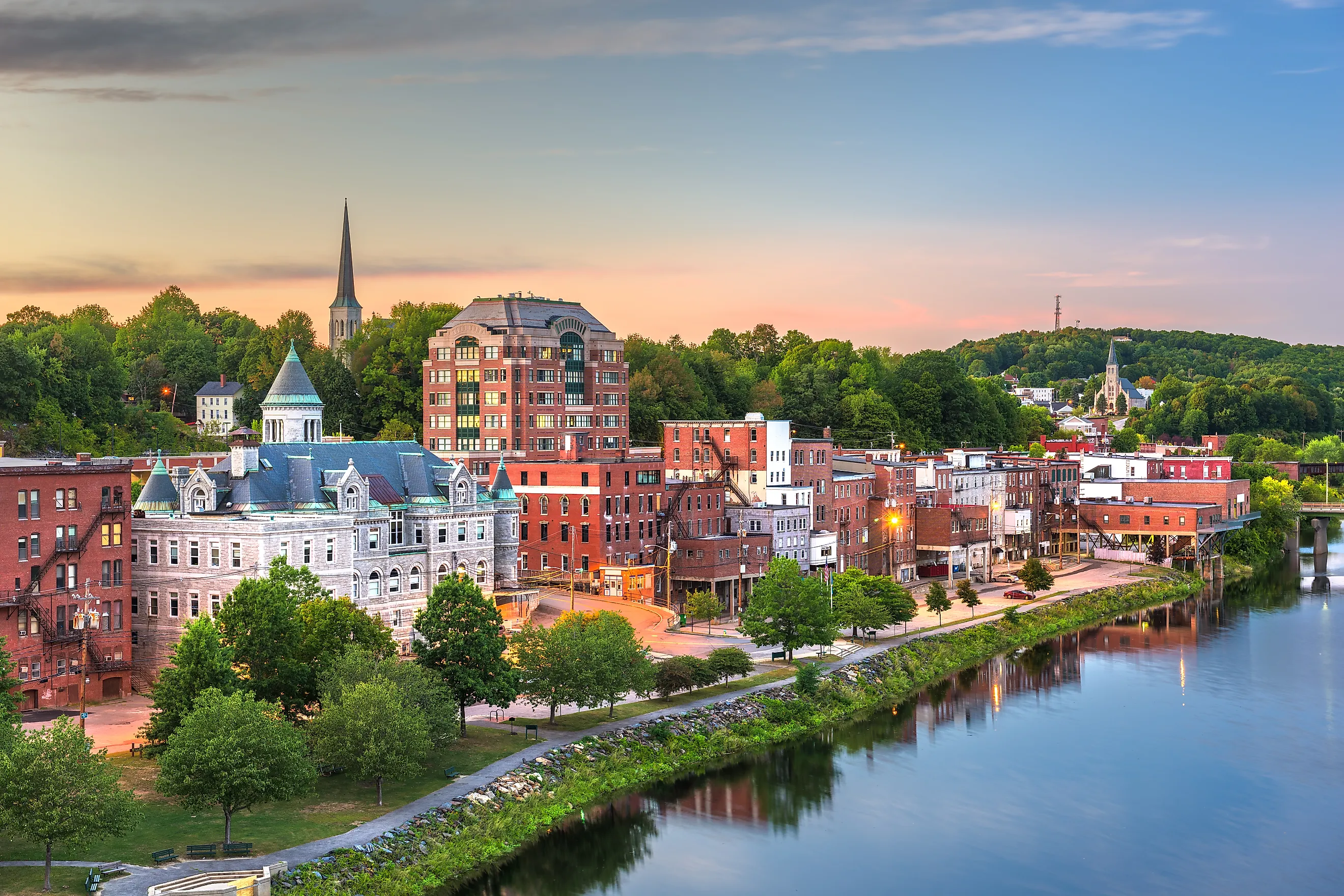
Built around a bridge spanning the Damariscotta River, the town of Damariscotta is best known for the ancient oyster shell middens left behind by Indigenous peoples thousands of years ago. Much of the downtown still reflects its past, with rows of 19th-century brick storefronts lining the main streets.

Visitors interested in the area’s early history can explore the Whaleback Shell Midden State Historic Site, where interpretive trails pass towering mounds of oyster shells discarded more than 2,000 years ago. To experience the river up close, Damariscotta River Cruises offers two-hour boat tours that pass active oyster farms and local seal colonies resting on nearby ledges. After time on the water, many visitors stop at Renys Underground, a Maine-based department store known for discounted clothing and regional specialty foods.
Hallowell

Known as the “Antique Capital of Maine,” Hallowell sits along the banks of the Kennebec River just south of Augusta. The town grew in prominence during the 1800s as a center for granite quarrying and river commerce, leaving behind a downtown rich in 18th- and 19th-century architecture. For a taste of the outdoors, Vaughan Woods & Historic Homestead, locally nicknamed “Hobbit Land”, features forested trails and picturesque stone bridges built in the 19th century.

Back in town, Water Street serves as the heart of Hallowell’s antique scene, where collectors browse a dozen independent shops, including the Hallowell Antique Mall, for vintage jewelry and classic New England pieces. After exploring the shops, many visitors stop at The Liberal Cup, an English-style gastropub known for its house-brewed ales and seafood served inside a historic granite-era building.
Fort Kent

Located at the northern end of U.S. Route 1 along the Canadian border, Fort Kent began as a military outpost during the 1839 Aroostook War. One of the town’s most significant historic landmarks is the Fort Kent Blockhouse, a National Historic Landmark and the only surviving structure from the border conflict.

Beyond its history, Fort Kent is also known for its outdoor recreation. In winter, the Lonesome Pine Trails offer downhill skiing, while the nearby Fort Kent Outdoor Center hosts international biathlon events. The town also celebrates its Acadian heritage through the annual Ploye Festival, where visitors can sample traditional buckwheat pancakes known as ployes. For those who enjoy fishing, the St. John River draws anglers each year for the Fort Kent International Muskie Fishing Derby.
These small towns offer more than preserved buildings; they reflect Maine’s long history of maritime trade, industry, and community life. From Castine’s colonial forts and Wiscasset’s seaport heritage to Eastport’s working waterfront and Hallowell’s antique-lined streets, each town has maintained a strong connection to its past. Their small populations and well-preserved downtowns have helped protect historic architecture and surrounding landscapes from large-scale development. Visiting these communities offers a glimpse into Maine’s earlier centuries, where quiet streets, historic storefronts, and working harbors continue to shape everyday life.