Which State Has The Fewest Counties?
Counties are often one of the most important divisions within a state, whether it's for political, administrative, or even cultural and social reasons. However, there's no set definition for what constitutes one, meaning some states end up packed with many counties (including more than 250 in Texas), and others manage with just a few covering larger areas. When it comes to the fewest, Delaware leads the pack with just three, but several other states aren't far behind. For consistency, this ranking uses counties and county equivalents as defined by the U.S. Census Bureau.
Delaware (3 counties)

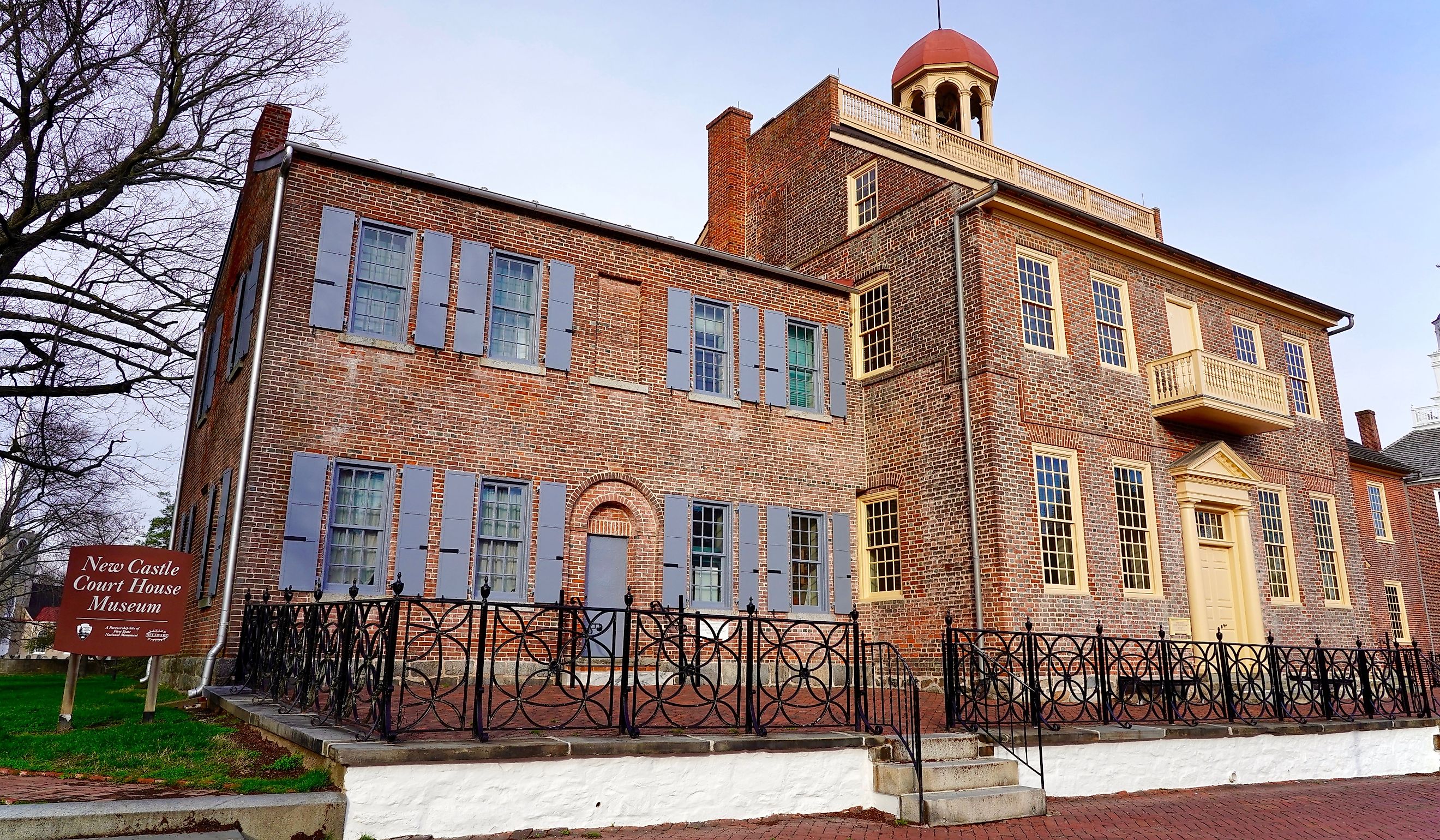
This relatively small state sits between New Jersey, Pennsylvania, and Maryland, providing a less high-profile place to call home that's nevertheless squarely in the heart of the densely populated Northeastern/Mid-Atlantic corridor. Delaware is split up into just three counties: New Castle, Kent, and Sussex. This three-county split dates back hundreds of years to the area's original organization as a colony in the 17th century, making the definitions even more deeply ingrained.

New Castle is home to the state's largest city, Wilmington. Central Kent County is the site of Dover, the state capital, while Sussex County covers the rural southern parts of the state (including the popular oceanfront communities like Rehoboth Beach), spanning nearly half of Delaware's total area.
Hawaii (5 counties)

Hawaii presents an unusual situation, with four true counties and one of what the state calls a "quasi-county." This latter element accounts for Kalawao County on Molokai, an administrative division that covers an area where people with Hansen's Disease (also known as leprosy) were once isolated and is now managed by the state Department of Health.
Hawaii's other four counties map relatively cleanly to the state's island geography. Hawaii County covers the "Big Island" of Hawaii, Honolulu County includes Oahu and some nearby smaller islands, and Kauai County covers Kauai and Niihau. Maui County covers Maui, Lanai, Kahoolawe, and the portion of Molokai outside Kalawao County.
Counties are particularly important for governance in Hawaii as there are no lower-level municipalities, such as independent cities, towns, or townships. This makes county- and state-level services particularly vital to Hawaii residents, many of whom face unique challenges due to the relative isolation of the islands.
Rhode Island (5 counties)

It naturally follows that America's smallest state would also be among the states with the fewest counties. The roughly 1,200 square miles that make up Rhode Island are divided into five counties: Bristol, Kent, Newport, Providence, and Washington. Bristol is the smallest, squeezed between the Massachusetts border and Narragansett Bay, while Kent is home to Warwick, one of the state's largest cities. Newport County includes the historic, sophisticated city that shares its name, as well as the luxurious homes in the surrounding area. Washington County, in the state's southwest, bordering Connecticut, is best known as the home of the popular tourist destination Block Island. Finally, Providence County is the site of the state's largest city and covers a relatively large portion of Rhode Island's northwest.
Unlike Hawaii's powerful and expansive county governments, Rhode Island's counties are basically just for show. They've been legally abolished as units of government, meaning they're strictly geographic divisions for judicial and reference purposes.
Connecticut (9 counties)

Connecticut is another state where counties are more of a historical and geographic marker than a true unit of local government. The state historically had eight counties, but it abolished county government in 1960, leaving local government primarily in the hands of its cities and towns. More recently, in 2022, the Census Bureau replaced those eight nominal counties in its system with nine planning regions that now serve as Connecticut's county equivalents.
These are the Capitol, Greater Bridgeport, Lower Connecticut River Valley, Naugatuck Valley, Northeastern Connecticut, Northwest Hills, South Central Connecticut, Southeastern Connecticut, and Western Connecticut planning regions. These units exist more for planning and coordination purposes between municipalities and local governments. However, the relative newness of the system means any effects of the change have had little time to make themselves known.
New Hampshire (10 counties)

New Hampshire rounds out the top five with just 10 counties. These are Belknap, Carroll, Cheshire, Coos, Grafton, Hillsborough, Merrimack, Rockingham, Strafford, and Sullivan counties. Half of these (Rockingham, Strafford, Hillsborough, Cheshire, and Grafton) were created together in 1769, with the remaining five designated in the following 71 years. The northern counties of Coos, Grafton, and Carroll represent New Hampshire's more sparsely populated, mountainous areas. Belknap and Merrimack are part of the state's central Lakes Region, while the remaining five make up the state's more densely populated south.
New Hampshire's counties still play important roles, unlike some other New England states. However, they also compete for power with more than 230 incorporated cities and towns, reflecting the state's truly local approach to government.
The Fewest Counties, For Different Reasons
Each of these five states arrived at its status with the fewest counties in different ways. Delaware and New Hampshire carry on the historical legacies of their formation, Hawaii is shaped by geography, and Connecticut and Rhode Island have counties mostly in name only. Still, they're all worth recognizing for their unique position within America's state and local government system.