These 9 Towns In The Rockies Were Ranked Among US Favorites In 2026
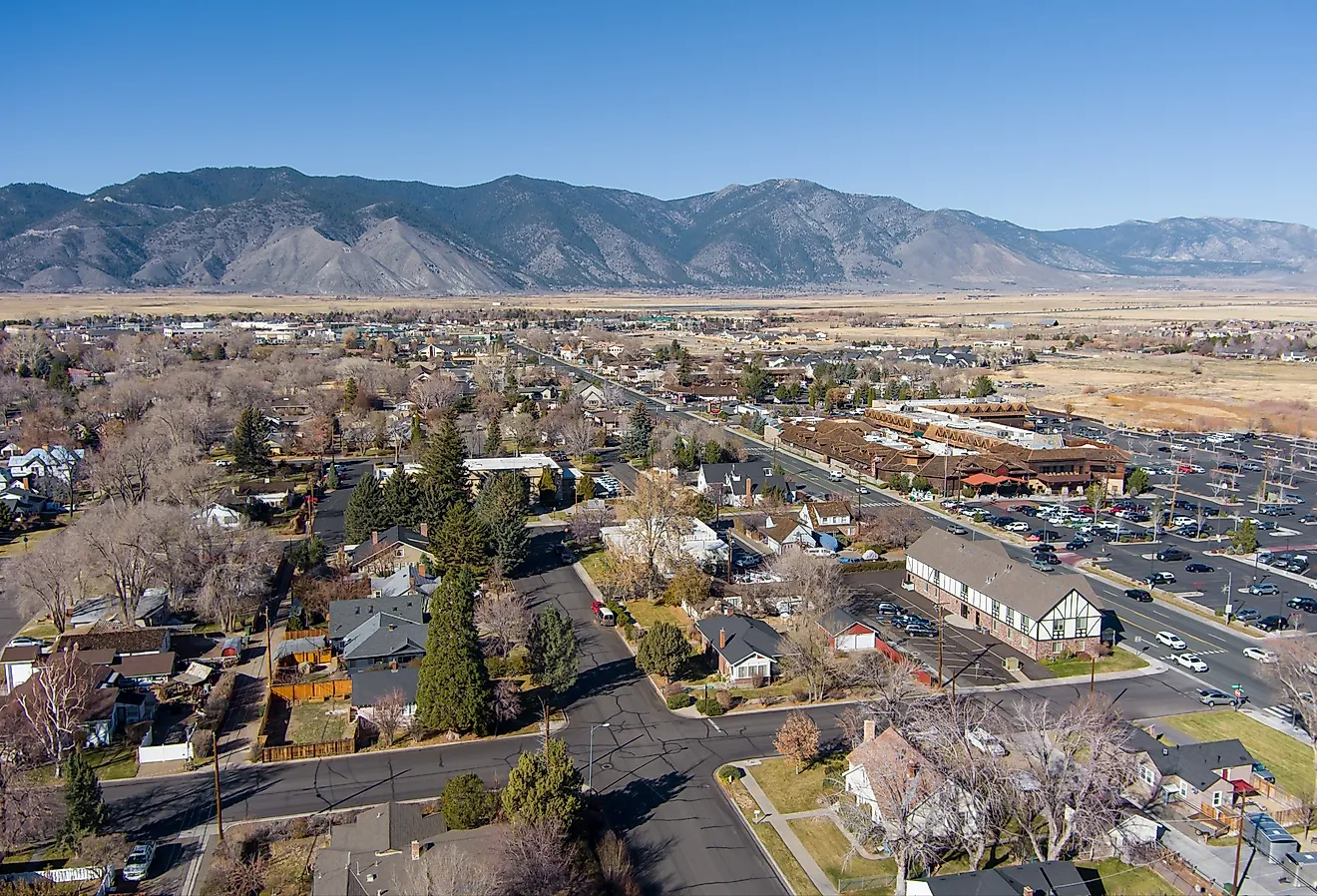
The whistle of the Durango & Silverton Narrow Gauge Railroad carries through downtown Durango as steam locomotives head for the San Juan Mountains. In Telluride, a free public gondola rises above Coonskin Ridge before dropping into neighboring Mountain Village. Over in Jackson, four arches built from naturally shed elk antlers frame the Town Square. The antlers come from the willing denizens of the nearby National Elk Refuge. Towns like these across the Rockies pair preserved historic districts with recognizable landmarks. They also hold on to the landscapes that first drew people there more than a century ago.
Breckenridge

Breckenridge's Main Street still follows the route laid out during the town's 1859 gold rush, where more than 200 Victorian-era buildings create one of Colorado's largest historic districts. False-front storefronts, weathered brick buildings, and the Gold Pan Saloon recall the mining camp that grew around rich placer deposits in the Blue River Valley. A short distance from downtown, the Country Boy Mine takes visitors on tours through original nineteenth-century tunnels, with preserved machinery and underground passages illustrating how hard-rock mining transformed the settlement into one of Colorado's best-known mountain towns. Above the rooftops, Peaks 7, 8, 9, and 10 of the Tenmile Range rise behind Breckenridge Ski Resort, where ski runs give way to alpine hiking trails each summer.
Estes Park

Estes Park sits at the doorstep of Rocky Mountain National Park, and much of the town grew alongside the travelers heading into Colorado's high country. Elkhorn Avenue is the town's busiest corridor, lined with galleries, outfitters, and the 1909 Stanley Hotel, whose Georgian Revival architecture became one of the town's defining landmarks during the early decades of mountain tourism.
The Beaver Meadows Entrance to Rocky Mountain National Park lies only a few miles west, placing Trail Ridge Road, alpine lakes, and some of Colorado's best-known wildlife viewing within easy reach of downtown. Closer to town, the Big Thompson River and Lake Estes provide walking paths, fishing access, and boating under the mountains.
Telluride

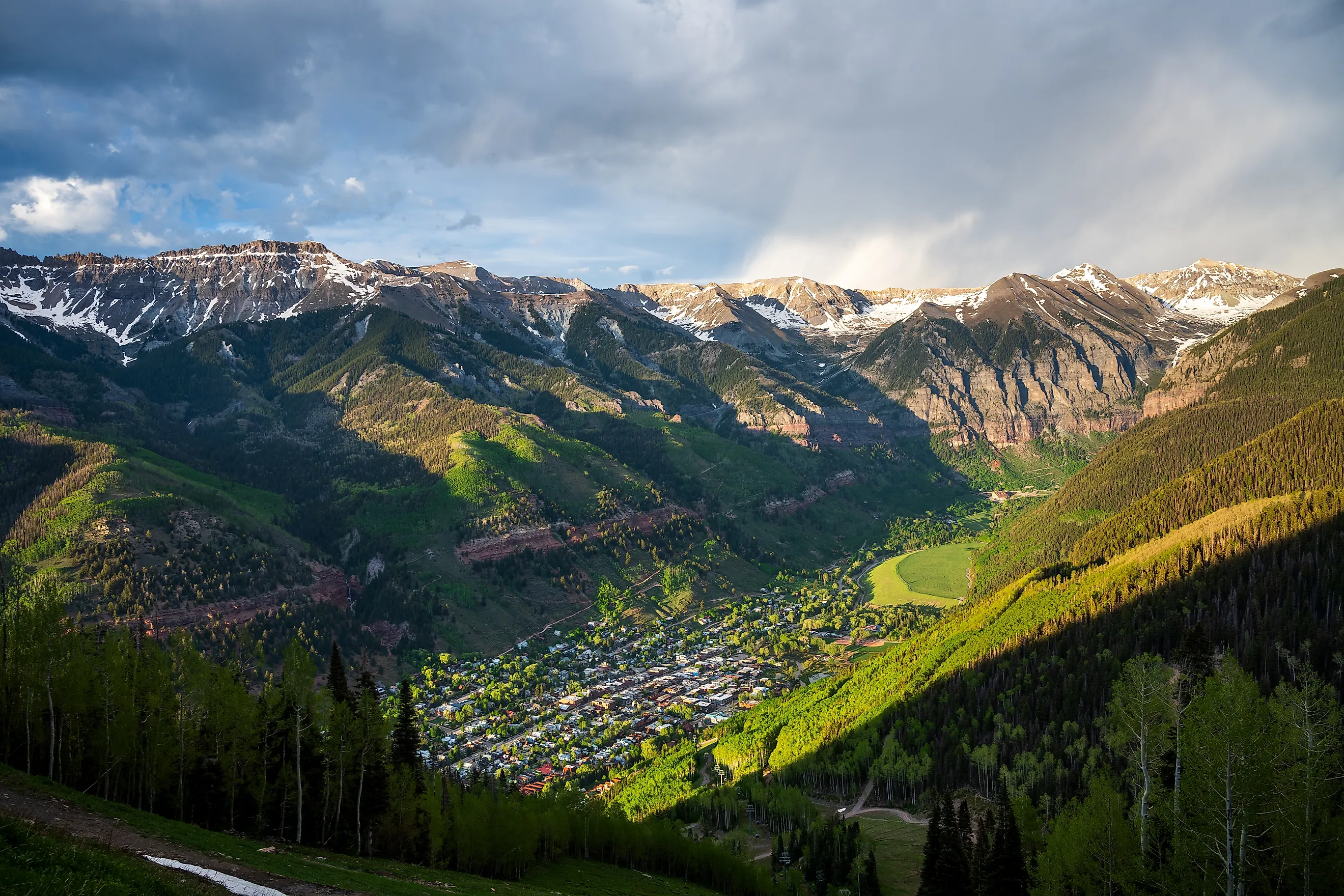
Telluride sits at the floor of a narrow box canyon, where steep cliffs leave little room for expansion beyond Colorado Avenue and its remarkably intact National Historic Landmark District. Victorian storefronts from the mining era line the main street beneath the 365-foot Bridal Veil Falls, which spills from the canyon rim at the valley's eastern end. The 1913 Sheridan Opera House continues to anchor downtown with concerts, theater, and film screenings.
Telluride's free public gondola carries residents and visitors above Coonskin Ridge to the Mountain Village, making it one of the few mountain towns in North America that relies on an aerial lift for everyday transportation. A few blocks away, the Bear Creek Trail leaves directly from town, climbing into waterfalls and alpine meadows within minutes of the historic district.
Jackson

Four arches built from naturally shed elk antlers welcome visitors into Jackson's Town Square, where wooden boardwalks, log-and-stone storefronts, and historic commercial buildings reflect the town's long connection to ranching and the American West. The antlers are gathered each year from the local National Elk Refuge, where thousands of elk spend the winter. Local spots such as the Million Dollar Cowboy Bar continue the theme that reaches back to Jackson's early frontier years. The broad valley of Jackson Hole stretches west toward the Teton Range, with Grand Teton, at 13,775 feet, dominating the surrounding landscape. The Snake River winds through the valley, drawing rafters, anglers, and wildlife enthusiasts, alongside the National Museum of Wildlife Art which overlooks the National Elk Refuge with galleries devoted to animals of America and beyond.
Ouray
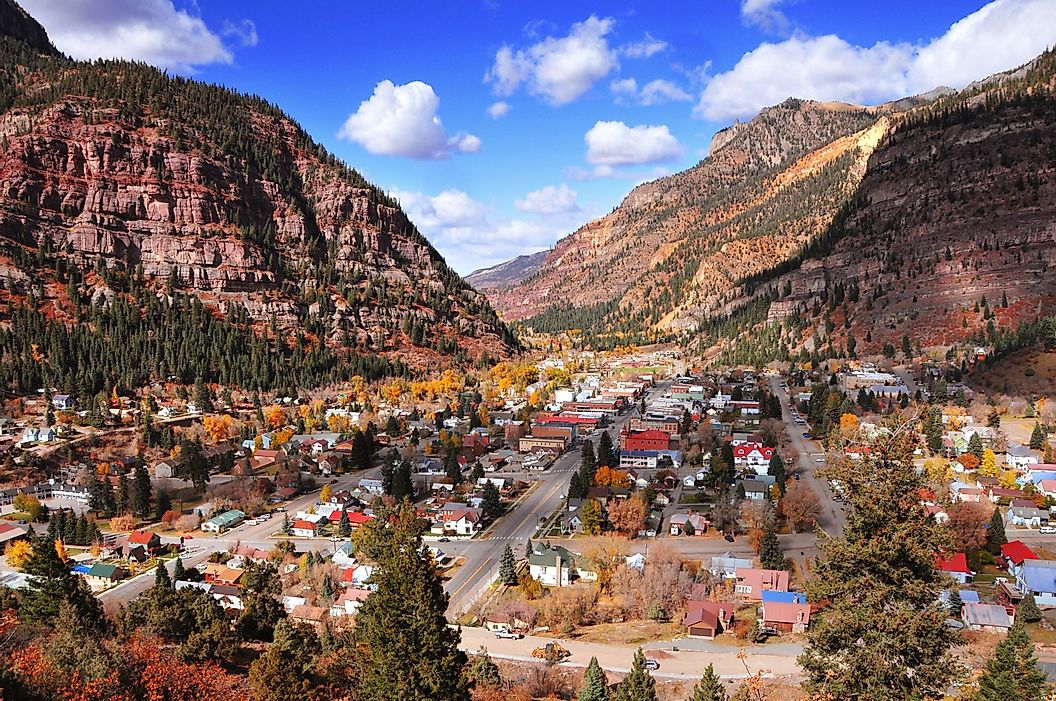
Cascade Falls spills over the cliffs above Ouray, where rows of Victorian brick buildings and landmarks such as the 1886 Beaumont Hotel recall the silver boom that transformed this small San Juan Mountain valley into one of Colorado's best-known mining towns.
Water continues to define the visitor experience long after the mines closed. In winter, the walls of the nearby Ouray Ice Park are turned into more than 150 artificial ice-climbing routes, while warmer months shift attention to the sulfur-free pools of Ouray Hot Springs beneath the surrounding peaks. Hiking trails leave town for Cascade Falls and overlooks above the valley, putting waterfalls, canyon scenery, and hot springs within easy reach of downtown.
Whitefish

The Great Northern Railway Depot has greeted arrivals in Whitefish since 1928, its half-timbered exterior and steep roof recalling the era when passenger trains introduced visitors to northwest Montana. The building still serves Amtrak's Empire Builder route, while exhibits inside trace the history of the railroad and the logging communities of the Flathead Valley. A few blocks away, Central Avenue offers a walkable collection of brick storefronts, galleries, cafés, and outdoor outfitters beneath wooden awnings that have sheltered pedestrians for generations. Beyond downtown, Whitefish Lake expands through a corridor of pine forest, with public beaches, boat launches, and lakeside campsites gathered inside Whitefish Lake State Park. Summer chairlift rides at Whitefish Mountain Resort open wide views toward Glacier National Park, where the surrounding slopes attract hikers and mountain bikers long after the snow has melted.
Park City

Main Street climbs the route laid out during Park City's silver mining era, threading a corridor of old storefronts, hotels, and restored commercial buildings dating to the late nineteenth century. Among its most recognizable landmarks is the Egyptian Theatre, whose Egyptian Revival facade arrived in the 1920s after the discovery of Tutankhamun's tomb. Today, the theater welcomes audiences throughout the year and becomes one of the focal points of the Sundance Film Festival, when filmmakers and visitors fill the historic downtown.
Mining gave way to skiing during the twentieth century in Park City. The Town Lift carries skiers directly from Main Street to Park City Mountain Resort, while neighboring Deer Valley offers another network of slopes only minutes away. Beyond the ski season, Utah Olympic Park opens its training facilities to visitors with guided tours, bobsled rides, zip lines, and opportunities to watch athletes preparing for international competition.
Durango

Main Avenue carries the character of Durango's railroad and mining years through rows of Victorian-era brick buildings, locally owned shops, and landmarks such as the 1887 Strater Hotel, whose richly furnished interior remains one of the town's best-known historic attractions. At the north end of downtown, the restored 1882 depot marks the departure point for the Durango & Silverton Narrow Gauge Railroad, where coal-fired steam locomotives begin their journey into the San Juan Mountains.
A short walk away, the Animas River flows beside downtown, followed by the Animas River Trail along its banks. The railway continues north through the canyons of the San Juan National Forest, while Mesa Verde National Park lies within easy driving distance, giving visitors the chance to pair a historic steam train excursion with remarkably preserved Ancestral Puebloan cliff dwellings in a single trip.
Steamboat Springs

Lincoln Avenue grew alongside Steamboat Springs' ranching community and still reflects that heritage through its historic brick storefronts, longtime outfitters, and locally owned businesses. Near the center of downtown, the Tread of Pioneers Museum occupies a 1901 Queen Anne home, where exhibits explore the Yampa Valley's agricultural roots, early settlement, and skiing history. F.M. Light & Sons, operating on Lincoln Avenue since 1905, remains one of the town's best-known landmarks.
A few blocks south, the Yampa River Core Trail follows the river through parks and open green spaces before the landscape gives way to the forested hills surrounding Strawberry Park Hot Springs. Together, the lively main street, riverside trail, and natural mineral pools highlight the blend of western heritage and outdoor recreation that keeps Steamboat Springs among the Rockies' most popular destinations.
A Mountain Legacy
Some experiences haven't changed much with time. Steps still descend into nineteenth-century mine tunnels, arrive beneath the steep roof of a railway depot built for the age of passenger trains, and settle into seats beneath the lotus columns of an Egyptian Revival theater. A few hours later, the route may lead above the treeline, on to a mountain trail, or into naturally heated mineral pools below the surrounding peaks. America's favorite towns in the Rockies are built on their history, but they embrace the creation of new experiences.