The Coldest Capital Cities In The World
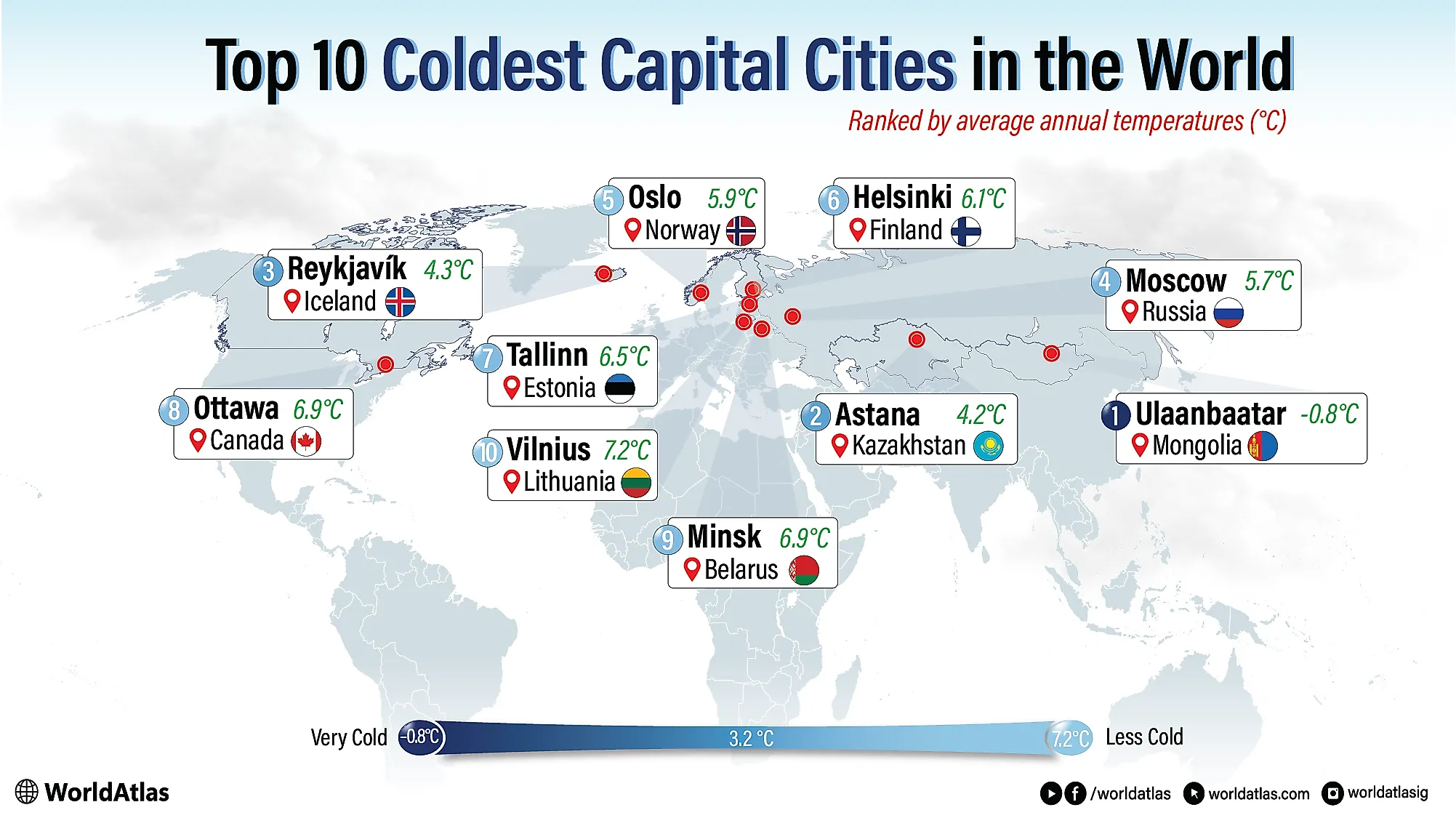
Based on the annual mean temperature, the top ten coldest capital cities in the world are Ulaanbaatar, Astana, Reykjavik, Moscow, Oslo, Helsinki, Tallinn, Ottawa, Minsk, and Vilnius. These ten capitals have chilling weather throughout the year with extremely cold conditions, often averaging near zero degrees Celsius. In most cases, their low temperatures are caused by high latitude, inland continental locations, limited ocean influence, or exposure to cold Arctic and Siberian air masses.
Among them, Ulaanbaatar is the coldest, with an annual mean temperature below freezing, making it the coldest national capital on Earth. Each of these cities is also home to resilient communities that have developed specific methods of daily life to cope with the cold climate. This article delves into the coldest capital cities in the world and why they are so cold. It also details the unique features of each city's local community and climate.
The Coldest Capital Cities In The World By Average Annual Temperature
| Rank | Capital City | Country | Average Annual Temperature |
|---|---|---|---|
| 1 | Ulaanbaatar | Mongolia | −0.8°C (30.6°F) |
| 2 | Astana | Kazakhstan | 4.2°C (39.6°F) |
| 3 | Reykjavik | Iceland | 4.3°C (39.7°F) |
| 4 | Moscow | Russia | 5.7°C (42.3°F) |
| 5 | Oslo | Norway | 5.9°C (42.7°F) |
| 6 | Helsinki | Finland | 6.1°C (42.9°F) |
| 7 | Tallinn | Estonia | 6.5°C (43.6°F) |
| 8 | Ottawa | Canada | 6.9°C (44.4°F) |
| 9 | Minsk | Belarus | 6.9°C (44.4°F) |
| 10 | Vilnius | Lithuania | 7.2°C (45.0°F) |
1. Ulaanbaatar, Mongolia - −0.8 °C (30.6 °F)
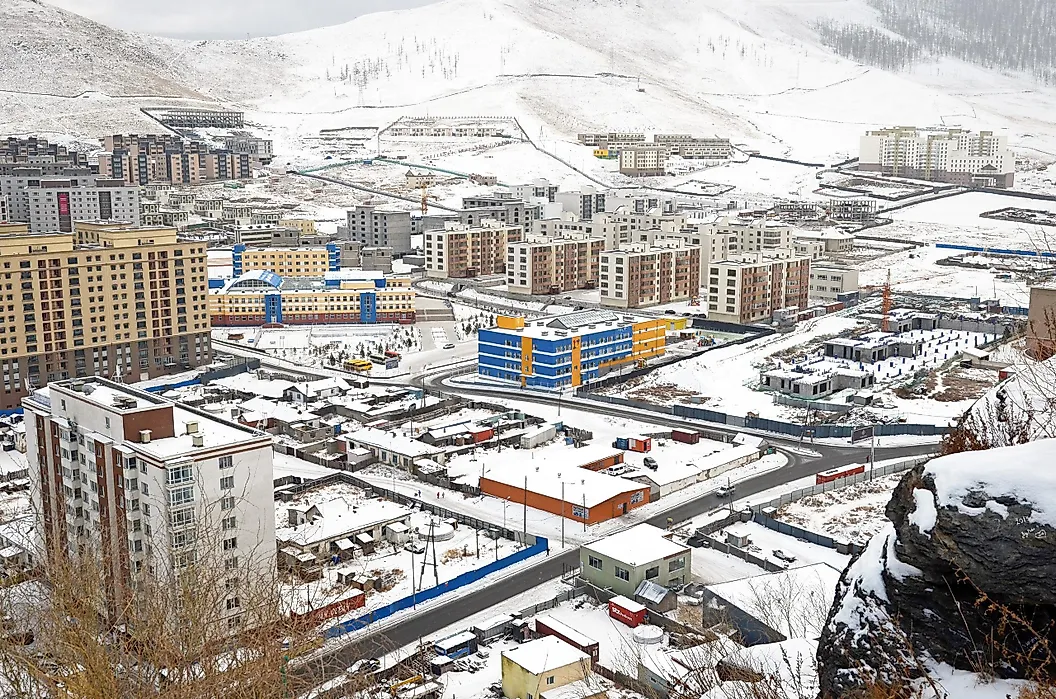
Ulaanbaatar is the capital and the most populous city in Mongolia. It is also the coldest capital city in the world with a mean annual temperature of −0.8 °C (30.6 °F), the only capital with a sub-zero average. This cold weather is due to the city’s extreme continental climate and high altitude, sitting at over 1,300 meters (4,265 feet). Mongolia also sits within Siberian high-pressure systems, which bring in dry air, leading to cold winter temperatures that can drop as low as −27.6 °C (−17.6 °F) during extreme winter months. Winters are long and harsh, often lasting from October to April, with very little snowfall but persistent freezing conditions that define daily life in the city.
It is located in the north-central part of the East Asian country, which sits just north of Russia. The city lies in a broad valley along the Tuul River and is surrounded by mountains that help trap cold air during winter. Ulaanbaatar is home to more than 1.6 million people, making it the political, cultural, and economic center of Mongolia. Many residents rely on heavy winter clothing, coal heating, and insulated housing to cope with the extreme cold.
2. Astana, Kazakhstan - 4.2 °C (39.6 °F)

Astana is the capital city of Kazakhstan and one of the largest in the country. Similar to the rest of the country, which is in a cold steppe climate, Astana is one of the coldest capital cities in the world. It has a category Dfb climate according to the Köppen Climate Classification and an average yearly temperature of 4.2 °C (39.6 °F). Moreover, temperatures rarely rise above freezing during winter, and the January average low is −14.2 °C (6.5 °F).
Various factors contribute to the city's cold climate, including strong winds from the Left Bank, which is characterized by an open steppe landscape. Moreover, the region falls in the path of cold Siberian winds and is far from the ocean, creating extremely cold wind currents. Despite its harsh winters, Astana experiences warm summers, with July averaging around 20.4 °C (68.7 °F), creating one of the widest seasonal temperature ranges among capital cities.
Due to the climate, Astana has a long duration of snow cover, sometimes lasting over six months. However, with over 1.3 million residents, locals have embraced the weather. Most homes have advanced heating systems, and the local municipal services focus on snow clearance during winter. Moreover, activities like winter swimming are popular, offering a contrast to the city’s modern, advanced infrastructure.
3. Reykjavik, Iceland - 4.3 °C (39.7 °F)

Reykjavík is the capital and largest city of Iceland, and despite its far northern latitude, it has a milder climate than many other capitals on this list. The city has a mean annual temperature of 4.3 °C (39.7 °F), making it one of the coldest capitals in the world, though not as extreme as Ulaanbaatar or Astana. Reykjavík’s climate is classified as subpolar oceanic, and its temperatures are strongly influenced by the North Atlantic and the nearby Gulf Stream, which helps prevent winters from becoming as severe as those in inland continental regions.
Winters in Reykjavík are long, dark, and cold, with average winter temperatures often hovering around freezing. Snowfall is common, though it is usually mixed with rain, and icy conditions are frequent during colder months. The city experiences very short daylight hours in winter, with only a few hours of sunlight around December. Reykjavík is home to roughly 140,000 people, with most residents relying on geothermal heating, which is widely available and provides affordable warmth year-round.
4. Moscow, Russia - 5.7 °C (42.3 °F)

One of the most populous capitals on this list is Moscow, the capital city of Russia. This bustling metropolis is home to over 13 million people and spans 2,511 square kilometers (970 square mi), making it one of the largest in the world. Moscow is also one of the coldest megacities, with a mean annual temperature of 5.7 °C (42.3 °F). The primary reason for the capital’s cold weather is its northern location in Central Russia, which is within a humid continental climate. The area has long winters lasting from November to March, with average temperatures remaining below zero throughout. It is also far from any major ocean, which limits maritime temperature moderation and allows colder Arctic air to come through.
While one of the coldest capitals, Moscow is not as cold as many other areas of the country, as it is farther south than much of Siberia and benefits from slightly milder conditions than Russia’s northern and eastern regions. To this end, locals are accustomed to the cold climate, using layered clothing and warm beverages to enjoy the weather. In fact, activities like ice skating and winter boat tours along the Moskva River are popular.
5. Oslo, Norway - 5.9 °C (42.7 °F)

The fifth-coldest capital city in the world is Oslo, the capital of Norway. It has a humid continental climate characterized by warm summers and cold winters due to its northern latitude. Consequently, the city has an average annual temperature of 5.9 °C (42.7 °F), although it doesn’t get as cold as some other entries on this list. The average temperature during January, the coldest month, is −5.1 °C (22.9 °F), while summers are also mild with a peak average of 17.4 °C (63.3 °F) in July. The temperature remains moderate thanks to the nearby North Sea, which absorbs energy.
Oslo is the most populous city in the country, home to around 725,000 people in the municipality. The city sits at the northern end of the Oslofjord, giving it direct access to the coast and nearby waters. The fjord helps soften extreme winter temperatures compared to inland cities at similar latitudes. Residents stay active year-round, with winter sports, waterfront walks, and outdoor recreation remaining common even in colder months.
6. Helsinki, Finland - 6.1 °C (42.9 °F)

Helsinki is the sixth-coldest capital city in the world, located in Finland. The city has a mean annual temperature of 6.1 °C (42.9 °F), primarily due to its northern latitude and proximity to the Baltic Sea. It lies in a cold hemiboreal humid continental climate zone and receives minimal sunlight during the winter, with some days receiving less than six hours. Moreover, the Baltic Sea acts as a heat sink, cooling incoming winds and further reducing their temperature. Winters in Helsinki are long and snowy, with average temperatures dropping to −4.9 °C (23.3 °F) in February. Sea ice commonly forms along the city’s coastline during colder winters.
During winters, the city manages ice transport with a robust system of icebreakers to keep shipping lanes open. The state-owned company Arctia operates around eight icebreakers that clear ice and free ships that are stuck. Helsinki is home to around 660,000 people, making it the most populous city in Finland. Residents rely heavily on insulated buildings, district heating systems, and efficient public transport to function smoothly during the long winter season.
7. Tallinn, Estonia - 6.5 °C (43.6 °F)

Tallinn is the capital and largest city of Estonia. It is one of the coldest capital cities in Northern Europe due to its northern latitude and strong Baltic Sea influence. The city has a humid continental climate, with long, cold winters and short, mild summers. The mean temperature throughout the year is 6.5 °C (43.6 °F), and in February it averages around −4.3 °C (24.2 °F). Cold winds from the Baltic Sea increase the chill, especially in coastal and harbor areas.
Winters in Tallinn are snowy and icy, with snow cover often lasting several months. Daylight hours are minimal during winter, with only a few hours of sunlight in December. Tallinn is home to roughly 450,000 people, making it the political and economic center of Estonia. Residents rely on efficient public transportation, winter-maintained roads, and insulated housing to manage daily life during the cold season.
8. Ottawa, Canada - 6.9 °C (44.4 °F)

Ottawa, the capital of Canada, lies in the southern part of the province of Ontario. The city is home to over a million people and serves as the government's headquarters. While it is not as cold as many northern regions of Canada, where some of the world’s coldest cities lie, Ottawa still sees cold, snowy winters. Temperatures average below freezing from December to March, and January has a minimum temperature of −13.4 °C (7.9 °F). The average annual temperature is also among the coldest in the world for capital cities, at 6.9 °C (44.4 °F). The cold climate is bolstered by wind chill, which can make the temperature feel as low as −40 °C (−40 °F).
Ottawa is located along the Ottawa River, which freezes in winter and contributes to colder air temperatures. One of the city’s most well-known winter features is the Rideau Canal, which becomes the world’s largest naturally frozen skating rink when conditions allow. Residents are well adapted to the cold, using layered clothing, heated buildings, and underground walkways in parts of the city. Snow removal and winter road maintenance are a major focus during the long winter season.
9. Minsk, Belarus - 6.9 °C (44.4 °F)

The ninth-coldest capital city in the world is Minsk, the capital of Belarus. Minsk has the same mean annual temperature as Ottawa at 6.9 °C (44.4 °F), but its climate is significantly different. Unlike Ottawa, this city has a warm, humid continental climate, and winters are not as cold. The average January temperature, the coldest month, is −5.5 °C (22.1 °F), which is warmer than many cities on this list. Moreover, summers are mild, with average temperatures ranging from 13 °C to 19 °C (55 °F to 66 °F).
Minsk sits on the flat Eastern European Plain, with no nearby mountains or large bodies of water to block incoming cold air. This open landscape allows cold air to flow freely, helping reduce temperatures year-round. Moreover, the city has a well-planned layout with wide roads and green spaces, which promotes wind flow in populated areas. However, with mild temperatures in both summer and winter, the local population of nearly two million does not have to take extreme measures.
10. Vilnius, Lithuania - 7.2 °C (45.0 °F)

Vilnius, the capital and largest city of Lithuania, rounds out the list as the tenth-coldest capital city in the world. The city has a mean annual temperature of 7.2 °C (45.0 °F), largely due to its inland location in northeastern Europe. Unlike coastal Baltic capitals, Vilnius does not benefit from maritime moderation, which allows colder air masses to settle over the region for extended periods. Winters are cold and steady, with January temperatures averaging −4.5 °C (23.9 °F), while summers remain mild rather than warm.
The city sits on the edge of the Eastern European Plain, where flat terrain allows cold air to move freely during winter. Snowfall is common from late autumn through early spring, and overcast skies are frequent during the colder months. Vilnius is home to roughly 600,000 people and functions as Lithuania’s political and cultural center year-round. Residents are accustomed to seasonal cold, with insulated housing, district heating, and reliable public transport helping daily life continue smoothly through winter.
The Coldest Capital Cities In The World
These ten capital cities are the coldest in the world based on average annual temperature. With Ulaanbaatar staying below freezing for most of the year and many other cities experiencing long winters, heavy snowfall, and wind chill, they are among the most extreme places to live. Still, millions of people live in these cities, and some, like Moscow, are megacities with tourist destinations, winter sports, and heating systems. This goes to show how people can adapt to even the most extreme climates in the world.