The American Towns Built On A Hot Spring Field
Congress set aside the thermal springs at Hot Springs, Arkansas, in 1832, four decades before Yellowstone became a national park. The town grew up over that water rather than beside it, and it is one of a handful of places where geothermal heat sits close enough under the streets to be drilled like any other utility. Across the seven towns below, that heat warms a statehouse, keeps sidewalks clear of snow, and fills bathtubs from wells beneath the buildings. Each one sits on a thermal aquifer or geothermal reservoir and taps it within town limits, so a resort a few miles out does not count. The others reached that point by different routes: one traded its name to a radio quiz show, and another grew up around a homesteader who drilled for drinking water and struck hot water instead. Their heat sources differ just as much (the National Park Service says the Arkansas water owes nothing to volcanic activity), yet every town on the list has learned that the supply has limits.
Hot Springs, Arkansas

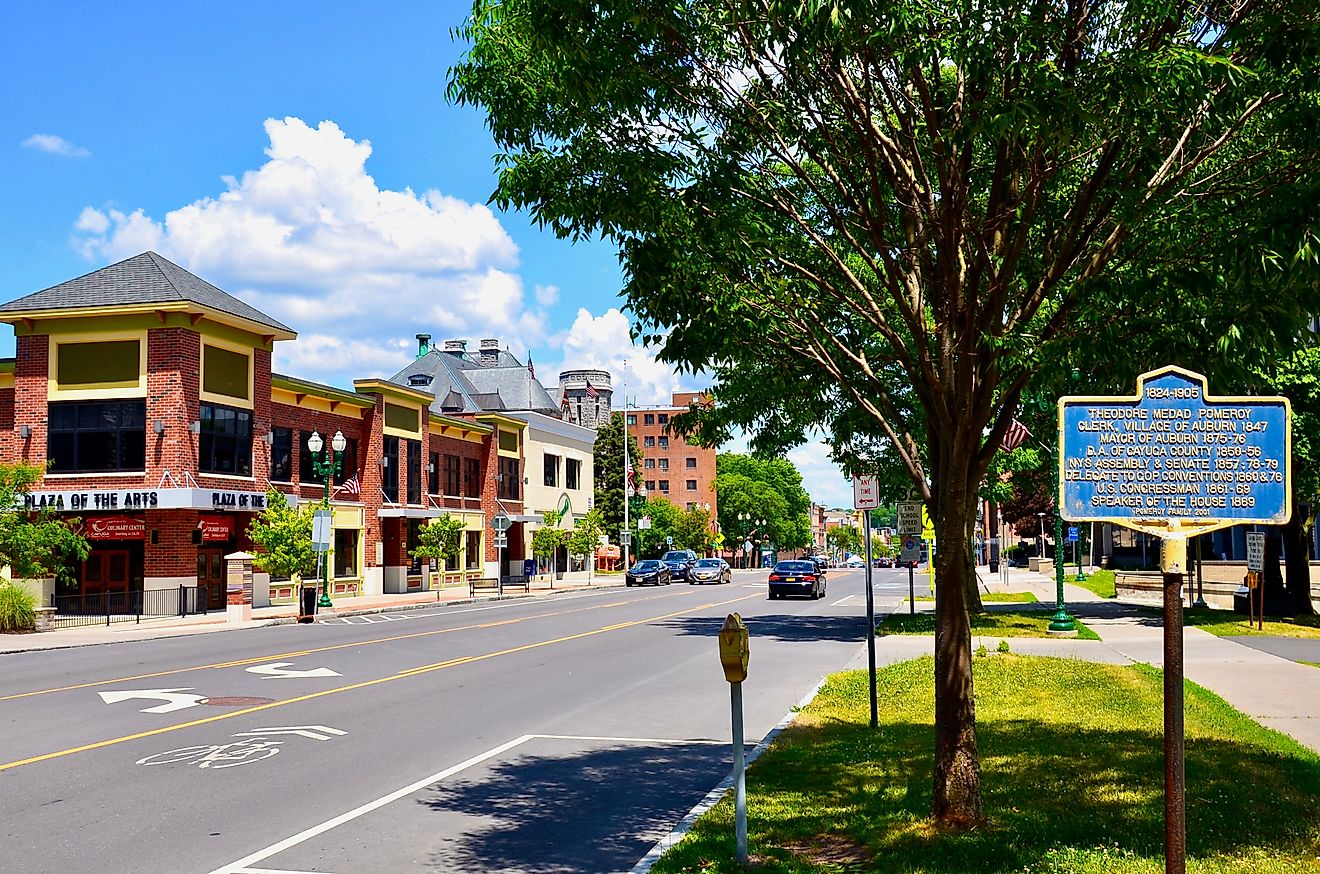
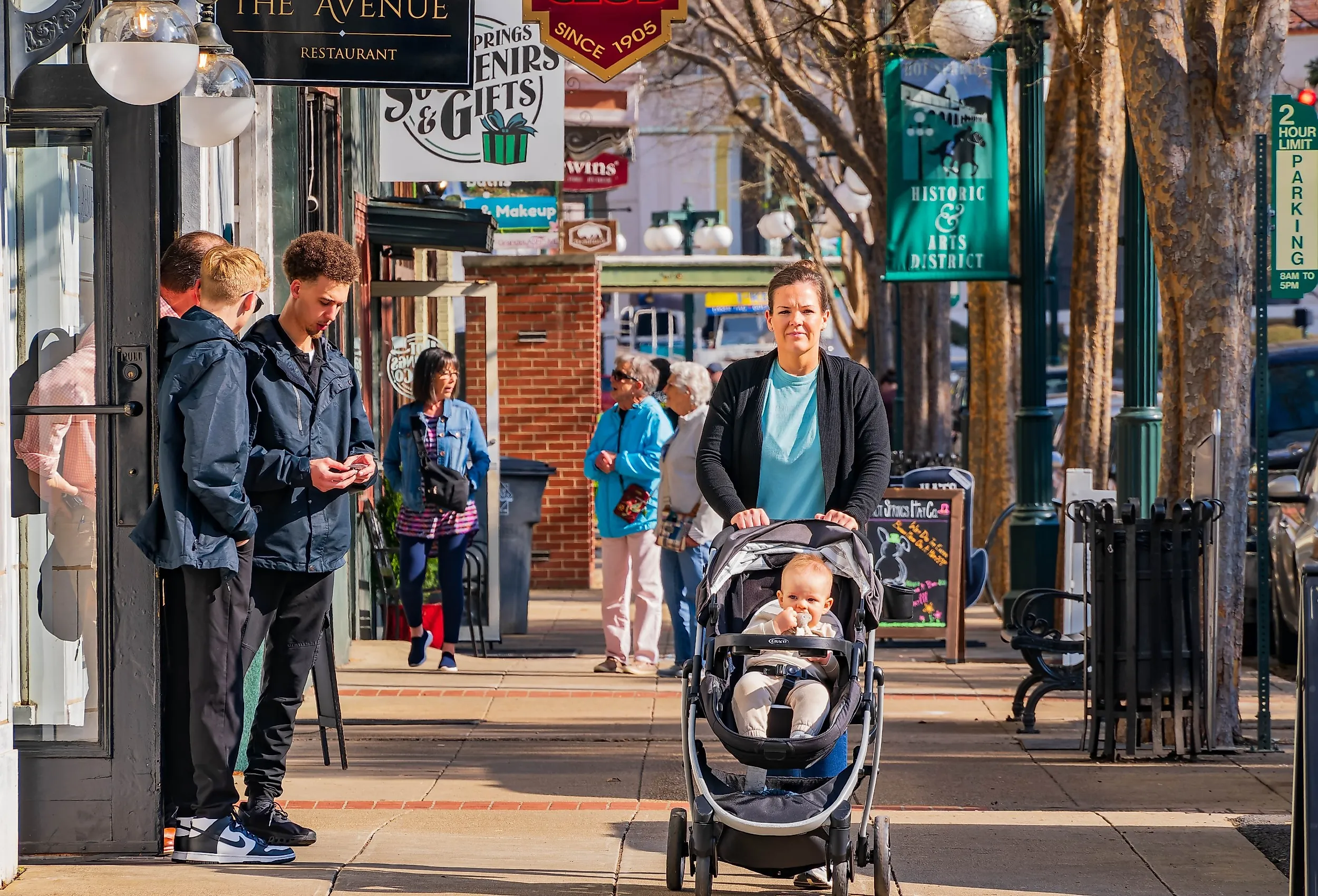
Beneath Central Avenue, the main street of Hot Springs, Arkansas, a creek runs through a stone tunnel built in the 1880s. Hot water is the reason the creek is there. The town's 47 springs rise on the western slope of Hot Springs Mountain at an average of 143°F, and all of their natural discharge drains into Hot Springs Creek. As bathhouses crowded its banks, the federal government put the creek into a channel in the early 1880s, roofed it over and laid a road on top. That road is Central Avenue.
The water itself is ancient. Rain falling on the Ouachita Mountains sinks about 6,000 feet underground and takes roughly 4,400 years to resurface. According to the National Park Service, no volcanic process is involved in heating the water. Congress set aside a four-square-mile reservation in 1832 to keep the water for public use, nearly 40 years before Yellowstone became the first national park. Today, Hot Springs National Park and the city share one valley. Bathhouse Row lines one side of Central Avenue, and the city begins on the other. Locals still fill bottles at public jug fountains with the odorless, colorless thermal water, which the park tests regularly, and the Buckstaff Bathhouse still offers traditional tub baths.
Pagosa Springs, Colorado

On August 20, 2011, a Guinness World Records adjudicator came to Pagosa Springs to oversee a measurement: a plumb line lowered into a single pool downtown. It went down 1,002 feet. The Mother Spring, at The Springs Resort and Spa, holds the record as the world's deepest geothermal hot spring, and no measurement has yet found its bottom.
The town uses that water as infrastructure. Federal Department of Energy funding helped drill two geothermal wells in the 1980s, and the Town of Pagosa Springs has owned and operated a geothermal heating utility since December 1982. In 2025, Rocky Mountain PBS and KUNC described it as one of 23 such systems in the country, heating more than 30 buildings, downtown sidewalks and three greenhouse domes. The domes stand in Centennial Park on the San Juan River. The nonprofit Geothermal Greenhouse Partnership built them and draws up to 100 gallons per minute from the town system to grow food through winters at about 7,100 feet. Businesses have moved downtown specifically to plug in: for example, a brewery opened in 2013 here because it sat inside the 12-block heating district.
Truth or Consequences, New Mexico

In 1950, the town of Hot Springs, New Mexico, voted about four to one to rename itself after a radio quiz show. Host Ralph Edwards had offered an annual visit to whichever town took the name Truth or Consequences, and he kept coming back here. The old name perfectly described the town, as a 2002 study by the Oregon Institute of Technology's Geo-Heat Center and New Mexico State University found that the town's hot springs and thermal wells all lie in the town center, within a radius of roughly a quarter mile.
Geology explains the cluster. At this spot, a bedrock constriction squeezes the Rio Grande between two basins, and hot water rises out of limestone into the river's terrace deposits. It reaches the surface at about 97 to 114°F. Spas pump it from drilled or hand-dug wells a few feet to 258 feet deep, many with natural artesian flow. In the late 1800s, cowboys from the John Cross Ranch built the first adobe bathhouse over Geronimo Springs, on the site of today's Geronimo Springs Museum. The state moved early to protect the water. In 1935, the New Mexico State Engineer declared a 38-square-mile Hot Springs Underground Water Basin around the town, and closed it to new thermal water rights in 1937. The 2002 study counted eight hot spring pools and spas still using the water directly.
Boise, Idaho

The Moore-Cunningham House at 1109 Warm Springs Avenue looks like many other Queen Anne mansions from 1892. However, its claim to fame is as the first house in the United States to be heated by natural hot water. Its owner, C.W. Moore, headed the Boise Artesian Hot and Cold Water Company, which drilled artesian hot-water wells along the foothills. The line that heated his house grew into the Boise Warm Springs Water District, which still heats about 300 homes in the Warm Springs area. The U.S. Department of Energy credits Boise with the world's first geothermal district heating system, dating it to 1892.
Idaho's capital kept expanding on the idea. Boise now runs four separate geothermal heating systems that together warm more than eight million square feet of space. The city's own utility, operating since 1983, pumps 177°F water from an aquifer about 3,200 feet below the foothills through more than 20 miles of pipe. After use, all the water returns underground through an injection well. A separate state-run system heats the Idaho State Capitol, the only statehouse in the country heated with geothermal water. Buildings in the city's system carry a small geothermal plaque, and the city publishes a one-mile walking route to find them.
Klamath Falls, Oregon

Even after a snowfall, the sidewalks on Main Street in downtown Klamath Falls stay clear. The city's geothermal heating system runs beneath them and also heats churches, banks, and government buildings, as well as the walking paths in Veterans Memorial Park. Its water comes from two wells on Old Fort Road, travels about a mile to a heat exchange facility, and returns to the aquifer through an injection well. The system has had setbacks: built in 1981, it shut down five years later after pipe failures and was rebuilt in 1991.
Residents tapped the heat long before the city did. Hot spring water was piped into homes here as early as 1900, and OPB reported in 2023 that about 600 homes heat with geothermal water. The resource is uneven. In the Pacific Terrace and Hillside neighborhoods on the northeast edge of town, which sit along a fault, owners reach hot water at depths of 100 to 400 feet, and the cheap energy adds $10,000 to $30,000 to home prices. Elsewhere, drilling is a gamble. Oregon Tech's facilities director told OPB, "It's a lottery." The college improved its odds in the 1960s by building its campus where snow melted sooner than elsewhere in town. Its wells reached water at 196°F about 2,000 feet down, and geothermal is still the only heat source for most of the campus.
Calistoga, California

In the late 1800s, a settler drilling a well in Calistoga, California, hit water under enough pressure to begin erupting on a regular schedule. That well may be the origin of the Old Faithful Geyser of California, which shoots water more than 30 feet into the air at intervals that have ranged from a few minutes to more than half an hour. The geyser's origin is disputed. A 2012 study in Geophysical Research Letters described it as an abandoned well drilled in the late 1800s, but the current owner maintains it is entirely natural.
Either way, the town sits on a geothermal aquifer whose water rises through a fault zone along the upper Napa Valley. Residents have drilled into it for about 150 years. Sam Brannan, the entrepreneur who founded the spa, opened his resort in 1862 with steam rooms and mud baths. The first well drilled in his era reached 65 feet before the pressure blew out the drilling tools. Part of Brannan's resort grounds is now Indian Springs Resort, where mineral buildup in the pipes is so rapid that the pipes are replaced every 5 to 8 months. Pumping has taken a toll. The Springs Grounds on the south side of town essentially dried up in the 1920s, possibly because of the wells, but wells deeper than 100 feet still reach hot water. As for the town's name, locals say a tipsy Brannan promised to build the "Calistoga of Sarafornia." The story is repeated widely, but it is local lore, not documented fact.
Desert Hot Springs, California

Desert Hot Springs began with two wells on opposite sides of one hill. In 1913, homesteader Cabot Yerxa was walking seven miles each way to Garnet several times a week for water. He decided to take a pick and shovel to his own land and first struck hot mineral water. On the far side of the hill, he dug again and found cold, fresh water. He named the divided spot Miracle Hill. The mystery was solved underground. The Mission Creek Fault, a branch of the San Andreas, runs through the area and separates a hot aquifer on one side from a cold one on the other.
The city grew up using both. The hot side, the Desert Hot Springs Sub-Basin, supplies the city's spa hotels, where water emerges from the ground at about 120-160°F. The cold side supplies tap water through the Mission Springs Water District. That water was named the best-tasting municipal water in the world at the 2020 Berkeley Springs International Water Tasting, and the district has won 11 medals there since first entering in 1997. Yerxa returned to the homestead in 1937 and hand-built a 35-room pueblo-style home there, now Cabot's Pueblo Museum.
Living On Borrowed Heat
What these towns share goes beyond warm water. In each one, the resource under the ground shaped what happened above it, from the federal government paving over a creek in Hot Springs to Boise laying hot water lines under a residential street. Each one has also run into the limits of that resource. Calistoga's original springs dried up in the 1920s, possibly from overpumping. New Mexico closed the Truth or Consequences basin to new thermal water rights by 1937. Idaho created a geothermal groundwater management area in Boise in 1987 after well levels along the foothills fell, and both Boise and Klamath Falls now return the water they use to the ground. In Hot Springs, the federal government had walled up and covered every spring by 1901 to protect the supply. Hot water made these towns. Keeping it coming has become one of the important jobs they do.