Where Moose And Grizzlies Overlap
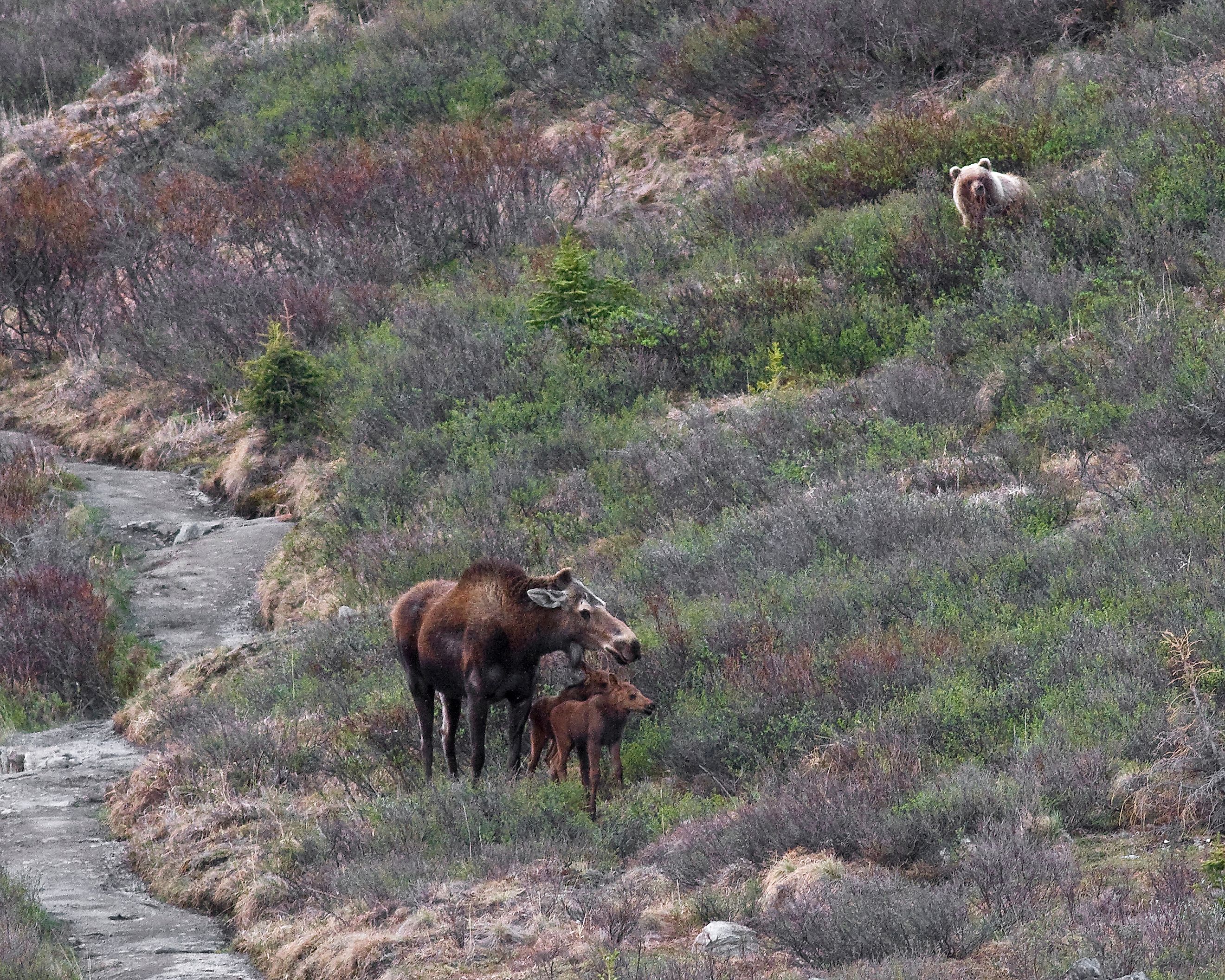
Along the Denali park road, a cow moose stepped into the willows with her calf just as a grizzly came wandering up the road behind them, nose down, following their scent. As the bear closed in, the cow whirled to face it, her calf hidden in the dwarf birch behind her.
Moments like this play out wherever moose and grizzly bears share ground, from Alaska and the Yukon to the northern Rocky Mountains. The two animals rarely compete for food, but the forests, wetlands, and river valleys that feed one tend to draw the other, and in early summer that overlap can turn deadly.
Denali National Park And Preserve, Alaska

Denali's moose favor forests near lakes and marshes, where summer supplies plenty of leaves and underwater vegetation. Grizzlies follow river corridors and cross open tundra in search of food, digging for peavine roots in spring and late fall. In between, they feed on summer greenery before berries become a mainstay in late July. Those feeding grounds sit right beside the forests and ponds where moose browse.
In late spring and early summer, grizzlies enter spruce forests to search for newborn moose. The Alaska Department of Fish and Game considers a calf's first two months its most vulnerable, and some bears become specialists at killing adults too. Still, a mother moose can sometimes drive off a full-grown grizzly, so even a young calf is not always an easy meal.
Ni'iinlii Njik, Yukon

Long after most rivers in the northern Yukon have frozen, salmon are still running at Ni'iinlii Njik, the protected area also known as Fishing Branch. Its rivers stay open throughout the year, and the late runs draw grizzlies to Bear Cave Mountain into early winter. Limestone caves on the mountain give the bears places to den, while the surrounding forests and wetlands hold moose.
Moose eat shrubs, leaves, and aquatic plants, so lakeshores and river edges become key feeding spots in spring and summer. In autumn, they range more widely during the mating season, just as the late salmon run keeps bears on the open water.
Jasper National Park, Alberta
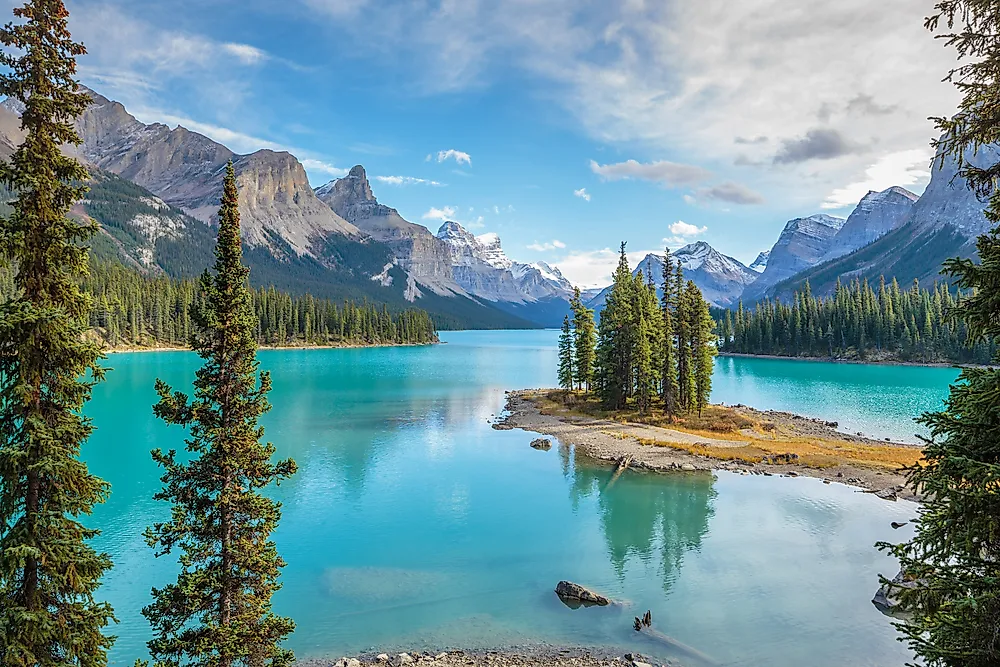
Three rivers, the Athabasca, Miette, and Maligne, come together near the town of Jasper, in an area Parks Canada counts as key habitat for both moose and large predators such as grizzlies. Moose feed along the banks of streams and lakes, eating aquatic plants along with leaves and twigs. According to Parks Canada, moose are often found in places like the Pocahontas wetlands, Yellowhead Pass, and Maligne Lake.
Grizzlies adjust their diet as the seasons change, moving up and down the slopes in search of food. In spring, dandelions draw them to valley bottoms and roadsides. As summer arrives, they head into alpine areas to dig for roots, flower bulbs, and sometimes ground squirrels. When fall brings fewer food options, grizzlies return to the lower valleys, back where the moose feed.
Yellowstone National Park, Wyoming

Most of the year, Yellowstone's moose use marshy meadows and waterways along Soda Butte Creek, Pelican Creek, Lewis River, and Gallatin River, while grizzlies roam the nearby forests and open areas. Winter changes that. Bears retreat to their dens, but moose stay active, with some moving to willow flats and others heading into fir forests.
A bear's interest in a moose does not always involve a chase. Yellowstone grizzlies also feed on moose carcasses, so a bear seen at a carcass did not necessarily kill it. A moose that dies of another cause can still become food for a bear, linking the two species through scavenging as well as predation.
Grand Teton National Park, Wyoming

South of Yellowstone, mountain streams, springs, and seeps sustain Grand Teton's wetlands, where willows grow beside pond lilies and cattails. The National Park Service identifies Willow Flats and Oxbow Bend as excellent moose habitat, with vegetation accessible both along the banks and beneath the water.
Whereas moose browse the willows, grizzlies at Lower Willow Flats dig beneath the vegetation for grubs and bulbs. The meadows also shelter elk calves, drawing bears in search of larger prey. The two can feed in the same wetland without competing. Elk raising their young there, however, face a much more direct danger from a passing bear.
When Their Paths Cross
A bear digging for roots and a moose browsing on willow can share a valley without competing for a single mouthful. Things change quickly when a grizzly turns to the calves. In the account Gene Harmon wrote for the National Park Service (NPS), the cow on the Denali park road held her ground against the grizzly stalking her calf. The two advanced and retreated as they challenged each other until the bear finally pulled away into the thicket. This time the mother won. Many calves are not so lucky.