The State Parks Where Cottonmouths Stay Active All Winter
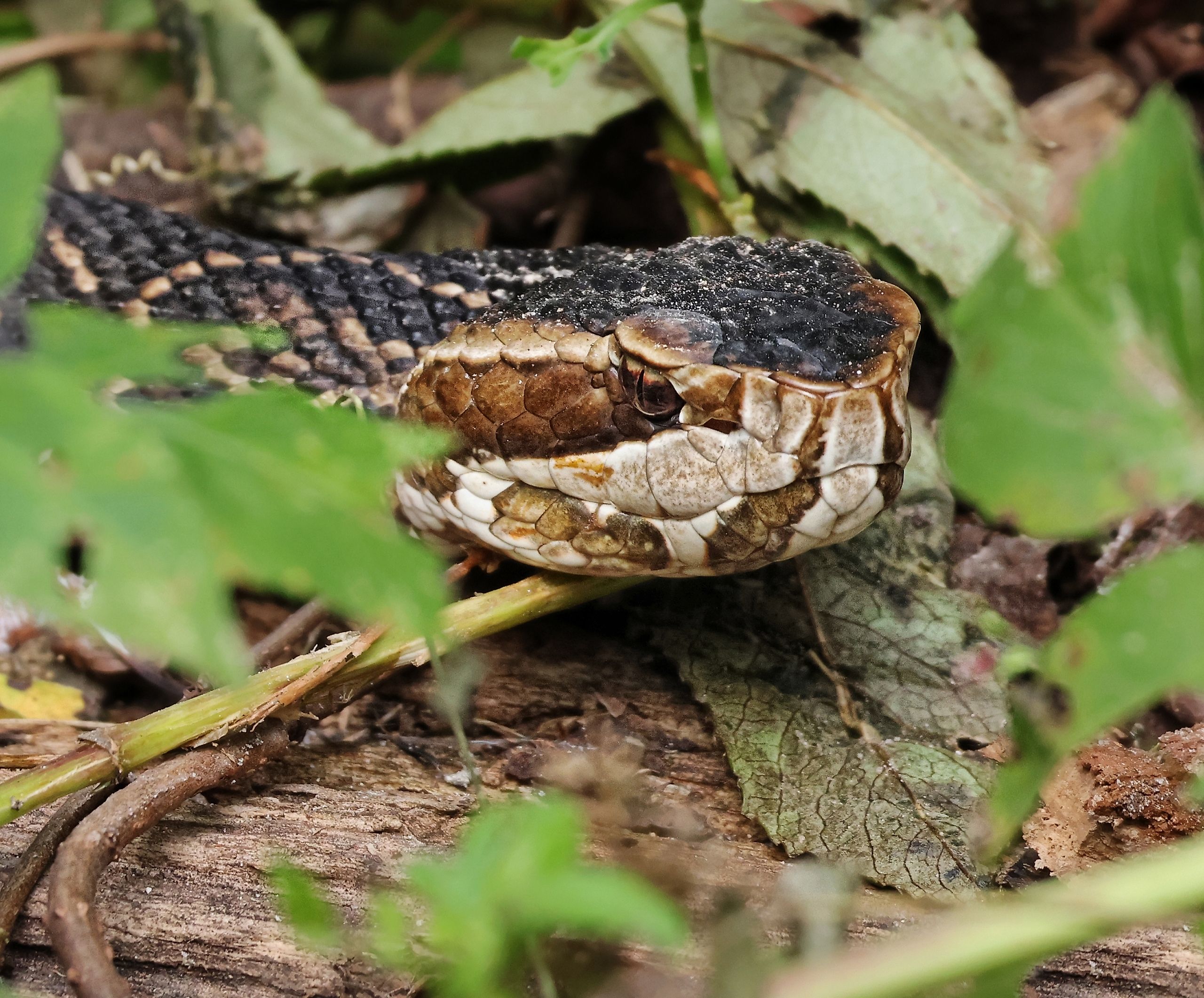
In much of the Deep South, a cottonmouth out on a sunny January day is no fluke. Georgia's wildlife agency says the snakes are often seen basking on sunny winter days. In Florida, they tend to stay active year-round. In several Southern state parks, they have been photographed in every winter month. At one park in South Florida, more cottonmouths turn up in January than in the entire summer.
Fontainebleau State Park, Louisiana

Fontainebleau State Park covers 2,800 acres on the north shore of Lake Pontchartrain, near Mandeville, and it is bordered on three sides by water, the lake and two bayous, Bayou Cane and Bayou Castine. The park's nature trail leads to a short boardwalk overlooking the marsh, the kind of low, wet edge cottonmouths keep to. Louisiana's wildlife department says they often stay coiled near water or on log jams in it, and calls them highly defensive and not inclined to get out of one's way. A provoked one coils, opens its mouth to show the white lining, and shakes its tail.
January averages a high of 61°F at nearby Slidell, cool enough that winter sightings here are scattered. Cottonmouths have still been photographed in and around the park in each winter month, including one inside the park's preserve on February 14, 2018. Away from the marsh, the park also has a 4.8-mile hiking trail and a stretch of the Tammany Trace, an old railroad line converted into a trail.
Brazos Bend State Park, Texas

Texas Parks and Wildlife tells visitors to Brazos Bend State Park, southwest of Houston, that any mild winter day is one of the best times to see the park's reptiles and amphibians, along with mild days in spring and fall.
The park's trails follow the edges of its lakes. The 1.7-mile Elm Lake Loop runs along Elm Lake, one of the two lakes where the park's more than 300 adult alligators are most concentrated. From there, the 0.6-mile Spillway Trail cuts over to the 1.2-mile 40 Acre Lake Trail, which passes several kinds of aquatic habitat, and an observation tower at 40 Acre Lake looks out over the marsh and hardwood wetlands around it.
A winter cottonmouth here is a mild-day snake. Of 199 cottonmouth sightings in the park on iNaturalist, three fall in each winter month, against 39 in September alone. One was photographed on New Year's Day 2023.
Paynes Prairie Preserve State Park, Florida

In north-central Florida, Paynes Prairie Preserve State Park, just south of Gainesville, holds a ranger chat at 9 a.m. on Saturdays from November through March at the La Chua Trail. The trail leaves the north rim of the prairie on a boardwalk, with views of wet prairie and marsh around Alachua Sink and Alachua Lake, and snakes are on the park's list of animals commonly seen. As of late November 2026, high water has partly closed La Chua, though it is open from the parking area to the end of the boardwalk. The cottonmouths here are Florida cottonmouths, a separate species from the northern cottonmouths of Louisiana and Texas, and at Paynes Prairie their record has no seasonal gap. They have been photographed in the park 109 times, in every month of the year.
Highlands Hammock State Park, Florida

Winter is the busy season at Highlands Hammock State Park, west of Sebring in south-central Florida, and the park's guided, narrated tram runs daily through those months. The cottonmouth record keeps the same calendar. November has more sightings than any other month, 21. February has 10 and December has eight, while each summer month has two or three.
The park's best-known swamp walk is closed for now. Flooding shut the Cypress Swamp Trail, whose boardwalk crosses the tea-colored water of Charlie Bowlegs Creek, along with the historic catwalk, on November 4, 2026. The Fern Garden Trail is not on the closure notice. Its accessible boardwalk runs through marsh, and the park says yellow-crowned night herons and alligators may be seen from it.
Fakahatchee Strand Preserve State Park, Florida

Janes Scenic Drive, a 6-mile dirt road off State Road 29, leads into Fakahatchee Strand Preserve State Park, southeast of Naples near the bottom of the Florida peninsula. Much of the park's winter cottonmouth record comes from along it, including a Florida cottonmouth photographed on the drive on January 29, 2024.
With January highs averaging 74°F at Naples, the snake's winter barely registers. Of 117 sightings in the park, 16 fall in January, more than June, July, and August combined, which add up to 11. December has 14 and February has 11.
The cool months are also when people are in the swamp. The park's Big Cypress Bend Boardwalk winds through old-growth cypress to an alligator pond and an observation deck, for a walk that stays dry. Ranger-led swamp walks leave from the ranger station on Janes Scenic Drive several times a month in winter, and Collier County's tourism office says swamp walks in the area fill quickly in January and February.
In South Florida, the snake's calendar and the visitor's calendar line up. Highlands Hammock's tram season and Fakahatchee's swamp walks fall in the same cool months when those parks log many of their cottonmouth sightings, and by the time the walks fill in January, the Florida cottonmouth has had no real winter to wait out. Farther north, at Brazos Bend and Fontainebleau, a winter cottonmouth needs a mild, sunny day to come out and bask. Either way, the snake beside a winter boardwalk is the one Florida's natural history museum describes, a species that is not aggressive and avoids people and pets, with most bites coming when someone harasses or handles one on purpose or steps on one by accident. Louisiana's wildlife department adds that a cottonmouth is not inclined to get out of the way, so going around it falls to the walker.