8 Off-The-Beaten-Path Towns In Washington
Washington’s lesser-known destinations are shaped by remote landscapes and communities with character. Winthrop preserves its Old West character beneath the North Cascades, while Port Townsend combines Victorian architecture with beaches and historic military sites at Fort Worden. Stehekin offers a far more remote experience, reached only by ferry, private plane, or trail and surrounded by waterfalls, mountains, and forest. On Whidbey Island, Coupeville and Langley add maritime history, local art, and views across Puget Sound. Together, these eight destinations showcase Washington through secluded landscapes, historic waterfronts, outdoor adventure, and small-town character.
Winthrop

Winthrop wears its Old West theme in earnest, with covered boardwalks and false-front wooden storefronts lining its main street. The look pulls people into Three Fingered Jack's Saloon, and the Old Schoolhouse Brewery serves house-brewed beer and pub food at its Winthrop location. The town sits at the eastern gateway to North Cascades National Park and along the Cascade Loop, the scenic route that carries State Highway 20 over the mountains.
Lodging ranges from a downtown inn, a rented cabin, or the hilltop Sun Mountain Lodge above the valley. Winter is the busy season. Methow Trails grooms the largest cross-country ski network in North America here, more than 120 miles of track open to skiers, fat bikers, and snowshoers. Snowmobilers head for the surrounding forest roads instead, since the Methow trails stay non-motorized.
Summer nights deliver some of the darkest skies in the state, well away from city light, which makes the valley a favorite for stargazers. Daytime hours fill with camping, fishing, hiking, biking, and horseback riding on a long web of maintained trails. The Methow River runs right through town, open to kayaking, swimming, and fishing.
Friday Harbor

Reaching Friday Harbor means boarding a Washington State Ferry out to San Juan Island, where the town's compact seaport unfolds within walking distance of the dock. The shops and kitchens here are independent, so the crab, coffee, and produce come off the island rather than from a chain. San Juan Vineyard pours local wine, Friday's Crabhouse serves the day's catch on the water, and Medio Cafe handles the morning coffee and pastry run.
The harbor is the jumping-off point for whale-watching boats and guided kayak tours, and self-piloted kayakers launch from here, too. Bald eagles turn up often enough that they are spotted right downtown. Anyone who would rather stay ashore can settle in with the sea air and the working-marina view.
Lime Kiln Point State Park, on the island's west side, ranks among the best shore-based whale-watching spots in the country. Jackson Beach sits about two miles from the ferry landing, with a picnic area, a boat launch, public restrooms, and room for beach volleyball.
Coupeville

Coupeville is the second-oldest town in Washington, its waterfront still lined with 19th-century storefronts on the central neck of Whidbey Island. The whole area falls inside Ebey's Landing National Historical Reserve, where working family farms date back generations. The red Coupeville Wharf and the calm water of Penn Cove set the scene from downtown.
Penn Cove mussels are the local signature, farmed on rafts just offshore and served all over town. Make the trip even more memorable by touring Admiralty Head Lighthouse at Fort Casey Historical State Park in Coupeville. The shoreline invites walking, biking, kayaking, and sailing on Puget Sound.
History and craft anchor the cultural side. Heritage farms, working artist studios, and the Island County Historical Society Museum sit within a short walk of one another. The Coupeville Arts Center offers classes for anyone wanting to make their own work, and downtown galleries are free to browse.
Sequim

The town suits campers, cabin renters, and hotel guests alike, including those who book the Juan de Fuca Waterfront Hotel out on Dungeness Bay. Hikers and birdwatchers head for the Dungeness National Wildlife Refuge, which reaches out along one of the longest natural sand spits in the country. Cyclists ride the Olympic Discovery Trail, which runs more than 100 miles along the Strait of Juan de Fuca between Port Townsend and the Pacific coast at La Push.
The Sequim Lavender Weekend each July fills booths with lavender goods and draws crowds for local seafood. That seafood is easy to find year-round at the Dockside Grill on John Wayne Marina or Salty Girls Seafood Co. in town.
Port Townsend

Port Townsend is a National Historic Landmark, recognized for the Victorian seaport architecture that fills its downtown and uptown districts. The same waters that built the port now draw whale watchers to the edge of Puget Sound. Orcas, seals, and sea lions are present year-round.
Gray whales pass through in the early spring. A small group known as the Sounders breaks off its northbound migration each March and April to feed in local waters before continuing on toward the Bering Sea. The Port Townsend Marine Science Center explains the seasons and the science behind the sightings.
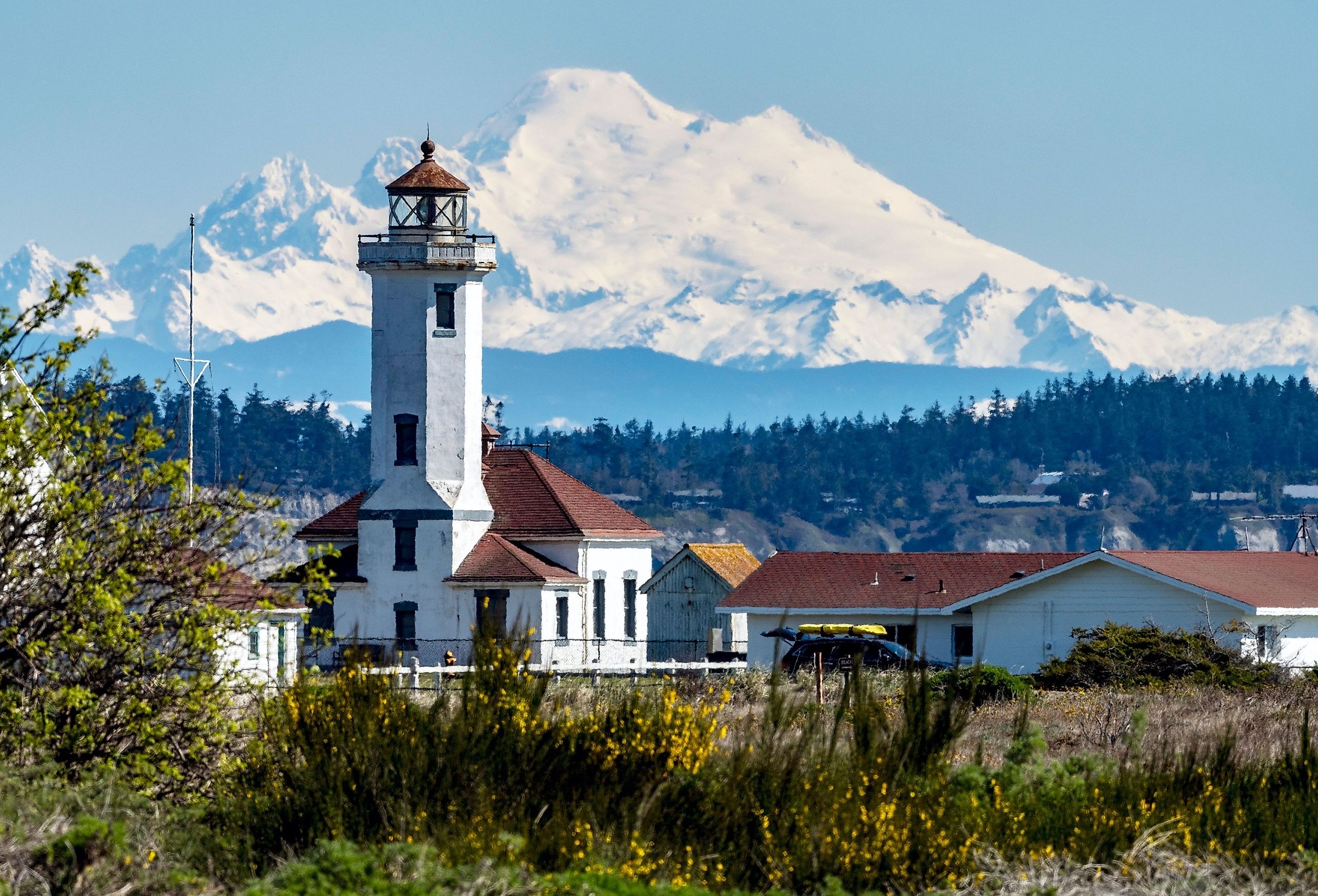
Fort Worden State Park spreads across the headland with forested trails, beaches, and the concrete artillery bunkers left from its military years. Point Wilson Lighthouse stands at the tip, first lit in 1879 and still active today. Weekend tours run in the warmer months, and the restored keeper's quarters take overnight guests.
The town has been an artists' colony for generations, home to painters, writers, musicians, and filmmakers. Independent film has a real foothold here, with screenings and celebrations at the Rose Theatre downtown.
Gig Harbor

Gig Harbor curves around a working waterfront where kayaks, paddleboards, and fishing boats share the water with pleasure cruisers. Rentals and guided tours launch from the harbor. On a clear day, the cobalt water of Puget Sound frames Mount Rainier rising to the southeast.
For the best vantage, the Finholm View Climb showcases the north end of the harbor to a lookout over the water and the mountain, with coffee and local brews waiting at the top. Down at water level, the Devoted Kiss Cafe keeps a few window tables with harbor views.
Two parks cover the range of walking here. Donkey Creek Park offers short, easy trails that thread through the Gig Harbor waterfront. McCormick Forest Park runs deeper into the trees, with routes for hikers, runners, and cyclists under a canopy of evergreens.
Stehekin via Chelan

Stehekin has no road connecting it to the outside world. Reaching it takes a ferry up Lake Chelan, a floatplane, or a hike in on foot. The community sits at the lake's head, ringed by North Cascades National Park, which puts a vast network of public trails and quiet water within reach.
In town, a rented bike or a short walk leads to Rainbow Falls, a 312-foot cascade beside the working Buckner Orchard. The orchard offers tours and Washington apples picked straight from the tree. The Stehekin Pastry Company, a short ride away, is known for cinnamon rolls that anchor many a paddle break or hike.
Wildlife has the run of the place. Deer wander freely, bald eagles work the skies, and mountain goats pick their way across the high rock where they are hard to spot. Cell coverage is thin to nonexistent, so a visit here means going off the grid by default.
Langley

Langley sits on a bluff at the south end of Whidbey Island, looking out over Saratoga Passage toward Camano Island. That passage is a corridor for migrating whales. Gray whales detour into these waters in early spring, and orcas move through in the warmer months, both often visible from the bluff. The Langley Whale Center downtown tracks the sightings and explains the animals behind them.
Langley is a certified Washington State Creative District, and the arts fill its small downtown. Galleries line the streets, and at Callahan's Firehouse visitors can watch glassblowers shape hot glass into custom pieces or try it themselves. The Clyde Theatre, a 1930s cinema, keeps live theater and film on the calendar.
Every February the town stages its Mystery Weekend, a live whodunit that turns the streets into a stage. Participants play detective and race to solve a staged crime before anyone else does.
For open air, South Whidbey State Park protects old-growth forest and beach trails a short drive from downtown. The waterfront at Seawall Park puts the passage and its whales right at the edge of town.
What Ties These Towns Together
The thread running through all eight is water and mountains, and the way small communities shape themselves around both. The island towns keep their pace by ferry schedule, Winthrop and Stehekin settle deep in the North Cascades, and the Olympic Peninsula stops trade on lavender, tides, and whale seasons. None of them try to be a city, and that is the point. Each one rewards a slower, closer look at a single corner of Washington.