7 One-of-a-Kind Small Towns in Missouri
Missouri sits at the center of the United States and is bordered by eight states. The Mississippi and Missouri rivers shaped early travel, trade, and settlement, making the region a natural crossroads. Long before European arrival, Native American tribes lived here, with evidence of human life stretching back more than twelve thousand years. French missionaries and traders arrived in the 1600s, and the first permanent settlement was founded in 1735. During the Civil War, Missouri remained in the Union, though many residents fought for the Confederacy. After the war, cities like St. Louis and Kansas City grew into major industrial and trade centers. At the same time, small towns developed along rivers, rail lines, mines, and farms. Agriculture, manufacturing, and tourism still shape the state today.
Scattered across this landscape are small towns with stories that feel almost unbelievable. You might find stone ruins rising from a forested bluff or a bar hidden deep inside a cave. These towns stand out because of chance discoveries, unusual geography, or strange chapters in local history. With that, here are some one-of-a-kind small towns in Missouri where the unexpected became part of daily life, leaving behind sights and stories that are hard to forget.
Ridgedale

Ridgedale is a small, quiet community in southern Taney County, Missouri. It sits along U.S. Route 65, about ten miles south of Branson and less than a mile north of the Arkansas border. Ridgedale’s standout quirk is the Lost Canyon Cave and Nature Trail. It is the only drive-through cave bar in the country, reached by riding a golf cart through a nature trail.
Inside the cave, drinks are served beside waterfalls, rock walls, and bats. Photos often show glowing cave ceilings and carts lined up underground. Besides riding the nature trail, you can visit Top of the Rock Ozarks Heritage Preserve for views, golf, and Chapel of the Ozarks at Top of the Rock. For those seeking a memorable and unique Ozarks experience, Ridgedale is a must-visit.
Camdenton

Camdenton is one of the youngest towns in the Ozarks, and that is part of what makes it unusual. While most Ozarks towns formed before the Civil War, Camdenton began in 1930 during the Great Depression. It became the Camden County seat before most of the town even existed. The reason was water. The construction of Bagnell Dam flooded the former county seat of Linn Creek, forcing officials to choose a new location. Business leaders selected a crossroads of two highways and built an entirely new town from scratch. Because of this late start, Camdenton has no Victorian homes.
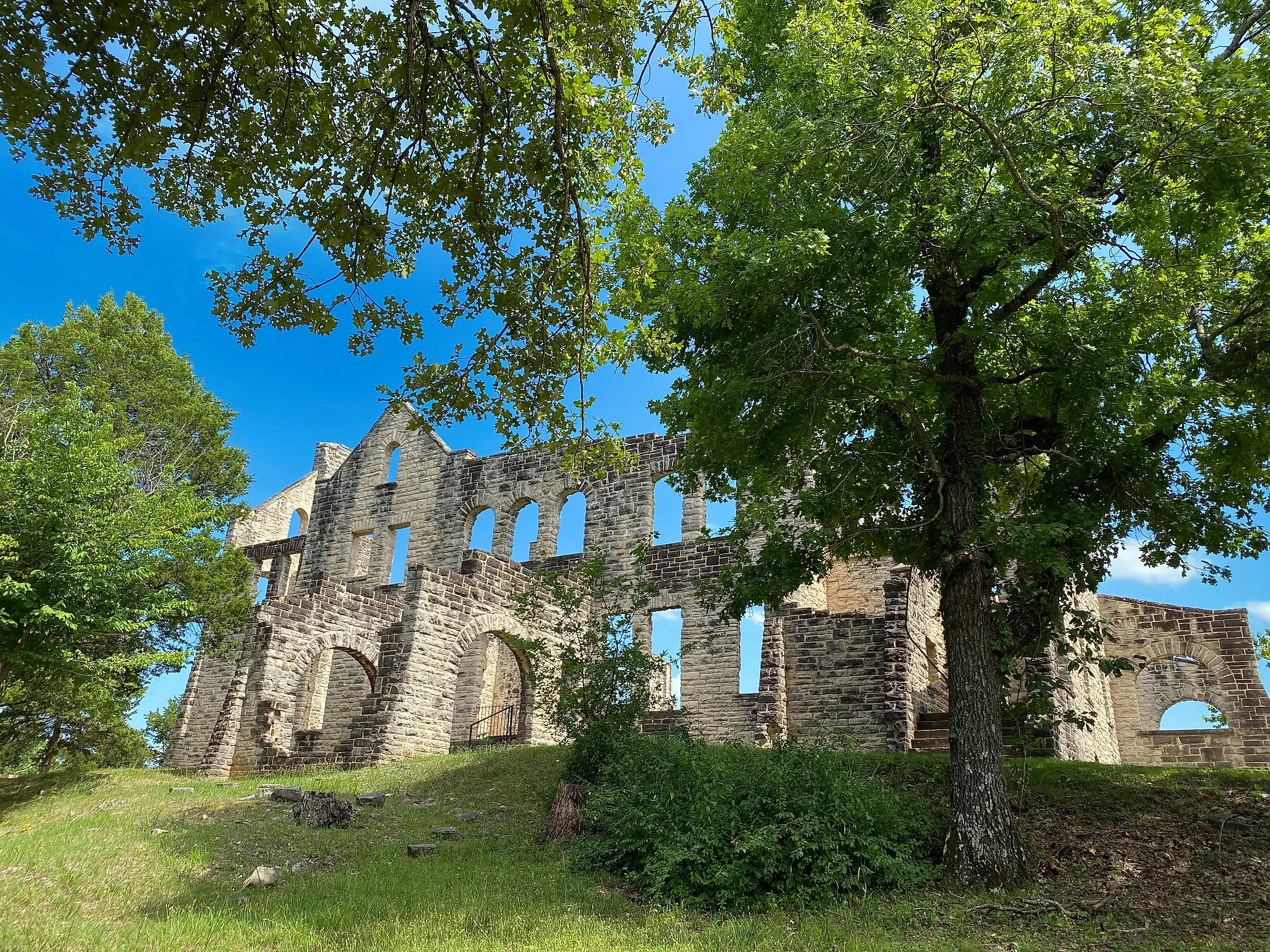
Instead, you will see Art Deco buildings like the Camden County Courthouse. Nearby sits the town’s most striking feature, the Ha Ha Tonka Castle Ruins. Built in 1905 and later destroyed by fire, the stone mansion stands on a bluff inside the Ha Ha Tonka State Park and draws visitors year-round. You can tour the castle ruins, hike trails with sinkholes and a natural bridge, and visit the Bridal Cave & Thunder Mountain Park.
Bonne Terre

Bonne Terre is a small city in St. Francois County with an unusual past and an even more unusual attraction. French settlers arrived here in the 1720s searching for minerals, and lead mining soon shaped the town. The Bonne Terre Mine opened in 1864 and operated for nearly a century before closing in 1962.
Over time, the mine filled with spring water, creating what is now the world’s largest known freshwater underground lake. Clear water reveals old rail tracks, tools, and massive chambers carved by miners. The quiet underground space feels calm and otherworldly. Above ground, the town has a relaxed pace and friendly feel.
Historic sites like the Bonne Terre Mine, the 1909 depot, and former St. Joe Lead Company buildings remain important landmarks. You can take a guided boat tour inside the Bonne Terre Mine, and you can even scuba dive in the underground lake if certified. Save time to also visit the Space Museum and Grissom Center, and hike trails at nearby St. Francois State Park.
Sullivan

Sullivan sits along Route 66 and stretches across Franklin and Crawford Counties, just east of the Ozarks. The town traces its roots back more than 160 years to Stephen and Dorcas Sullivan, who moved here from South Carolina after learning about the Meramec River region from Daniel Boone. They built a cabin, farmed the land, and helped shape what would become the town. Growth picked up in the 1850s when the railroad arrived. Stephen Sullivan donated land for a depot, and the station took his name. Mining soon followed, with lead, iron, zinc, and copper driving the local economy for decades. While nearby towns faded, Sullivan continued to grow.
Today, Sullivan is best known for Meramec Caverns, one of the most visited cave systems in the state. The glowing rock formations and Jesse James legends make it a standout stop. Visitors can also spot Route 66 history at the old Shamrock Court, a stone tourist court built in the 1940s that still reflects the town’s travel-era past. Besides that, you can camp or float the river at Meramec State Park.
Sedalia

Sedalia grew on land once inhabited by the Osage Nation before white settlement expanded after 1825. George R. Smith founded the town in the late 1850s, betting on the railroad. That gamble paid off in 1861 when Sedalia became the western terminus of the Pacific Railroad. Rail access pushed rapid growth, turning a small settlement into a busy railroad and commercial center within a decade. By the late 1800s, Sedalia had rail shops, hospitals, a courthouse, and a strong downtown.
It was also where Scott Joplin studied music and performed before shaping ragtime history. The town’s standout attraction is Bothwell Lodge, a large Craftsman-style home built over natural caves for cooling. The lodge features eclectic decoration, with mostly original furnishings, offering one of the best tastes of early 20th-century life in the Midwest. While in town, you can also explore the Daum Museum of Contemporary Art, check out Clover Dell Park, and hike the Katy Trail.
Liberty

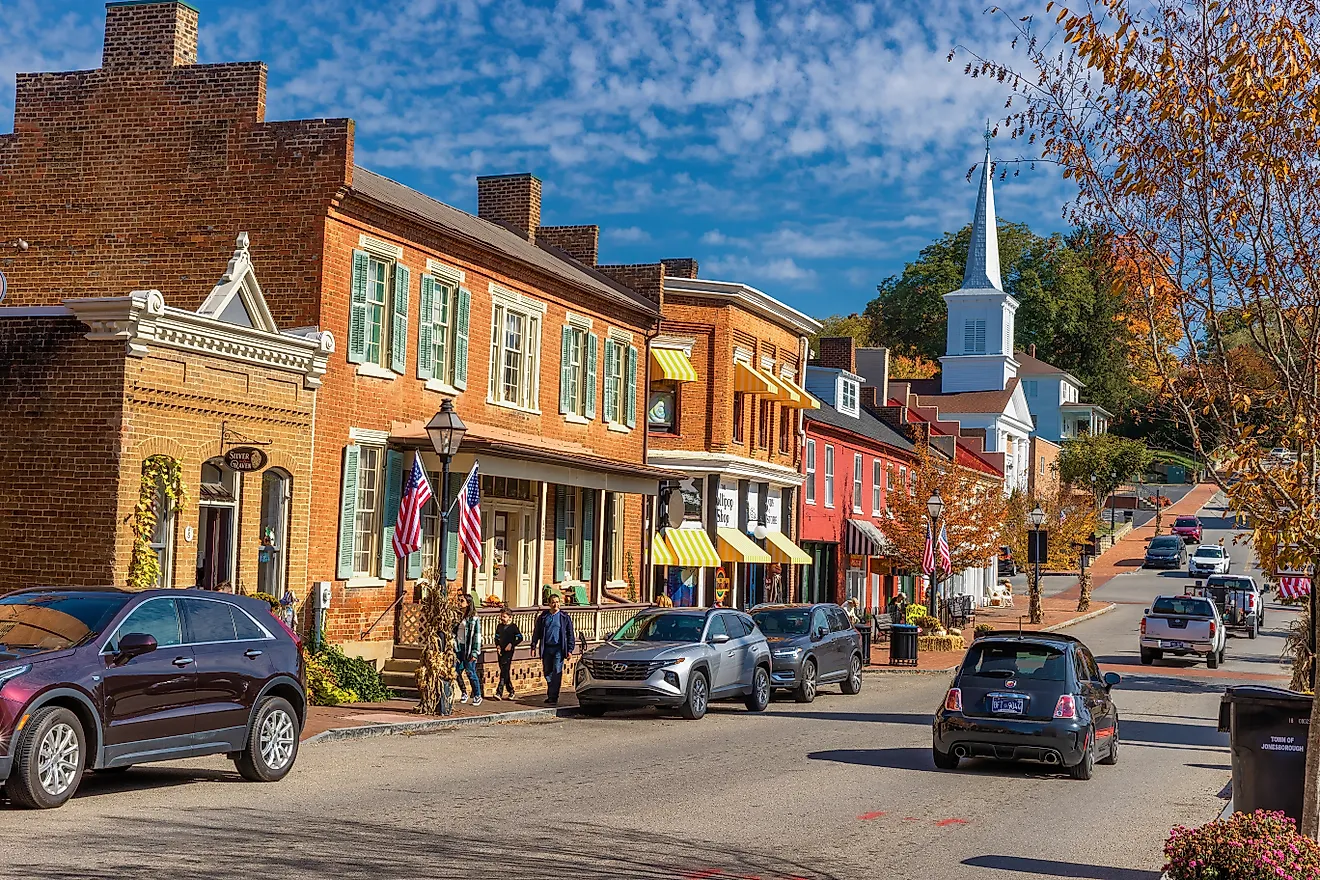
Liberty is one of the oldest towns west of the Mississippi River. American settlers arrived in the early 1800s, and by 1822, Liberty became the Clay County seat. Incorporated in 1829, it played an early role in westward expansion. Steamboats once docked at Liberty Landing along the Missouri River, bringing settlers and supplies from the east.
The town is also known for key moments in American history. The Liberty Jail, built in 1833, briefly held Joseph Smith, the founder of the Mormon religion, during the 1838 Mormon War. William Jewell College opened in 1849, shaping Liberty as an educational center. Later events in the town included the 1866 Clay County Savings Bank robbery, one of the earliest daylight bank robberies in the U.S.
Liberty’s most unusual feature is the Odd Fellows Home, a preserved fraternal complex from 1900, which had a working farm, orphanage, school, and more. Unsurprisingly, the complex has its fair share of local ghost legends. You can explore the Liberty Jail, the Jesse James Bank Museum, and the tree-lined square that reflects both growth and preservation. You can also check out their on-site winery, called Belvoir Winery and Inn, for tastings.
Hannibal

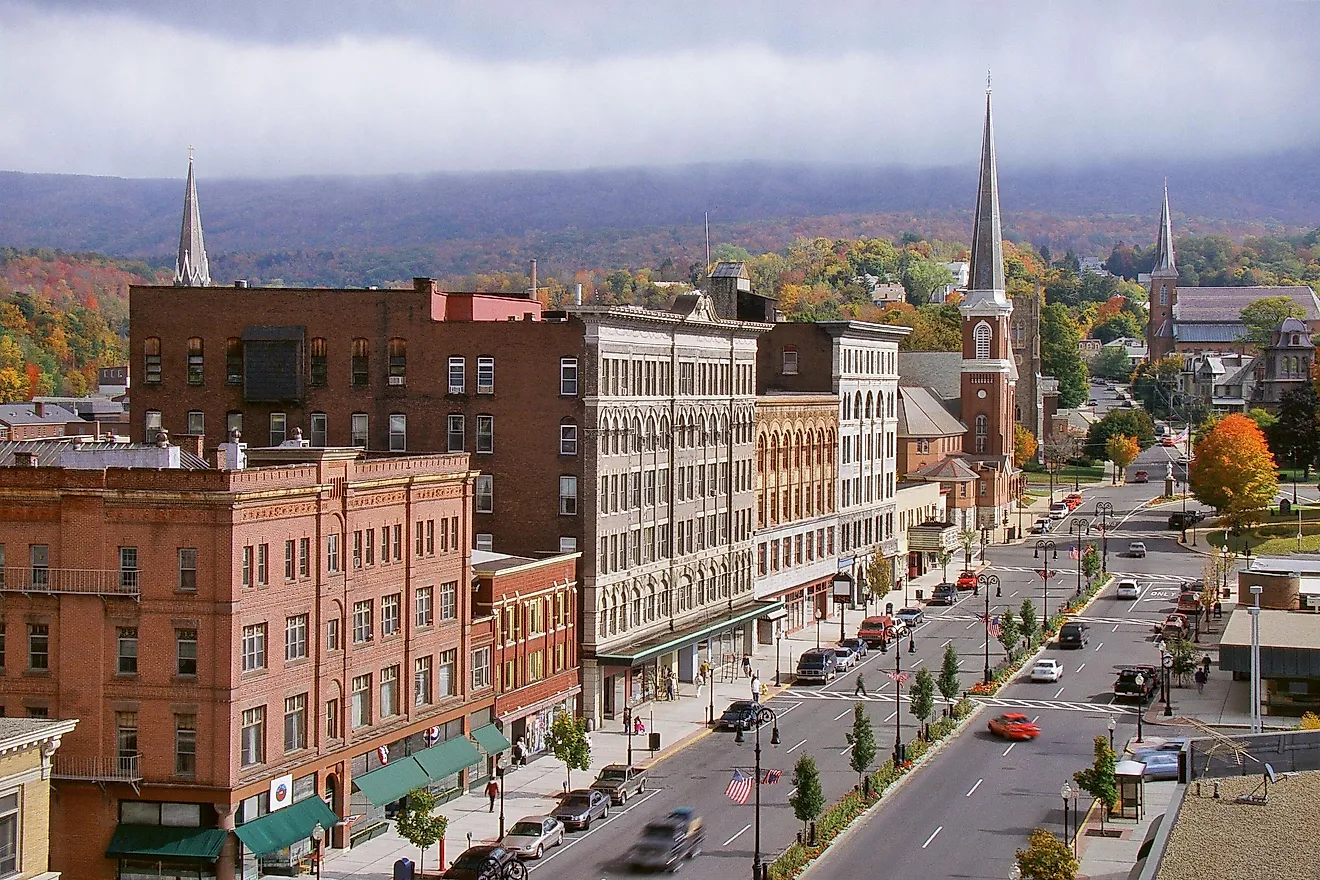
Hannibal sits along the Mississippi River in northeast Missouri, about 100 miles north of St. Louis. It is easy to reach by Highway 61 and Highway 36, which connect the town to cities like St. Louis, Kansas City, and Chicago. Founded in 1819, Hannibal grew quickly as a busy river port where steamboats stopped to load and unload goods. By the mid-1800s, it was one of Missouri’s leading commercial cities, supported by industries such as milling, pork packing, and later shoe and cement manufacturing. What makes Hannibal truly one of a kind is its deep link to Mark Twain.
Samuel Clemens, who later wrote under the name Mark Twain, spent his childhood here, and the town became the model for many scenes and characters in Tom Sawyer and Huckleberry Finn. Visitors can still see his boyhood home, the Becky Thatcher house, and the Mark Twain Cave that inspired his stories. You can tour the Mark Twain Boyhood Home and Museum and check out the famous Lover’s Leap overlook, a dramatic cliff with stunning views of the Mississippi River and the surrounding area.
Missouri’s small towns show how unusual events and local choices can shape everyday life in lasting ways. Some places grew because of railroads or mining, while others formed after floods, dam projects, or chance discoveries underground. Over time, these towns held on to the features that made them different. These attractions are just attention-grabbing; they connect visitors to the rich and fascinating history of this state. Visiting them shows a side of Missouri that goes beyond the expected, leaving you with one-of-a-kind memories to last a lifetime.