14 Underrated Destinations In the Pacific Northwest To Avoid Summer Crowds
The Pacific Northwest is full of underrated spots that the summer crowds never reach. Crater Lake and Mount Rainier jam up by the Fourth of July, but these barely notice the season. Some lie hours from the nearest town. Others hide behind farm fields or drop below a desert rim where nobody thinks to look. A few pull real numbers on weekends, then clear out by Tuesday. What waits instead is deep gorges, black lava fields, and water cold enough to steal your breath.
Owyhee Canyonlands, Idaho and Oregon

You can drive the gravel into the Owyhee Canyonlands for an hour and never pass another car. The country straddles the corner of southwest Idaho and southeast Oregon, flat farmland running right up to the edge before a sudden drop into red rock.
Desert rivers and creeks cut the canyons, spires, and pinnacles below. Vegetation crowds the water while the rest of the ground stays bone dry. The remoteness keeps the place almost empty, and the night sky goes black enough to pick out the Milky Way.
Lake Pend Oreille, Idaho

At more than 1,150 feet deep, Lake Pend Oreille holds more water than any summer crowd can fill. Idaho's largest lake runs long and narrow through the Panhandle, cold and clear, with pine forest and the Coeur d'Alene Mountains climbing off the shore.
Farragut State Park covers the south end with a full-service campground. The national forest backcountry holds dispersed sites for anyone who wants quiet over hookups. The water is built for a summer swim, and a lakeside camp makes the best base.
Hell's Canyon National Recreation Area, Idaho

North America's deepest river gorge stays empty mostly because almost nobody lives near it. Hell's Canyon National Recreation Area runs the western Idaho and eastern Oregon line, where the Snake River has cut deeper than the Grand Canyon.
Craggy walls climb on both sides as the trail drops toward the water. The trail names match the drama, with Suicide Point among them. Shaded campsites line the canyon bottom near the historic Kirkwood Ranch, homesteaded in the late 1800s for anyone who wants a stop with some history.
Wallowa Mountains, Oregon

The far northeast corner of Oregon keeps the Wallowa Mountains off most summer itineraries. Locals call them the Alps of Oregon.
The Eagle Cap Wilderness packs more than 500 miles of trail past granite summits, alpine lakes, and high meadows, the largest such area in the state. The Eagle Cap day hike runs about 20 miles with 4,000 feet of climbing and the widest views in the range. Wolverines still roam the high country, and a lucky hiker might catch sight of one.
Alvord Desert, Oregon

The Alvord playa is one of the emptiest places you can camp in Oregon, just you and the crunch of cracked mineral crust underfoot. The dry lake bed stretches about 12 miles by 7 in southeastern Oregon, with the jagged peaks of Steens Mountain rising behind it.
Camping straight on the flat opens up a huge bowl of dark sky overhead. Alvord Hot Springs nearby charges a small fee for a soak in the geothermal water. Cool-weather months work best, before the desert heat turns brutal.
Painted Hills, Oregon

The colored bands at the Painted Hills record millions of years of climate, and central Oregon keeps them far from the summer rush. The unit belongs to John Day Fossil Beds National Monument, its hills layered red, gold, and black by different geological eras.
The half-mile Overlook Trail frames the most photographed view. The quarter-mile Painted Cove boardwalk runs right up to the mounds without bruising the soft clay. The site lies about 9 miles northwest of Mitchell and stays quiet while Crater Lake and the coast fill up. Carroll Rim adds a 1.5-mile round trip and 400 feet of climbing for the wide view across the valley.
North Cascades National Park, Washington

Three hours from Seattle, North Cascades National Park drew just 16,485 visitors in 2024, the second-least-visited national park in the country. More than 300 glaciers crown its peaks, the largest such system in the lower 48, with turquoise lakes below earning it the name the American Alps.
Highway 20 cuts the southern edge, with overlooks at Diablo Lake and trailheads for the Maple Pass Loop and Cascade Pass. Jack Kerouac spent the summer of 1956 in the fire lookout atop Desolation Peak. The trail up there still pulls literary-minded hikers.
Camlann Village, Washington
Skip the festival weekends and Camlann Medieval Village feels almost private. The site in western Washington recreates rural England in the 1370s.
Costumed interpreters work as blacksmiths, shoemakers, and archers, holding conversations true to the period. The Bors Hed Inne serves dishes like Fenberry Pie and Sanc Dragon, with live minstrel music during meals. Come on an ordinary day and the place drops into a quiet from a time before engines.
Thousand Springs State Park, Idaho

Paddle the Snake on a weekday and Blue Heart Springs can be all yours. Thousand Springs State Park spreads across southern Idaho where the canyon opens and the Malad River runs down toward the Snake.
Canoes, kayaks, and paddleboards rent out for the trip upriver past waterfalls spilling off the cliffs. A narrow tree-lined channel leads to Blue Heart, a pool of piercing turquoise cold enough for a quick dive. Summer weekends pull crowds, but weekdays leave miles of river open.
Hobbit Trail, Oregon

Most people stop at Heceta Head Lighthouse and never notice the Hobbit Trail just south. The 1.2-mile path drops through wet coastal forest to Hobbit Beach.
Giant Sitka spruce close in overhead and the light filters down soft and gray. A leafy tunnel through the brush spits hikers out onto the sand. The misty coast and the short walk make it one of the more memorable beach hikes around.
Lime Kiln Point State Park, Washington

Lime Kiln Point stays calmer than the rest of the San Juan Islands all summer, and it still ranks among the best places on earth to watch whales from land. The 36-acre park occupies the west shore of San Juan Island.
Orcas pass close offshore, along with porpoises, seals, and bald eagles. A short 300-meter walk leads out to the ocean overlook. The lighthouse, built in 1919, still runs and gives whale spotters a higher perch.
Lava River Cave, Oregon

When the surface bakes in July, Lava River Cave stays cold and nearly empty underground. The mile-long lava tube belongs to Newberry National Volcanic Monument in central Oregon, formed as flowing lava crusted over and drained out beneath.
Visitors take 55 stairs down with a headlamp and flashlight for the self-guided walk. Kill the lights once and the dark goes absolute, the kind you can't find aboveground. Gear rules help keep white-nose syndrome out of the bat population, and the full walk takes about 1.5 hours.
Craters of the Moon National Monument, Idaho

Craters of the Moon draws about 300,000 visitors a year, a sliver of the traffic that hits Yellowstone a few hours away. NASA sent Apollo astronauts here in 1969 to train on ground close to the lunar surface.
The monument and preserve covers 753,000 acres of black lava, cinder cones, and broken rift terrain in south-central Idaho. Eight eruptive periods over the past 15,000 years built it, the last ending only about 2,000 years ago. The 7-mile Loop Road hits the main features, with stops at Inferno Cone, Devil's Orchard, and the Spatter Cones. Lava tube caves like Indian Tunnel and Boy Scout Cave open for self-guided trips with a free permit, and gear rules guard against white-nose syndrome in the bats.
Palouse Falls, Washington

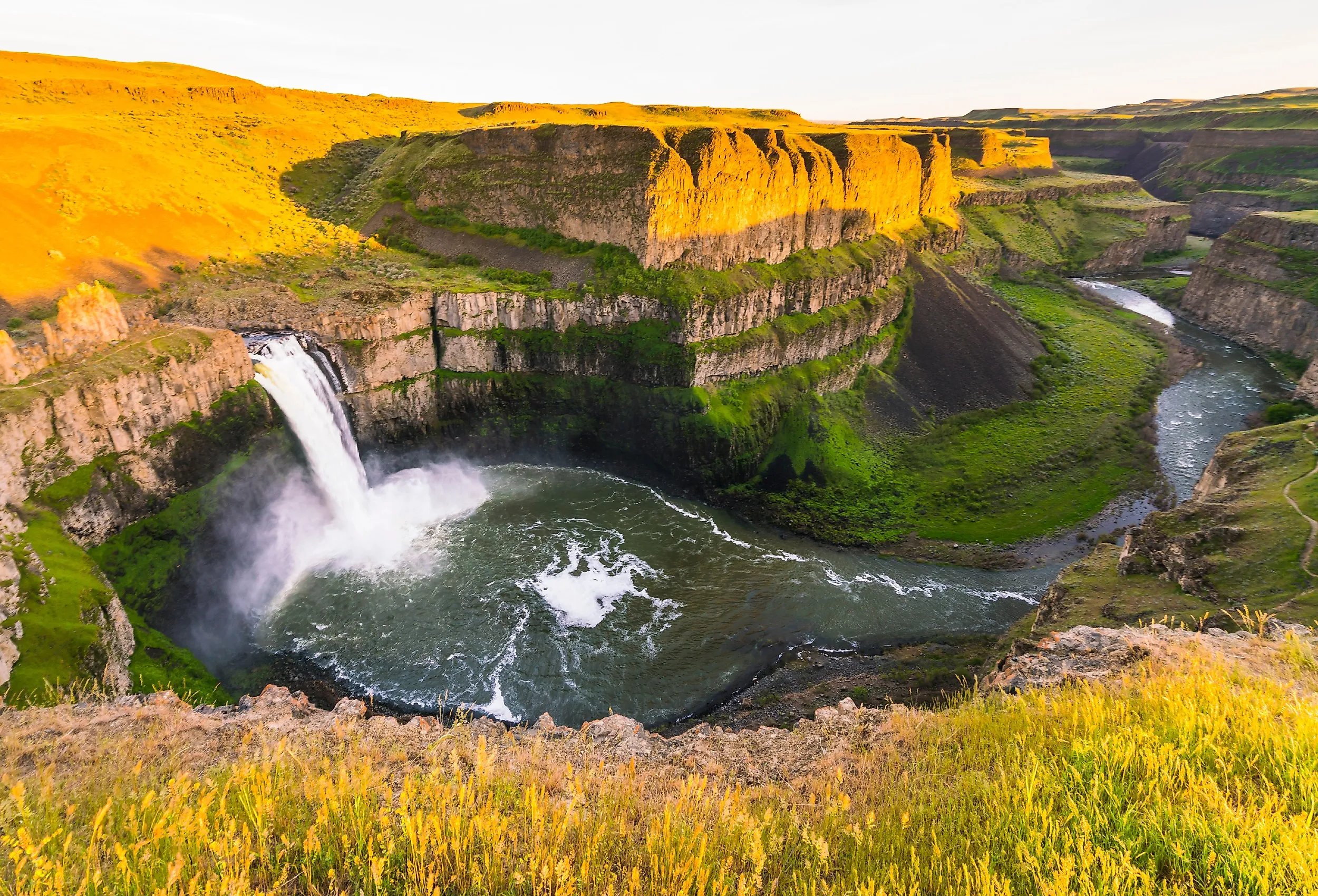
Palouse Falls takes some effort to reach, which is exactly why the crowds skip it. The waterfall in southeastern Washington is one of the last along the Ice Age flood path, carved more than 13,000 years ago.
Water pours over layered basalt and drops about 200 feet into the Palouse River canyon below. The river then runs another few miles to meet the Snake. The spot is remote enough that only people who plan for it ever turn up, and an overnight camp catches the falls through the full arc of daylight.
Where The Crowds Never Made It
Summer thins out fast once you leave the headline parks behind. Float in the cold turquoise of Blue Heart Springs on a Tuesday and the pool can be all yours. Cross the cracked Alvord playa at dusk with nobody else in sight. Climb to Kerouac's old lookout on Desolation Peak and trade the trailhead lines of Rainier for silence. Owyhee, the Palouse, and Craters of the Moon each pay back the long drive with room to breathe. Pick one this season and let it point you toward the next.