7 Of The Friendliest Towns On The Atlantic Coast
Friendliness on the Atlantic Coast tends to look a specific way: a walkable Main Street where locally-owned shops outnumber chains, a working harbor where fishing boats still come in daily, and a calendar of community festivals that locals actually turn up to. The seven towns below span from Cape Cod down to the South Carolina coast. Each has a different angle, from Bar Harbor's proximity to Acadia to Murrells Inlet's half-mile marshwalk lined with seafood restaurants, but all share the kind of community scale where visitors end up on a first-name basis with the proprietor of the bakery by the end of the weekend.
Chatham, Massachusetts

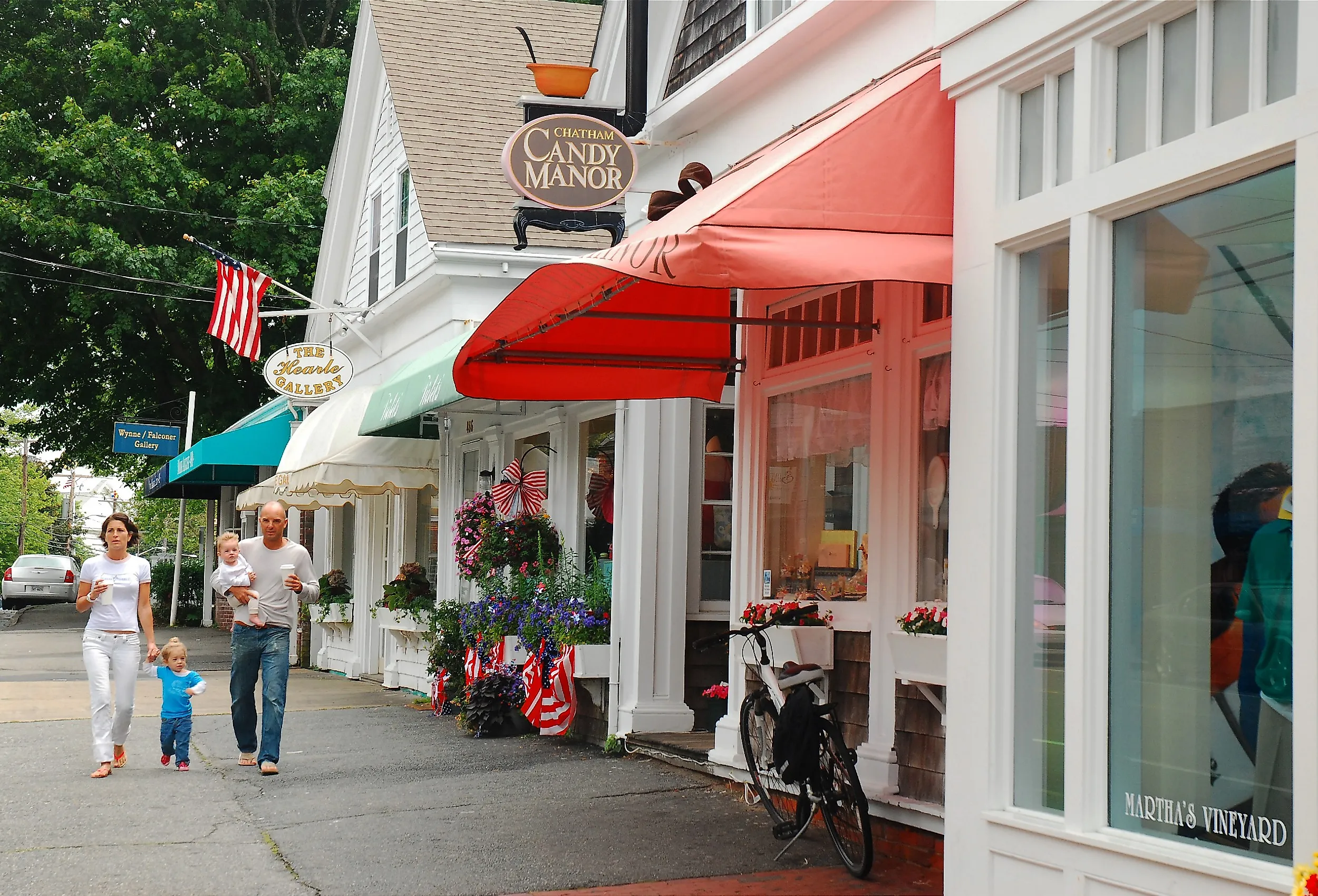
Located on Cape Cod, Chatham is an old fishing village, which gives it a historical and maritime feel. The Chatham Pier Fish Market is where you can get the freshest seafood possible, since the boats come in daily to the Chatham Pier. The pier is also visited regularly by area seals, drawn by the day's catch. The walkable Main Street is at the center of the town's downtown district, with a focus on the local and long-standing family-run businesses along the street. The town's architecture goes back to the 18th century, with homes and public buildings in the Cape and Colonial styles.
The Marconi-RCA Wireless Museum is housed in a brick structure built by the Marconi Wireless Telegraph Company of America in 1914. The site was an early transatlantic wireless station, and it became a top-secret Naval communications facility during World War II. The museum is part of the Chatham Marconi Maritime Center. If hiking or birdwatching is your passion, the Monomoy National Wildlife Refuge covers more than 7,600 acres of protected migratory bird habitat. It is also home to one of the largest gray seal haul-out sites on the Atlantic Seaboard, where seals emerge from the water to rest, moult, and breed. The refuge is also critical habitat for the piping plover and horseshoe crabs. For some town spirit and sense of community, the Chatham Art Festival is held every year in August at Chase Park, showcasing over 140 artisans, crafts, and local food. Also during August is the Chatham Summer Craft Festival, held at the Community Center and featuring American-made crafts, jewelry, and specialty foods.
Bar Harbor, Maine

Located on Mount Desert Island, Bar Harbor is only around a three-minute drive to Acadia National Park, roughly a 49,000-acre coastal park with granite peaks and rocky shores. With the park close by, the natural beauty of Bar Harbor is a key part of its appeal, as is its location along the Atlantic shoreline. The compact and walkable downtown is centered around Main Street, with a focus on locally-owned businesses. Although a popular tourist destination, Bar Harbor remains relaxed, and residents tend to be welcoming to visitors. The town's history is visible in the architecture, while community events, such as free summer concerts at the Village Green, along with farmers' markets, contribute to a close-knit sense of community.
A good spot for hiking or cycling, Acadia National Park has 45 miles of carriage roads that wind through the interior. At around 16 feet in width, these broken-stone roads were used at the turn of the 20th century and were built with the funding and vision of John D. Rockefeller Jr. Along the trails, you will encounter stone-faced bridges spanning streams and waterfalls. Another route, although somewhat less strenuous, the Shore Path starts at the town pier and offers views of Frenchman Bay and the Porcupine Islands. A unique place to explore is Bar Island, accessible on foot from Bridge Street across a gravel sandbar of roughly 0.4 miles that surfaces only at low tide. Cadillac Mountain is the highest point on the US Atlantic seaboard, and its position right at the shore makes it one of the first places to see the sunrise from roughly October through early March. Bar Harbor is also a good place for spotting the area's marine wildlife, including whales and puffins.
Cape May, New Jersey

This seaside town is often cited as one of the friendliest beach towns in the US, with its well-preserved Victorian architecture throughout the town, as well as its hospitable community, more low-key than other beach towns. While on the beach, you can search for Cape May Diamonds, polished quartz pebbles found on Sunset Beach. Focusing on local shops, the Washington Street Mall is a pedestrian-only outdoor mall, where you encounter unique finds and local fare. If you feel the need for antiquing, the Cape May Antique Center is large enough to cover many periods and styles.
For history lovers, the wreck of the S.S. Atlantus is visible off Sunset Beach, the concrete ship sunk there in 1926. As part of the US coastal protection initiatives in World War II, a concrete bunker was built on the beach at Cape May Point State Park. Now partially submerged, the bunker is still open for exploration. Can't get enough of World War II sites? The Naval Air Station Wildwood Aviation Museum features a WWII hangar at the Cape May Airport (the former NAS Wildwood) that houses historical planes, engines, and exhibits. The Harriet Tubman Museum is located at the Macedonia Baptist Church, where you can learn about Tubman's time spent in Cape May, including her work raising funds to operate her rescue missions. A key community event, the Exit Zero Jazz Festival takes place every May and is held at various locations around town.
Lewes, Delaware

This historic seaside town in Delaware is seen as a quiet alternative to some of the larger and busier beach towns. Founded in 1631, where Delaware Bay and the Atlantic Ocean meet, the town is rich in maritime history. The downtown district is centered around Second Street, where locally-owned businesses flourish with tax-free incentives. This walkable downtown has many restaurants, shops, and cafes, many in buildings dating back to the 17th and 18th centuries. The downtown features lots of community activity, a weekly farmers market, concerts, and the annual Tulip Festival. To view the water, go for a walk, or have a picnic, nearby Canalfront Park is located along the Lewes and Rehoboth Canal.
The town's Dutch heritage is celebrated at the Zwaanendael Museum, built in the style of a typical Dutch town hall. The museum focuses on local and maritime history, and its collections include a rare Fiji merman. The Cannonball House houses a maritime museum and is noted for having an 18-pound British cannonball embedded in its foundation from the War of 1812. Specialized boat tours take you out for dolphin viewing. Boat and bike rentals let you self-guide around the town and waterfront, so you can explore the coastline and the scenic pine forests at your own pace. Like many seaside towns, Lewes has some World War II history: the Cape Henlopen State Park Bunkers are decommissioned WWII concrete bunkers and observation towers hidden in the sand dunes that you can explore.
Beaufort, South Carolina

This close-knit community is considered one of the most welcoming towns in the South and is a quiet alternative to Charleston. Downtown Beaufort is a 304-acre National Historic Landmark District, known for its well-preserved antebellum architecture and for local businesses along Bay Street, the commercial corridor. Many of the buildings along Bay Street have back porches overlooking the Beaufort River. The Northwest Quadrant is the historic center of the African American community in Beaufort, with houses built in the 19th century, some in the shotgun style, narrow, single-story homes with rooms arranged in a line.
The town's history can be explored at the Old Sheldon Church Ruins, the remains of a church burned during the Revolutionary War and again during the Civil War. Just off Beaufort is St. Helena Island, where you can find Penn Center, one of the first schools for freed slaves in the US, and Fort Fremont, a Spanish-American War installation. Morgan Island, known as Monkey Island, is home to a colony of rhesus monkeys. Landing on the island is not permitted, but the monkeys are visible from the water. You can take a boat tour from Henry C. Chambers Waterfront Park to view bottlenose dolphins. Celebrate Beaufort's maritime history along with the locals at the Beaufort Oyster Festival every January, with a focus on oystering and culinary events.
Tybee Island, Georgia

This island off Georgia is very much the epitome of a slower and friendlier pace of life. That friendliness is best encountered in South Beach, the commercial district centered around Tybrisa Street. It's a hub for much of the activity on Tybee Island, a walkable area where visitors can move from the beach straight onto the main strip where local businesses abound. The Tybee Island Pier and Pavilion is a landmark where locals fish and which features live music during the summer. For some water activity, you can kayak to Cockspur Island Lighthouse, a historic small lighthouse, or visit Little Tybee Island, an uninhabited nature preserve.
For more history, Fort Pulaski National Monument features 19th-century fortifications and Civil War-era bunkers. At Fort Screven, Battery Garland was built in 1899 for the Spanish-American War, and its reinforced concrete structures were active through World War II, with massive coastal defense guns. The site now houses the Tybee Island Museum. There are plenty of opportunities for seafood on the island, including the Crab Shack, which features crab, shrimp, and Low Country boil, a classic Southern one-pot meal with shrimp, smoked sausage, corn on the cob, and red potatoes boiled together with heavy seasoning. The dish is served on a newspaper-covered picnic table and is meant for sharing. Every March, the Tybee Island Irish Heritage Celebration Parade takes place on Butler Avenue, mixing laid-back island vibes with Irish culture.
Murrells Inlet, South Carolina

This historic fishing village is known for its marshland and for being the Seafood Capital of South Carolina. The heart of the downtown district is the MarshWalk, a half-mile boardwalk with waterfront dining, plenty of seafood options, and live music. Huntington Beach State Park is located near the downtown and is home to alligators and bald eagles. The park features miles of beach, a boardwalk through the marshes, and Atalaya Castle, the 1930s Moorish-style winter home of philanthropist and scholar Archer Milton Huntington and sculptor Anna Hyatt Huntington. The building is mostly empty now, unfurnished, but open for exploration. The site is the location of the Atalaya Arts and Crafts Festival every year in late September.
Some outdoor activities include Brookgreen Gardens, a National Historic Landmark with one of the largest collections of American figurative sculpture in the US, plus a botanical garden and a zoo. The Sandy Island Preserve is one of the largest protected freshwater islands on the East Coast, located between the Pee Dee and Waccamaw Rivers, and covers about 9,000 acres of a prehistoric sand dune. There are plenty of water-based activities, such as kayaking, fishing charters, and dolphin-spotting cruises. For community fun and connections, the Annual Oyster & Bloody Mary Festival takes place in March, with all-you-can-eat oysters, a Bloody Mary contest, plus crafts, music, and food trucks.
The Atlantic Coast, Town By Town
These seven towns span more than 1,000 miles of Atlantic shoreline and a full range of coastal character, from Cape Cod's shingled fishing villages to the Low Country marshes of South Carolina. What holds them together is a community scale that larger tourist destinations tend to lose: storefronts with a single owner, festivals organized by local volunteers, and a welcome that stays with visitors after the weekend ends.