7 Towns in Mississippi That Were Frozen in Time
Mississippi carries one of the deepest historical layers of any state, spanning French colonial settlement, the Civil War, and the Civil Rights era. The French established a foothold on the Gulf Coast in 1699, which is still reflected in towns like Ocean Springs and in sites like Longwood and Fort Maurepas Park. For civil rights history, the Tupelo Civil Rights and African American Heritage Trail and the Natchez Museum of African American History and Culture are two strong starting points. The seven towns below each hold part of the record.
Natchez

Natchez sits on a bluff above the Mississippi River and holds one of the densest concentrations of pre-Civil War architecture in the South. A number of antebellum homes have been restored and opened for tours, with Longwood, an unfinished octagonal mansion begun in 1860, standing out as the most unusual. The town sits on the Americana Music Triangle and the Mississippi Blues Trail, which anchors its place in the state's blues history.
For Civil War history, Fort McPherson is a surviving earthwork from the Union occupation of Natchez. The Natchez Museum of African American History and Culture and the Rhythm Night Club Memorial Museum, which covers the 1940 fire that killed more than 200 patrons at a Black nightclub, both handle difficult local history directly. Natchez's annual Biscuit Festival in September fills downtown when it lands.
Vicksburg

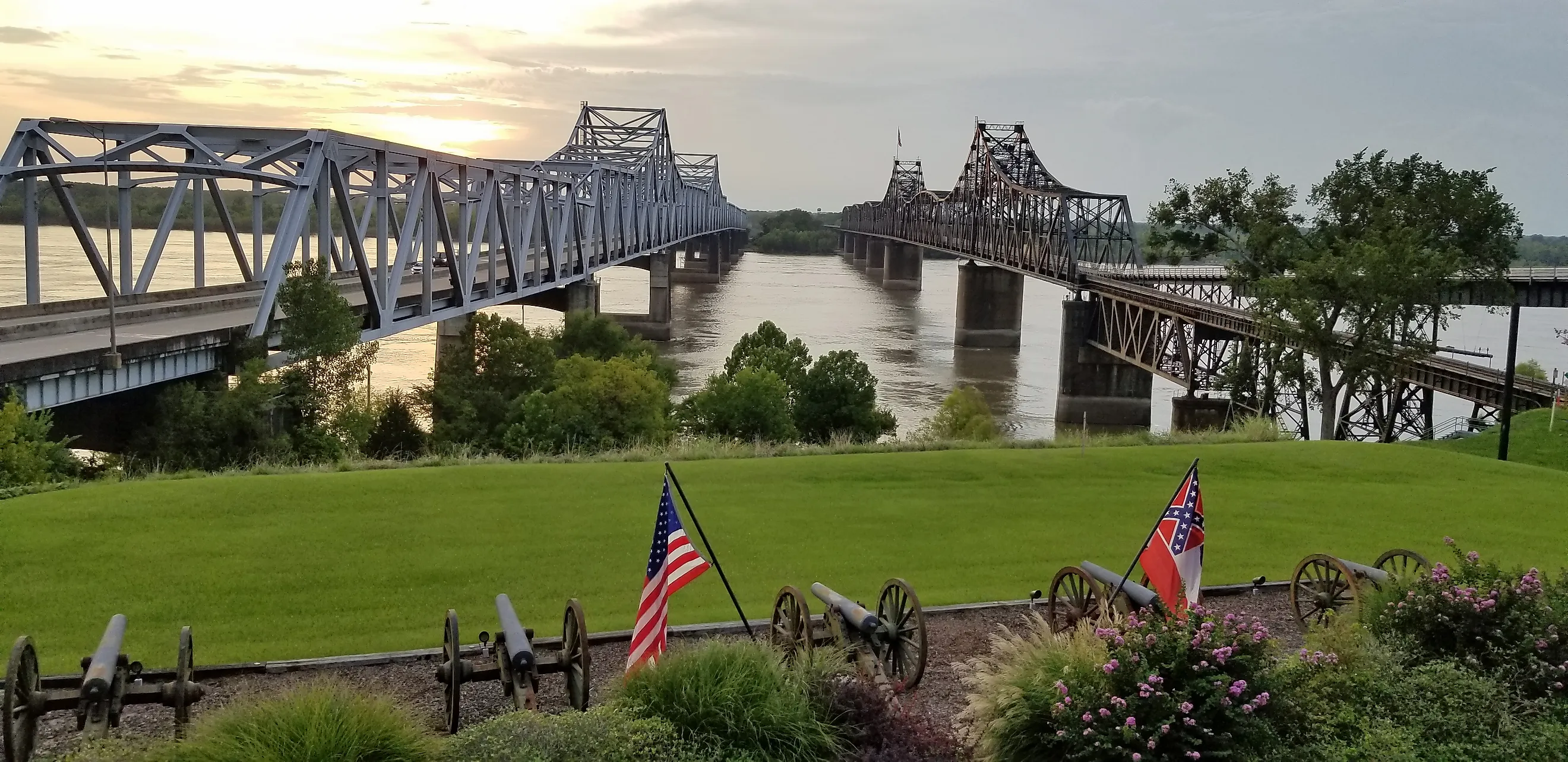
Roughly 75 miles north of Natchez along the Mississippi River, Vicksburg is one of the central sites of the Civil War. Vicksburg National Military Park preserves the battlefield from the 1863 siege that gave the Union control of the river. Visitors can drive or walk the tour road past cannon, earthworks, and state memorials, and the park includes the USS Cairo, an ironclad gunboat sunk in the Yazoo River in 1862 and raised a century later, along with the Vicksburg National Cemetery.
Down by the waterfront, the Old Depot Museum runs a detailed diorama of the siege, and the Jesse Brent Lower Mississippi River Museum covers regional river history and commerce. The downtown murals along the floodwall depict scenes from Vicksburg's past, from Native American trade to the 20th century.
Ocean Springs

Ocean Springs sits on the Gulf Coast across the bay from Biloxi and marks the oldest site of European settlement in the state. Fort Maurepas Park commemorates the 1699 French arrival under Pierre Le Moyne d'Iberville, with a replica fort, a pier, open greens, and a splash pad. Downtown runs along Washington Avenue with independent shops, galleries, and restaurants built around local seafood.
The Ocean Springs L&N Depot, built in 1907, anchors the historic district and now houses the chamber of commerce and visitor center. East of downtown, the Mississippi Vietnam Veterans Memorial sits on Bienville Boulevard. The Mary C. O'Keefe Cultural Arts Center runs classes, exhibits, and performances out of a restored 1927 school building, and the Walter Anderson Museum of Art covers the work of one of Mississippi's most distinctive 20th-century artists.
Corinth

Corinth sits at the intersection of two Civil War-era railroads, the Memphis & Charleston and the Mobile & Ohio, which made it strategically important enough to earn the nickname "Crossroads of the South." The Siege and Battle of Corinth followed Shiloh in 1862, and the Corinth Civil War Interpretive Center, part of Shiloh National Military Park, covers both engagements with exhibits and a reconstructed earthwork outside.
The Corinth Contraband Camp, established in 1862, was one of the largest settlements of formerly enslaved people who reached Union lines during the war, and the site now preserves that history with bronze figures depicting daily life in the camp. Downtown, Borroum's Drug Store and Soda Fountain has been operating since 1865 and still serves at the original counter.
Tupelo

Tupelo is where Elvis Presley was born in 1935, and the Elvis Presley Birthplace preserves the two-room house his father built, along with the church he attended as a boy and a small museum on the same grounds. The Civil War history in the area centers on the 1864 Battle of Tupelo and the nearby Battle of Brice's Cross Roads; both are covered at Mississippi's Final Stands Interpretive Center in Baldwyn, about 20 miles north.
Tupelo also sits on the Natchez Trace Parkway and on the Mississippi Civil Rights and African American Heritage Trail, which marks sites including Spring Hill Missionary Baptist Church and the former RC Cola Plant that housed the Dixie Belle Theater, a stop on the Chitlin' Circuit for Black performers in the segregation era.
Canton

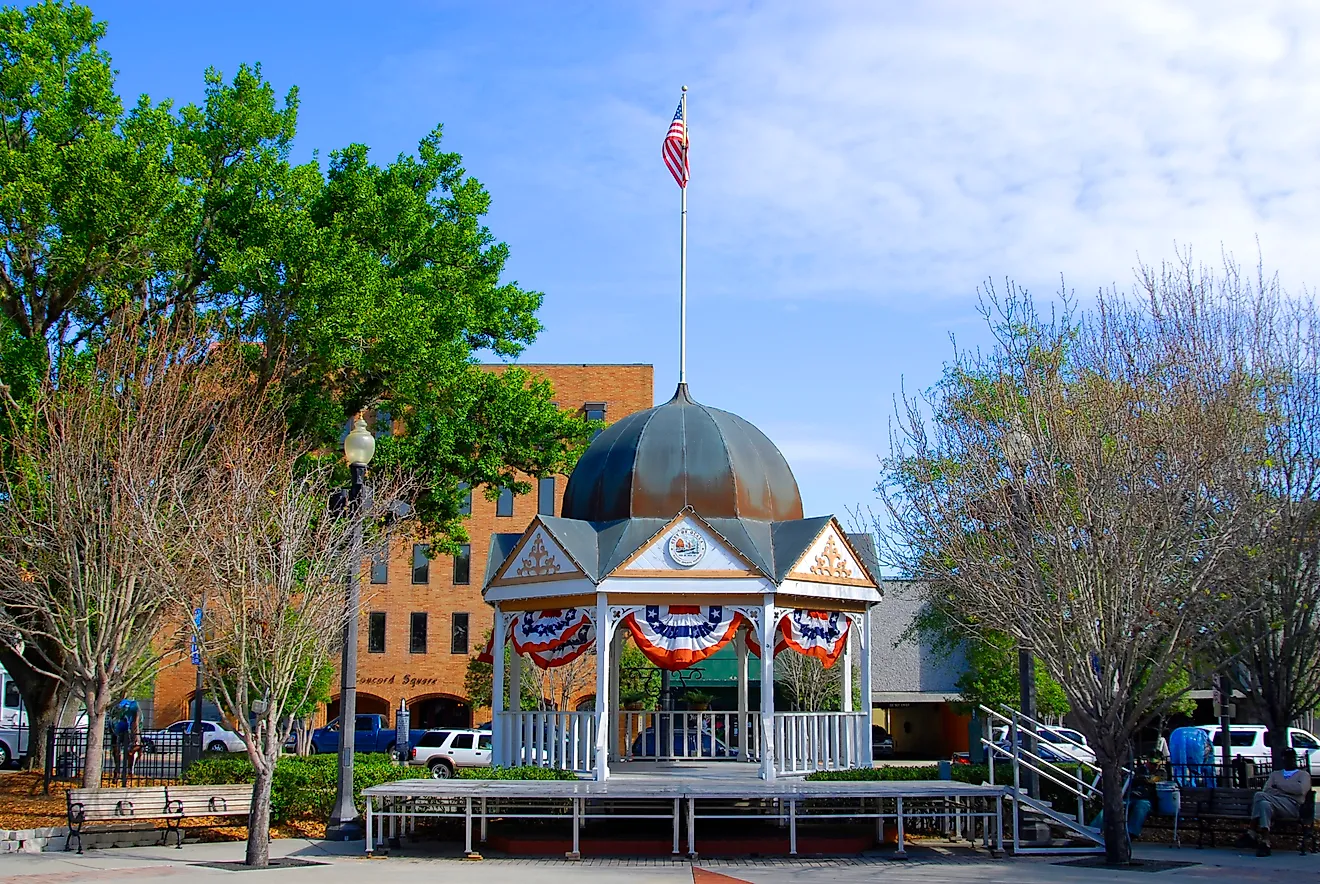
Canton sits about 25 miles north of Jackson and is organized around the Canton Courthouse Square District, listed on the National Register of Historic Places. The square hosts the Canton Flea Market Arts & Crafts Show, one of the largest juried shows in the Southeast, each May and October. The Madison County Courthouse at the center of the square dates to 1858 and is one of the oldest courthouses still in use in Mississippi.
The Canton Multicultural Center and Museum covers the county's African American history, and the Canton Movie Museums document the films shot in town, including "A Time to Kill" and "My Dog Skip," both of which used the square as a primary location.
Woodville

Woodville, near the Mississippi-Louisiana border, was incorporated in 1811, making it one of the oldest towns in the state. More than 100 buildings in and around town are on the National Register of Historic Places, and the Courthouse Square is the center of what remains a working small-town downtown. The Wilkinson County Museum occupies the former West Feliciana Railroad banking house from the 1830s, and the African American Museum covers local Black history, including the region's plantation economy and the musicians who came out of the area. West of town, Clark Creek Natural Area covers more than 700 acres of steep ravine country with a concentration of waterfalls unusual for Mississippi.
Mississippi's Historic Thread
Across these seven towns, Mississippi's history shows up in different forms: Natchez and Woodville in antebellum architecture, Vicksburg and Corinth in preserved Civil War battlefields, Ocean Springs in French colonial beginnings, Tupelo in both music and civil rights, and Canton in a Main Street that has stayed more or less intact for a century. Any of them is a starting point for a more specific thread.