5 Best Natural Wonders To Visit In Virginia This Year
Virginia is one of the few states where you can travel from coastal wetlands to limestone caverns and mountain gorges within a single day. You can walk the cathedral-like chambers of Luray Caverns, one of the largest cavern systems in the Eastern United States. You can also take in the canyon views at Breaks Interstate Park, or ride the chairlift down to the railroad-cut passage at Natural Tunnel State Park. The five wonders below stand out as some of the best natural sites to visit in Virginia this year.
Luray Caverns

Luray Caverns is one of the largest cavern systems in the Eastern United States and features massive chambers, stone formations, and the famed Stalacpipe Organ. Stalactite and stalagmite formations continue to grow within chambers that reach up to 10 stories high and are often compared to cathedrals in size. The Giant Hall contains some of the largest of these formations, including the 47-foot-high Double Column. The Great Stalacpipe Organ is housed in the Great Hall, also known as the Cathedral. Built using stalactites across 3.5 acres of caverns, the organ uses solenoid-fired strikers to produce bell-like tones.
Dream Lake is a shallow pool with an almost mirror-like reflection that captures the image of the cave's columns and creates the illusion of great depth. The Underground Wishing Well is a six-foot-deep pool that has collected millions of coins over the years. New deposits form at roughly 1 cubic inch every 120 years, meaning the cavern system is still growing. Because of its size and protection from outside weather, the temperature remains a consistent 54°F year-round. First discovered in 1878, the Luray Caverns are open year-round and feature 1.25 miles of paved, well-lit walkways with step-free entry.
Great Dismal Swamp

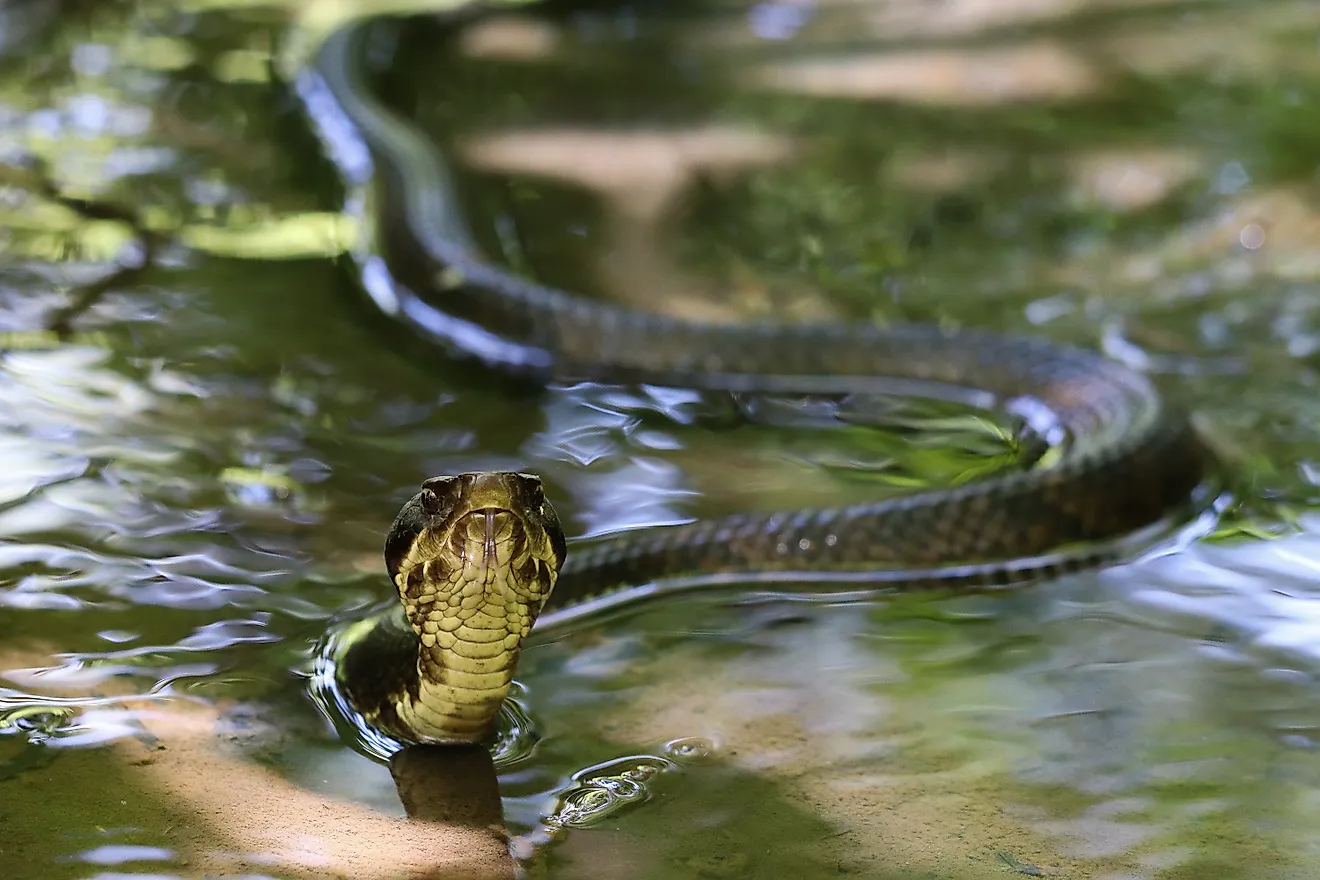
The 113,000-acre National Wildlife Refuge, on the border between Virginia and North Carolina, supports a wide range of wildlife and a notably high density of black bears. From the 1600s through the Civil War, the swamp was a sanctuary for escaped slaves, known as Maroons, who built communities deep in the interior. The refuge is also the northernmost habitat for many species endemic to the South, with thick forests and wetlands of bald cypress and Atlantic white cedar. Its biodiversity makes it an oasis for wildlife, including bobcats, river otters, more than 200 bird species, and 96 butterfly species. At the heart of the swamp is Lake Drummond, one of only two natural freshwater lakes in Virginia. The lake covers more than 3,100 acres, but its deepest point is no more than 6 feet. The water throughout the swamp is colored by juniper tannins, which give it a dark, tea-colored hue. Sailors prized the water because those same tannins kept it fresh for long periods at sea.
The name Dismal came from William Byrd II in 1728. Others saw the swamp more favorably, including George Washington, who called it a "glorious paradise." The best time to visit is October through May, when the weather is cooler. Summer heat and humidity can be rough, and the swamp draws large numbers of mosquitoes and biting yellow flies in those months. Fall, winter, and early spring are better windows for hiking. There are more than 40 miles of trails, and the Dismal Swamp Canal Trail is popular for cycling. For birders, migration runs from mid-April through mid-May.
Shenandoah National Park and Skyline Drive

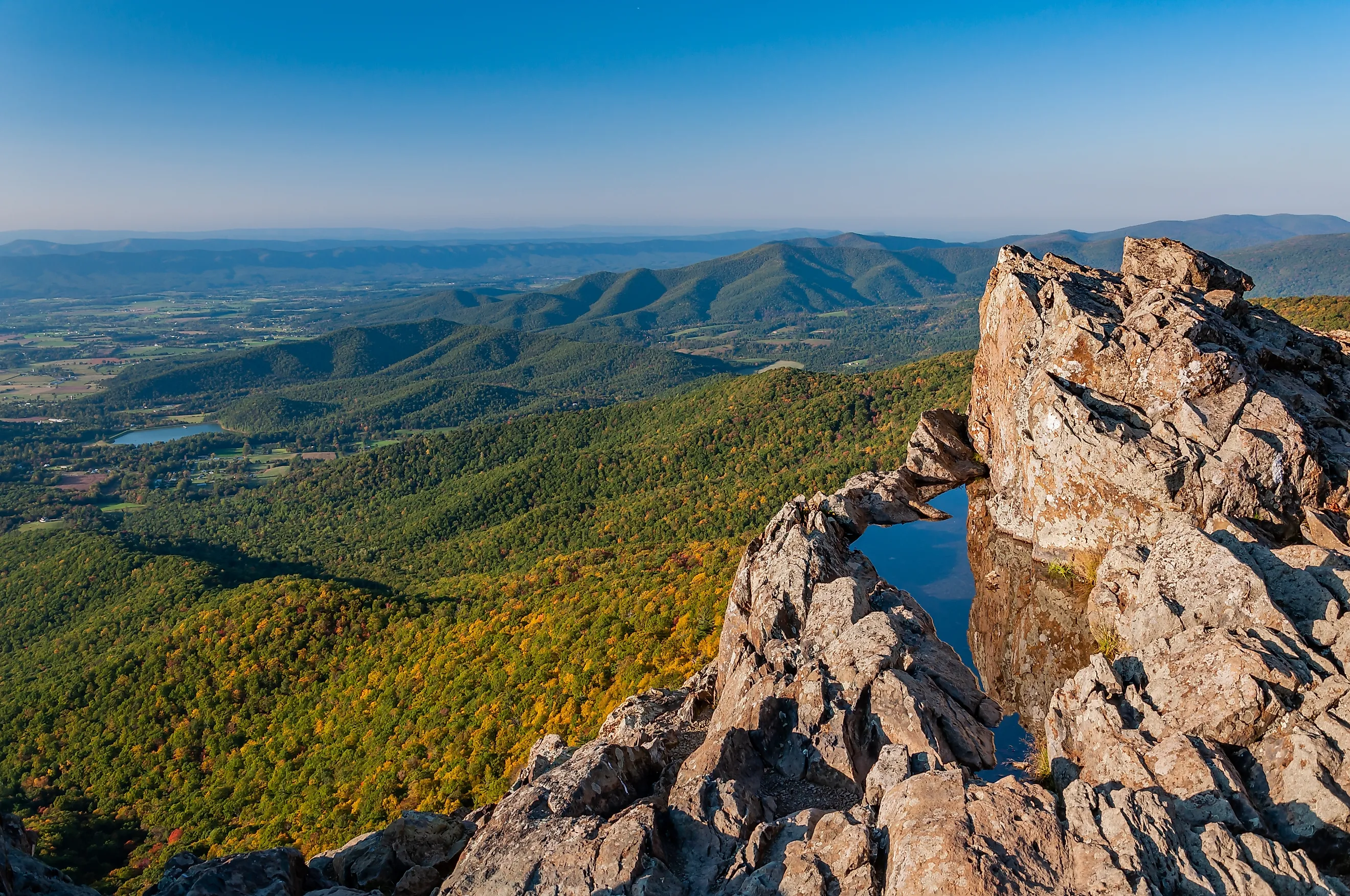
With 105 miles of Skyline Drive and long views of the Shenandoah Valley, Shenandoah National Park is a longtime destination for hiking, wildlife watching, and historic trails. The park covers more than 200,000 acres of protected land and holds over 500 miles of hiking trails, along with a 101-mile stretch of the Appalachian Trail that runs the length of the park. Popular side trails lead to waterfalls, including Whiteoak Canyon Falls and Dark Hollow Falls, and to the Stony Man summit. Skyline Drive runs along the ridge crest of the Blue Ridge Mountains, with regular opportunities to see black bears, deer, and wild turkeys.
The park covers four distinct seasons, with spring wildflowers, fall colors, and mild winters all drawing visitors at different times. Rapidan Camp within the park served as the summer retreat of President Herbert Hoover. The park has three districts, North, Central, and South, with Central being the busiest. Camping sites and lodges are available, both in the Big Meadows area. Driving the accessible parts of the park takes about four hours non-stop, so plan for a full day unless you're staying overnight. Autumn and spring draw the largest crowds; spring typically has fewer visitors than fall.
Breaks Interstate Park

Often called the Grand Canyon of the South, Breaks Interstate Park holds one of the largest canyons east of the Mississippi River. It sits along the Virginia-Kentucky border and features a 1,600-foot-deep gorge with the Russell Fork River running through it. There are more than 25 miles of hiking trails, scenic overlooks, and seasonal elk tours. The gorge is rugged and dramatic, home to black bears, bobcats, and a thriving herd of reintroduced elk.
The Canyon Rim Zip Line runs roughly 2,300 feet above the canyon floor, and whitewater rafting is offered on the Russell Fork River. For overnight stays, the park has cottages, lakefront cabins, yurts, campsites, and a lodge. October brings peak fall foliage and is also the peak window for whitewater rafting, which depends on scheduled water releases from the John W. Flannagan Dam. Spring is a more comfortable hiking window and brings blooming wildflowers, particularly rhododendron. Summer works well for water activities on nearby Laurel Lake, and winter offers clear views of the gorge through bare trees.
Natural Tunnel State Park

This 850-foot-long, 10-story-high tunnel was naturally carved through a limestone ridge by acidic groundwater. An active railroad has run through the tunnel since 1893, and a scenic chairlift takes visitors from the ridge top down to the tunnel mouth. Trains still pass through regularly, offering a view of both the natural formation and the engineering that threaded track through it. Wild Cave Tours are guided tours of the underground areas around the tunnel. The Wilderness Road Historical Area, also part of the park, covers early pioneer life, including a replica of the blockhouses manned by the Holston Militia during the frontier conflict between Native Americans and settlers. These served as assembly points for travelers using the Wilderness Trail into Kentucky. The John Anderson Blockhouse is noted for its unusual top-heavy design; the original was built in 1775.
The best times to visit are April through June and September through October. October draws the largest crowd for fall foliage, and summer remains popular despite the heat. Weekdays are generally less crowded. Cabins and campgrounds are available on site. For a less typical experience, Railroad Day, held once a year in July, is the only scheduled opportunity to walk through the tunnel on the tracks; exact dates vary year to year.
The Geological Diversity of Virginia
Virginia's natural wonders offer a rare mix of accessibility and variety, with caves, mountains, wetlands, and canyons all within a single state. Whether it's walking through the chambers of Luray Caverns, spotting wildlife in the Great Dismal Swamp, or taking in long views from Skyline Drive, each of these sites highlights a different side of Virginia's landscape. Together, these five show how geology and geography combine to produce outdoor experiences worth returning to year-round.