9 Most Neighborly Towns In British Columbia
British Columbia's smallest towns are where province-wide hospitality stops being a stereotype and starts showing up in concrete form. Nelson's Saturday farmers market at Cottonwood Falls draws as many locals as visitors. Kimberley's pedestrian-only Platzl has a cuckoo clock where a yodeling figure emerges on the hour if a visitor drops a quarter in the slot. Kaslo anchors its village of about 1,000 around the restored SS Moyie sternwheeler tied up at the waterfront. These 9 BC towns share populations under 12,000, walkable historic cores, and community events that make it easy to strike up a conversation.
Fernie

Fernie sits along the Elk River in the East Kootenays near the Alberta border, with 6,320 residents at the 2021 census. The Historic District took its current form after the Great Fire of 1908; the rebuilt blocks of sandstone and brick storefronts still house downtown today. The Fernie Museum runs walking tours of that district through summer, which is where most short visits actually begin. The Brickhouse and the Bridge Bistro are the two restaurants locals mention first, both operating at a scale where the staff recognize regulars within a few visits. Sunday mornings belong to the Mountain Market on the Chamber of Commerce lawn from June through October.
Kimberley

Kimberley was built on the Sullivan Mine, which operated from 1909 until 2001 and was once one of the world's largest lead-zinc-silver producers. When the mine wound down, the town leaned into its 1970s rebranding as a Bavarian-themed resort: the Platzl downtown is still pedestrian-only, and the landmark cuckoo clock at its center features a yodeler named Happy Hans who emerges on the hour when a visitor drops a quarter into the slot. The 2021 census put the population at 8,115. Restaurants, cafes, and a few small shops line the Platzl rather than a conventional main drag, which keeps downtown interactions at walking pace. Kimberley Alpine Resort handles the winter tourism, but the Platzl is where residents and visitors actually cross paths.
Ladysmith

Ladysmith runs along 1st Avenue on Vancouver Island between Nanaimo and the Cowichan Valley, with 8,990 residents at the 2021 count. The town was renamed in 1904 after the South African town whose siege had ended four years earlier; the Victorian-era storefronts along 1st Avenue date to roughly the same period. The Festival of Lights each December strings hundreds of thousands of lights across downtown and draws crowds from across the Island for a single-night turn-on in late November. Oyster Bay Marina and the Ladysmith Maritime Society keep the waterfront active year-round. The Old Town Bakery on 1st Avenue is the morning gathering point for both retirees and commuters.
Smithers

Smithers sits in the Bulkley Valley in BC's northwest, with 5,378 residents at the 2021 census and an alphorn-playing statue called Alpine Al on Main Street that nods to the town's Bavarian-themed makeover in the 1970s. The Bulkley Valley Museum on Main Street covers local history in a building that also houses the public library. Telkwa is 15 minutes down the highway, which gives the area a broader community feel than the town's size suggests. Restaurants like Two Sisters Cafe anchor the downtown lunch scene. Hudson Bay Mountain looms directly above town, and the community rhythm tends to shift with the ski hill's calendar.
Osoyoos

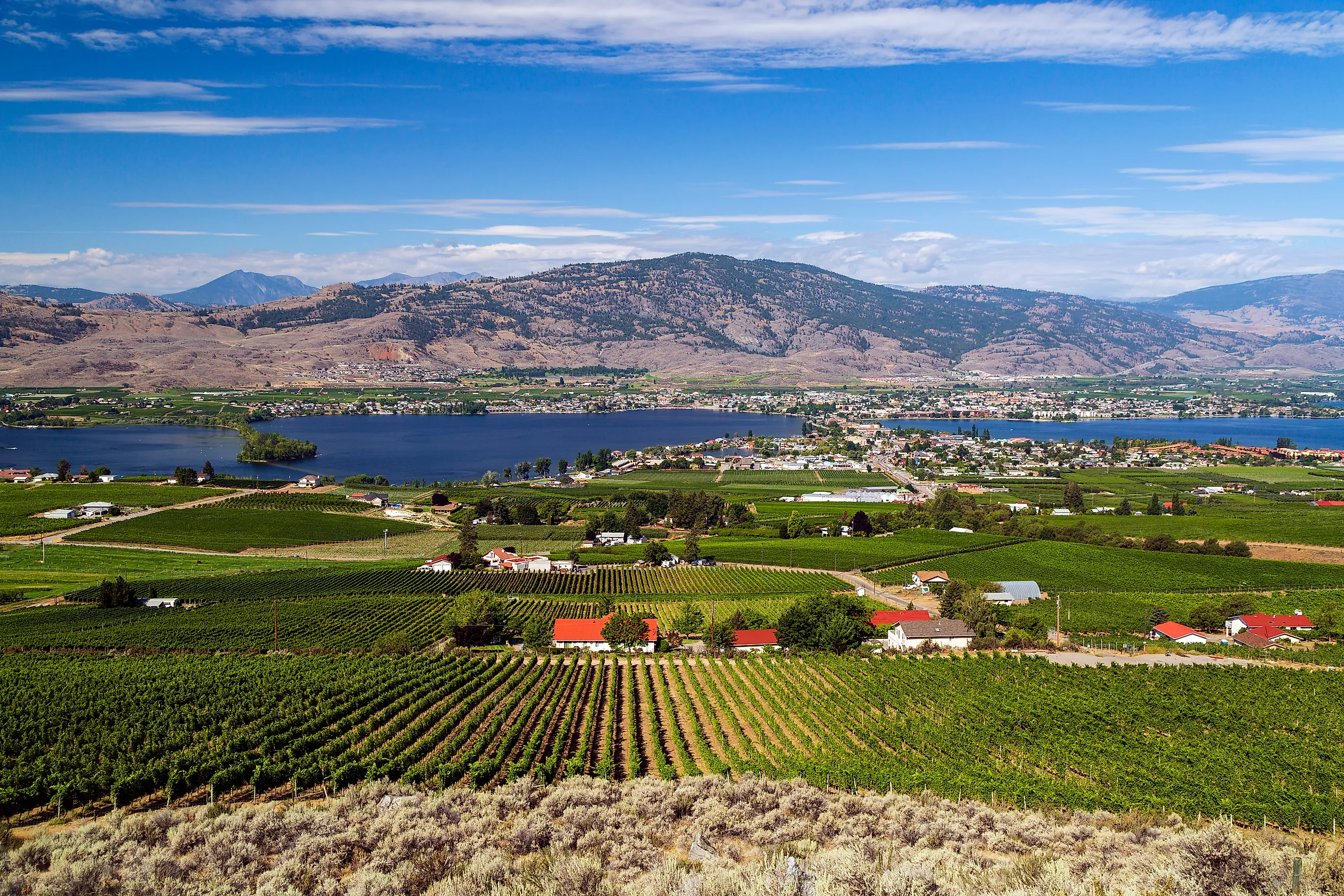
Osoyoos sits at the south end of the Okanagan Valley on the shores of Osoyoos Lake, with 5,556 residents at the 2021 census and some of the hottest summer temperatures in Canada. The area holds the country's only semi-desert, which makes local agriculture unusually specific: cherries, peaches, apricots, and wine grapes dominate the orchards and vineyards within a few kilometres of town. Nk'Mip Cellars on the east side of the lake was North America's first Indigenous-owned winery when it opened in 2002, run by the Osoyoos Indian Band. The seasonal market on Main Street runs through summer and pulls in both residents and the orchard workforce. The Bear, the Fish, the Root & the Berry at Watermark Beach builds its menu around Indigenous ingredients from the Similkameen and Okanagan valleys.
Nelson

Nelson's Baker Street holds more than 350 heritage buildings from the 1890s silver-mining boom, which is more pre-1910 architecture than almost any other town its size in Canada. The population was 11,106 at the 2021 census. Saturday mornings from May through October, the Nelson Farmers Market sets up at Cottonwood Falls Park with live music, local growers, and enough regular foot traffic that the same faces turn up week after week. The Whitewater Ski Resort is locally operated and draws a tight community of season-pass holders. The Hume Hotel's Mike's Place Pub has held the same corner of Vernon Street since 1898 and is still where a first-time visitor can end up in conversation with someone who grew up here.
Rossland

Rossland earned its nickname "The Golden City" from the LeRoi Mine, which produced gold from 1890 until about 1929. The Rossland Museum sits at the mine site and still runs underground tours of a preserved section of the workings. The 2021 census counted 4,140 residents. The Miners Union Hall (1898) and the Courthouse (1901, a National Historic Site of Canada) still anchor downtown. Red Mountain Resort handles the winter crowd, but the community calendar pulls people together year-round through events like the Rossland Mountain Film Festival each fall.
Kaslo

Kaslo's population was 1,049 at the 2021 census, and the main street is short enough to walk in ten minutes. The SS Moyie tied up at the waterfront is the oldest intact passenger sternwheeler in the world, launched in 1898 and designated a National Historic Site. The Langham Cultural Centre in a restored 1893 hotel served as internment housing for Japanese Canadian families during the Second World War and now runs as a gallery and performance space. The Kaslo Jazz Etc. Summer Music Festival in early August sets up a floating stage on Kootenay Lake. The Moyie, the Langham, and the festival together make a weekend in Kaslo busier than its population implies.
Nakusp

Nakusp sits on Upper Arrow Lake in the West Kootenays, with 1,605 residents at the 2021 census. The Nakusp Hot Springs are 12 kilometres from town, operated by the village at thermal pools open year-round. Day-to-day life centers on Broadway Street, where the weekly farmers market runs Saturdays from spring into fall. The old school building houses a community arts centre that puts on concerts and theatre on a small budget and a loyal volunteer base. Groceries, the post office, and the library all sit within a three-block walk of the lake.
Small Towns, Real Welcome
What these nine BC towns share isn't scenery (the province has plenty of that) but the scale where recognizing faces becomes possible. A farmers market where the grower remembers your name by the third visit, a downtown cuckoo clock where the yodeler's quarter goes to a community fund, a sternwheeler at the waterfront that the whole village helped preserve: these are the details that make a weekend feel less like a stop and more like a visit. Small populations and walkable cores do most of the work. The rest is left to whoever happens to be sitting at the next table.