12 Most Relaxing Florida Towns
Florida's springs, marshes, and shoreline kept many of its towns small. Cedar Key sits at the end of a single road in Levy County, where about 687 people and a working clam aquaculture industry carried on while much of the Gulf coast developed in other directions. West Indian manatees winter in the springs around Crystal River because the water stays at 72 degrees year-round, and the federal program that allows swimmers to enter the water with them exists nowhere else in the country. In towns like these, you will find yourself relaxed and entertained without even trying.
Mount Dora

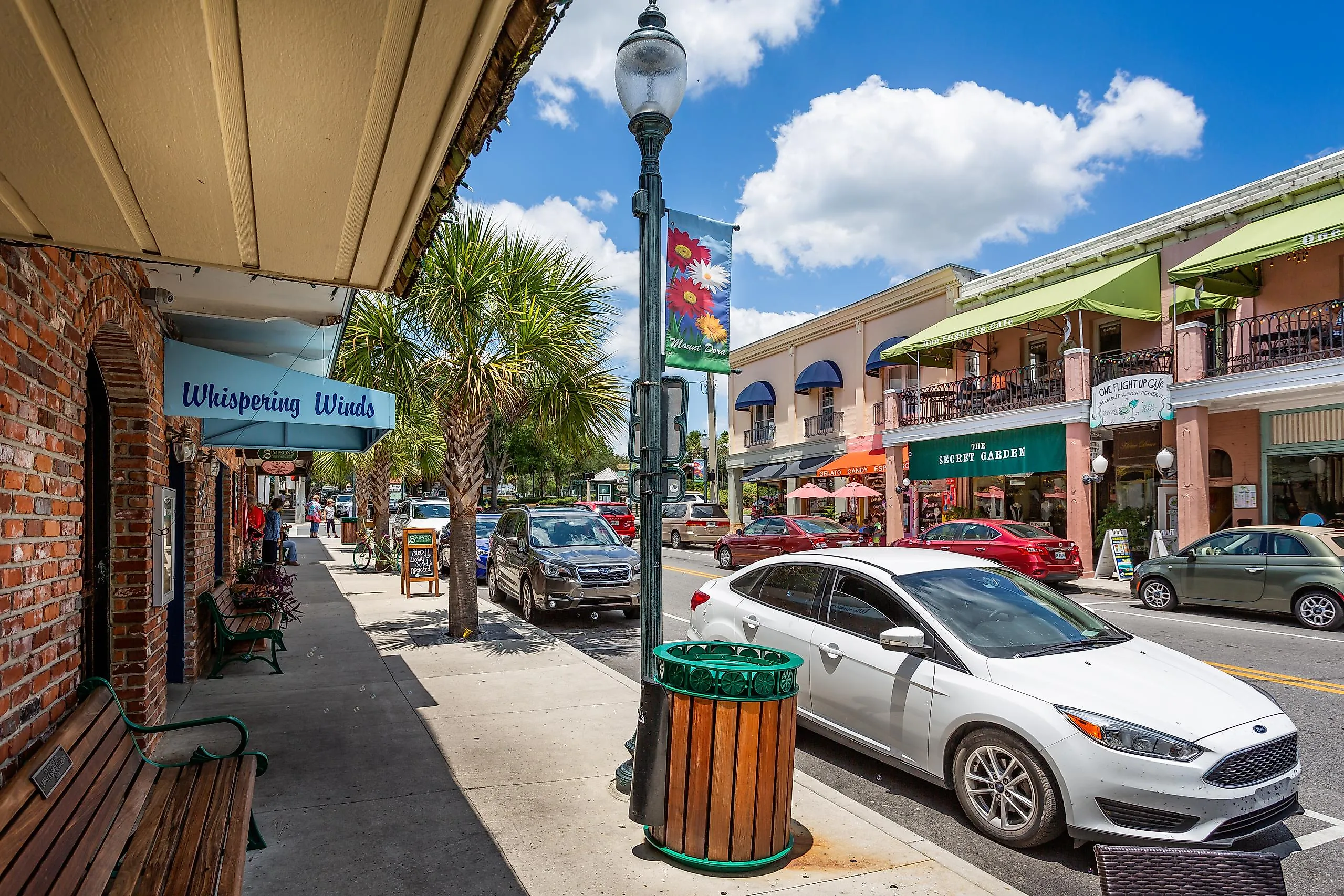
The Dora Canal is 1.2 miles of old-growth cypress, growing so close to the water that a canoe paddle sometimes clips the roots. It connects Lake Dora to the Harris Chain of Lakes and runs through a stretch of Florida landscape that rewards a slower pace. Mount Dora sits on a ridge above Lake Dora in Lake County, with about 16,000 residents and a downtown along Donnelly Street and Fifth Avenue, built from early-20th-century brick, that holds independent shops, a theater, and galleries at a scale that works on foot. The Lakeside Inn dates to 1883 and has a veranda facing the lake that has served as a gathering point for well over a century. Antique festivals bring larger crowds to Mount Dora on certain weekends, so checking the calendar before visiting is worthwhile, though those weekends do not define the town's day-to-day pace.
Apalachicola

What keeps Apalachicola feeling like itself is partly geography and partly stubbornness. The Apalachicola National Estuarine Research Reserve wraps 246,766 acres of tidal marsh, floodplain forest, and bay habitat around the town on nearly every side, which makes large-scale development difficult from the start. The town had 2,341 residents at the 2020 census and still earns its living from the water. Oysters built this place in the 19th century, and the shrimp boats at the municipal dock are not decorative. Battery Park at the north end sits at the edge of the Apalachicola River where it opens toward Eastpoint, and the view across holds nothing but water and marsh. The John Gorrie Museum State Park is worth the stop: Gorrie was a local physician who worked in the 1840s on early refrigeration technology, and the museum treats that history with the seriousness it deserves.
Fernandina Beach

The fishing boats at Fernandina Beach's municipal marina go out before most people are awake, and the morning waterfront carries the working character of a town that has held onto its commercial fishing identity for generations. The town sits at the north end of Amelia Island in Nassau County, with 13,168 residents at the 2020 census and a 50-block downtown that the National Register of Historic Places recognizes as one of Florida's most intact Victorian-era commercial districts. Center Street is the spine of it: brick storefronts, independent restaurants, and galleries that keep reasonable hours. Fort Clinch State Park at the island's northern tip has a Civil War-era masonry fort, a long stretch of Atlantic beach with almost no development behind it, and a hammock trail along the tidal river that rewards visitors who are willing to explore beyond the fort.
Inverness

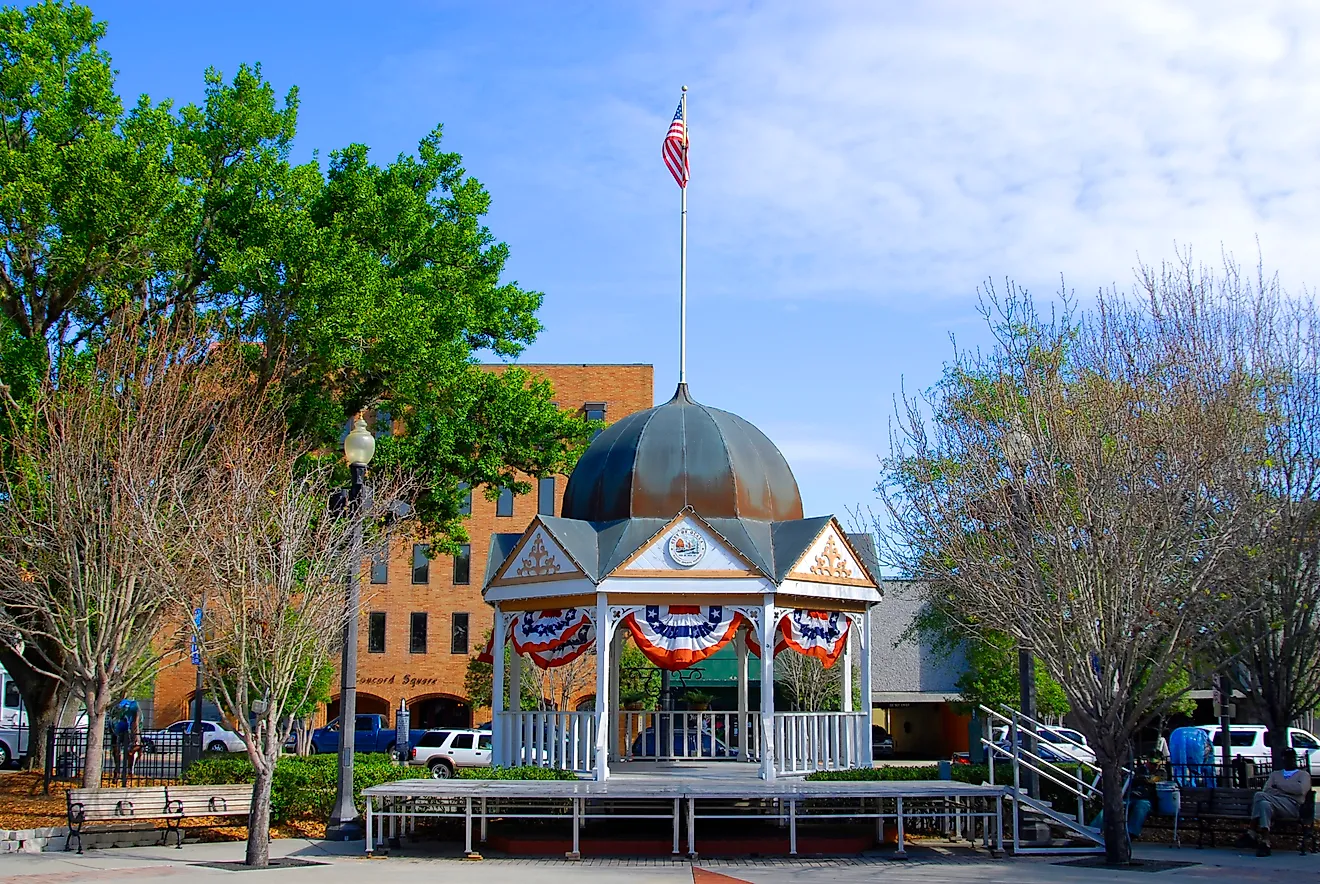
Inverness does not have a beach and does not pretend to. What it has is Lake Henderson at its center, a natural freshwater lake that feeds into the Tsala Apopka chain through a canal system, and 46 miles of the Withlacoochee State Trail running through cypress lowland and scrub oak on a converted rail corridor. The trailhead sits close enough to downtown to walk to, which matters in a place where the whole point is moving at your own pace. The Crown Hotel on the main square opened in the 1920s and still looks like it, restored but not stripped of its age, and the square around it gives a clear sense of what the town's historic core has preserved. The 2020 census put the population near 7,200.
Micanopy

The commercial district in Micanopy is one block long: antique shops and a cafe inside old frame buildings, a canopy of oaks overhead, and a road that is over almost as soon as it begins. About 600 people live here, making it one of Florida's smallest incorporated towns. The draw is Paynes Prairie Preserve State Park, directly next door, 21,000 acres of wet prairie and pine flatwoods where bison and wild horses cross open ground visible from the road. The La Chua Trail on the park's north end runs 3.3 miles out to an observation deck over the prairie basin, and serious birders drive long distances to use it. Micanopy dates to 1821, one of the oldest inland towns in the state. Gainesville is about 10 miles north.
Cedar Key

There is one road in and one road out of Cedar Key: State Road 24. It dead-ends at a cluster of Gulf islands in Levy County, where 687 people lived at the 2020 census, and a working clam aquaculture industry still operates in the surrounding waters. The Cedar Keys National Wildlife Refuge protects 13 islands and their surrounding habitats. The Cedar Key Museum State Park covers the town's earlier identity as a pencil manufacturing center in the 1800s, before the cedar timber gave out and the town rebuilt around fishing, galleries, and a quieter visitor economy. Hurricane Helene struck the area in September 2024 and produced significant storm surge across the islands; recovery was ongoing into early 2025, so anyone planning a visit should check current conditions before going.
Crystal River

More than 70 springs feed Kings Bay and hold the water temperature at 72 degrees Fahrenheit year-round. That steady temperature is what draws the manatees in. West Indian manatees winter here in numbers found nowhere else in the country, and Crystal River operates the only place in the U.S. where you can legally swim with manatees, managed by the US Fish and Wildlife Service. The Crystal River National Wildlife Refuge covers the springs and the surrounding habitat. Crystal River Preserve State Park adds more than 27,500 acres of coastal marsh, tidal creeks, and pine flatwoods with a 7-mile loop trail. Downtown along US Highway 19 is understated: a waterfront park, outfitter shops, and a commercial strip that fits the town's 3,396 residents.
Dunnellon

The Rainbow River runs at a constant 72 degrees and stays clear enough to watch the aquatic vegetation move along the bottom from a tube or a kayak. Rainbow Springs State Park protects the headwaters and offers a tubing launch, a swimming area, and a riverside trail under live oaks and cypress that stays cool even in summer. The town is small, with about 1,800 people at the 2020 count, and the commercial strip along US 41 sits close enough to reach on foot. Phosphate mining gave Dunnellon its initial economy in the late 1800s, drawing workers and businesses that built the downtown blocks still standing today. The river has outlasted that economy by well over a century.
DeFuniak Springs

The walking path around Lake DeFuniak is flat, shaded by old trees, and bordered on one side by Victorian-era homes on Circle Drive and on the other by the water. On a weekday morning, there is almost no one on it. The lake itself is one of the world's rare, naturally round spring-fed lakes, a geographic fact that still surprises people who grew up in the area. The town grew up around it in the 1880s as a Chautauqua Movement resort, and 5,919 people called it home at the 2020 census. The Walton-DeFuniak Library opened in 1887 and has been in continuous operation since, making it the oldest continuously operated library in Florida. The Walton County Heritage Museum, housed in the former Louisville and Nashville Railroad depot, presents the town's history without embellishment. DeFuniak Springs sits inland in the Panhandle with no beach access, which keeps it off most itineraries, and the quieter calendar suits the town well.
Steinhatchee

Scalloping season in Steinhatchee runs from late June through September, and during those months, the boat traffic on the Steinhatchee River picks up considerably. Outside of that window, the town settles into its default rhythm: 1,049 residents at the 2020 census, a short commercial strip with fishing supply shops and seafood restaurants, and a Gulf coast that is tidal flat rather than sand beach. That coastline, with its open water, grassy flats, and almost no resort infrastructure, defines the place's character. The Big Bend Saltwater Paddling Trail runs through the surrounding coastal waters as part of a longer corridor linking Apalachee Bay to the Suwannee River mouth; anyone planning to paddle it should confirm current conditions and distances with the Florida Department of Environmental Protection before going out.
Monticello

Stand at the Jefferson County Courthouse square on a weekday afternoon, and the main sound is wind in the live oaks. About 2,400 people live in Monticello, and the surrounding blocks hold a concentration of antebellum and Victorian-era homes that local preservation efforts have maintained without converting the district into a formal walking tour. The Monticello Opera House, a restored 1890 building on the square, still runs performances and keeps the downtown active. US Highway 19 and US Highway 90 cross here, so the town is more accessible than its size suggests, though through traffic stays light. The Tallahassee-St. Marks Historic Railroad State Trail passes through Jefferson County, following a path through longleaf pine and hardwood forests that also support documented red-cockaded woodpecker habitat. Birders work those areas through the Aucilla Wildlife Management Area, managed by the Florida Fish and Wildlife Conservation Commission.
Port St. Joe

Reid Avenue in Port St. Joe still feels like the center of a working county seat, with a brewery, a few independent restaurants, and shops that keep reasonable hours. The town recorded 3,357 residents at the 2020 census and sits on St. Joseph Bay in Gulf County, with calm water that makes the shoreline a practical part of life for residents rather than a seasonal attraction. Cape San Blas, the narrow peninsula that extends south from town into the Gulf, offers miles of state-protected shoreline with no large-scale development. T.H. Stone Memorial St. Joseph Peninsula State Park covers more than 2,500 acres at the tip: undeveloped beach, dune fields, pine scrub, and water on both sides. The Constitution Convention Museum State Park in town marks where Florida's first state constitution was drafted in 1838, with a focused exhibit that covers that history well.
Quiet by Design
Most of what makes these towns work comes from what sets them apart: no convention center filling the weekends, no identity built around six weeks of peak season, no downtown replaced by a commercial corridor. Florida's most restful places tend to sit on water that has stayed largely undeveloped: a spring-fed river still running clear, a Gulf coastline still flat and grassy, a lake that a town decided to walk around rather than build on. That choice, or that luck, or that stubbornness, is what separates each of these towns from the pace of everything around them.