10 Serene Towns in Texas for a Weekend Retreat
Spread across the state's varied regions, the limestone hills of the Hill Country, the desert west, and the pine forests of the east, these 10 towns offer a genuine change of pace for a weekend away. Many have histories that stretch back to the 1800s, founded by settlers, ranchers, and railroad workers whose influence is still visible today. Some sit beside spring-fed rivers ideal for swimming and kayaking, others are surrounded by hiking trails, dark skies, and wildlife. Several have built reputations around art, local food, or wine. With so much to see and do in these towns, below are their highlights.
Fredericksburg

Founded in 1846 by German immigrants, Fredericksburg stands as a testament to the enduring legacy of European settlement in Texas. The town was named after Prince Frederick of Prussia, and its layout reflects the organized, communal nature of its early settlers. Today, it's not uncommon to hear German spoken by some of the older residents, and the town's Main Street is lined with preserved 19th-century buildings. Hoffman Haus is a great accommodation option. The cottages are inspired by traditional German-Texan architecture, with limestone facades and wooden beams.
Visitors can visit the Vereins Kirche, built in 1847, which served as a church, school, and town hall, making it a key community landmark. Another prominent attraction is the Fredericksburg Nature Center, featuring trails through woodlands, grasslands, and riparian zones that highlight the Texas Hill Country's diverse ecosystems. The town also hosts the Texas Rangers Heritage Center, honoring the legendary history of the Texas Rangers and their significance in the state's past.
Marfa

Marfa was established in the early 1880s as a railroad water stop. The town's name is reportedly inspired by a character in a Dostoevsky novel. Marfa's transformation began in the 1970s when artist Donald Judd moved to the area, attracted by the potential for large-scale installations. His influence is still deeply felt today, with the town housing the Chinati Foundation, a museum that integrates art with the stark desert landscape. Hotel Paisano, built in 1930, is a historic landmark that hosted the cast of Giant, including James Dean. The hotel's Spanish Revival architecture and original tile work will make you feel like a celebrity for a weekend.
The Marfa Lights, first observed in the late 1800s, continue to attract visitors and researchers. This mysterious natural event remains unexplained. The Blackwell School, now a museum, recounts the history of Marfa's segregated school system that persisted until the mid-20th century. Furthermore, the Marfa and Presidio County Museum, housed in a historic adobe building, offers insights into the area's history, from Native American artifacts to the impact of the railroad.
Wimberley

Wimberley's history is closely tied to the Blanco River and Cypress Creek, which have drawn settlers to the area since the 1800s. Initially a trading post, the town grew around a gristmill established in 1856 by William Carvin Winters. The mill, which ground grain for local farmers, was central to the town's early economy. The remnants of the mill can still be seen today. Meanwhile, the town's natural beauty is evident in the towering cypress trees that line the waterways, a green canopy that contrasts with the surrounding Hill Country. Blair House Inn, perched on a hillside, is ideal for a serene weekend retreat.
Cypress Creek, known for its clear, spring-fed waters, has long been a popular spot for locals and visitors. It offers activities such as swimming, kayaking, and picnicking under the shade of ancient cypress trees. Close by, Blue Hole Regional Park features a deep swimming hole and is among Texas's favorite natural swimming locations, set within a forest that fosters a secluded vibe. Additionally, Jacob's Well Natural Area is nearby, home to one of Texas's longest underwater caves.
Alpine

Alpine, the largest town in the sparsely populated Brewster County, was founded in 1882 as a stop along the Southern Pacific Railroad. The town quickly became a hub for ranching and trade, serving the ranchlands of West Texas. The presence of Sul Ross State University, established in 1917, has made Alpine a cultural outpost in the middle of the desert. For a historic stay, choose the Holland Hotel, originally built in 1912 by John R. Holland with significant additions in 1928. The hotel's design blends Mission Revival and Spanish Colonial architecture.
Alpine is also known for its proximity to the Davis Mountains, one of Texas's most scenic and least-explored regions. A drive up to the McDonald Observatory, perched atop Mount Locke, leads to views of the desert below and the clear night skies above, which are among the darkest in the continental United States. Kokernot Field, a historic baseball stadium known as "The Best Little Ballpark in Texas," has hosted teams since 1947 and remains a cherished local institution. For those interested in local art and history, the Museum of the Big Bend on the Sul Ross campus has exhibits that cover everything from the area's prehistoric past to its role in the cattle ranching industry.
Salado

Salado, founded in 1859, was an important stop on the Chisholm Trail, the cattle-driving route that stretched from Texas to Kansas. The town's history is closely tied to Salado College, which operated from 1860 to 1885 and was one of the first coeducational institutions in Texas. Although the college itself is long gone, its ruins remain a reminder of the town's early commitment to education and culture. Salado Creek's clear waters and limestone bed provide a picturesque setting for the Inn on the Creek, where guests can hear the flowing water from the rooms shaded by centuries-old oak trees.
Chalk Ridge Falls Park, just outside town, features a waterfall and hiking trails that wind through thick forests. The historic Stagecoach Inn, serving travelers since the mid-1800s, highlights Salado's importance as a key stop on early Texas roads. Additionally, the Salado Glassworks offers visitors the chance to observe artisans creating hand-blown glass artworks in their studio.
Port Aransas

Port Aransas, known as the "Fishing Capital of Texas," has a history rooted in its coastal location on Mustang Island. The area was originally inhabited by the Karankawa, and the Texas coast became a stop for pirates, including the notorious Jean Lafitte, in the early 19th century. The Aransas Pass Lighthouse, first lit in 1857, marked the beginning of a more permanent settlement, and by the late 1800s, the town had developed into a small fishing village. The Sandpiper Condominiums offer visitors direct access to the Gulf of Mexico, with the sound of waves creating a soothing ambiance.
The Port Aransas Wetlands Park is a spot for birdwatching, where visitors can observe a wide variety of species that inhabit the coastal marshes. The Aransas Pass Lighthouse, though no longer operational, remains a historic landmark and can be seen via boat tours that also explore the nearby Lydia Ann Channel. The nearby Mustang Island State Park is a natural escape with miles of sandy beaches and dune trails for hiking and birdwatching.
Granbury

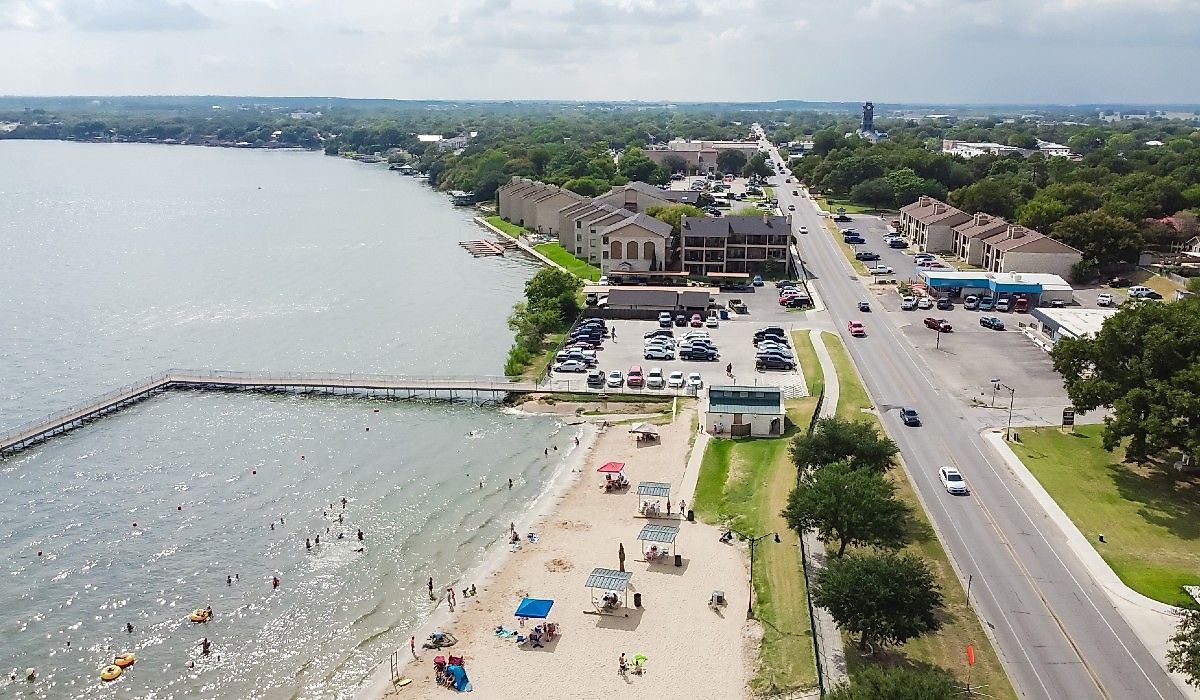
Granbury, located on the banks of Lake Granbury, is named after Confederate General Hiram B. Granbury and is known for its well-preserved Victorian-era architecture. Granbury's historic downtown square is listed on the National Register of Historic Places. The Inn on Lake Granbury has upscale accommodations with private lakefront access for a quiet weekend away.
Visitors to Granbury can explore the Hood County Courthouse, an example of Second Empire architecture, which dominates the town square. The nearby Acton Nature Center is a peaceful setting for hiking and birdwatching, with trails that meander through prairies and wetlands. Another attraction is the Granbury Cemetery, where the alleged remains of Jesse James, the infamous outlaw, are said to be buried.
Jefferson

Jefferson, located in the pine forests of East Texas, was once one of the most important river ports in the state during the mid-19th century. Steamboats connected Jefferson via Big Cypress Bayou and Caddo Lake to the Red River and then the Mississippi, moving goods to and from New Orleans and making Jefferson a key inland port before the rise of the railroad. Jefferson's history is reflected in its antebellum architecture and cobblestone streets. The Excelsior House Hotel, built in the 1850s, is among the oldest continuously operating hotels in Texas and has hosted notable figures including Ulysses S. Grant and Lady Bird Johnson. Don't miss the chance to stay here.
Visitors can visit the Jefferson Historical Museum, situated in a former federal courthouse, which features exhibits on the town's development as a transportation center and its decline after the Civil War. The collection showcases artifacts from Jefferson's golden era. Another key attraction is the Sterne-Hoya House Museum and Library, showcasing early Texas architecture. The Caddo Lake National Wildlife Refuge nearby offers a labyrinth of bayous, wetlands, and cypress trees covered in Spanish moss, serving as a popular spot for birdwatchers.
Llano

Llano, in the heart of the Texas Hill Country, was established in 1856 as a frontier outpost on the banks of the Llano River. Llano's history is deeply intertwined with the cattle drives of the late 19th century, which brought prosperity to the region and earned the town its reputation as the "Deer Capital of Texas." The Dabbs Railroad Hotel, built in 1907, is a historic landmark that once served travelers coming through town on cattle business. The hotel's rustic charm and riverside location make it an ideal base for exploring Hill Country.
The Llano County Courthouse, an example of Romanesque Revival architecture, is a focal point of the town's historic district and stands as a testament to Llano's early prosperity. Just outside of town, the Llano River offers opportunities for kayaking, fishing, and swimming, with its clear waters. Another natural attraction is the nearby Enchanted Rock State Natural Area, where a massive pink granite dome rises above the landscape, a unique geological experience.
Dripping Springs

Dripping Springs, often referred to as the "Gateway to the Hill Country," was settled in the 1850s by pioneers drawn to the area's springs and fertile soil. The town's name is derived from a limestone ledge that drips water into a small stream. Rolling hills and oak groves define Dripping Springs' landscape. The Alexander at Creek Road has cottages that blend into the natural surroundings, ideal for a peaceful stay.
Hamilton Pool Preserve is one of the town's most famous natural landmarks, formed when an underground river collapsed thousands of years ago. Its emerald waters, limestone grotto, and waterfall create a peaceful setting that ranks as one of Texas's most serene locations. The Dr. Pound Historical Farmstead in Dripping Springs offers a glimpse into early Texas pioneer life, featuring original buildings, artifacts, and gardens. Wildlife enthusiasts can take guided tours at the Westcave Outdoor Discovery Center, exploring a limestone grotto and waterfall, with a focus on conserving the area's natural resources.
In Summary
These ten serene towns in Texas offer more than just a peaceful escape; they provide a deep connection to the state's history and nature. Each town invites visitors to slow down and experience the essence of Texas. By choosing to stay in these towns, visitors not only enjoy a serene weekend but also support the preservation of Texas's cultural and natural heritage, ensuring that these small communities continue to thrive for generations to come.