7 Best Cities To Retire In England
Retiring to England carries a certain romance, with its thatched pubs, cathedral bells, allotment gardens, and trains to small towns in the surrounding countryside. The cities that deliver span the country, and each pairs a compact center you can cross on foot with a cultural calendar that never goes quiet. York sits within just over two miles of medieval walls, and the National Railway Museum is free to visit. Bath's UNESCO-listed heart takes under twenty minutes to cross on foot and is home to Britain's only naturally hot mineral springs. Durham curls around a tight loop of the River Wear beneath a cathedral and castle listed by UNESCO since 1986. Read on for seven of the best cities to retire in England, and what daily life in each one actually looks like.
Cheltenham

Cheltenham's Regency architecture, all cream-colored terraces and ornamental ironwork, gives the place an orderly, faintly theatrical feel. Cheltenham Racecourse hosts the Cheltenham Festival every March, the biggest event in National Hunt jump racing, and locals make a ritual of it. The Cheltenham Literature Festival, founded in 1949 and generally reckoned the oldest of its kind in the world, brings major authors to Cheltenham every October. Jazz and science festivals fill out much of the rest of the calendar, so there is rarely a dry stretch between events. Pittville Pump Room, a Regency-era spa building set in its own park, hosts concerts and recitals in a historic and ornate setting. Beyond town, the Cotswolds sit on Cheltenham's doorstep, with regular bus links for day trips into the surrounding villages.
York

York's retirement appeal starts with how much of the city can be reached on foot. The downtown core sits inside just over two miles of medieval city walls, and a full lap of the ramparts is a habit for locals. The National Railway Museum, which bills itself as the largest of its kind in the world, is a short walk from the train station and drew more than 650,000 visitors in 2025. It holds Mallard, the steam locomotive that set the world speed record for steam traction in 1938, and entry is free. The Shambles is a narrow medieval street of overhanging timber-framed buildings, and it anchors an afternoon of browsing that stays comfortably walkable. York Racecourse runs a full flat-racing calendar between May and October, and York Minster, one of the largest Gothic cathedrals in northern Europe, hosts evensong most days of the week.
Chester

Chester's walls, Roman in origin and closed into a full circuit under the Normans, run about two miles around the old city. Unlike York's, they complete the loop without a gap, which makes them a built-in walking route residents use daily. Chester Racecourse, known locally as the Roodee, is recognized by Guinness World Records as the oldest racecourse still in operation anywhere in the world, dating to 1539. Its compact one-mile track makes race days feel intimate rather than overwhelming. The Chester Rows are an architectural oddity found nowhere else in Britain, covered two-tier medieval galleries that let pedestrians browse storefronts on two levels. Chester Zoo, a few miles from the city center, is Britain's most-visited wildlife attraction. Spread across 130 acres and home to more than 500 species, it is worth getting a membership to enjoy regular visits at a leisurely pace.
Durham

Durham is built on a tight loop of the River Wear, and the water influences daily life here more than in most English cities. Durham Cathedral and Durham Castle, together a UNESCO World Heritage Site since 1986, sit on a rocky peninsula that residents circle on riverside paths. The city hosts Durham Regatta on the second weekend of June, the second-oldest rowing regatta in England after Chester's and five years older than the Henley Royal Regatta. Rowing boat rentals along the Wear are a low-key way to spend an afternoon that doesn't require racing chops. Durham is the most affordable city on this list, and it has the smallest population, at just over 50,000. The result is a less urbanized feel, with Newcastle just under 20 minutes away by train for bigger-city errands.
Cambridge

Cambridge's daily rhythm is set by the river and the colleges, and both are highly accessible to locals and visitors alike. Punting on the River Cam past the university's landmark buildings becomes more of a local habit outside peak summer tourist season. King's College Chapel sings evensong under its late-Gothic fan vaulting most days of the university term, and the service is free, though general admission to the chapel is not. The Fitzwilliam Museum shows Egyptian antiquities and Impressionist paintings under one roof and is free every day, so both make easily repeatable outings. Each summer, the Cambridge Folk Festival brings two days of live music to Cherry Hinton Hall, with a wider run of concerts across the city in the days beforehand. Many also take advantage of Cambridge's college town offerings, with public lectures and evening classes open to the wider community year-round.
Bath

Bath's compactness is its main selling point for retirees: the entire historic core, UNESCO-listed since 1987, can be crossed on foot in under twenty minutes, and most daily errands don't require a car. Thermae Bath Spa draws on Britain's only naturally hot mineral springs, and its rooftop pool looks out over the city skyline. The Roman Baths next door preserve the original bathing complex that the Romans built around the same springs nearly 2,000 years ago. The Theatre Royal Bath runs a full season of touring West End productions and new work, giving residents a lively theater venue without a trip to London. The Bath Skyline, a six-mile circular walking route maintained by the National Trust, climbs the hills ringing the city for views back over the Georgian rooftops.
Canterbury

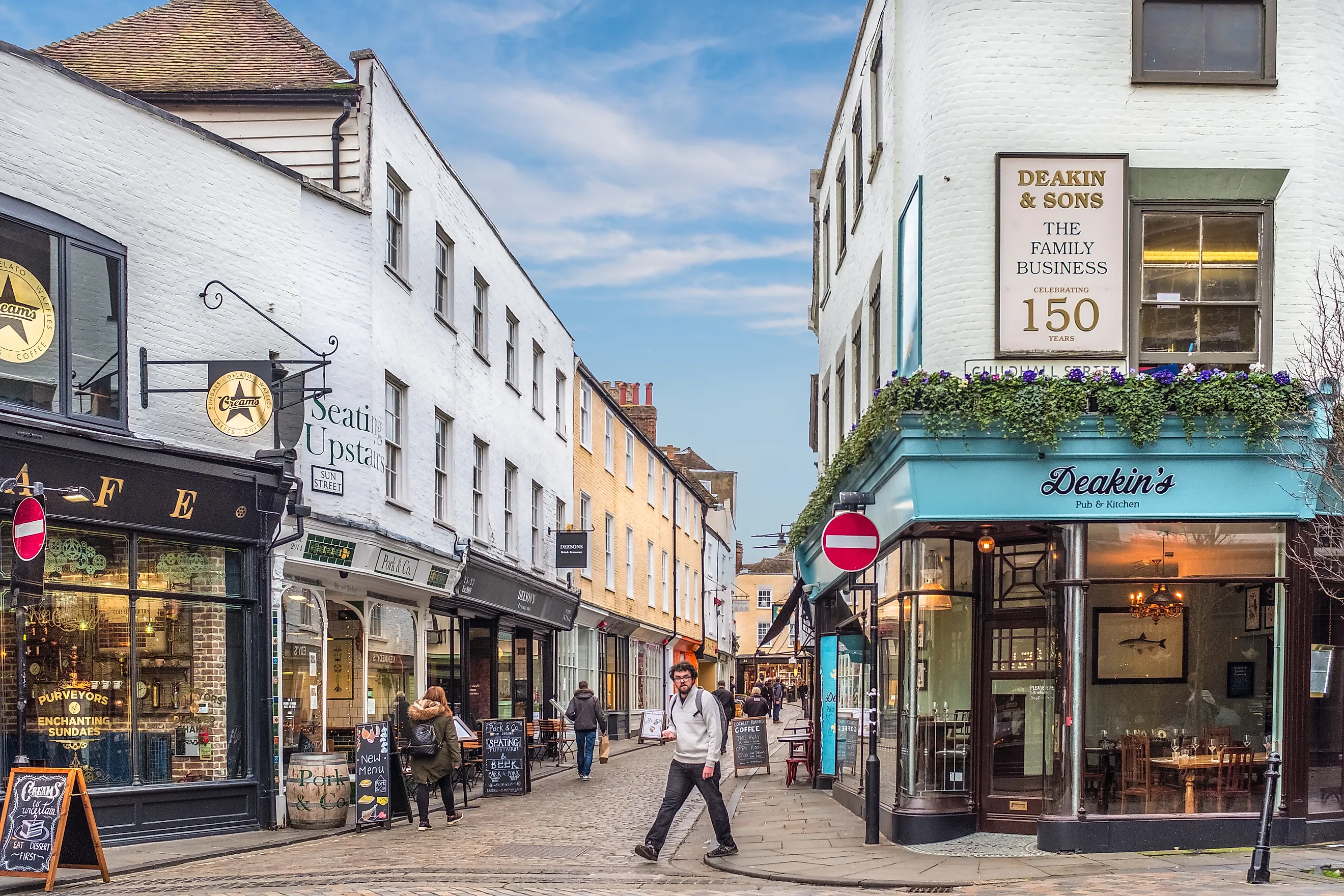
Canterbury's cathedral city status is a defining feature, but unlike some cathedral towns, the city around it is decidedly lively. Canterbury Cathedral is the seat of the Archbishop of Canterbury. A site of continuous Christian worship since 597 CE, the cathedral anchors the old city and is still open to residents for regular services and tourist visits. The Marlowe Theatre runs a year-round program of touring drama and comedy, plus visiting dance companies, giving Canterbury a cultural calendar well beyond what its size would suggest. The Kent County Cricket Club at the St Lawrence Ground is a summer fixture that draws a loyal local crowd throughout the season. Canterbury sits close enough to the Kent coast that Whitstable and its oyster harbor are a short train ride away for a change of scenery.
Finding the Right Fit in England
If you're weighing a retirement in England, the choice is less about which city ranks highest than which daily rhythm suits you. These seven cities each offer slightly different answers, some organized around a river loop or a complete circuit of walls, others around a cathedral or a university calendar. Whether you're drawn to Roman spring water, evensong under fan vaulting, a zoo worth a membership, or a daily lap of the ramparts, these are the English cities that make the strongest case for spending a retirement in the UK.