14 Small Towns on the Atlantic Coast that were Ranked Among US Favorites
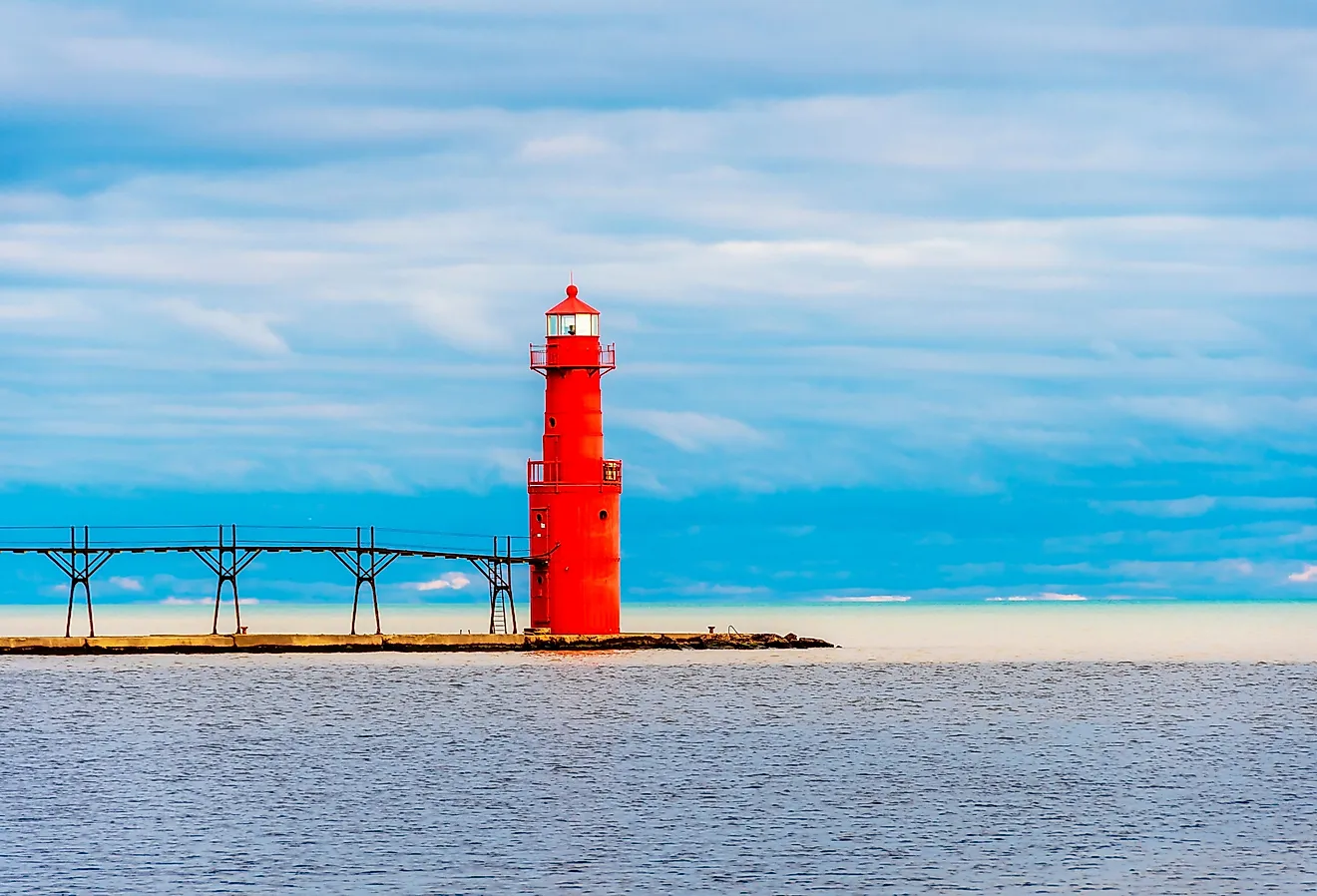
The Atlantic Coast is a long line of towns where the local economy still runs partly on the water. Boats come in with the morning catch. Lighthouses still mark working channels. Late-summer storms push the schedule around for everyone from charter captains to ice-cream parlors. The fourteen towns below sit between the headliner cities and reward a visit on their own terms. Bar Harbor pulls in the lobster-roll crowd at the edge of Acadia. Provincetown leans into its art galleries and theater scene at the tip of Cape Cod. Cape May runs whale-watching boats out of its harbor in the spring and fall. St. Augustine keeps the haunted-mansion tour going year-round inside the oldest continuously occupied European settlement in the country. Pick your weekend and pick your town.
Bar Harbor, Maine

Bar Harbor sits on Mount Desert Island in the state of Maine, with most of the island given over to Acadia National Park. The Shore Path runs about half a mile along the harbor from Agamont Park past the Bar Harbor Inn, and the Land Bridge to Bar Island is a sandbar exposed only at low tide. Cadillac Mountain rises 1,530 feet at the eastern edge of the park and is the first place in the country to see the sunrise from October through early March. Downtown is built around the Village Green; the 90-minute Bar Harbor Ghost Walking Tour leaves from there in season, and Side Street Cafe and the Travelin' Lobster handle the lobster-roll question.
Hampton Beach, New Hampshire

Hampton Beach is a small Rockingham County beach town in the state of New Hampshire, sitting along three miles of public sand on the Atlantic. Hampton Beach State Park covers the southern end with a boardwalk and a 2,800-vehicle parking lot, and the Seashell Stage in front of the boardwalk runs free concerts most summer evenings. The Atlantic Whale Watch and similar operators run dolphin, seal, and fin-whale trips out of the harbor on the Hampton River. The Sea Ketch on Ocean Boulevard handles the rooftop cocktail end of dinner; Ron's Beach House on the same strip runs a more classic seafood menu.
Provincetown, Massachusetts

Provincetown sits on the curled tip of Cape Cod in Massachusetts, where the Mayflower made its first North American landfall in November 1620 before continuing to Plymouth. The Pilgrim Monument, a 252-foot granite tower built in 1907 and 1910, marks the spot and offers a long view down the cape. Whale-watching boats run from MacMillan Wharf for three- to four-hour trips to Stellwagen Bank, where humpbacks feed through the warm months. Race Point and Herring Cove Beach handle the beach day, and Commercial Street is the long shopping and gallery strip from the East End to the West End. Dinner runs from the Lobster Pot to Jimmy's Hideaway to Victor's, all within a few blocks of one another.
Narragansett, Rhode Island

Narragansett sits on the southern tip of Washington County in Rhode Island, with three miles of beach along the Atlantic. Narragansett Town Beach handles the family scene, Roger W. Wheeler State Beach has the longest stretch of sand, and the Block Island Ferry runs from the Galilee terminal at Point Judith for the hour-long crossing to Block Island. The 1856 Point Judith Lighthouse marks the western entrance to Narragansett Bay and is a Coast Guard station, with grounds open to visitors. The Coast Guard House and Aunt Carrie's are two of the long-running seafood restaurants in town, both on Ocean Avenue.
Mystic, Connecticut

Mystic is a village split between the towns of Stonington and Groton in southeastern Connecticut, on the Mystic River near Long Island Sound. The Mystic Seaport Museum is a 19-acre living-history museum of 19th-century maritime New England, and home to the Charles W. Morgan, the last surviving wooden whaling ship in the world (built in 1841 and a National Historic Landmark). The Mystic Aquarium runs the only Steller sea lions and beluga whales on display in New England. Olde Mistick Village, on the north side of I-95, is built in the style of a 1720s colonial settlement and holds about 50 shops and restaurants. Several ghost tours run from downtown in the evenings.
Montauk, Long Island, New York

The hamlet of Montauk, with a year-round population of about 4,000, sits at the eastern tip of Long Island in the town of East Hampton. The Montauk Point Lighthouse, commissioned by George Washington and lit in 1797, is the oldest lighthouse in New York and still operates. Camp Hero State Park, just west of the lighthouse, holds the abandoned Cold War-era radar tower that inspired part of the Stranger Things mythology, and Hither Hills State Park covers a long beach and coastal forest at the western edge of town. Lodging runs from the budget Ocean Resort Inn to the high-end Gurney's Montauk Resort & Seawater Spa, and dinner runs from Duryea's lobster deck to Gosman's on the harbor.
Cape May, New Jersey

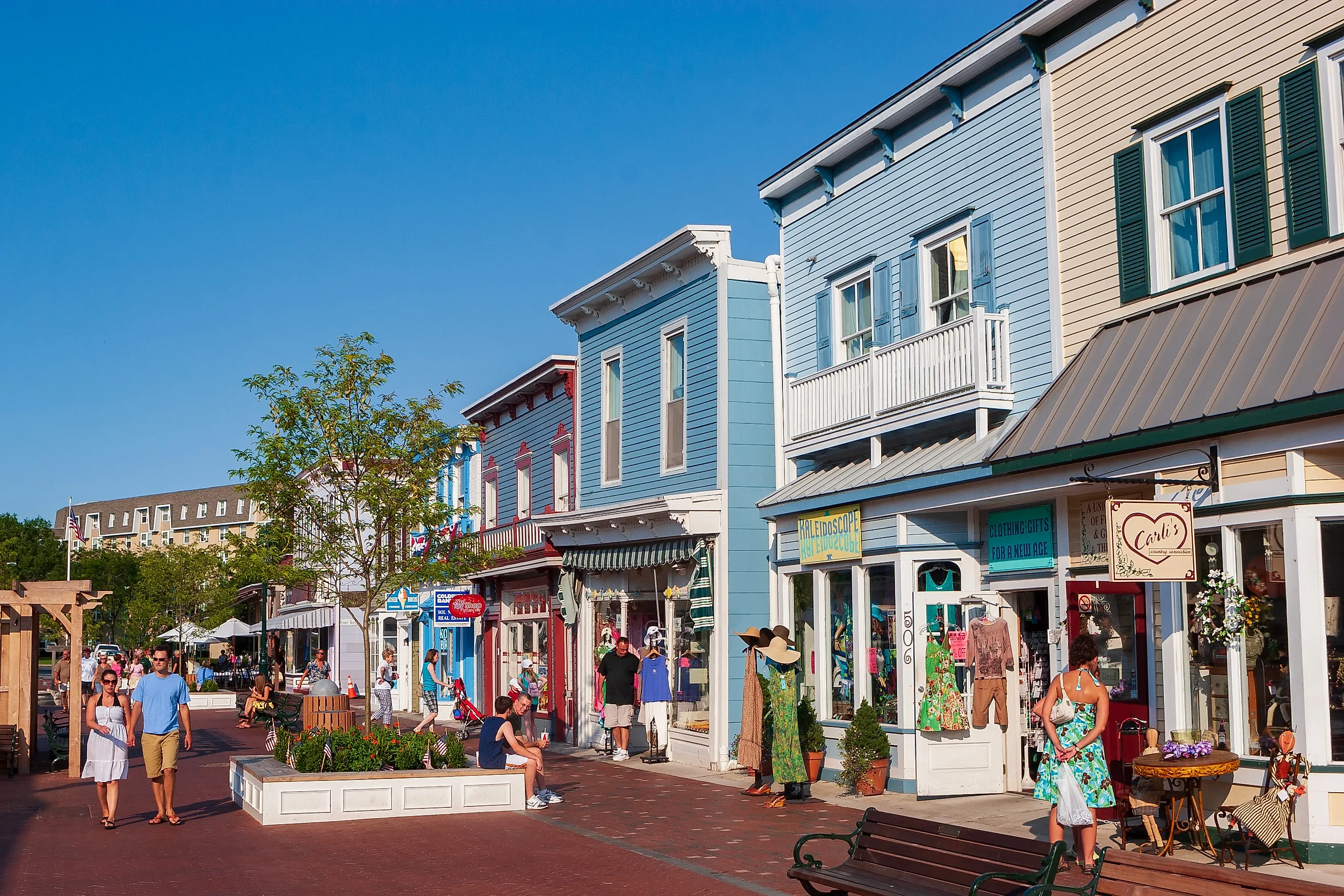
A favorite of New Jersey, Cape May sits at the southern tip of the state where Delaware Bay meets the Atlantic. The town's Victorian historic district is a National Historic Landmark, with about 600 preserved 19th-century buildings; the Emlen Physick Estate runs guided tours of an 1879 Frank Furness mansion. The 1859 Cape May Lighthouse stands 157 feet at the south end of Cape May Point State Park, with 199 steps to the watch room. Whale-watching season runs from spring through fall, with Cape May Whale Watcher running daily three-hour trips out of the harbor for humpbacks, fin whales, and bottlenose dolphins.
Lewes, Delaware

Lewes is the first town settled in Delaware, founded by the Dutch in 1631, and sits on Delaware Bay in Sussex County. Cape Henlopen State Park covers 5,193 acres at the entrance to the bay, with five miles of beach, the World War II-era Fort Miles Historical Area, and the Seaside Nature Center. The Cannonball House on Front Street still has a British 24-pounder lodged in its foundation from the 1813 bombardment of the town during the War of 1812. The Lewes-Cape May Ferry runs across Delaware Bay from the terminal at the foot of Cape Henlopen Drive. Striper Bites is a long-running seafood spot on Savannah Road, and the Lewes Farmers' Market runs Saturday mornings from May through October.
Saint Michaels, Maryland

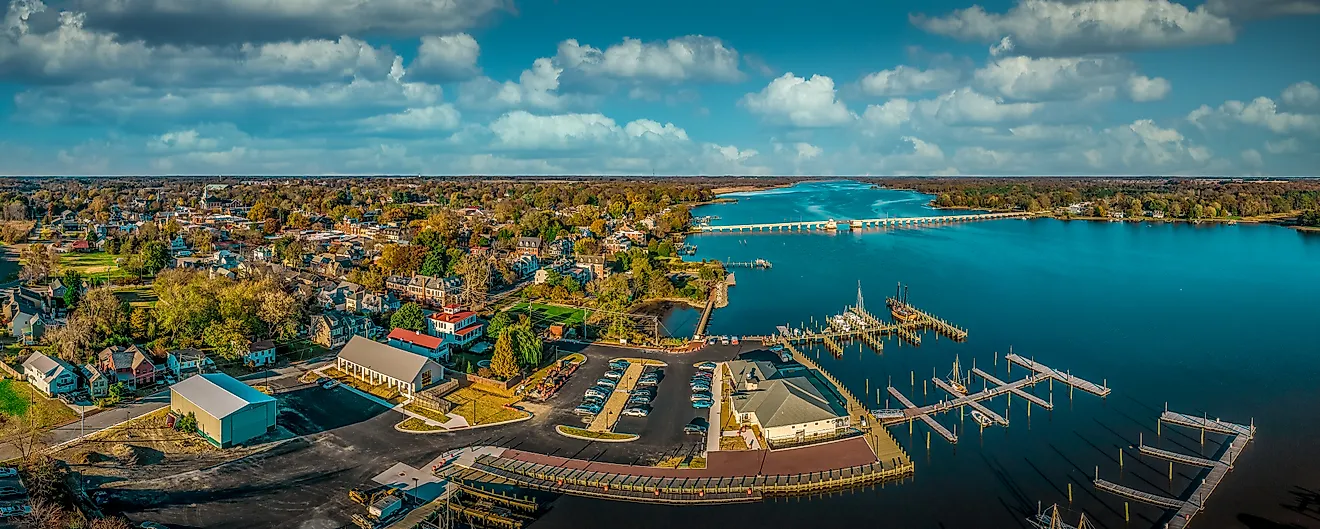
Saint Michaels sits on the Miles River in Talbot County on the Eastern Shore of the Chesapeake Bay, with about 1,000 year-round residents. The town earned the nickname "the town that fooled the British" for an 1813 night raid in which residents reportedly hung lanterns in trees and on masts above the town to draw British naval fire harmlessly into the woods. The Chesapeake Bay Maritime Museum covers 18 acres on the harbor and includes the 1879 Hooper Strait Lighthouse, a hexagonal screw-pile light moved here in 1966. Tilghman Island sits 13 miles southwest at the end of the peninsula and is one of the last working watermen communities on the bay. The Crab Claw on the harbor has been serving steamed blue crabs since 1965.
Chincoteague, Virginia

The town of Chincoteague sits on Chincoteague Island in Accomack County on Virginia's Eastern Shore. Most of the island, plus all of neighboring Assateague Island, is federally protected as the Chincoteague National Wildlife Refuge, which is the main draw. The wild ponies of Assateague are the local mascot, and the annual Chincoteague Pony Swim happens the last Wednesday in July: members of the Chincoteague Volunteer Fire Company swim a portion of the Assateague herd across the channel to be auctioned the next day, a fundraiser running since 1925. Chincoteague Island Adventures runs daily kayak tours and pony-spotting boat tours, and Beebe Ranch is the original home of Misty, the pony made famous by Marguerite Henry's 1947 children's novel.
Beaufort, North Carolina

Beaufort is a small Carteret County town on the Crystal Coast of North Carolina, established in 1709 and the third-oldest town in the state. The North Carolina Maritime Museum holds artifacts from Blackbeard's flagship, Queen Anne's Revenge, which ran aground a few miles offshore at Beaufort Inlet in 1718; the wreck was located in 1996 and is still being excavated. Cedar Island National Wildlife Refuge sits about 30 miles east and protects 14,500 acres of salt marsh. The Rachel Carson Reserve, accessible by ferry from the Beaufort waterfront, covers a chain of small islands inhabited by feral horses and is named for the marine biologist who studied the Carolina coast there in the 1930s. The Dock House on Front Street has been the town's harborfront restaurant for decades.
Beaufort, South Carolina

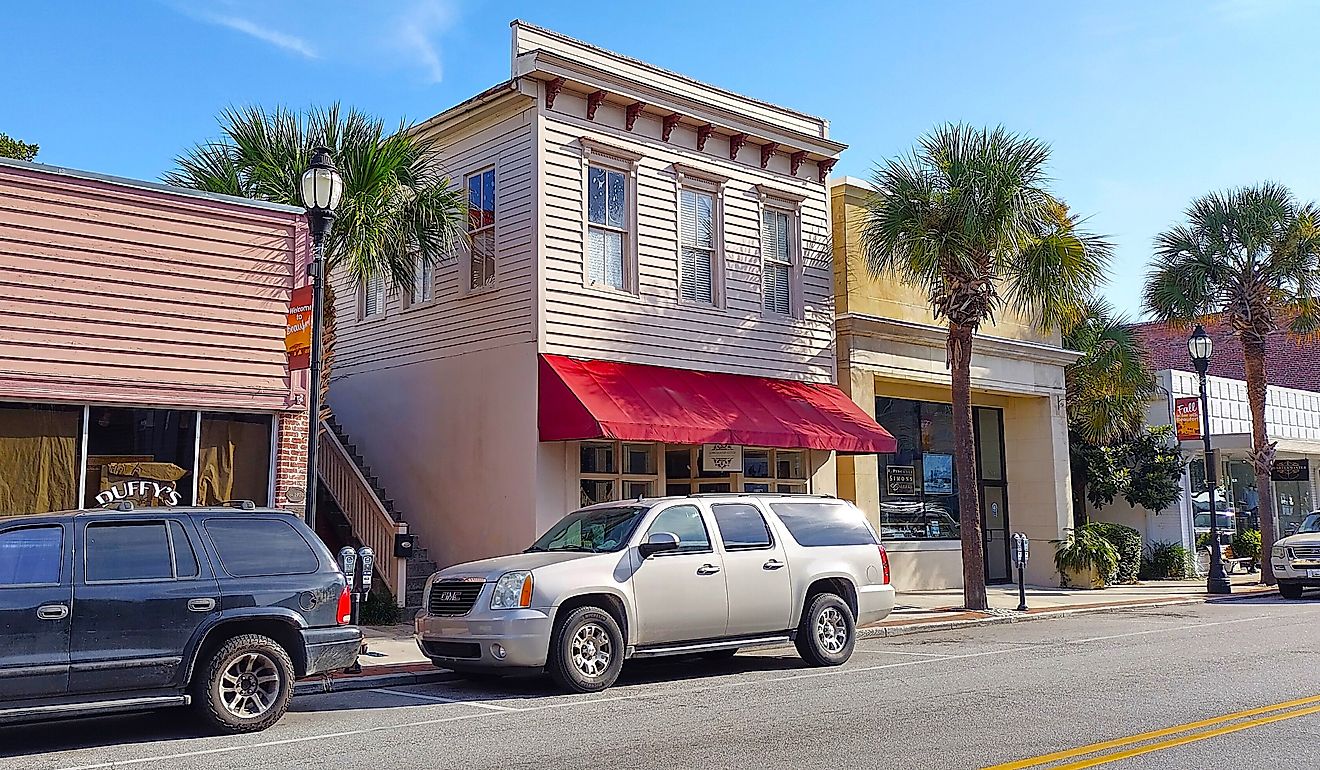
Not to be confused with its North Carolina namesake, Beaufort, South Carolina, sits on Port Royal Island in the Sea Islands about 70 miles south of Charleston. The town's antebellum architecture survived the Civil War largely because Union forces took the area early, in November 1861, and used the houses as headquarters and hospitals; the result is one of the most intact 18th- and 19th-century downtowns in the South. The John Mark Verdier House on Bay Street is open for tours of an 1804 federal-style merchant's home. Hunting Island State Park, about 16 miles east, covers a barrier-island beach with the 1875 Hunting Island Lighthouse open for the climb to the top. The novelist Pat Conroy lived nearby on Fripp Island, and the Pat Conroy Literary Center on Charles Street covers his life and work.
Tybee Island, Georgia
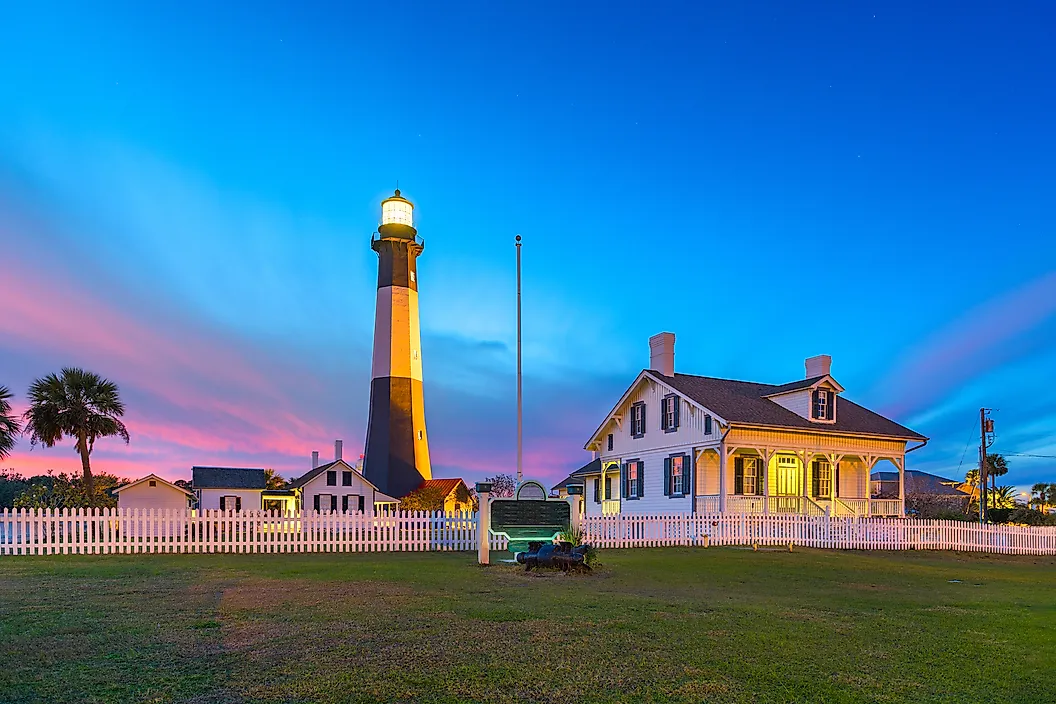
Tybee Island sits at the mouth of the Savannah River, about 18 miles east of Savannah, Georgia. The Tybee Island Light Station has guided ships into the river since 1736 and is the third-oldest lighthouse in the country, with 178 steps to the top of the current 154-foot tower (the original was destroyed by Confederate forces in 1862 and rebuilt in 1867). Cockspur Lighthouse, a small range light on a rock at the river entrance, is part of Fort Pulaski National Monument and was famously left lit through the 1862 Union shelling of the fort. The North Beach is the quieter family stretch; the South Beach near the Tybee Pier handles the bigger crowds. The Crab Shack on Chimney Creek is a long-running open-air seafood spot reached over a wooden footbridge.
St. Augustine, Florida

St. Augustine, founded by the Spanish in 1565, is the oldest continuously inhabited European-established settlement in the contiguous United States. Castillo de San Marcos National Monument is the oldest masonry fort in the country, built between 1672 and 1695 from coquina (a local sedimentary stone made of compressed shells) and never taken by force. The St. Augustine Pirate and Treasure Museum on Charlotte Street holds one of the largest collections of pirate artifacts in the world, including a chest from Captain Thomas Tew. Several ghost-tour operators run nightly walks through the historic district, and Catch 27 on Charlotte Street is the local seafood pick.
In Conclusion
The fourteen towns above span the coast from Mount Desert Island in Maine to a Spanish fort in Florida and link by water as much as by road. Each one has a working harbor, a commercial fishery in some form, and a downtown built around the lighthouse, the wharf, or the inlet. Pick the one that fits the weekend, and let the others wait for the next trip.