8 Best Small Towns To Retire In Mississippi
Mississippi remains one of the most affordable states in the country to retire, with a statewide median home price of about $273,000 (per Redfin's March 2026 figures) against a national median of $436,412. The state also exempts qualified retirement income from state tax and offers a homestead exemption that knocks the first $75,000 off the assessed value of a home for owners 65 and older. The eight towns below cover the genuine spread of what retirement in Mississippi looks like, from a quiet certified retirement community on the Tombigbee River to an Ole Miss college town where home prices run above the national average. Three are official Certified Retirement Cities through the state's Hometown Mississippi Retirement program. The rest were chosen for the same reasons retirees actually move: walkable downtowns, real medical care, and a daily life worth showing up for.
Aberdeen

Aberdeen sits on the Tombigbee River in the northeast corner of Mississippi and was one of the state's first Certified Retirement Communities under the Hometown Mississippi Retirement program. The town's strongest pitch to retirees is the math: median listing prices around $187,000 sit well below the state median of $273,000, and the property tax bill is further reduced by Mississippi's homestead exemption for owners 65 and older. The walkable downtown holds hundreds of buildings on the National Register of Historic Places, with the Elkin Theatre and Evans Memorial Library serving as the cultural anchors and the Tennessee-Tombigbee Waterway providing the outdoor backdrop for kayaking, fishing, and birding.
Highway 45 connects Aberdeen north to Tupelo (35 miles) and south to Columbus (27 miles), giving access to two larger regional hubs. Monroe Regional Hospital handles routine and 24-hour emergency care in town, and Baptist Memorial Hospital in Columbus and North Mississippi Medical Center in Tupelo cover the harder cases. Golfers have a nine-hole course at Aberdeen Golf and Country Club and the championship-grade Old Waverly Golf Club a short drive away in West Point, host of the 1999 US Women's Open won by Juli Inkster.
Ocean Springs

Ocean Springs sits on Biloxi Bay on the Mississippi Gulf Coast, with a population of about 18,000 and a downtown built around Washington Avenue. The Walter Anderson Museum of Art is the cultural centerpiece, dedicated to the Mississippi watercolorist whose Gulf Coast paintings made him one of the state's defining 20th-century artists. Galleries, seafood restaurants, and small shops fill the surrounding blocks, and the Pink Rooster on Washington Avenue is a long-standing stop for handmade jewelry and regional artwork.
The retirement appeal is the combination of waterfront and infrastructure. Ocean Springs Hospital, part of the Singing River Health System, provides emergency and rehabilitation care in town, and the Gulf Islands National Seashore is minutes away with marked trails, beaches, and bayou kayak launches. New Orleans sits about 90 minutes west on Interstate 10, putting major medical centers, the airport, and a serious cultural calendar within day-trip range.
Natchez

Historic downtown of Natchez, Mississippi. Editorial credit: Nina Alizada / Shutterstock.com.
Natchez is the oldest continuously settled town on the lower Mississippi River, founded by the French in 1716, and the historic district holds one of the largest concentrations of antebellum architecture in the United States. Median listing prices run around $247,000, slightly under the state median, and the housing stock includes everything from compact downtown bungalows to full antebellum properties on the bluff. Longwood, an octagonal six-story mansion crowned with an onion dome, was abandoned mid-construction at the start of the Civil War and remains preserved in that unfinished state. Stanton Hall, completed in 1857, occupies an entire downtown block in full Greek Revival.
The Natchez Trace Parkway begins in Natchez and runs 444 miles north to Nashville, providing one of the cleanest scenic drives in the South for short outings or longer cycling trips. Natchez State Park sits a few miles north with a fishing lake and trails. Merit Health Natchez handles emergency, surgical, and cardiology care, and Magnolia Village Assisted Living operates within walking distance of the hospital.
Diamondhead

Diamondhead is a planned community on the Bay of St. Louis with a marina that runs straight into the Gulf and two 18-hole championship courses at The Club at Diamondhead. The Pine Course leans on tight bunkering and water carries; the Cardinal Course offers wooded, rolling fairways that play longer than the yardage suggests. The town also runs the only indoor-outdoor golf academy on the Mississippi Gulf Coast, which makes it a fit for anyone who plans to play three or four times a week in retirement.
Day-to-day life relies on neighboring cities. Gulfport sits 20 miles east, Biloxi 35 miles east, and New Orleans 60 miles west on Interstate 10. Memorial Hospital at Gulfport covers cardiology, emergency, and rehabilitation. Twin Lakes Pavilion and Park offers freshwater fishing and shaded trails inside the community itself, and Rotten Bayou is a calm paddle route toward the bay that pulls regular sightings of blue herons and egrets.
Tupelo

Tupelo, Mississippi, USA. Editorial credit: Dee Browning / Shutterstock.com
Tupelo is the seventh-largest city in Mississippi (population around 38,000) and a Certified Retirement City through the state program. The retirement case rests on one fact most retirees prioritize above almost everything else: North Mississippi Medical Center is a 640-bed regional referral hospital, the largest non-metropolitan hospital in the country, a Level II trauma center, and a two-time winner of the Malcolm Baldrige National Quality Award. The medical staff covers more than 50 specialties and serves a 24-county region, which means a Tupelo retiree rarely needs to drive elsewhere for advanced care.
The cultural draw is Elvis Presley's birthplace, the two-room shotgun house at 306 Elvis Presley Drive where Presley was born in January 1935, now part of a museum and event complex. Tupelo is also the headquarters of the 444-mile Natchez Trace Parkway, with the visitor center on the north side of town. Housing costs run about 38 percent below the national average, the Mall at Barnes Crossing serves as the shopping anchor for north Mississippi, and Ballard Park provides 153 acres of trails, a small lake, and a regular schedule of concerts and races.
Oxford

The charming downtown area of Oxford, Mississippi. Image credit Feng Cheng via Shutterstock
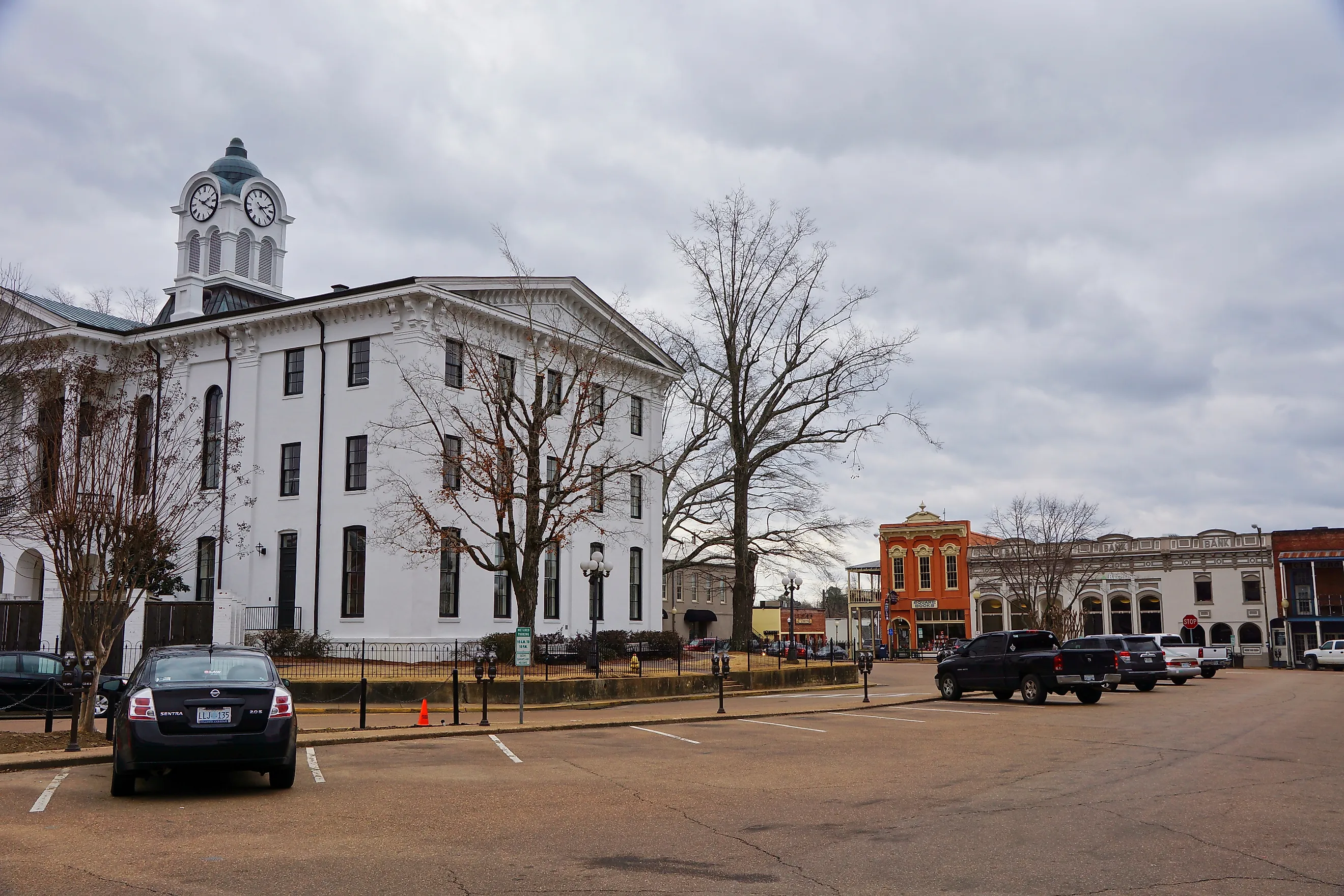
Oxford is the outlier on this list. It is a Certified Retirement City and one of the most consistently recommended college towns for retirement in the South, but median home prices sit between $400,000 and $470,000 (per recent Redfin and Zillow data), well above both the state median and the national median. The premium buys a specific kind of retirement: a walkable Square anchored by Square Books (named Publishers Weekly Bookstore of the Year in 2013), the University of Mississippi a few blocks south, and the steady rotation of lectures, concerts, and athletic events that come with a campus of more than 20,000 students.
Healthcare runs through Baptist Memorial Hospital-North Mississippi, a Joint Commission-accredited Level III adult trauma center with more than 200 beds. The University offers tuition-free auditing for residents 65 and older through its Division of Outreach and Continuing Education, which is one of the genuine perks of retiring to a state flagship. William Faulkner's Rowan Oak, his preserved home and writing study, sits a short walk from the Square and operates as a museum. The downsides worth knowing: traffic and prices both rise during football weekends and student move-in, and the senior services infrastructure is thinner than in towns built around an older population.
Hattiesburg

Hattiesburg is the third-largest city in the state and a Certified Retirement City, with a population of about 47,000 and two universities inside the city limits: the University of Southern Mississippi (around 13,000 students) and William Carey University. The college presence underwrites the dining scene, a regular concert and theater calendar at the Hattiesburg Saenger Theater (a 1929 venue still in continuous use), and a deeper local services bench than most Mississippi cities of similar size.
The cycling and walking infrastructure is unusually strong for the region. The 44-mile Longleaf Trace runs from the eastern edge of Hattiesburg through Sumrall, Bassfield, and Carson to Prentiss on a paved former rail bed and was inducted into the Rails-to-Trails Hall of Fame. Healthcare comes through Forrest General Hospital and Merit Health Wesley, both offering full emergency, surgical, and rehabilitation services. Timberton Golf Club, designed by Mark McCumber, ranks consistently among the better public courses in the state.
Vicksburg

Vicksburg is a Certified Retirement City sitting on bluffs above the Mississippi River, with four riverfront casinos (Ameristar, Bally's, Riverwalk, and WaterView) providing a steady supply of dining, entertainment, and weekend traffic. Ameristar is the largest dockside casino in central Mississippi. The Vicksburg Senior Center serves as the in-town gathering point for retirees, with regular fitness classes, art and cooking sessions, and group day trips to surrounding towns.
Vicksburg National Military Park covers 1,800 acres of preserved Civil War battlefield with a 16-mile driving tour, more than 1,300 monuments, and the USS Cairo Museum housing the recovered ironclad gunboat. The Vicksburg Theatre Guild is one of the oldest continuously operating community theaters in Mississippi and runs a full season each year. Merit Health River Region handles emergency, surgical, and cardiac care in town.
Settling In
Mississippi rewards retirees who pick a town for the way they actually want to spend their days, not for a generic checklist. Aberdeen and Natchez deliver historic-district walking and a low monthly nut. Ocean Springs and Diamondhead trade slightly higher housing costs for direct Gulf access. Tupelo offers the strongest medical infrastructure of any town its size in the state. Oxford trades affordability for the rhythms of a SEC college town. Hattiesburg and Vicksburg sit in the middle on most measures and excel at being well-rounded. The shared advantages (no state tax on qualified retirement income, the 65-and-over homestead exemption, and a statewide median home price about 37 percent below the national figure) apply everywhere on this list.