7 Missouri Towns Where Time Stands Still
Missouri's history runs deeper than its 1821 statehood and the towns on this list are where you can still see it. Most were founded in the late 1700s or early 1800s and they have held on to that era in a way that makes a visit feel like a walk through a different century. Hermann was settled by German immigrants in the 1830s and still has buildings from the 1840s lining its streets. Carthage's downtown is a Victorian time capsule anchored by the 1894 Jasper County Courthouse often called Missouri's second-most-photographed building. Each of these seven towns holds a different piece of the state's past and together they make one of the best history road trips the Midwest has on offer.
Ste. Genevieve

Ste. Genevieve is a charming town on the Mississippi River, on the border with Illinois. This town is unarguably the oldest permanent European settlement in Missouri and one of the oldest west of the Mississippi. It was founded between 1735 and 1750 by French Canadian settlers who were known for farming, salt production, and lead mining. The Ste. Genevieve National Historical Park now preserves much of that history, with several French colonial buildings reflecting the vernacular vertical log architecture adopted by the early settlers. The Bauvais-Amoureux House, one of the park's buildings, dates to 1792 and is worth visiting as it is among the few surviving poteaux-en-terre style houses in North America. Across the town are more ancient structures worth exploring, including the Louis Bolduc House, built in 1788 and highlighting early French colonial architecture. The Louis Bolduc House is part of the Centre for French Colonial Life Museum Campus, whose exhibits facility sells tickets for guided tours of the Bolduc and LeMeilleur houses and presents exhibits on the region's French Creole history.
For nature and outdoor lovers, there's plenty to enjoy in this town, including the nearby Pickle Springs Natural Area, featuring a two-mile trail winding through waterfalls, box canyons, rocky slopes, and rare plants and animals. About 25 minutes west of Ste. Genevieve, Hawn State Park offers a memorable outdoor experience in one of Missouri's unspoiled landscapes, made up of streams, oak and pine trees, sandstone canyons, and cliffs. The park offers a campground, hiking and backpacking trails, and opportunities for fishing and birdwatching.
Carthage

Carthage was named after the ancient Carthaginian city of the same name, and is known for the Battle of Carthage, one of the earliest battles of the Civil War, which led to the destruction of the town in 1861, after it had been established in 1842. Thankfully, the town grew rapidly after the war and now invites visitors to walk through its historic downtown, where Victorian architecture offers a step back in time to the 19th century. The Jasper County Courthouse, one of the notable structures on Main Street, was built in 1894-95 from locally quarried Carthage stone and is a Romanesque Revival landmark often described as Missouri's second-most-photographed building.
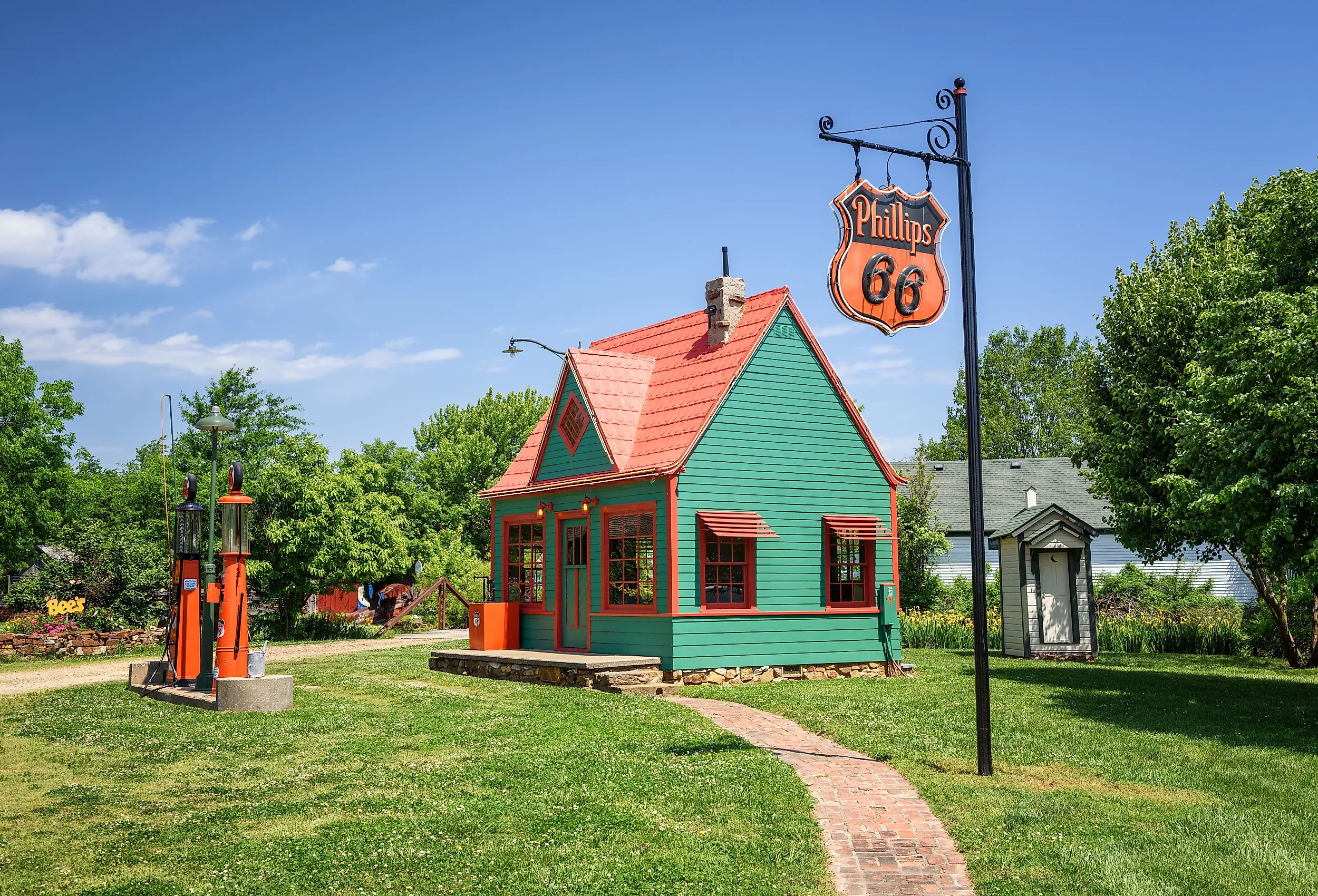
Meanwhile, modern-day Carthage has its quirky side, with attractions like Boots Court, a 1939 motel on Route 66 designed in the Streamline Moderne style. For art lovers, Precious Moments Chapel and Gardens in town holds an amazing collection of Biblical artworks, painted all over the walls and ceiling of the chapel, alongside outdoor sculptures complemented by fountains. The site also has a visitor center where one can shop for souvenirs.
Hannibal

Hannibal sits on the Mississippi River, on the border with Illinois, with a rich historic allure and some of the state's significant historical treasures. Founded in 1819 and named for Hannibal Creek, whose name traces to the ancient Carthaginian general, the river town's historic core feels more like a 19th-century Mississippi River community than a colonial-era settlement. For one, Rockcliffe Mansion, just outside the historic downtown, dates to the late 1890s and represents one of the most elegant Colonial Revival Georgian-style residences in America. Seasonal guided tours are offered, and the mansion also operates as a boutique bed-and-breakfast. On the main street, one will find the Mark Twain Boyhood Home & Museum, where America's most beloved humorist and author, Mark Twain, was raised. The museum showcases artifacts and lessons from Twain's life, from paintings to childhood friends and local experiences that inspired some of his best writing.
In the meantime, Hannibal is a paradise for adventures, featuring attractions like the Mark Twain Cave, where one can explore beautifully lit caverns that also inspired Mark Twain. Just south of town, Lover's Leap is a five-acre blufftop park with benches, historical information, and panoramic views of Hannibal, the Mississippi River, and Illinois.
Hermann

Situated on the Missouri River, Hermann is a charming town with a history dating to 1837 when it was settled by German immigrants. Today, the town is steeped in German culture and hosts German-inspired events year-round, including an Oktoberfest celebration held every weekend in October. Meanwhile, across the town are several attractions that make the area seem frozen in time, including the Deutschheim State Historic Site, which preserves structures dating from 1840 to 1890. Tours are offered at the site for insights into the lives of 19th-century German immigrants and to explore structures, like the Pommer-Gentner House, a neoclassical brick home and one of the oldest in the city, built in 1840. Elsewhere, Hermann Farm is a cool place to experience and learn about the town's agricultural history, German heritage, and farming practices. Here, one can explore historic homes dating to the 1800s, enjoy carriage rides with plenty of history lessons, and get up close to mules and draft horses. Meanwhile, Hermann is a famous wine town, home to several wineries worth visiting, including Stone Hill Winery. Founded in 1847, Stone Hill Winery is promoted as Missouri's oldest and highest-awarded winery, and visitors can tour its historic cellars, taste its wines, and dine at the on-site Vintage 1847 Restaurant.
Weston

Weston is one of Missouri's smallest towns with a rich history and plenty of recreational opportunities. Established in 1837 along the Missouri River, Weston grew into an important river town, and the Lewis and Clark Expedition camped close to present-day Weston on July 2, 1804. The town largely maintains its historical allure today, with its antebellum homes and other Victorian-era structures, as well as notable historical attractions such as the Holladay Distillery. Founded in 1856, Holladay Distillery in Weston invites visitors on tours of a working historic distillery where bourbon has been made for over 170 years. At the Weston Historical Museum, one can explore Civil War artifacts, pioneer tools, and other age-old exhibits highlighting the town's long history. And, for nature lovers, the town is home to Weston Bend State Park, a lush recreational area on the banks of the Missouri River, featuring over 10 miles of hiking and biking trails, and developed campsites. The Harpst Trail, one of the park's most challenging trails, is a short but rugged hike through mature river woods.
Lexington

Lexington holds a huge place in Missouri's history and feels frozen in the 1800s when it was founded and became the site of the First Battle of Lexington. Fought in 1861, around 39 years after the town's establishment, this battle was one of the earliest of the Civil War, and the Battle of Lexington State Historic Site preserves that history today. Besides the unique feeling of being on a quiet battlefield, the site hosts a visitors center with war exhibits and historic structures like the 1853 Oliver Anderson House, whose walls still feature evidence of bullets and cannon fire from the armed conflict. Perhaps even more exciting, downtown Lexington is adorned with historical architecture, making strolling feel like a step back in time.
On the main street, particularly, visitors will be met with notable structures like the 1847 Lafayette County Courthouse, a Greek Revival landmark that has been in continuous use since the mid-19th century. Additionally, downtown is home to the Lexington Historical Museum, housed in the former Cumberland Presbyterian Church built in 1846, with exhibits covering local history from Indigenous peoples and steamboats to coal mining and the Civil War. For a respite from the history, the Lexington Riverfront Park offers access to the Missouri River for boating and fishing, as well as waterfront picnic areas.
Boonville

Boonville is a small town on the Missouri River, full of history and natural scenery. Settled in 1810, the town was named after Daniel Boone, whose sons once operated a salt deposit nearby. It still feels tied to the 1800s across the town today, especially at the Rivers, Rails & Trails Museum, where visitors can explore Boonville's river, railroad, trail, and transportation history. The museum features an authentic wagon used by pioneers, a model train display, and steamboat memorabilia, alongside Civil War exhibits. Notably, Boonville sits on Katy Trail State Park, a 240-mile rail-trail that makes the town a strong access point for hiking, biking, running, or horseback riding along the Missouri River corridor. Automobile enthusiasts can arrange an appointment to tour Lewis Miller's Mitchell Collection, an extensive collection of Mitchell wagons, bicycles, motorcycles, and automobiles from the 19th and early 20th centuries. Elsewhere, Warm Springs Ranch, the Budweiser Clydesdale breeding facility on more than 300 acres outside Boonville, offers reservation-only seasonal tours where visitors can learn about the famous Clydesdales.
With time moving faster than ever before due to the rapid dissemination of information, and entire cities getting transformed into modern metropolises, full of new-age technological advancements, finding slow-paced towns from bygone eras is becoming increasingly difficult. Thankfully, these towns in Missouri have maintained their characters from the late 1700s to the 1800s and define what it truly means to be frozen in time. Traveling through these towns feels authentic, with opportunities to physically explore evidence of some of the earliest periods in Western American history, sometimes defined by conflicts, but more frequently by European pioneer resilience, industrialization, and architectural brilliance.