12 Most Overlooked The United States Towns For 2026
Interstate exit signs rarely tell the whole story. Between the neon promise of Vegas and the skyline swagger of Chicago lives an American "skip zone," those FM dead spots where the signal fades, the asphalt cools, and entire communities drift past the windshield unnoticed.
In a year when travel algorithms keep serving up the same postcard darlings, the real frontier lies in that static. Our 12 most overlooked U.S. towns for 2026 are the places where rail whistles still set the schedule, where Friday night lights glow over eight-man football, and where the museum docent might also pour your coffee an hour later. Each town on this list proves that relevance is not measured by influencer reels; it is etched into grain elevators, courthouse clock towers, and century-old cafes that never needed a rebrand. Pull over, downshift, and listen: there is still a whole country humming off the main frequency.
Decorah, Iowa

Decorah, Iowa, is a Norwegian-American stronghold set in the Driftless Area, a region the glaciers missed, leaving behind rugged bluffs, limestone outcroppings, and spring-fed trout streams. The town holds the most significant collection of Norwegian-American artifacts in the country at Vesterheim Museum, a block-long campus that includes 12 preserved buildings and over 33,000 objects, many of them hand-crafted by 19th-century immigrants. Decorah Ice Cave State Preserve, a short walk from downtown, is the largest known glaciere in North America east of the Black Hills and holds ice well into summer thanks to unusual subterranean airflow. Entry is free, though a safety barrier limits visitors to the first ten feet.
The Trout Run Trail circles 11 miles through farmland, river valleys, and high ridgelines, crossing a sculptural bridge over the Upper Iowa River and skirting the Decorah Fish Hatchery. In town, Java John's offers coffee roasted on-site and walls lined with local art, while La Rana Bistro on Washington Street serves confit duck legs and seasonal risottos sourced from regional farms. Despite its modest size, Decorah is like a self-contained cultural district dropped into the middle of Northeast Iowa farmland.
Caliente, Nevada

Caliente, Nevada, is the only incorporated city in Lincoln County and one of the last remaining rail towns built in the Mission Revival style. Its 1923 Union Pacific depot, now housing city offices and a small museum, anchors the center of town with stucco walls, arched windows, and red tile roofing, a style more common in Santa Fe than eastern Nevada. The town's name, meaning hot in Spanish, comes from the local hot springs that still bubble nearby but are largely undeveloped, giving Caliente a rawness that has not been packaged for tourism.
Cathedral Gorge State Park sits ten minutes north along US-93 and features slot canyons carved into soft bentonite clay, some barely shoulder-width, others opening into narrow amphitheaters. Kershaw-Ryan State Park, just south, offers irrigated gardens and picnic areas set against the sheer rock faces of Rainbow Canyon. Side Track Cafe on Clover Street serves green chile cheeseburgers and house-made pies, with laminated menus that have not changed in years. At the Caliente Railroad Depot Museum, visitors find photos of the depot's heyday when it served as a crew-change hub on the Salt Lake to Los Angeles line, surrounded by a once-booming rail yard now reduced to silence. Caliente remains defined by what it was and what it stubbornly refuses to become.
Lanesboro, Minnesota

Lanesboro, Minnesota, is one of the few U.S. towns whose downtown still runs on its own water power. The stone dam across the Root River was completed in 1868 to drive the town's flour and saw mills, built from unmortared limestone by immigrant craftsmen and now one of only six gravity arch dams left in the country. The power canal and powerhouse have been generating electricity since 1903. Set in the karst limestone bluffs of southeastern Minnesota, the town has preserved its grain elevator, stone arch bridges, and feed mills without converting them into galleries or boutiques. Its street grid remains tight and walkable, with the 19th-century brick storefronts of Parkway Avenue housing a mix of working studios, cafes, and the professional-level Commonweal Theatre Company, which mounts six productions a year.
The 42-mile Root River State Trail cuts directly through town and connects Lanesboro to Harmony, Rushford, and Fountain via paved routes once used by Milwaukee Road freight trains. Pedal Pushers Cafe serves up healthy bowls and sandwiches. Sylvan Park, across from the dam, hosts Friday evening bluegrass and fills with trout anglers by sunrise. The Lanesboro History Museum, wedged above the dam's spillway, holds 19th-century newspaper printing blocks, post office boxes, and a working jail cell from the original Fillmore County Sheriff's Office. Lanesboro does not lean on nostalgia; it operates like the town it always was, only more quietly.
Blanco, Texas

Blanco, Texas, is a small town in the Texas Hill Country. It sits along the Blanco River, which flows wide and shallow through limestone banks, feeding a spring-fed swimming area that runs through Blanco State Park just steps from Main Street.
Real Ale Brewing Company operates out of a 60,000-square-foot facility south of town and produces Firemans #4, Devil's Backbone, and a rotating series of barrel-aged beers under the Mysterium Verum label. The taproom includes a rotating food truck and weekly brewery-only releases. Redbud Cafe serves chicken salad on jalapeno cheese bread and curates local art on its interior walls. Hill Country Lavender, located off FM 165, opens its fields to the public each May and sells sachets, soaps, and culinary buds made from Grosso and Provence cultivars. At night, most of the town quiets by 9 p.m., but Twin Sisters Dance Hall, built in 1870, still holds monthly public dances, often led by conjunto or classic country bands from Austin and San Marcos.
Livingston, Montana

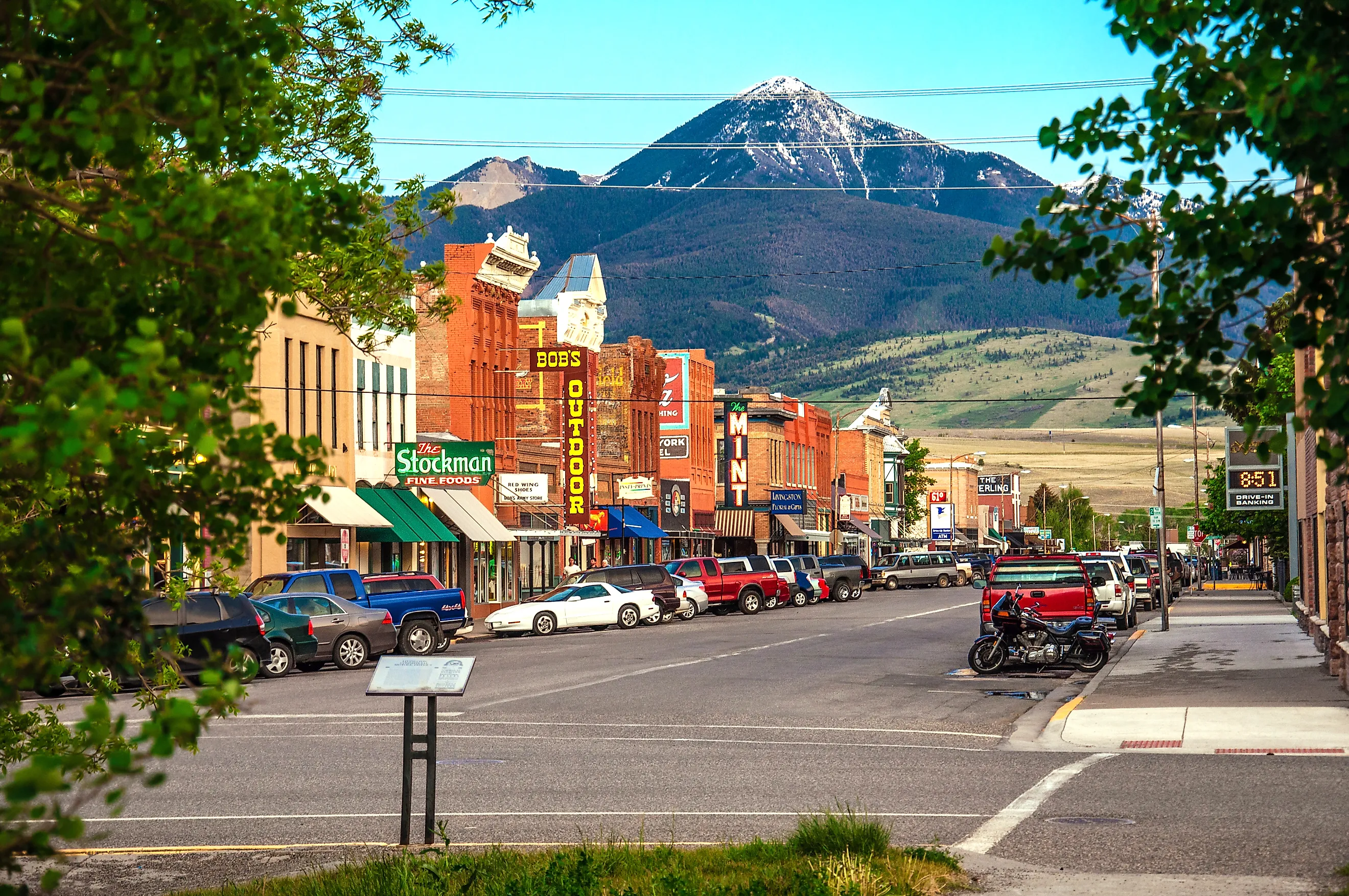
Livingston, Montana, sits along the Yellowstone River but was built for the railroad. It began as a division point for the Northern Pacific in the 1880s, and the 1902 Livingston Depot still anchors downtown. It was designed by Reed and Stem, the Minnesota firm that would go on to draw up New York's Grand Central Terminal, in an Italianate style of red and yellow brick with terra cotta lions' heads and floral detailing. Writers moved in during the 1970s, among them Thomas McGuane and Jim Harrison. The town kept its grain elevators and saloons, but added galleries, bookstores, and a restaurant scene that now draws chefs from Bozeman and beyond.
The Yellowstone Gateway Museum, housed in a former school, exhibits frontier maps, Crow Nation artifacts, and full-scale replicas of early 20th-century street scenes. Fly fishers gather in Sacajawea Park, where the river bends around cottonwoods and the Absaroka Range rises in the distance. Campione on Main Street serves black pepper tagliatelle with wild mushrooms and ribeyes cured in kosher salt and coffee grounds. Coffee Crossing roasts in-house and operates out of a brick building next to a repurposed gas station. In a town of under 9,000, secondhand stores outnumber chain businesses. The northern entrance to Yellowstone National Park is an hour away, but most here are not looking to leave.
Wallace, Idaho

Wallace, Idaho, holds a distinction almost no other American town can match: the entire downtown is listed on the National Register of Historic Places, added in 1979 and preserved essentially whole. The uniformity is the product of a single bad night in 1890, when fire took thirteen saloons and six hotels, and the town rebuilt in brick and stone with silver money. When Interstate 90 came through in 1991, engineers put it on a viaduct above the valley floor rather than drive it through the buildings.

The Silver Valley around it has produced more than 1.2 billion ounces of silver since 1884, and mining still runs. Four museums split the history between them: the Wallace District Mining Museum, the Northern Pacific Depot, the Sierra Silver Mine tour, and the Oasis Bordello Museum, which preserves a business that operated until 1988. Then there is the matter of the manhole cover at Bank and Sixth. In September 2004 the mayor proclaimed that spot the Center of the Universe, reasoning that nobody could prove otherwise, and the town has committed to the bit ever since. Fewer than 800 people live here. The Route of the Hiawatha runs 15 miles of rail-trail through tunnels and over trestles southeast of town, and the paved Trail of the Coeur d'Alenes covers 73 miles across the Panhandle.
Abbeville, South Carolina

Abbeville, South Carolina, claims the title "Birthplace and Deathbed of the Confederacy," and its history is recorded in the granite walls of the Burt-Stark Mansion, where Jefferson Davis held his final war council in May 1865. The mansion still holds the rosewood piano played the night Davis arrived. Court Square remains intact with brick sidewalks and gas-style lanterns. The 1904 Abbeville Opera House continues to stage seasonal plays and concerts in a space originally built for vaudeville acts traveling between New York and Atlanta.
Trinity Episcopal Church, built in 1860, has a 125-foot spire visible from nearly every block in town. Inside, the slave balcony remains untouched. The Livery Stable, once home to horse carriages, now hosts historical lectures and small exhibits curated by the Historic Properties Commission, as well as a farmer's market and special events. Just past the railroad tracks, Divine Your Space is a quirky home decor shop offering wine and workshops. Abbeville holds its architecture and historical contradictions in plain sight.
Paris, Kentucky

Paris, Kentucky, sits at the center of Bourbon County, which took its name from the French royal house in 1785, decades before distillers borrowed it for the whiskey. The town's Main Street is lined with Italianate brick buildings that have not been gutted or refaced. Just south of downtown, Claiborne Farm operates year-round as one of the most storied thoroughbred farms in the country, home to Secretariat and his sire Bold Ruler. The farm cemetery draws breeders, gamblers, and historians who walk past stone markers bearing the names of Triple Crown sires.
Hartfield and Co., a grain-to-glass distillery on Pleasant Street, was the first to legally produce bourbon in Bourbon County since Prohibition closed the county's distilleries in 1919. Lil's Coffee House, tucked into the old J.J. Newberry building, serves homey meals with a Kentucky twist. The Hopewell Museum, inside a 1909 Beaux-Arts post office, holds rotating exhibits on local equine history, Civil War letters, and early African American educators. The Bourbon County Courthouse, capped with a limestone clock tower, still runs its original mechanical bell system. No part of Paris has been remade for tourism. It still runs on horse schedules, local traffic, and family land deeds handed down by hand.
Silver City, New Mexico

Silver City, New Mexico, sits above an ancient caldera, and a flash flood in 1895 tore out its original Main Street, leaving a channel now known as the Big Ditch that runs a full story below the surrounding blocks. The town's original Chinatown, built during the silver boom, has vanished, but its influence remains in artifacts housed inside the Silver City Museum, a restored 1881 brick mansion with intact wallpaper, dressmaker tools, and mining ledgers. Billy the Kid lived here as a child. His mother is buried at Memory Lane Cemetery under a simple white stone that locals still tend.
The Western New Mexico University Museum, located in Fleming Hall, holds one of the most comprehensive collections of Mimbres pottery in existence, with geometric bowls, ceremonial vessels, and hand-carved tools excavated from nearby cliff dwellings. Tranquilbuzz Coffee House serves green chile quiche, pinon coffee, and local poetry readings on a patio shaded by cottonwoods. Gila National Forest begins just past the edge of town, with over 3 million acres of ponderosa, juniper, and hot springs accessible from trailheads off NM-15. Little Toad Creek Brewery and Distillery, set inside a 1930s auto garage, offers house-brewed IPAs and prickly pear margaritas poured for a mix of hikers, off-gridders, and geology students. Silver City holds more history than it displays.
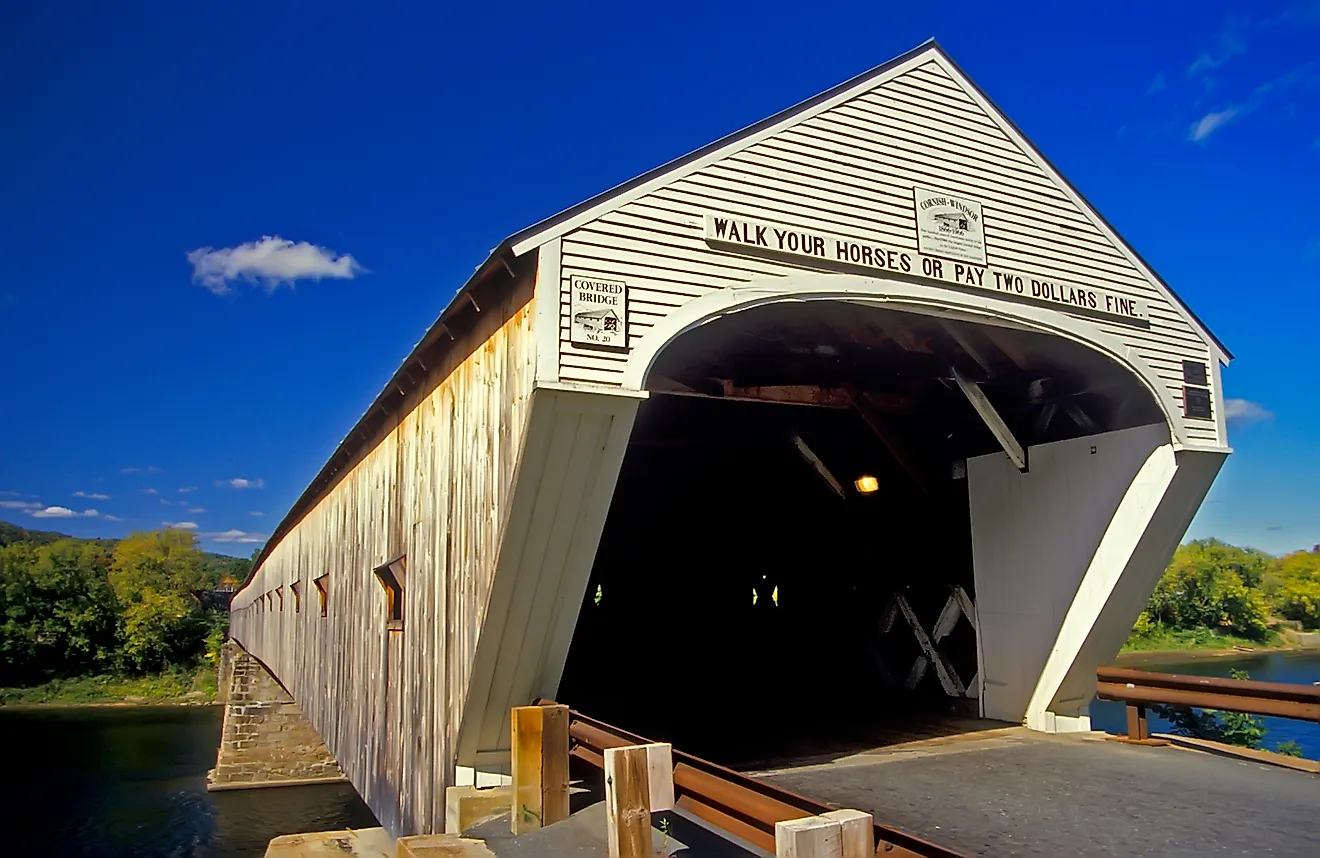
St. Johnsbury, Vermont

St. Johnsbury, Vermont, is one of the few towns in the U.S. where a 19th-century natural history museum, fine art gallery, and public planetarium sit within three blocks, all established by the same industrial family. The Fairbanks family, whose platform scales revolutionized commerce, funded most of the civic infrastructure, including the Fairbanks Museum and Planetarium, which houses over 30,000 objects and operates as the state's official meteorological observation center. Its planetarium, the only public one in Vermont, runs shows inside a dome added in 1961 and still uses analog star projectors alongside digital mapping.
Across the street, the St. Johnsbury Athenaeum holds a first-edition copy of Leaves of Grass, a marble bust of Ceres, and Albert Bierstadt's Domes of the Yosemite, an enormous canvas the gallery was effectively built around. Dog Mountain, northeast of town, spreads across 150 acres and includes hiking trails, a dog sculpture garden, and a chapel filled with handwritten notes to departed pets. The doors never lock. Cafe Lotti, located in the former railroad office, serves boiled cider chai and cardamom buns alongside back issues of Yankee Magazine. Passengers no longer arrive by rail, but the schedule still hangs inside the depot, marked by hand.
Houghton, Michigan

Houghton, Michigan, was once the copper capital of North America, with more native copper pulled from the Keweenaw Peninsula than anywhere else on the continent. Its geography forced engineering solutions: the Portage Lake Lift Bridge remains the heaviest double-deck vertical lift bridge in the world, designed to allow both ship traffic below and snowmobiles across its lower deck in winter. Michigan Technological University, founded to train mining engineers, now anchors the town with advanced research labs, trail systems, and a student body that rivals Houghton's permanent population.
The A.E. Seaman Mineral Museum holds native copper specimens the size of small engines, along with datolite, thomsonite, and a fluorescent rock gallery lit by UV lamps. Keweenaw Brewing Company on Shelden Avenue pours pints of Pick Axe Blonde and Widow Maker Black Ale from a walk-up bar inside a timber-beam taproom with iron-stove heat. Suomi Home Bakery serves pannukakku and nisu bread in a narrow storefront run by the same Finnish-American family for decades. The Tech Trails offer over 20 miles of groomed single-track for skiing, biking, or trail running, much of it through cedar and birch forest bordering campus. Snow arrives early and stays long in this quiet town.
Coos Bay, Oregon

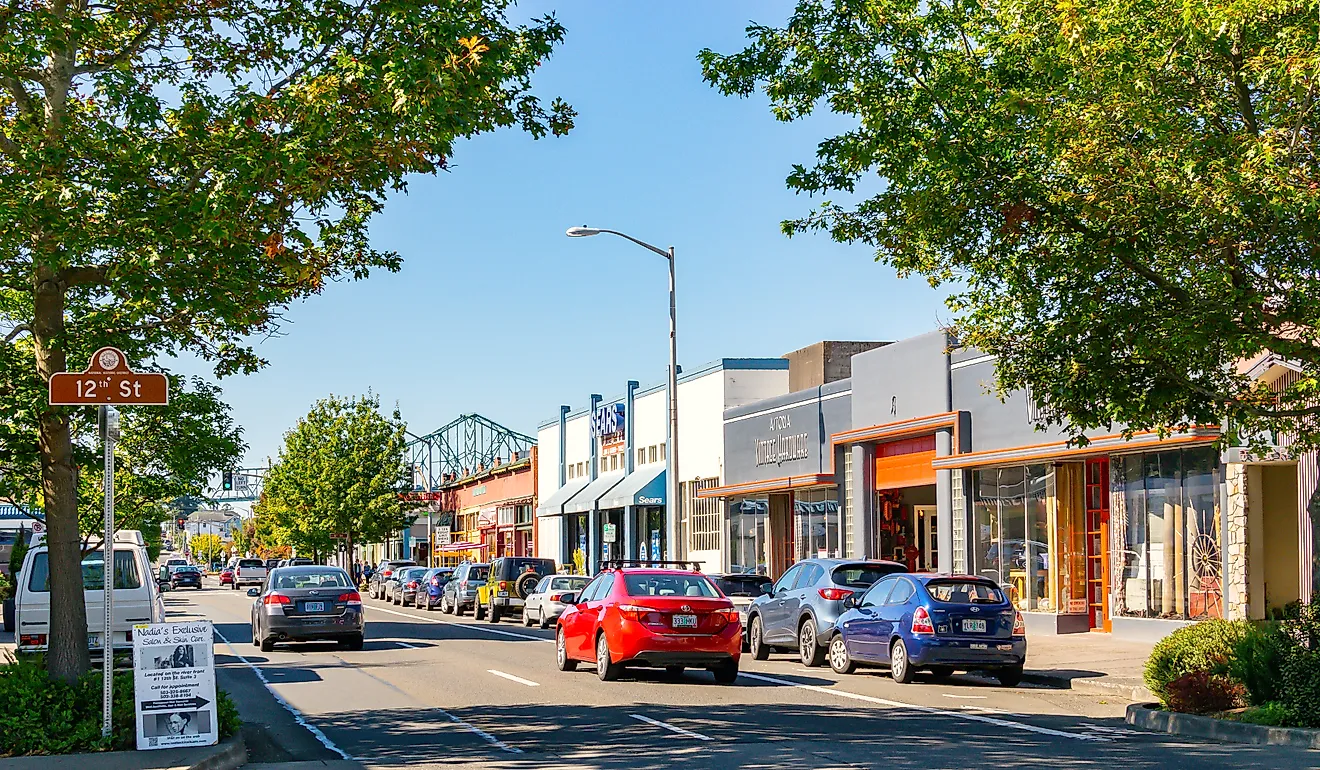
Coos Bay, Oregon, is the largest town on the state's southern coast but remains defined by water, shipbuilding, and a port that still loads raw logs for export. It is one of the few places in the Pacific Northwest where cranberry bogs, sawmills, and commercial fishing boats operate within five miles of each other. The town sits at the edge of the Coos River estuary, which feeds directly into the Pacific through a dredged shipping channel lined with pulp yards and dock cranes that still function.
Shore Acres State Park, twelve miles west on Cape Arago Highway, was once the estate of timber baron Louis Simpson. Its formal gardens remain intact, with ocean waves crashing against 80-foot sandstone cliffs just beyond the hedgerows. The Egyptian Theatre downtown, opened in 1925, retains its original Wurlitzer organ and a painted zodiac ceiling. Cranberry Sweets and More, just off Highway 101, has operated since 1962 and offers hundreds of factory-made confections, including jalapeno jellies, cranberry truffles, and smoked sea salt caramels. Captain's Choice Fish House in nearby North Bend serves fried razor clams, Dungeness crab sandwiches, and chowder made with whole cream. The smell of salt and steam still defines the air at every intersection.
Off The Main Frequency
Each of these twelve towns carries a signature imprint of geology, industry, and invention. Together they map an alternate United States, one powered by hydro dams, lift bridges, lavender fields, and rail whistles that still matter. Ignore the hashtags; the stories here are written in courthouse eaves, brewery mash tuns, and planetarium domes. The overlooked are merely ungoogled, waiting quietly beyond the next FM fade.