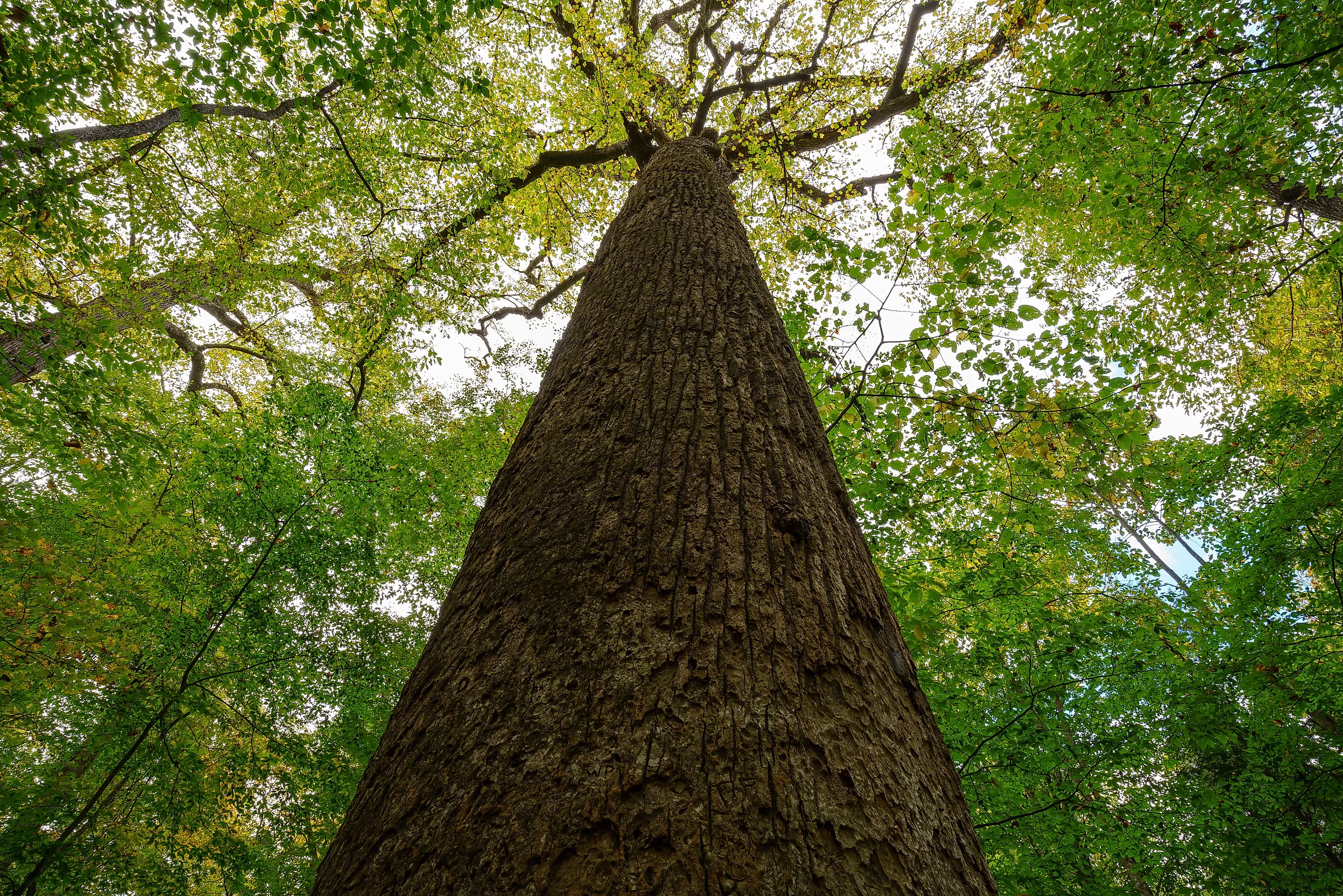
The Last Wild Hemlock Forests Left Standing
An invasive insect no bigger than a pinhead has killed large numbers of eastern hemlocks across the Appalachian Mountains, changing forests that took centuries to develop. Yet remarkable old-growth hemlock stands remain in protected valleys, steep ravines, and remote stretches of public land. Their survival matters beyond the trees themselves. Hemlock canopies shade streams, shelter wildlife, and maintain cool, damp conditions that many forest species depend on.
These forests are among the surviving examples of old-growth eastern hemlock communities in the United States, although they are not the only hemlock stands remaining. Some grow within national forests managed by the US Department of Agriculture's Forest Service, while others are protected in state parks and natural areas. Their condition varies, particularly where the hemlock woolly adelgid has caused extensive damage. Together, these seven locations illustrate the ecological importance of eastern hemlock forests and the challenges involved in preserving them.
Joyce Kilmer Memorial Forest, North Carolina

In western North Carolina, Joyce Kilmer Memorial Forest protects approximately 3,800 acres of old-growth forest within Nantahala National Forest. The memorial forest is part of the larger Joyce Kilmer-Slickrock Wilderness, where rugged terrain and a history of protection helped preserve trees that escaped the extensive logging that transformed much of the eastern US. Some of the forest's enormous yellow-poplars have stood for centuries, alongside other native hardwoods.
Eastern hemlock (Tsuga canadensis) was historically an important part of this forest community, contributing dense evergreen shade beneath the surrounding hardwood canopy. However, the arrival of the invasive hemlock woolly adelgid caused extensive mortality among mature hemlocks. Dead and dying trees altered the forest canopy, allowing more sunlight to reach areas that had previously remained shaded year-round. The surviving hardwoods still preserve an eastern forest that developed over centuries, but the losses of hemlock make it clear that protection from logging could not shield the stand from an invasive insect. Joyce Kilmer is no longer an intact old-growth hemlock stand. What it offers instead is a record of how hemlock decline reshapes a woodland that was otherwise left alone.
Tight Hollow, Kentucky

Kentucky preserves one of the region's few remaining uncut stands of yellow-poplar and eastern hemlock at Tight Hollow, a rugged tract within Daniel Boone National Forest. Forest Service records identify approximately 72 acres (29 hectares) of uncut forest within the larger 469-acre (190-hectare) proposed Research Natural Area. Located in the Red River Gorge Geological Area, Tight Hollow contains old-growth hemlock-mixed mesophytic forest that escaped much of the logging experienced elsewhere in the region.
Tight Hollow includes several adjacent sandstone gorges, with slopes rising from creek bottoms toward rocky rims. The terrain creates sheltered, moist habitats where hemlocks grow alongside yellow-poplar and other hardwoods. The area's varied topography also supports distinctive plant communities associated with the Cumberland Plateau. Its small uncut core is a reminder that old-growth hemlock often survives in pockets inside larger protected landscapes rather than as vast, continuous tracts. The Forest Service still lists Tight Hollow as a proposed Research Natural Area, and its documented old growth offers a glimpse of the woodland that once covered more of the region.
Rock Creek Research Natural Area, Kentucky

Another significant remnant lies within Rock Creek Research Natural Area, also in Kentucky's Daniel Boone National Forest. Established in 1939, the approximately 189-acre (76-hectare) protected area contains a deep, narrow gorge historically classified as old-growth hemlock-mixed mesophytic forest. Forest Service records identify Rock Creek as one of the few remaining examples of the uncut hemlock-hardwood forests once found throughout the Cumberland Mountains.
A botanical survey published by the Forest Service in 2000 documented 350 plant taxa, including 17 rare or special-interest species. Researchers conducted their fieldwork between 1985 and 1995, recording plants across the gorge and its surrounding ravines. The findings set a historical baseline for the area's vegetation, though a survey from that era cannot speak to the current health of the gorge's hemlocks. The term "mixed mesophytic" describes a diverse forest community associated with relatively moist conditions. At Rock Creek, eastern hemlock historically shared the canopy with numerous hardwood species, while sandstone cliffs and sheltered ravines supported additional plant communities. That range of habitats is what makes the gorge useful for studying forest ecology and long-term environmental change.
Cook Forest State Park, Pennsylvania

In northwestern Pennsylvania, Cook Forest State Park protects some of the most impressive old-growth hemlock and white pine forests in the northeastern United States. According to Pennsylvania's Department of Conservation and Natural Resources, the park contains 11 old-growth areas totaling more than 2,300 acres. Many are dominated by ancient eastern hemlocks and eastern white pines, with some trees approaching 350 years of age. The park's Forest Cathedral Natural Area is especially notable for its towering trees. Pennsylvania conservation officials describe it as one of the finest remaining stands of tall white pine and hemlock in the Northeast. Many trees exceed three feet in diameter, while the tallest white pines approach 200 feet. Beneath the canopy, hardwoods such as red maple and black cherry contribute to the forest's diversity.
Commercial logging cleared much of Pennsylvania's original forest during the nineteenth and early twentieth centuries, so stands this old carry particular weight for research and conservation. The park's hemlocks keep the woodland shaded for wildlife and moisture-dependent plants, but they face the same threat from hemlock woolly adelgid as other eastern hemlock forests, and their survival depends on continued protection and management.
Memorial Grove Hemlocks, Wisconsin

Memorial Grove Hemlocks in Wisconsin preserves a different expression of the eastern hemlock forest. Established as a Forest Service Research Natural Area in 1989, the 64-acre (26-hectare) research site contains a relatively undisturbed old-growth stand dominated by eastern hemlock and yellow birch. Wisconsin also recognizes the grove as a State Natural Area, designated in 1996. Unlike the sandstone ravines of Appalachia, Memorial Grove occupies a pitted glacial moraine landscape containing numerous depressions, or kettles, left by glacial processes. The terrain supports a mature forest where eastern hemlock grows alongside yellow birch, sugar maple, and other northern hardwoods. The dense evergreen canopy contributes to the cool, shaded conditions characteristic of old hemlock stands.
Wisconsin's Department of Natural Resources identifies another concern for the forest's future. Although hemlock seedlings frequently establish on decaying logs, browsing by deer and snowshoe hares can prevent them from developing into saplings. Even where mature hemlocks remain standing, a new generation may not follow. Keeping old growth here depends as much on regeneration as on preventing logging, and the grove provides researchers with a working site for studying both the old stand and the pressures on its future.
Porcupine Mountains Wilderness State Park, Michigan

Along the southern shore of Lake Superior, Michigan's Porcupine Mountains Wilderness State Park protects one of North America's most significant remaining old-growth northern hardwood forests. Michigan's Department of Natural Resources identifies approximately 35,000 acres of primary, or uncut, forest within the Porcupine Mountains. The area is considered one of the largest relatively undisturbed northern hemlock-hardwood forests west of the Adirondacks. Eastern hemlocks grow among sugar maples and other northern hardwoods across the park's rugged terrain. The forest extends across rocky slopes, sheltered valleys, and ridges overlooking Lake Superior. This extensive woodland preserves the kind of forest that covered the western Great Lakes region before widespread commercial logging.
Size sets this forest apart. Most surviving hemlock stands occupy small tracts, but the Porcupine Mountains protect a continuous landscape with trees of many ages and a range of habitats, large enough for natural processes to play out across wide areas. The 35,000-acre figure covers the broader primary forest, not an exclusively hemlock-dominated stand. The area has also received National Natural Landmark recognition for its natural features.
Cathedral State Park, West Virginia

Cathedral State Park in West Virginia protects an old-growth eastern hemlock-hardwood forest in the central Appalachian Mountains. A study published in Natural Areas Journal in 2010 describes the forest as covering approximately 133 acres (54 hectares) and documents the first detection of hemlock woolly adelgid there in 2002. Researchers revisited forest plots originally established in 2000 and measured them again in 2006. Their work documented the structure of the old-growth forest during the early years of adelgid infestation. At the time, more than 10% of the measured overstory hemlocks showed evidence of infestation, although the extent varied considerably between study plots.
The researchers found relatively little change in the forest's overall structure attributable to the adelgid between 2000 and 2006. Still, the insect's arrival raised concerns about future mortality and canopy loss. The study now serves as a baseline for later monitoring, though its findings do not describe the park's hemlocks today.
Eastern Hemlocks Under Threat
Hemlocks hold their needles year-round, so their dense shade keeps streams cool and streamside habitats sheltered even in winter, shaping the temperature and moisture of the surrounding forests. The hemlock woolly adelgid puts that role at risk. The invasive insect feeds on stored nutrients at the base of the needles, leaving white, woolly coverings on the undersides of branches, and heavy infestations cause needle loss, branch dieback, and eventually tree death. Mortality has been especially severe in parts of the southern Appalachians.
Land managers have responded with monitoring, insecticide treatments for selected trees, and research into biological controls, though no single approach works across the hemlock's entire range, and browsing remains a separate obstacle for young trees. The seven forests here sit at different stages of that story, some still holding documented old-growth hemlock and others recording what its loss looks like. Their future depends on keeping surviving trees alive and giving the next generation room to grow.