The 12 Can't-Miss Towns In The Pacific Northwest
In the Pacific Northwest, the can't-miss towns feature dramatic landmarks framed by a rugged coastline and the mountains further inland. In Astoria, a 125-foot column rises above the town on the Columbia River Bar. Joseph sits a mile north of Wallowa Lake, where the steepest four-passenger gondola in North America climbs to the summit of Mount Howard. At Cannon Beach, Haystack Rock climbs 235 feet from the sand, and low tide opens the tide pools at its base. In Coupeville, the wharf reaches into Penn Cove with views of the Olympic and Cascade ranges. Spread across Oregon, Washington, and Idaho, these towns are well worth a stop or a stay in the Pacific Northwest.
Astoria, Oregon

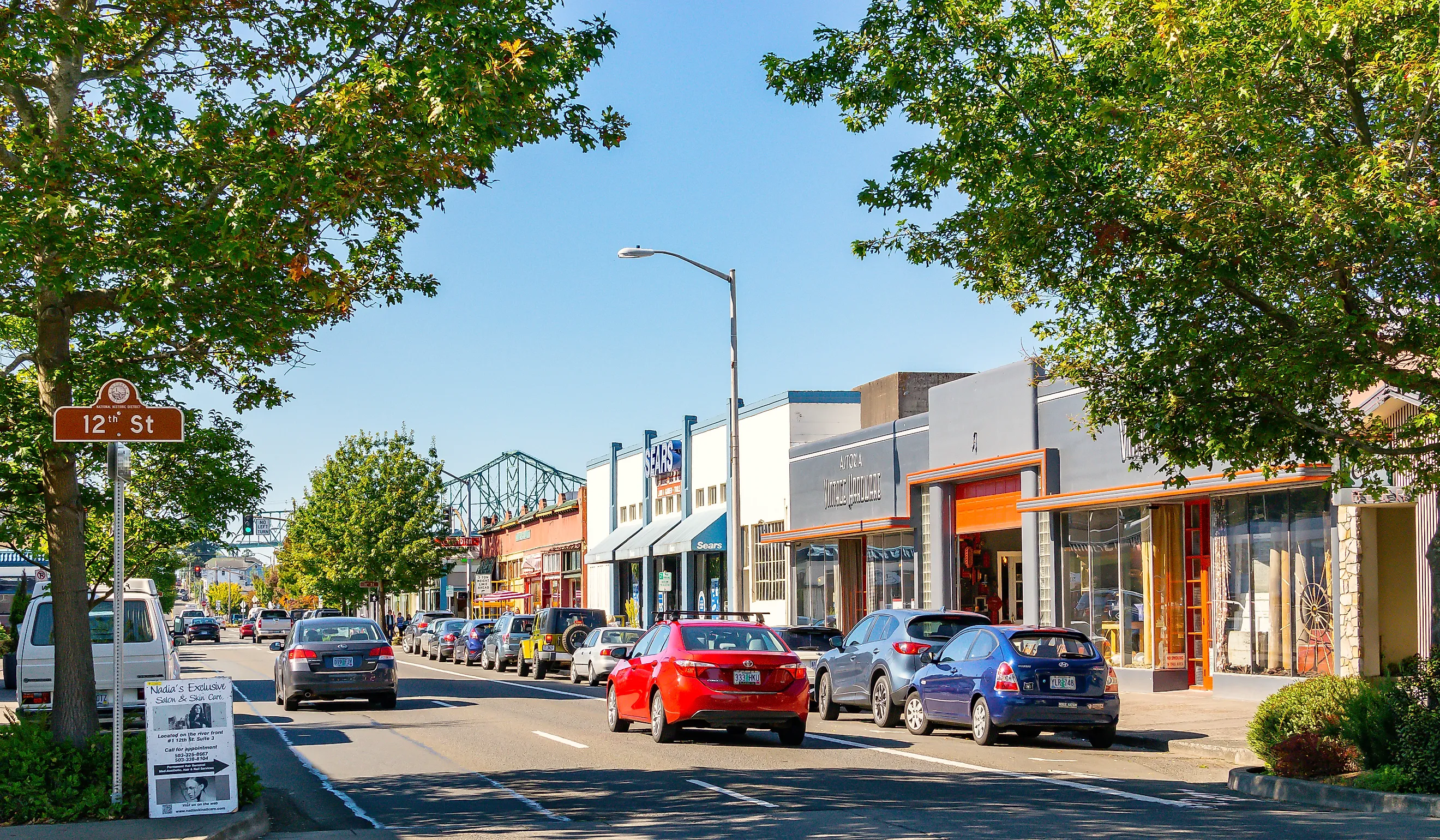
The Astoria Column rises 125 feet above Coxcomb Hill, and the 164 steps to the top offer views of the Columbia River, the Pacific Ocean, and the Cascade Range. Built in 1926, the tower looks over a town shaped by the river's dangerous mouth. Down on the waterfront, the Columbia River Maritime Museum tells the story of the Columbia River Bar, with a Coast Guard rescue exhibit and the lightship Columbia, which visitors can board. The Flavel House Museum shows who profited from that traffic. Captain George Flavel, a bar pilot who became one of Astoria's first millionaires, built the Queen Anne house in 1885, and its fourth-story cupola let his family watch the ships. The Astoria-Megler Bridge, 4.1 miles long, carries traffic across the river to Washington.
Cannon Beach, Oregon

The town takes its name from a cannon that came ashore from the wrecked schooner Shark, and the original sits in the Cannon Beach History Center and Museum. Hemlock Street has most of the galleries and boutiques, as well as the Coaster Theatre Playhouse. South of downtown, Haystack Rock rises 235 feet from the sand, and low tide opens the tide pools at its base, though climbing the rock is not allowed. From April through early August, tufted puffins nest in burrows on the rock's grassy north slope. Ecola State Park, just to the north, is where William Clark spotted a beached whale in 1806, and migrating whales can still be seen from its headlands.
Hood River, Oregon

Wind made Hood River a windsurfing capital in the 1980s, and the Event Site at the east end of the waterfront is still where boards, kites and wing foils launch into the Columbia River. Rentals are available in town at Big Winds. South of town, the 35-mile Fruit Loop passes more than 30 orchards, cideries, farm stands, and lavender farms, and the Mount Hood Railroad runs 22 miles from the Hood River depot to Parkdale in vintage cars. Evenings tend to end on the downtown brewery row, where pFriem Family Brewers and Full Sail Brewing both have taprooms, and pFriem's riverside dining room looks out on barge traffic.
Joseph, Oregon

Bronze sculptures of wildlife, cowboys, and Nez Perce figures line the sidewalks of Joseph, and Valley Bronze, a company in town, made the bronze wreaths and Freedom Wall stars for the World War II Memorial in Washington, D.C. A mile south, Wallowa Lake, a glacial ribbon lake at 4,372 feet, sits beneath Chief Joseph Mountain, and Old Chief Joseph is buried at the foot of the lake. The Wallowa Lake Tramway lifts riders 3,700 vertical feet to the 8,256-foot summit of Mount Howard on the steepest four-passenger gondola in North America. At the top, a restaurant called the Summit Grill and about 1.2 miles of loop trails await, and the tram runs from May through September.
Newport, Oregon

Sea lions claim the docks of Newport's Historic Bayfront, where the fishing fleet shares the waterfront with seafood markets and shops, and Mo's Seafood & Chowder has served clam chowder from its original bayfront dining room since the 1940s. Conde McCullough's Yaquina Bay Bridge, opened in 1936, arches over the harbor with a 600-foot main span. On the bridge's south side, the Oregon Coast Aquarium has a walk-through seabird aviary and a tunnel under its open-sea exhibit, while the Hatfield Marine Science Center, run by Oregon State University, schedules octopus feedings nearby. Four and a half miles north, Yaquina Head Lighthouse stands 93 feet tall, making it Oregon's tallest lighthouse, and it was first lit in 1873.
Port Townsend, Washington

Port Townsend nearly became a major city. The boom ended when the railroad chose Tacoma, and the Victorian storefronts along Water Street stayed much as they were around 1890. The Northwest Maritime Center sits at the end of that street and runs the Wooden Boat Festival each September, drawing more than 300 boats. Two miles north, Fort Worden State Park, a former Army coast artillery base on 432 acres, served as the filming location for An Officer and a Gentleman. Its Point Wilson Lighthouse dates to 1914, and its light, 51 feet above the water, is the tallest on Puget Sound. The Terrace Steps climb from downtown to the Uptown neighborhood, where the 1868 Rothschild House Museum sits among the Victorian homes.
Leavenworth, Washington

In the 1960s, Leavenworth was a fading timber-and-railroad town, and its answer was to rebuild its downtown as a Bavarian village. The Greater Leavenworth Museum on Front Street tells that story, along with exhibits on Native settlements, agriculture, and outdoor sports. The Leavenworth Nutcracker Museum, also on Front Street, displays thousands of nutcrackers and uses a six-foot figure carved in Oberammergau, Germany, as its mascot. Waterfront Park follows the Wenatchee River through town, and north of it the Leavenworth Ski Hill Historic District preserves a 1930s lodge and the Bakke Hill Sky Jump. From Thanksgiving through the end of February, about half a million lights stay on across downtown and Front Street Park for the Village of Lights.
Friday Harbor, Washington

A British pig eating in an American garden set off the 1859 Pig War, and the standoff that followed ended in a 12-year joint occupation of San Juan Island. San Juan Island National Historical Park preserves both camps. English Camp, on sheltered Garrison Bay, has a blockhouse, a commissary, barracks, and a formal English garden, while American Camp, at the south end, has prairie trails and the two-mile South Beach. On the island's west side, Lime Kiln Point State Park, nicknamed Whale Watch Park, has a viewing platform for orcas. The San Juan Islands Sculpture Park spreads across 20 acres, and Pelindaba Lavender Farm is open to visitors in summer.
Winthrop, Washington

Winthrop's cowboy storefronts date from 1972, when business owners facing the opening of the North Cascades Highway remodeled downtown in an Old West style modeled on Leavenworth. The real history sits uphill at the Shafer Museum, which is free with a donation and includes the "Castle" built by the trader Guy Waring, whose Harvard classmate Owen Wister wrote The Virginian after honeymooning in Winthrop. Sun Mountain Lodge serves a themed cowboy dinner in warmer months, and the 4-mile hike up Patterson Mountain from the lodge's trail network brings wildflowers in spring and golden aspens in fall. In winter, Methow Trails grooms more than 200 kilometers of cross-country ski routes, the largest such network in North America, with Winthrop and Sun Mountain among its four connected areas.
Coupeville, Washington

Penn Cove mussels end up on menus across the country, and Penn Cove Shellfish farms them in the cove beside Coupeville. The town celebrates each March at Musselfest, with mussel farm boat tours and chowder tastings. The Coupeville Wharf extends into the cove, offering views of the Olympic and Cascade ranges. Around town, Ebey's Landing National Historical Reserve, established in 1978 and more than 80 percent privately owned, protects farmland and Victorian-era buildings, and Fort Casey Historical State Park contains the Admiralty Head Lighthouse within a late-1800s fort. The present brick-and-stucco lighthouse dates to 1903 and replaced an earlier wooden light that the Army tore down to build the fort, which guarded Admiralty Inlet alongside Fort Worden and Fort Flagler.
Sandpoint, Idaho

Sandpoint sits on the northern shore of Lake Pend Oreille, the largest lake in Idaho and, at more than 1,150 feet deep, the fifth-deepest in the United States. Ice Age glaciers and floods carved the basin, and today the Long Bridge path runs about two miles across the water beside U.S. Route 95, open to walkers and cyclists. Downtown, the Cedar Street Bridge Public Market occupies a covered 400-foot bridge over Sand Creek, modeled on the Ponte Vecchio in Florence, Italy, and opened as a marketplace in 1983. Each summer, the Festival at Sandpoint stages outdoor concerts at Memorial Field on the lakeshore, and in winter, skiers head up to Schweitzer Mountain Resort, the largest ski area in Idaho.
Wallace, Idaho

Every building in downtown Wallace is listed on the National Register of Historic Places, a move that stopped Interstate 90 from bulldozing the old silver-mining town. The highway was lifted onto a viaduct above town instead, and until it opened in 1991, Wallace had the last stoplight on the coast-to-coast interstate. The town gave the light a funeral with bagpipes and a horse-drawn hearse, and it now lies in a casket at the Wallace District Mining Museum. A manhole at Bank and Sixth Streets marks the "Center of the Universe," as declared by the mayor in 2004, and the Oasis Bordello Museum preserves the brothel as it was left when it closed in 1988. South of town, the two-mile Pulaski Tunnel Trail follows the escape route of ranger Ed Pulaski, who sheltered his crew in a mine tunnel during the Great Fire of 1910 and saved all but six of his 45 men.
Taken together, the 12 towns show how much variety fits inside one region, from the river mouth at Astoria to the tide pools at Cannon Beach and the silver-mining streets of Wallace. Some are easy to reach, and some take planning. Newport and Coupeville sit close to the main routes, while Winthrop depends on the North Cascades Highway, which is usually open only from May through October, and the Wallowa Lake Tramway above Joseph runs only from May through September. Timing can also decide the trip, with Port Townsend's Wooden Boat Festival filling the waterfront each September, and Coupeville saving its mussel chowder tastings for March.