11 Best Towns On The Atlantic Coast To Retire Comfortably
Retiring on the ocean usually means picking two out of three: the water, the weather, or the price. The typical American home is worth about $369,000 right now, and along this coast you can find a walkable historic town at $250,000 or a beach five minutes away at $593,000, sometimes within the same afternoon's drive. Georgia lets anyone over 65 exclude $65,000 of retirement income per person. Delaware charges no sales tax at all. Florida takes nothing off the top. These eleven run north to south down the Atlantic, and the price and the tax bill move independently of each other, which is the whole game.
Rockland, Maine

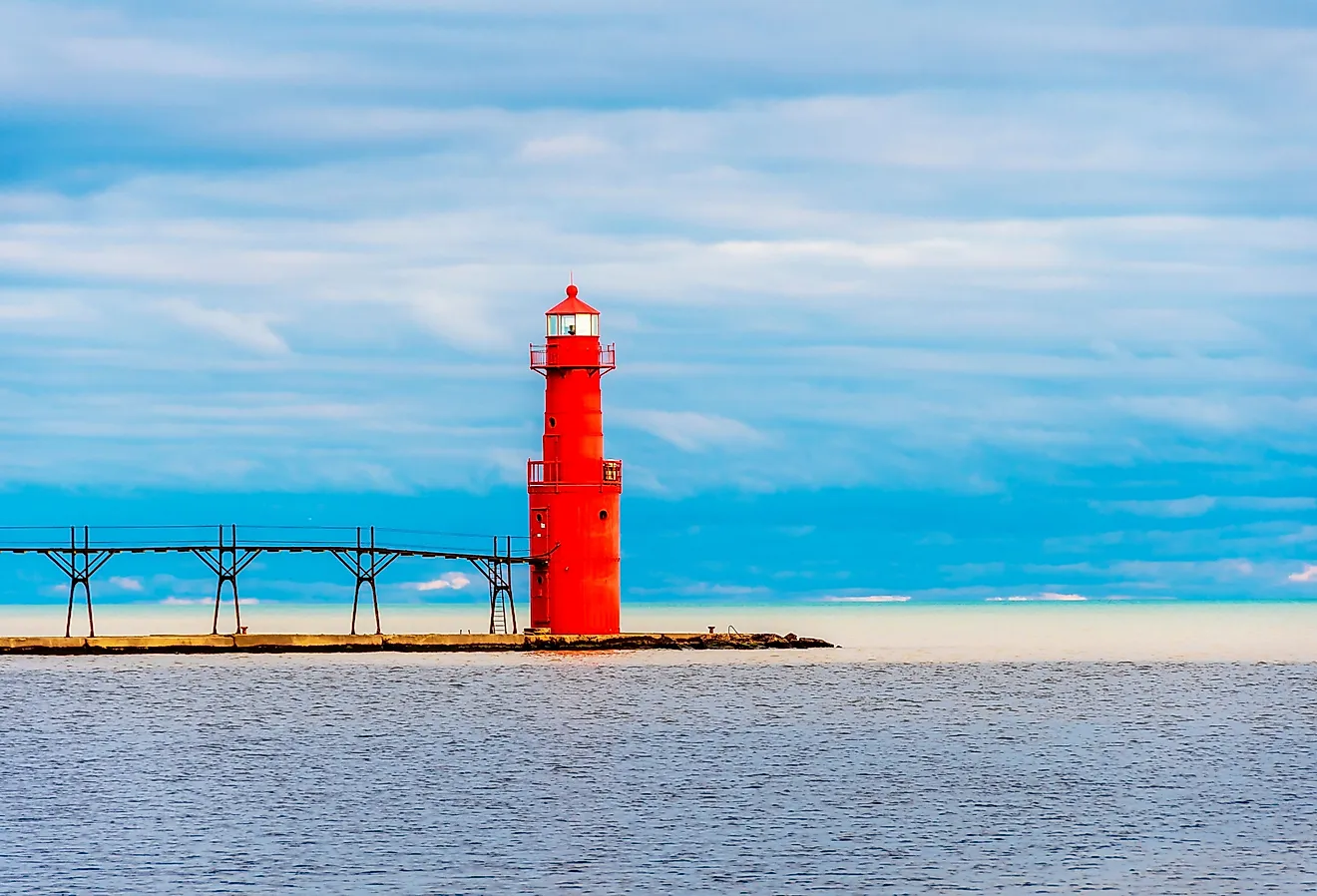
You can walk almost a mile out into Penobscot Bay here on a granite breakwater built from 700,000 tons of rock, with a lighthouse at the end of it. That is Rockland's party trick, and it is free. The town of about 7,000 still runs a working harbor, which is why it never got polished into an expensive resort the way its neighbors did.
The Farnsworth Art Museum is the surprise. It holds one of the country's serious collections of American art, with three generations of Wyeths well represented, in a town this size. Every August the Maine Lobster Festival takes over the waterfront, as it has since 1947. Pen Bay Medical Center is in neighboring Rockport, a few minutes up Route 1. Rockland is also the rare piece of the midcoast that still costs well under the Maine state average of roughly $415,000. Be clear-eyed about Maine, though: winters are long, and the state taxes retirement income, albeit with a meaningful pension exemption and no tax on Social Security.
Lewes, Delaware

Here is the pitch for Delaware in one line: no sales tax, no tax on Social Security, and a pension exclusion for anyone over 60. Retirees have been doing that arithmetic for decades, which is why Sussex County keeps filling up. Lewes calls itself the First Town in the First State, founded by the Dutch in 1631, and it has the compact brick downtown to back it up.

Cape Henlopen State Park sits at the town's edge with beaches, bike trails, and the bunkers and fire-control towers left over from World War II coastal defenses. The Cape May-Lewes Ferry runs across Delaware Bay to New Jersey, which makes a good day out. Beebe Healthcare is headquartered right in town, unusual for a place this small, and it has expanded specifically around an aging population. The honest caveat: at a typical home value around $593,000, Lewes is by far the priciest town on this list and roughly $224,000 above the national figure. The tax savings are doing the work here, not the housing.
Ocean City, Maryland

Ocean City has roughly 7,000 year-round residents and several hundred thousand people on a July weekend, and retirees who live here will tell you the trick is simple: the other nine months belong to you. The boardwalk empties out, parking becomes free and easy, and the restaurants that survive the winter are the good ones.
The town sits on a barrier island in Maryland, with Atlantic General Hospital in nearby Berlin handling most day-to-day care. Assateague Island National Seashore is immediately south, where the wild ponies live and the beach runs undeveloped for miles. Northside Park runs senior softball, fishing tournaments, and community gardens, and Thrasher's fries have been sold on that boardwalk since 1929. Typical home values run about $429,000, just under the Maryland state average and well above the national one. Maryland does not tax Social Security and offers a pension exclusion, which softens an otherwise middling tax picture.
Cape Charles, Virginia

Cape Charles is a railroad town that ran out of railroad. It was built from nothing in 1884 as the southern terminus of a line that ferried rail cars across the Chesapeake, the ferries stopped, and the town spent most of a century quietly falling asleep on the Eastern Shore. About 1,200 people live there now, and the whole grid of late-Victorian houses is on the National Register.
What makes it work for retirement is the beach. Cape Charles faces west across the Chesapeake, which means a genuinely swimmable, wave-free public beach at the end of Mason Avenue and sunsets over the water rather than behind you. Typical home values sit around $403,000, which is not a bargain in absolute terms but buys a waterfront address rather than an inland one. Virginia does not tax Social Security and gives an age deduction to older filers. The catch is medical distance: Riverside Shore Memorial Hospital is about half an hour north in Onley, and anything serious means crossing the seventeen-mile Chesapeake Bay Bridge-Tunnel to Norfolk.
New Bern, North Carolina

Pepsi was invented here, in a downtown pharmacy, by a man named Caleb Bradham who was trying to make something for upset stomachs. He called it Brad's Drink before settling on a better name in 1898. The pharmacy still stands and still sells the stuff. That is New Bern in miniature: a lot of consequential history in a very manageable town.
It sits where the Trent River meets the Neuse, about thirty miles inland from the ocean, with typical home values around $283,000, comfortably under both the state and national figures. Tryon Palace, the reconstructed colonial governor's residence, anchors a historic district you can walk in an afternoon. CarolinaEast Medical Center is in town. North Carolina does not tax Social Security and has a flat income tax that keeps dropping, which is doing a lot of the heavy lifting on this list.
Southport, North Carolina

Hollywood keeps filming here because Southport looks like what people think a Carolina coastal town should look like, and the live oaks leaning over the streets do most of that work. About 4,000 people live at the mouth of the Cape Fear River, where it meets the Atlantic, and the waterfront is all rocking chairs pointed at passing container ships.
The fishing is the main event, from the pier, from a boat, or from the surf. Fort Johnston, the garrison the town grew up around, dates to the 1740s. The ferry to Bald Head Island runs from here, and the island allows no cars, only golf carts. Dosher Memorial Hospital is a small community hospital in town, with Wilmington's larger facilities about forty minutes north. Prices reflect the demand: typical home values run about $418,000 here, well above the North Carolina average of roughly $335,000, and higher still out on the island.
Georgetown, South Carolina

At a typical home value around $250,000, Georgetown is the best value on this list, roughly $119,000 below the national figure, and it is not a compromise town. Founded in 1729, it is the third-oldest city in South Carolina, built on rice money, and sitting on Winyah Bay where five rivers empty into one harbor.
The Harborwalk runs along the water behind the Front Street shops, which is where most of the eating and idling happens. The Rice Museum explains how this stretch of coast once produced almost half the country's rice crop, and it does not flinch from the enslaved labor that made that possible. Hobcaw Barony, a 16,000-acre former plantation just north, now runs as a research reserve with tours. Tidelands Health covers the area, and Pawleys Island beaches are fifteen minutes up the road. South Carolina exempts Social Security entirely and offers a substantial retirement deduction after 65.
Beaufort, South Carolina

Beaufort is the one that looks like a film set because it frequently has been one. The Big Chill, Forrest Gump, and The Great Santini all shot here, and the antebellum houses under Spanish moss along the Point are the reason. Founded in 1711, it is the second-oldest town in South Carolina and small enough at about 13,000 that the historic district is genuinely walkable.

Beaufort Memorial Hospital is in town and is the main reason this place works for retirement rather than just for visiting. You pay for all of it: typical home values are around $413,000, over $100,000 above the South Carolina average. Hunting Island State Park, sixteen miles out, has the only publicly accessible beach in the area plus a climbable lighthouse. The Marine Corps depot on Parris Island means a steady military-retiree population and the services that follow them. Waterfront Park downtown has the swinging benches, which are worth the detour on their own.
Brunswick, Georgia

Georgia has the most generous retirement tax treatment on this entire coast. Anyone 65 or older can exclude up to $65,000 of retirement income per person, which for a couple means $130,000 before the state takes anything, and Social Security is exempt on top of that. Brunswick puts that advantage in a city where typical home values run under $250,000, well below both the Georgia average and the national one.
It is the mainland gateway to the Golden Isles, so St. Simons, Sea Island, and Jekyll Island are all a short causeway away without paying island prices to live there. The Old Town historic district is laid out on the original 1771 grid, with live oaks over the squares. Mary Ross Waterfront Park runs along the East River with a pavilion and the Liberty Ship Memorial, commemorating the ninety-nine ships built here during the Second World War. Southeast Georgia Health System has its main campus in the city.
St. Marys, Georgia

Wild horses live forty-five minutes off the end of this street. St. Marys is the ferry terminal for Cumberland Island National Seashore, which has seventeen miles of undeveloped beach, a feral horse population descended from stock left behind centuries ago, and the burned-out shell of the Carnegie family's Dungeness mansion. Day trips run year-round and the ferry books up, so plan ahead.
The town itself has about 20,000 people and a historic waterfront district of Victorian houses under Spanish moss, and it carries the same Georgia retirement exclusion as Brunswick with prices below the state average. The Submarine Museum is a genuine curiosity, built around the Kings Bay naval base next door, with a working periscope you can put your eye to. Southeast Georgia Health System operates a campus in Camden County, with the larger Brunswick hospital forty minutes north.
Fort Pierce, Florida

No state income tax, and typical home values around $279,000, which on Florida's Atlantic coast is genuinely cheap and about $90,000 under the national figure. Fort Pierce sits on the Indian River Lagoon, the most biologically diverse estuary in North America, and manatees come into the marina in the cooler months. The Manatee Observation and Education Center downtown exists specifically so you can watch them.
Lawnwood Regional Medical Center is in the city and Cleveland Clinic Tradition is twenty minutes south, which is a strong pairing. The restored Sunrise Theatre brings in touring shows, the downtown farmers market runs Saturdays on the waterfront, and Harbor Branch Oceanographic Institute, part of Florida Atlantic University, runs public programs on the lagoon. Fort Pierce Inlet State Park has the beach and the fishing.
Before You Buy Anything
Two things decide this more than any amenity. The first is tax: Florida takes nothing, Georgia excludes $65,000 per person over 65, Delaware charges no sales tax, and the Carolinas exempt Social Security outright, while Maine and Maryland are the least generous on the list. The second is insurance. Every town here is on a hurricane coast, and premiums from Georgia south have climbed sharply, with flood coverage priced separately and required for most of these addresses. Get a real quote on a specific property before you fall in love with it, because on a fixed income that number matters more than the sale price.
On price, the spread is wider than most lists admit. Brunswick, Georgetown, Fort Pierce, and New Bern all sit below the national figure of roughly $369,000, with Georgetown the cheapest at about $250,000. Cape Charles, Southport, Beaufort, and Ocean City run between $400,000 and $430,000, and Lewes tops out near $593,000. Spending more here buys proximity to the water, not a better town.
After that it comes down to what you want out of the coast. Rockland and Lewes give you a working harbor and four real seasons. Ocean City, Southport, and Fort Pierce put you on the sand. Cape Charles, Georgetown, Beaufort, and St. Marys are the quiet historic ones, where the appeal is a walkable grid under old trees. New Bern and Brunswick sit slightly inland and trade beach access for the lowest prices on the list. Figures here are Zillow typical home values as of 2026 and move with the market, so treat them as a starting point rather than a quote.