7 Ideal Destinations for a 3-Day Weekend on the Atlantic Coast
The US Atlantic seaboard covers roughly 2,000 miles of coastline across 14 states, with national parks, barrier-island beaches, eighteenth-century lighthouses, and colonial port cities packed within a few hours of each other along I-95. The seven destinations below cover the range of the coast, sized for a three-day weekend. A few sit close enough to pair together (Acadia and Portland, Charleston and Savannah), but the full Maine-to-Georgia run is about 1,200 miles, which is too much road for a long weekend.
Acadia National Park, Maine

Cadillac Mountain on Mount Desert Island rises to 1,530 feet, and from early October through early March it is the first place in the continental US to see sunrise. Acadia National Park covers about 49,000 acres across the main island, the Schoodic Peninsula on the mainland, and the offshore Isle au Haut. Thunder Hole on the eastern shore lives up to its name when waves slam the granite inlet at high tide, and the Park Loop Road links the major sights along a 27-mile circuit. The carriage road network, built by John D. Rockefeller Jr. between 1913 and 1940, adds another 45 miles of broken-stone roads closed to cars. Campgrounds and the gateway town of Bar Harbor handle most of the lodging for multi-day stays.
Portland, Maine

Portland Head Light, commissioned by George Washington and first lit on January 10, 1791, is the oldest lighthouse in Maine and the unofficial symbol of Portland. The lighthouse stands at Cape Elizabeth a few miles south of downtown, on grounds that double as Fort Williams Park. Portland itself sits on Casco Bay and works as both a working port and a tourist base, with the Old Port district handling the seafood restaurants, breweries, and shops in the historic core along Commercial Street. The bay supports boaters, kayakers, and surfers depending on which beach or break you pick, and the lobster rolls (at Eventide Oyster Co. and Bite Into Maine, among many others) are a real reason to make the trip.
Cape Cod, Massachusetts

Cape Cod is a hook-shaped peninsula in southeastern Massachusetts that runs about 65 miles end to end. The Cape Cod National Seashore, established by President Kennedy in 1961, covers 40 miles of Atlantic-facing beach along the outer arm. Provincetown sits at the very tip with art galleries, the 252-foot Pilgrim Monument commemorating the Mayflower passengers' first landfall in 1620, and a waterfront packed with restaurants. Villages farther down the arm (Wellfleet, Chatham, Eastham) handle oysters, antique shops, and clam shacks. Cape Cod Bay wraps the inside of the peninsula, and whale-watch boats out of Provincetown run to Stellwagen Bank from April through October.
Outer Banks, North Carolina

The Outer Banks are a string of barrier islands stretching about 200 miles along the North Carolina coast, with no large cities and just a chain of small towns (Duck, Nags Head, Hatteras, Ocracoke) connected by NC-12 and the occasional ferry. Cape Hatteras National Seashore covers most of the southern end. The Cape Hatteras Lighthouse, at 198 feet, is the tallest brick lighthouse in the United States and was famously moved 2,900 feet inland in 1999 to escape coastal erosion. Bodie Island Lighthouse anchors the northern run. Inland stops include the Wright Brothers National Memorial in Kill Devil Hills (the site of the first powered flight on December 17, 1903), the Elizabethan Gardens on Roanoke Island, and the Alligator River National Wildlife Refuge. Vacation rentals and coastal-themed B&Bs handle most of the overnight stays.
Charleston, South Carolina

The American Civil War began at Charleston Harbor when Confederate forces opened fire on the Union garrison at Fort Sumter on April 12, 1861, and the fort today operates as a National Monument reached by ferry from Liberty Square downtown. Charleston itself was founded in 1670 as Charles Town and was one of the largest cities in colonial North America. The historic peninsula district is walkable end to end and includes Rainbow Row (a stretch of pastel Georgian townhouses on East Bay Street), the Battery promenade overlooking the harbor, the 1788 Charleston City Market, and a deep concentration of antebellum mansion museums. The USS Yorktown, a World War II aircraft carrier, sits across the Cooper River at Patriots Point Naval and Maritime Museum. Folly Beach, Sullivan's Island, and the Isle of Palms (all within 20 to 30 minutes of downtown) handle the Atlantic-beach side of the visit.
Ocean City, Maryland

Trimper's Rides has been running rides and amusements on the south end of the Ocean City boardwalk since 1893, which makes it one of the oldest continuously operating amusement parks in the United States. Ocean City itself sits on a 10-mile barrier island along the Atlantic, with the boardwalk running about 3 miles north from the inlet. The town calls itself the White Marlin Capital of the World for the offshore fishery and hosts the White Marlin Open tournament each August, one of the largest billfish tournaments in the world. RV parks, campgrounds, vacation rentals, and high-rise hotels at the north end handle the lodging mix, and Assateague Island National Seashore (with its herd of wild horses) sits just south for a day-trip option.
Savannah, Georgia

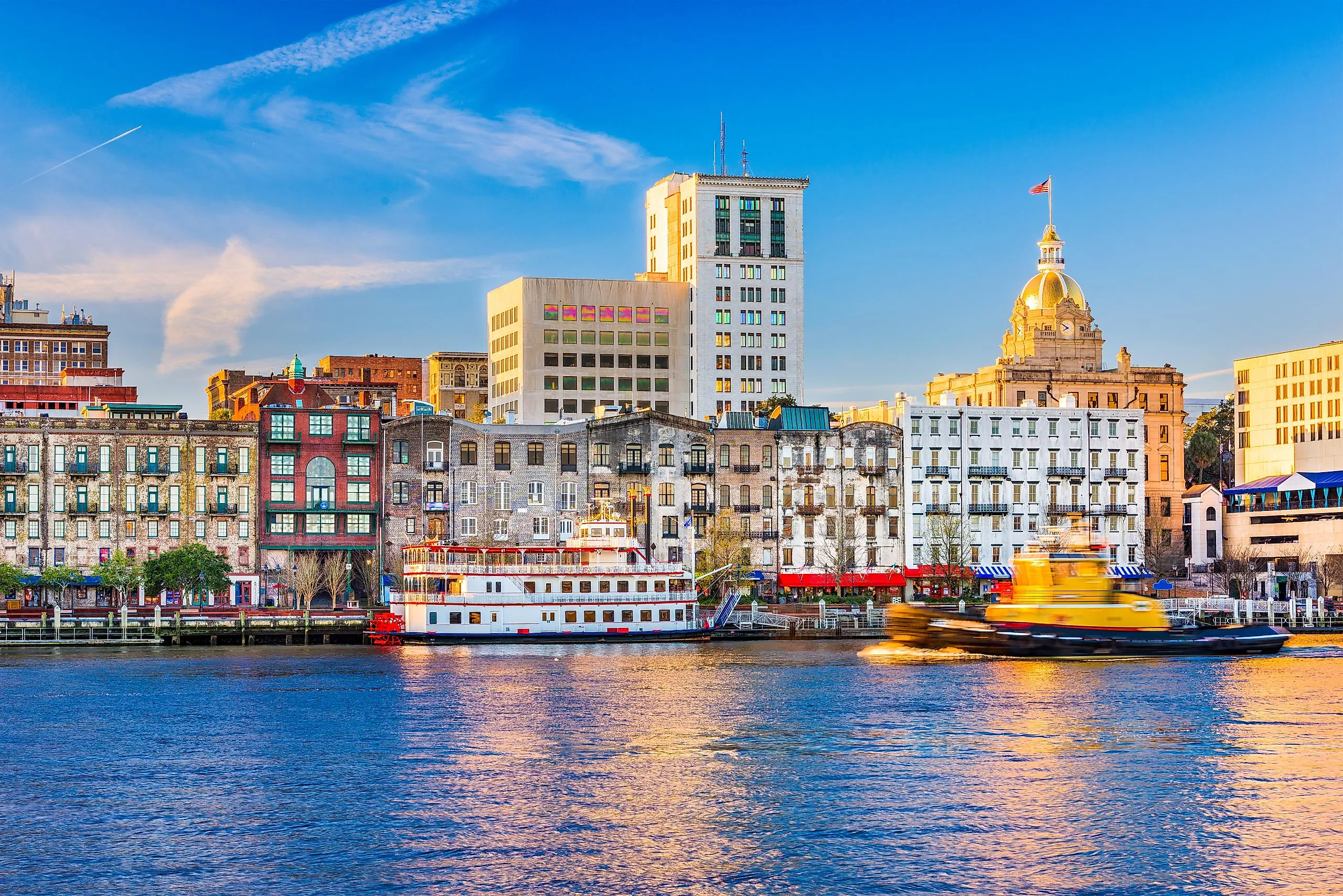
James Oglethorpe laid out Savannah in 1733 on a grid of 24 public squares, 22 of which still survive and anchor the historic district. The city sits about 18 miles inland up the Savannah River from the Atlantic, which makes it a natural base for trips out to Tybee Island and the barrier-island beaches. Forsyth Park, the largest of the historic squares, includes the 1858 fountain that has become the city's photo postcard. The American Prohibition Museum, the Davenport House, and the Andrew Low House cover the city's layered history, and the City Market handles food, shops, and the carriage tours that work as a standard introduction to the grid. Oak-shaded streets dripping with Spanish moss, antebellum architecture, and a steady run of ghost tours fill out a typical weekend.
How These Seven Fit Together
The full coast, with about 1,200 miles between Acadia and Savannah on I-95, is too long for one weekend. The list pairs naturally into shorter trips. Acadia and Portland make one Maine weekend with about three hours of driving between them. Cape Cod stands alone for a long weekend out of Boston. Outer Banks works as its own trip from Hampton Roads or the Research Triangle. Ocean City pairs with Assateague for a Delmarva weekend. Charleston and Savannah, separated by two hours on I-95, make the strongest two-city pairing on the list. Acadia and Charleston represent opposite ends of what the Atlantic Coast does, granite mountains meeting cold water in the north and Lowcountry tide flats meeting warm water in the south.