10 Whimsical Towns In Germany
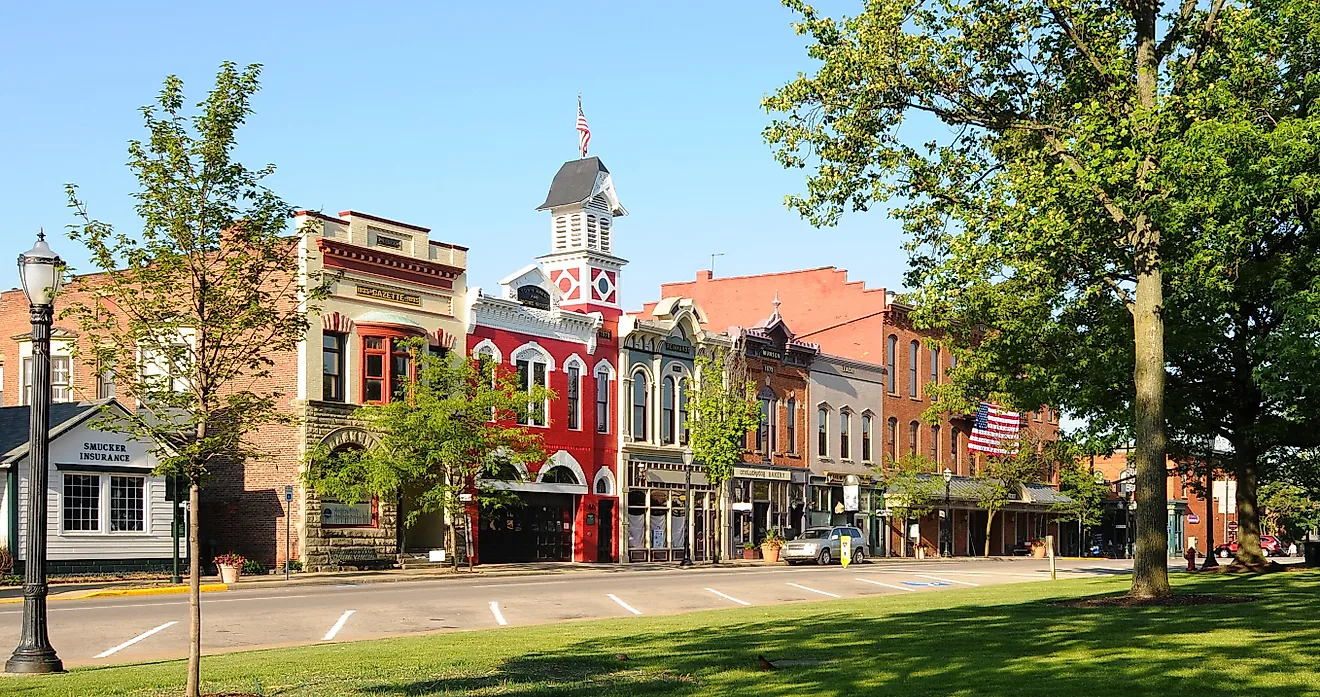
Rothenburg ob der Tauber still wraps itself in the walls and watchtowers that the Brothers Grimm would have recognized on sight. Quedlinburg holds a UNESCO-protected old town of half-timbered houses around the tomb of King Henry I. Meissen has been firing the first true porcelain in Europe since 1710. Lindau sits on an island in Lake Constance with a Bavarian lion guarding the harbor mouth. These ten German towns trade in the kind of medieval and early-modern detail that often gets edged out by the bigger Berlin and Munich itineraries.
Görlitz

About 60 miles east of Dresden on the Polish border, Görlitz holds more than 4,000 protected landmark buildings in an old town that came through the Second World War largely intact. The local nickname is "Görliwood" for the parade of films that have used the streets as backdrops, including Inglourious Basterds, The Book Thief, and The Grand Budapest Hotel. The architecture spans Gothic, Renaissance, Baroque, Art Nouveau, and Wilhelminian periods within a few square blocks of each other.
The Silesian Museum covers the regional history shared between Germany, Poland, and the Czech Republic. The Obermarkt is the Baroque square at the upper end of the old town and the Untermarkt the medieval one below, ringed by the houses of the cloth merchants. The Sun Organ at the Church of Saint Peter and Saint Paul dates to the early 1700s and still gets played in summer recitals. The Emmerich Hotel and the Parkhotel Görlitz handle the historic-stay options downtown.
Bad Wimpfen

About 24 minutes north of Heilbronn on the Neckar River, Bad Wimpfen runs a half-timbered old town along the high bank above the river. The region was the Roman frontier in the early centuries AD and held a small Roman fort, which is part of why the Roman Empire still gets referenced in the town's local history.
The Staufian Imperial Palace (Kaiserpfalz) and the adjoining Blue Tower (Blauer Turm) are the standout medieval landmarks, both built by the Hohenstaufen emperors in the 12th century. The Kloster Bad Wimpfen monastery sits a short walk away. Bad Wimpfen's own Valley Market (Talmarkt), running since AD 965, is one of the oldest markets in Germany, and the Imperial City Festival in September fills the old town with reenactment groups for the weekend. The Christmas Market in December takes over the same streets. The Hotel Neues Tor handles the historic-stay end in the old town.
Quedlinburg

Quedlinburg was the favored royal residence of King Henry the Fowler in the 10th century and the early Ottonian kings, and the UNESCO-protected old town still runs the same half-timbered street grid below the castle hill. The whole core is one of the largest preserved medieval ensembles in Germany, with more than 2,000 half-timbered houses across the protected area. It is recognized as one of the most significant UNESCO World Heritage Sites in Germany.
The Collegiate Church of St. Servatius on the castle hill holds the tomb of King Henry I and a treasury of medieval church artifacts from the 10th to 12th centuries. The Klopstockhaus museum covers the local poet Friedrich Gottlieb Klopstock, born in Quedlinburg in 1724. The Schlossmuseum on the same castle hill holds the rest of the medieval and early-modern collection. The Harz Mountains north of town and the Bode Gorge nearby handle the regional hiking. The Hotel am Hoken and Hotel Tilia run the historic-stay options.
Rothenburg ob der Tauber

Rothenburg ob der Tauber sits on a plateau above the Tauber River valley in the rolling hill country of Franconia in northern Bavaria. The medieval town walls are still intact and the gates and watchtowers all still in their original positions, which is the look anyone who has ever read a Brothers Grimm story is reaching for when they imagine medieval Germany. The town held Free Imperial City status from 1274 to 1803 and was originally a Hohenstaufen fortress before that.
St. Jakob's Church holds the Holy Blood Altar carved by Tilman Riemenschneider around 1505, considered one of the most important late-Gothic woodcarvings in Germany. The Imperial City Museum covers the town's medieval and early-modern history, including the local legend of the Meistertrunk: during the Thirty Years' War in 1631, the former mayor Nusch reputedly drank a three-and-a-quarter-liter tankard of wine in one go on a dare from the Catholic League general Tilly, and the dare saved the town from sacking. The legend is reenacted every year at Whitsun in the play Der Meistertrunk. The Hotel Rappen and Gästehaus Am Heckenacker handle the in-town stays.
Füssen

Füssen sits on the Lech River near the Austrian border, about two hours south of Munich, with Roman roots going back nearly 2,000 years to the Roman outpost of Foetes on the Via Claudia Augusta trade route. The medieval Baroque town center holds the old workshops of the violin and lute makers who made Füssen one of the centers of European stringed-instrument craft, alongside the High Palace (Hohes Schloss) up on the bluff.
What pulls most visitors here is the pair of castles just outside town in the foothills of the Allgäu and Bavarian Alps. Neuschwanstein Castle, the 19th-century King Ludwig II project that became the model for the Disney castle, sits on a rock outcrop above Hohenschwangau. Hohenschwangau Castle, where Ludwig grew up, is the older yellow-walled palace just downhill, with the Swan Knight's Hall, the Guelph Room, and the Hohenstaufen Room as its standout interiors. Ferienhaus "Beim Lenzer" and the Ferienwohnungen Allgäu Moni handle the in-town apartment stays.
Mittenwald

About 50 miles east of Füssen and right on the Austrian border, Mittenwald runs a painted-facade Bavarian town on what was once a Roman trading route between Augsburg and Verona. The Karwendel Mountains rise straight up behind the town and the Isar River runs through it. The Wetterstein Range to the west holds Zugspitze at 9,718 feet, Germany's highest peak. The Leutaschklamm gorge just over the Austrian border south of town is the dramatic shoulder-season hike.
Mittenwald has been a violin-making town since 1683, when Mathias Klotz brought the trade back from Cremona and started a local craft school that still operates. The Geigenbaumuseum covers the history. The Karwendelbahn cable car runs from the edge of town up to a viewing platform on the Karwendel ridge. The 1912 alpine railway from Munich through Mittenwald to Innsbruck made the town a key transit point during the First World War (see the wider World War I picture for context). The Hotel Bichlerhof and Hotel Sonnenbichl handle the in-town stays.
Lindau

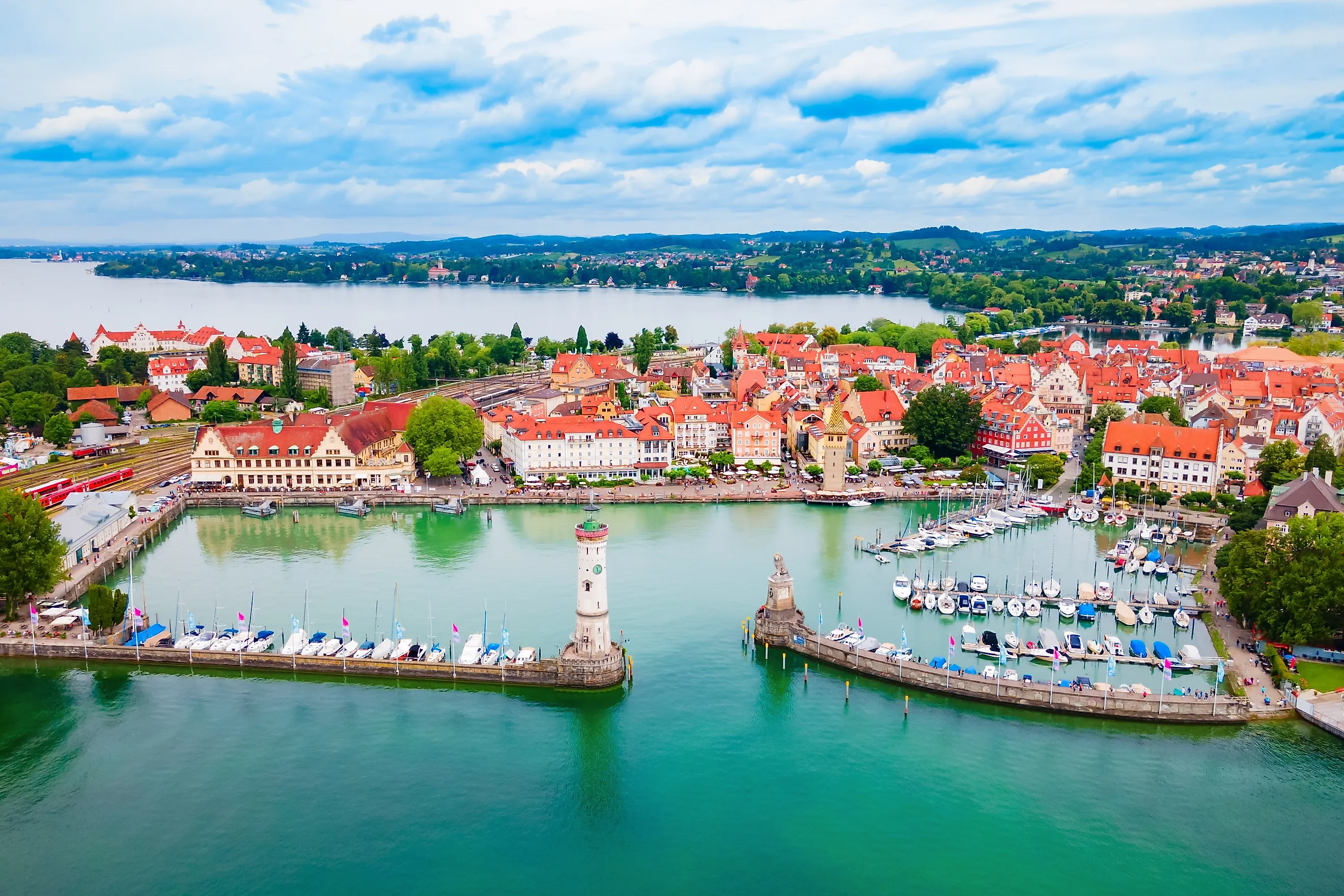
Lindau is the "Garden City" on an island in Lake Constance (Bodensee), connected to the mainland by a bridge and a causeway. The island was probably a fishing settlement on the site of a Roman waystation in the early centuries AD, then a Benedictine nunnery around 810, and a Free Imperial City of the Holy Roman Empire from 1275. The town name means "linden island" in German.
The Gothic Altes Rathaus (Old Town Hall) on Bismarckplatz dates to the 1420s with its painted facade from the 19th century. The Stadtgarten on the lakefront looks south across Bodensee to the Swiss and Austrian Alps on clear days. The harbor mouth is guarded by the 1856 New Lighthouse and the marble Bavarian Lion looking out across the lake. The 12th-century Mangturm watchtower on the harbor promenade is the older lighthouse, with its conical tile roof intact. The Hotel Bayerischer Hof on the harbor handles the historic-stay option.
Cochem

Cochem sits in a tight loop of the Moselle River in the heart of the Moselle wine valley, the steepest-slope riesling country in Germany. Roman-era viticulture seeded the local industry and the steep south-facing slate slopes have been producing wine continuously since the medieval era. The town pulls visitors from across the river borders with France and Luxembourg.
Reichsburg Cochem (the Imperial Castle) on the slope above town dates to about AD 1000 in its earliest form, was destroyed by Louis XIV's army in 1689, and was rebuilt in the 19th century in the romantic Neo-Gothic style that gives it its current silhouette. The Bundesbank Bunker Cochem, the secret Cold War cash reserve facility built in the 1960s and declassified in 1988, runs guided tours through the underground vault that once held about 15 billion Deutsche Marks in spare currency. Burgruine Winneburg and Burgruine Coraidelstein, the two ruined castles outside town, give the standard short hikes for visitors with an afternoon to fill. Hotel Hegenbarth and the Ich Zeit-Apart Hotel handle the in-town stays.
Wismar

On Wismarbucht (Wismar Bay) on the Baltic coast a few miles east of Lübeck, Wismar runs another UNESCO World Heritage old town. The town was founded around 1229 and joined the Hanseatic League as a trading port for herring and beer from the 13th to 15th centuries, with the prosperity of that era still visible in the Gothic brick churches and the gabled merchant houses around the Markt.
Control of Wismar passed to Sweden in 1648 under the Treaty of Westphalia and the town became a major Swedish administrative and defensive center on the continent until the early 1800s. During the Second World War, the Wismar shipyards turned out vessels for the Kriegsmarine on the Baltic Sea. The phanTECHNIKUM museum covers the regional industrial history through interactive exhibits. The Wasserkunst on Markt is a Renaissance-era stone water-supply building from the early 1600s, and the Wassertor from 1450 is the only surviving original gate of the medieval town wall.
Meissen

About 16 miles upstream from Dresden on the Elbe River, Meissen started as the Slavic settlement of Misni and grew up as the seat of the House of Wettin, earning the local title "cradle of Saxony." The town's fame, though, is porcelain. Meissen Porcelain Manufactory (the Meissen Porzellan-Stiftung) is the first hard-paste porcelain factory in Europe, founded in 1710 by Augustus the Strong on the back of Johann Friedrich Böttger's 1708 discovery of the formula.
The story is the running gag of European applied science: Böttger was a young alchemist who had been imprisoned by Augustus and ordered to find the Philosopher's Stone, did not find gold, but instead discovered how the Chinese had been making hard-paste porcelain for centuries. The factory still operates. Albrechtsburg Castle on the hill above the old town houses the historical porcelain collection in the building where the manufactory originally sat. Schloss Siebeneichen and Schloss Proschwitz, both nearby, hold smaller porcelain collections in their own ways. Hotel Alte Klavierfabrik Meißen and Dorint Parkhotel Meißen handle the in-town stays.
Pacing a German Small-Town Route
The ten towns above sit across the geographic spread of Germany. Görlitz holds the Polish-border Lusatia, Füssen and Mittenwald the Alpine foothills, Wismar the Baltic coast, and Quedlinburg the half-timbered hills of the Harz. Each one trades on its own specific hook: imperial residence, royal castle, porcelain history, wine valley, Hanseatic harbor. Pick the version you want and start the morning on whichever main street.