9 Towns Made For A Quiet Getaway In Washington
Washington's quieter towns split between the wet west coast and the dry east, and the variety on offer reflects the divide. Friday Harbor runs on ferry schedules and orca pods through the Salish Sea. Winthrop rebuilt itself as a Western frontier town in 1972 and never broke character. Sequim sits in the Olympic rain shadow and stays sunny while the rest of the peninsula gets soaked. Walla Walla has rebuilt a struggling downtown around more than 130 wineries. These nine towns make a long weekend out of whichever Washington you want.
La Conner

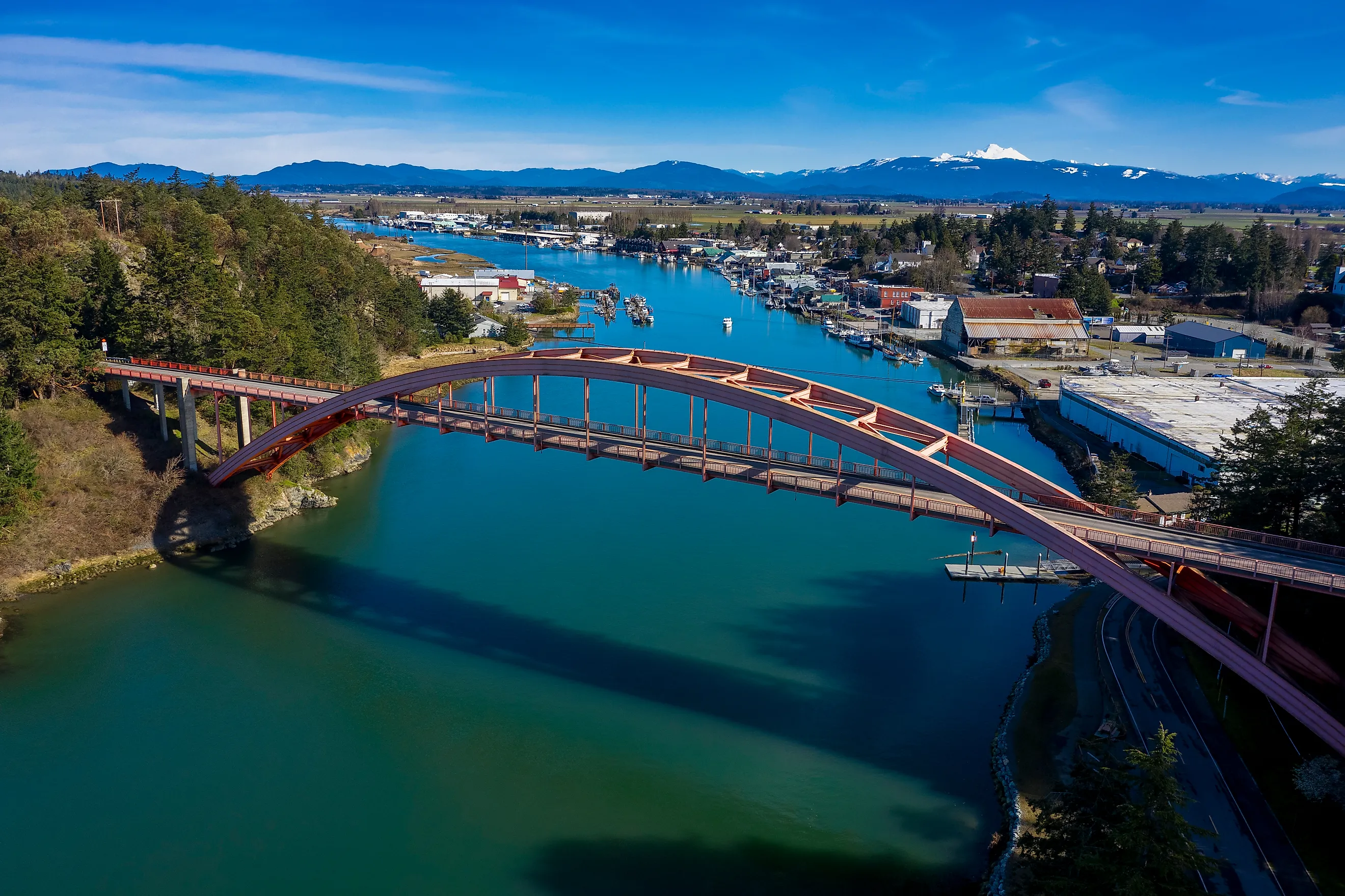
La Conner is a Swinomish Channel town of about 1,000 residents that stays quiet most of the year and explodes for the Skagit Valley Tulip Festival every April when the surrounding farmland turns red, yellow, and pink. The whole downtown is walkable in about 20 minutes.
The Swinomish Channel runs straight through the middle of town, with the historic Rainbow Bridge arcing across to the Swinomish Reservation on the opposite side. The Museum of Northwest Art on First Street holds a permanent collection of Pacific Northwest art. The rest of First Street is antique shops, galleries, and waterfront cafes.
For lodging on the water, La Conner Channel Lodge is the only option directly on the channel and runs balconies on every room. The Tulip Festival pulls nearly a million visitors to the county each spring, with downtown La Conner one of several festival hubs.
Friday Harbor

Friday Harbor sits on San Juan Island and is only reachable by ferry or small plane, which keeps the foot traffic low. The downtown runs about four blocks deep up from the ferry terminal.
The Salish Sea around the island is some of the best whale-watching territory in North America, with the southern resident orca pods passing through every spring and fall. The Whale Museum on First Street, which opened in 1979 as the first museum in the country devoted to a single wild species (the Southern Resident orcas of these waters), is the standard cultural stop. Bookstores, galleries, and the working fishing harbor handle the rest of the walk.
For an overnight stay, Friday Harbor House sits on a bluff above the ferry landing with water views from every room. Bird Rock Hotel a few blocks up the hill is the smaller boutique option and lends free bikes to guests. Ferries run every couple of hours through the day, and between sailings the streets empty out completely.
Port Townsend

On the northeast tip of the Olympic Peninsula, Port Townsend is one of only three Victorian seaports on the National Register of Historic Places. Water Street holds the brick storefronts and ornate facades that have been there since the 1880s.
Fort Worden State Park on the north edge of town runs military bunkers, beach trails, and the Point Wilson Lighthouse looking out over the Strait of Juan de Fuca. Downtown holds a dense cluster of bookstores and galleries in about a six-block radius. Every September, the Wooden Boat Festival (running since 1977) brings 300-plus historic wooden boats to Point Hudson and fills the harbor for three days.
The Palace Hotel on Water Street, built in 1889 with original moldings still intact, runs the historic-stay option with a bar downstairs. The Swan Hotel a few blocks down is the smaller, quieter option with rooms looking onto Port Townsend Bay. Port Townsend kept its Victorian core because the Northern Pacific Railroad terminus the town's 1880s boom expected never arrived (the railroad ran south to Tacoma and Seattle instead), and the town's growth stalled with it.
Winthrop

At the eastern edge of the North Cascades in the Methow Valley, Winthrop is a village of about 600 with one of the most committed visual brands in the state. In 1972, ahead of the North Cascades Highway opening, the town voted to rebuild every storefront with wooden boardwalks and false-front facades to pull visitors off the new route. The bit even extends to the gas stations and the grocery store.
The Methow Valley around town holds the largest groomed cross-country ski trail network in North America at about 200 kilometers, which converts to mountain-biking and hiking routes in summer. The Methow River runs along the edge of town for rafting and fishing. The Shafer Historical Museum holds artifacts from the original mining and homesteading era before the Western-theme reset.
River's Edge Resort runs cabins directly on the Methow with private decks over the water. The Mt. Gardner Inn is the simpler small-town option just off Riverside Avenue with a pool and basic rooms.
Coupeville

Coupeville sits on Penn Cove on Whidbey Island, founded in 1853 by sea captains who used the cove as a protected anchorage. Front Street is part of Ebey's Landing National Historical Reserve, with original 1800s wood-frame buildings still standing and used as shops and cafes along the four-block strip.
Penn Cove mussels, farmed right offshore from town, end up on restaurant menus across the Pacific Northwest. Every March, the Penn Cove Musselfest fills downtown for one weekend and has been running since the 1980s. A few miles up the road, Ebey's Landing National Historical Reserve runs the hilltop bluff trail looking out over the water and the farmland that has been worked here for more than 150 years.
The Captain Whidbey Inn, built in 1907 from local madrone logs and right on the water, is the historic-stay option, with rooms in the original lodge and newer cabins on the property. The Osprey Nest Bed and Breakfast is the quieter alternative a few blocks off the water.
Sequim

Sequim sits in the Olympic rain shadow where the mountains block most of the Pacific weather. The western side of the peninsula gets more than 100 inches of rain a year and Sequim gets about 16, which makes it one of the sunniest spots in western Washington. The agricultural pace stays slow year-round.
Sequim is the official Lavender Capital of North America, with working lavender farms scattered across the Dungeness Valley. Purple Haze Lavender Farm and Olympic Lavender Farm both open in season for visitors to walk the rows and cut their own bunches. North of town, the Dungeness National Wildlife Refuge holds the longest natural sand spit in the country at 5.5 miles out into the Strait of Juan de Fuca. The Olympic Discovery Trail runs straight through town with paved sections suitable for biking and walking.
Just outside town, Juan de Fuca Cottages runs waterfront cabins with private decks over Dungeness Bay. Tides and Timber is the smaller inn-style option a few blocks off the water. The Sequim Lavender Festival every July pulls tens of thousands of visitors for a three-day weekend of farm tours, music, and craft markets, after which the town returns to its slower routine.
Walla Walla

Walla Walla in the southeast corner of the state is the largest town on this list at about 34,000 residents, but the downtown still reads small. The valley around town holds more than 130 wineries, and the preserved historic core won the Great American Main Street Award in 2001.
The Walla Walla Valley is one of the most respected wine regions in the country, especially for cabernet sauvignon and syrah. Downtown also runs the Walla Walla Foundry, the Gesa Power House Theatre, and the independent restaurants and bookshops that came in with the wine money. Whitman College on the east side of downtown keeps the year-round population young.
The Marcus Whitman Hotel, a 13-story 1928 brick tower visible from blocks away, is the historic-stay anchor. The FINCH a few blocks south is the boutique-design alternative with a wine bar and rooms built around local art. Walla Walla rebuilt itself on wine after a decades-long downtown bust in the late 20th century, with tasting rooms filling the empty storefronts as a handful of wineries started winning national awards in the 1990s.
Chelan

Chelan sits at the southern tip of Lake Chelan in north-central Washington. The lake runs 50.5 miles long and over 1,400 feet deep, with the northern end pushing into the North Cascades and only accessible by boat, foot, or seaplane. The town and most of the developed shoreline are at the south end.
Summer fills the south shore with swimmers, paddleboarders, and boat-rental traffic, with lakeside parks running the length of town. Beyond the water, more than 30 wineries operate in the Lake Chelan AVA, including Karma Vineyards and Hard Row to Hoe with tasting-room patios looking out over the lake.
Campbell's Resort, in business right on the lake since 1901, sits on 8 acres with a 1,800-foot private beach, two heated pools, a full-service spa, and 170 rooms angled toward the water. The Riverwalk Inn downtown is the smaller motel-style alternative a block from the public beach. Chelan runs at full capacity in July and August, eases off through fall, and goes quiet by January when the wineries cut back to weekend-only hours.
Poulsbo

Poulsbo on Liberty Bay on the Kitsap Peninsula was founded in the 1880s by Norwegian immigrants who said the bay reminded them of home. The downtown still leans into the heritage with Scandinavian architecture, painted troll statues, and Norwegian folk art on the building facades.
Front Street runs along Liberty Bay with shops and bakeries on the inland side and marina views on the water side. Sluys Bakery has been making Norwegian pastries on Front Street since 1966. The Poulsbo Maritime Museum at the south end of the strip covers the town's fishing and boat-building history. Every May, the Viking Fest fills the downtown for three days with parades, traditional music, longboat displays, and a lutefisk-eating contest.
Poulsbo Inn & Suites a mile up the hill off Highway 305 is the largest property in town with a seasonal pool and free breakfast. GuestHouse Inn & Suites closer to the waterfront is the more walkable option, within a few blocks of Front Street, the marina, and Liberty Bay Waterfront Park. The Sons of Norway lodge in town still runs Norwegian language classes, folk-dancing instruction for kids, and traditional dinners year-round.
Choosing the Right Washington Getaway
Most of these towns sit within a two-to-four-hour drive of Seattle, Spokane, or the Tri-Cities, which makes them practical for a weekend out of any of the metros. The best season depends on the town: lavender in Sequim, tulips in La Conner, lake days in Chelan, Western boardwalks under fresh snow in Winthrop.