The US Dams That Have Never Used Their Spillway
This is a shrinking list, and the reason it keeps shrinking is the interesting part. Garrison Dam in North Dakota went more than half a century without opening its spillway, and when the 2011 Missouri River flood finally forced it, engineers came back afterward and found damage plus what one review called a potentially significant safety risk. Oroville Dam in California went 49 years, used its emergency spillway once in February 2017, and nearly lost it. Hoover Dam has opened its spillways exactly twice since 1936, once as a test and once for a flood, and the 1983 flood chewed cavitation damage into the concrete. The pattern across all of them is uncomfortable: a spillway that has never been used is also a spillway that has never been tested.
Here is which dams have gone longest without one, what happened when the streak ended, and why the never-used category is really a list of things nobody has checked.
Hoover Dam Has Used Its Twice In Ninety Years
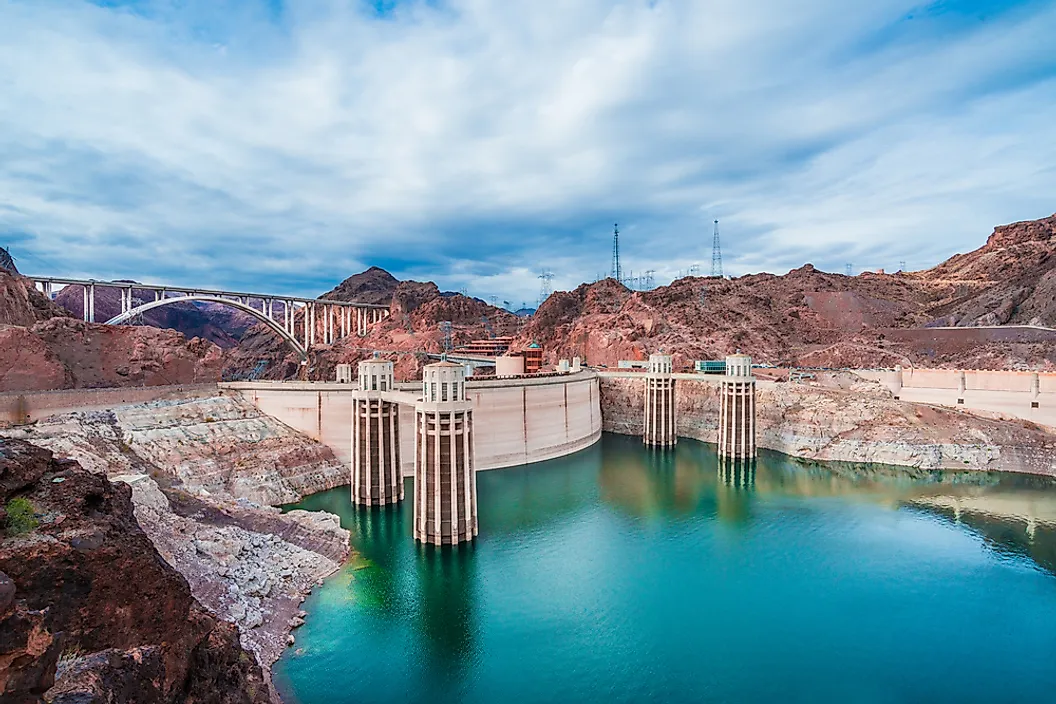
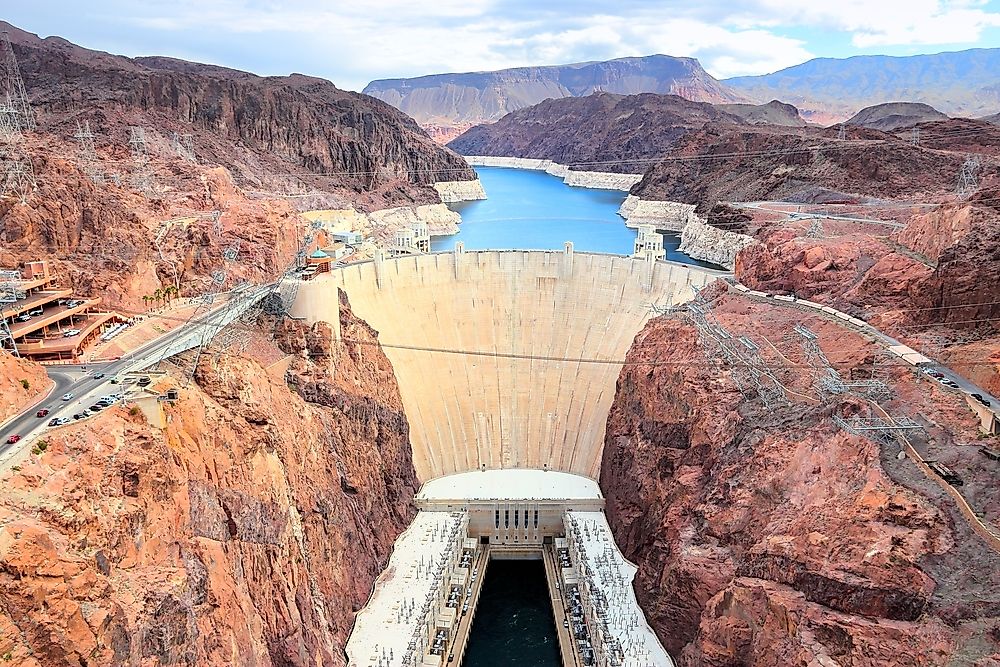
Reclamation's own history is unambiguous about this. The Hoover spillways have been used twice: once in 1941 as a test of the system, and once in 1983 for a flood.
The hardware is extraordinary for something operated twice. Each of the two spillways has four steel drum gates, 100 feet long and 16 feet high, and each gate weighs roughly five million pounds. They cannot stop water entering the spillway, but raised they allow an extra 16 feet of storage in Lake Mead.
They also work by float. When the reservoir rises past a fixed point, a float lowers the gate automatically, without anyone deciding to do it.
Garrison Dam Waited More Than Fifty Years

The clearest case in the country, and it is a big structure to leave untested that long.
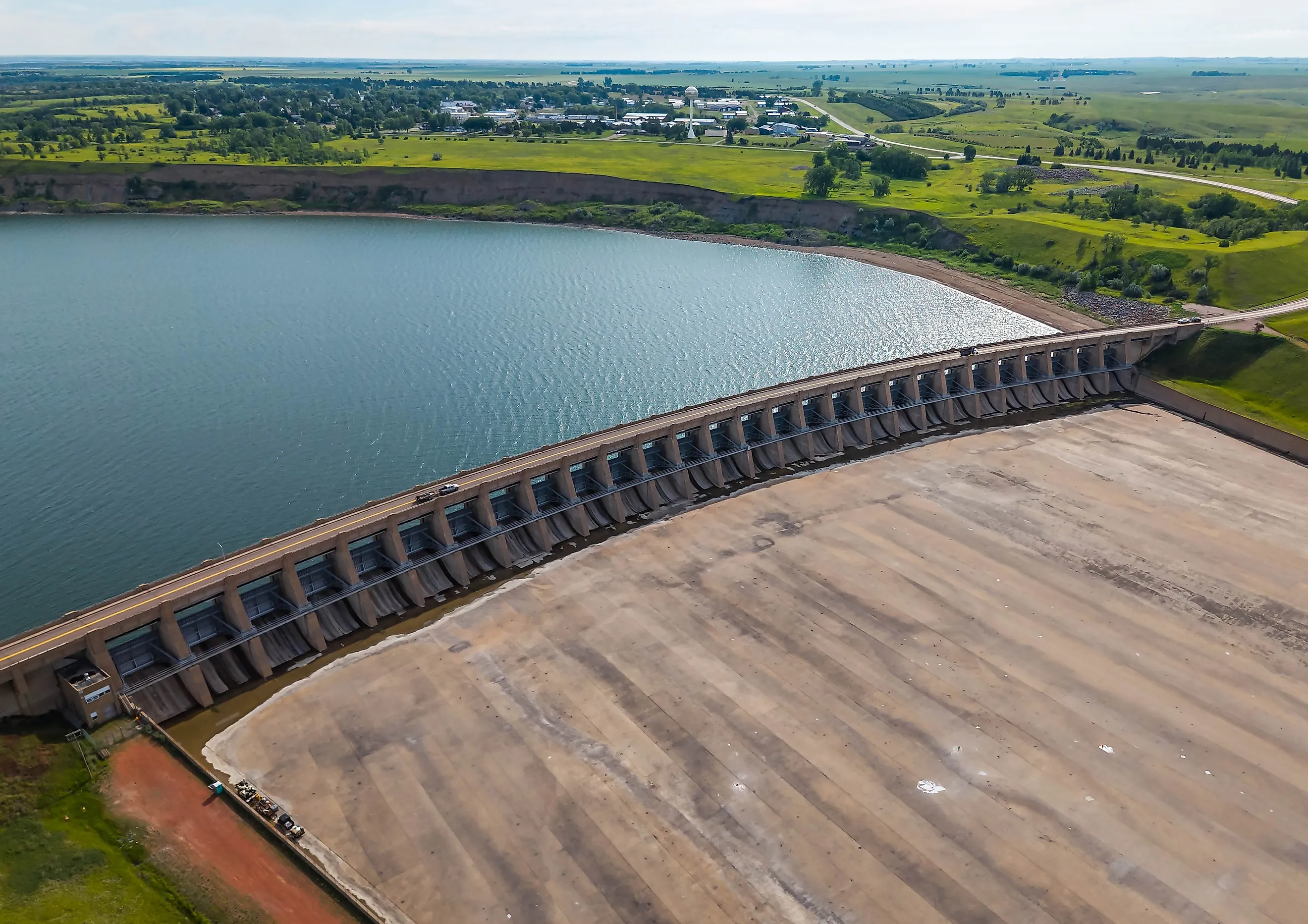
Garrison is the world's fifth-largest earthen dam, a two-mile embankment across the Missouri holding back Lake Sakakawea, which runs 178 miles, covers 382,000 acres and stores 23.8 million acre-feet. That makes it the largest reservoir in the Missouri River system and the largest of any Army Corps project in the nation.
Its spillway is 1,336 feet wide with 28 gates and a design discharge capacity of 827,000 cubic feet per second. Sources put the dam's completion at 1953 and the start of operations at 1955, and either way the spillway sat unused until the flood of 2011.
June 23, 2011
On that date all 28 gates stood open, releasing 150,000 cubic feet per second. Peak flows into the dam reached more than twice the previous record, around 150,600 cfs.
Worth putting that against the design number. The spillway is built for 827,000 cfs. The unprecedented, record-shattering, first-ever-use flood of 2011 ran it at roughly 18 percent of capacity.
That is either reassuring or alarming depending on which part you focus on, and both readings are fair.
What The First Use Revealed

Here is the part that justifies this whole article.
After the water receded, inspection found damage to the spillway's concrete chute. The scouring flow had peeled loose one or two manhole covers belonging to a drainage system running beneath the chute. A post-flood review concluded the spillway had a flaw carrying a low probability of failure that could nonetheless threaten North Dakota cities downstream.
The Corps completed a further study in June 2023 and is now partway through the Garrison Dam Spillway Approach Rehabilitation Project. Senator Kevin Cramer announced $24 million for dredging and riprap protection, with that phase due for completion in April 2028, and the wider project includes replacing the drainage system entirely so there are no manhole covers inside the spillway at all.
Fifty-six years of no information, one flood, and a rehabilitation program running into the late 2020s.
Oroville Went Forty-Nine Years

The most famous version of this story, and the most alarming.
Oroville, the tallest dam in the United States, was completed in 1968 with a gated main spillway and an ungated emergency spillway, essentially a concrete weir with a hillside below it. The emergency spillway was never used at all until February 2017.
When it was, the hillside began eroding backward toward the weir fast enough that officials concluded the structure might fail, and roughly 188,000 people downstream were ordered to evacuate. The main spillway had already developed a crater.
Both spillways were rebuilt at a cost running past a billion dollars. The dam held, and the emergency spillway's first performance review was conducted with the county being evacuated.
Glen Canyon Is The Reverse Case
Glen Canyon Dam belongs here as the counterexample, because its spillways were used early and hard rather than late.
The 1983 Colorado flood forced extended use of its two 41-foot tunnel spillways, which were designed for short bursts, and cavitation tore out thousands of tons of concrete and sandstone. Plywood and then steel flashboards were bolted to the gate tops to buy storage while the damage was assessed.
The repair installed aeration slots, and the fixed left spillway was tested at 50,000 cfs in August 1984 with no damage found. That test is the last spillway operation at Glen Canyon, which means it has now gone 42 years without one.
Fort Peck Has Used Its Seven Times

For contrast, the oldest of the Missouri mainstem dams has actually exercised its spillway repeatedly.
Since Fort Peck was completed in 1940, there have been seven years when upper plains and Rocky Mountain front runoff exceeded what Fort Peck Lake could hold, and in those years water went through the spillway straight to the Missouri.
Seven uses in 86 years is not frequent. It is, however, seven more data points than Garrison had before 2011, and that difference matters more than the raw count.
The 2011 Flood Emptied The List
The reason so few American dams can still claim a never-used spillway is one event.
The 2011 Missouri River flood ran through the whole mainstem chain: Fort Peck, Garrison, Oahe, Big Bend, Fort Randall and Gavins Point. Runoff that year overwhelmed the system's flood storage and forced releases at multiple dams, including Garrison's first ever.
Between 1983 on the Colorado, 2011 on the Missouri and 2017 in California, most of the large American dams that had gone decades untested got tested inside a single generation.
Why They Sit Dry For So Long

Three reasons, and they are all deliberate.
A spillway is the last of several outlets. Water normally leaves through turbines, which makes electricity, or through outlet works, which at least controls the release. The spillway only opens when inflow exceeds everything else combined, which in a well-sized reservoir is rare by design.
Flood storage absorbs the rest. Lake Sakakawea holds 23.8 million acre-feet, and a reservoir that big can swallow an enormous amount of runoff before the level reaches spillway crest.
And spillways are engineered for a design flood far larger than anything on record, which is why Garrison's 2011 event used less than a fifth of its capacity.
The Real Problem Is Not Knowing

Put the three cases side by side and the same thing happens in each.
Garrison's first use damaged the chute and dislodged drainage covers nobody knew were vulnerable. Oroville's first use nearly destroyed the emergency spillway and evacuated 188,000 people. Glen Canyon's first extended use produced cavitation that engineers had already identified as a risk but had not yet designed the fix for.
None of those were failures of the flood. They were failures that had been sitting in the structure, undiscovered, because water had never run over it in anger. Concrete degrades, drainage systems corrode, hillsides weather, and none of that shows up on an inspection of a dry spillway.
The Honest Answer
Very few large American dams have genuinely never opened a spillway, and the ones with the longest dry streaks are mostly dams whose streaks have already ended.
The current record holders for time since last use are Glen Canyon at 42 years and Hoover at 43, and both got there by having used them dramatically rather than never. Garrison and Oroville held the never-used title for 56 and 49 years respectively, and both lost it in a way that produced a rehabilitation program.
Which suggests the useful way to read this category. A dam advertising an unused spillway is not telling you the structure is over-engineered. It is telling you the most important part of it has never been switched on.