The Longest Mountain Pass Road In America
It is the Beartooth Highway, a stretch of US Route 212 running between Red Lodge, Montana and the northeast entrance of Yellowstone National Park, and it measures 68.291 miles. There, question answered in one sentence, which leaves the rest of this page with something to prove. So consider what follows the case for why a road nobody can drive for nine months of the year, whose summit is in the wrong state, which shut down this past June because of what officials called extreme travel conditions, is more interesting than its own headline number. It holds two separate state records simultaneously. It is the reason 140 people spend every winter unable to leave home except by driving through a national park. And its entire reputation rests on one sentence a television presenter said decades ago.
Start with the number, because the number is funnier than it looks.
Somebody Measured It To The Foot

The official length is 68.291 miles. Not 68. Not roughly 68. Sixty-eight point two nine one, which works out to a precision of about fifteen feet on a road that spends most of the calendar under several feet of snow.

Most sources round it to 68 and some say 69, which tells you the surveyors cared more than the copywriters. It is the kind of figure that exists because a federal agency had to put something on a form, and it has been quietly propagating through the internet ever since.
It Holds The Record In Two States At Once

This is the detail that should be more famous. The Beartooth is the highest-elevation highway in Wyoming, topping out at 10,947 feet at Beartooth Pass. It is also the highest-elevation highway in Montana, at 10,350 feet.
Same road, two states, two records. It manages this by crossing the state line repeatedly, which means the summit of Montana's most celebrated drive is in Wyoming. Montanans have made peace with this. Mostly.
It Is Closed More Than It Is Open

The road typically opens on Memorial Day weekend and closes around October 15, which gives it roughly four and a half months of operation in a twelve-month year. It is frozen for most of the other seven and a half.
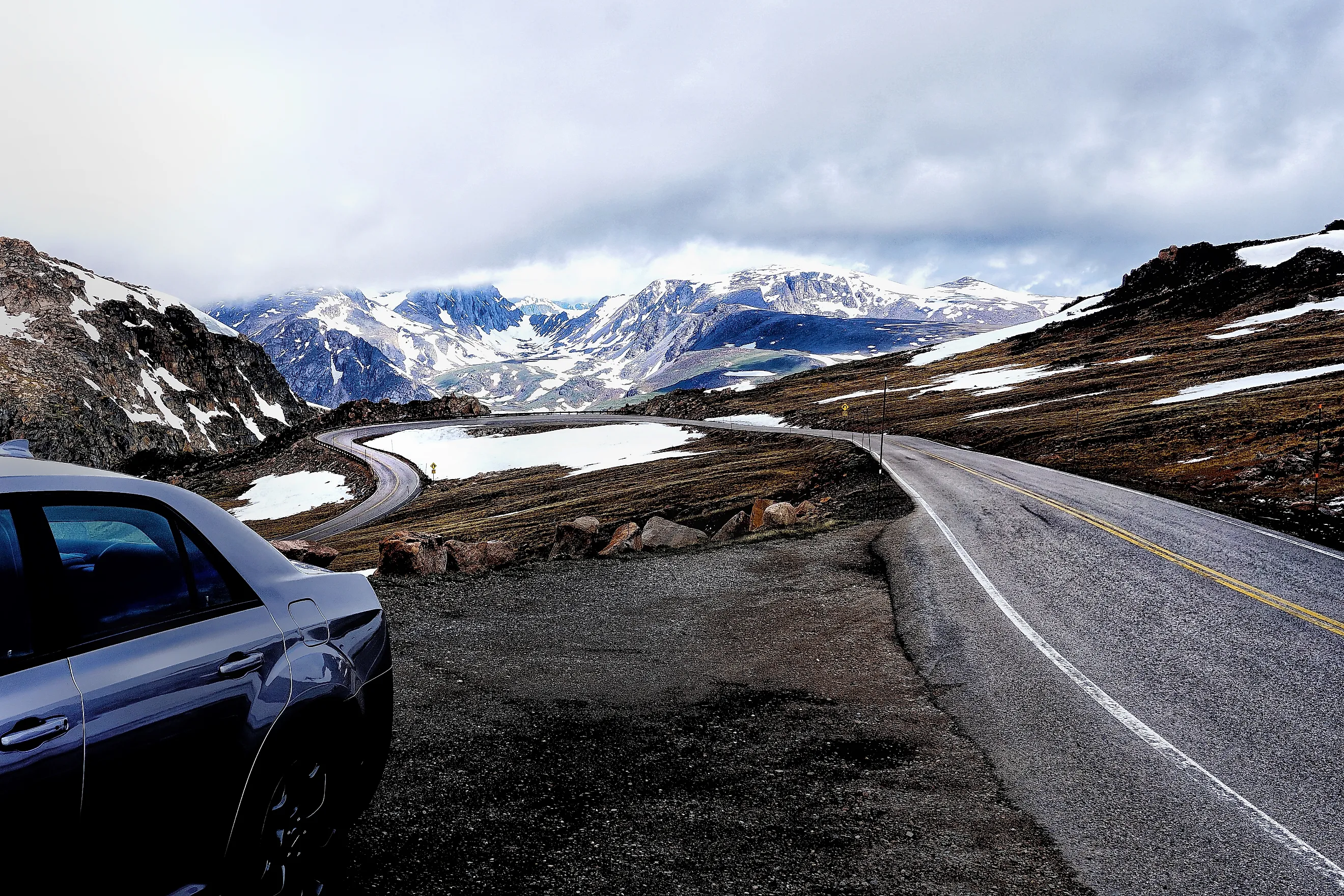
Snowbanks routinely line the pavement into July. You can ski here in June, and people do. When the highway is formally shut, snowmobilers use roughly the same route, which is either a loophole or the actual intended use depending on how you look at it.
This June It Closed For Extreme Travel Conditions

In June 2026, well inside its own operating season, the Beartooth shut at the Montana-Wyoming line. The stated reason was extreme travel conditions, which at nearly 11,000 feet in June means snow.
The highway's own advisory put it about as cheerfully as a road closure can be put, noting that even in summer, that much elevation means winter can make an unexpected comeback. Travelers were sent around via Wyoming Highway 296, the Chief Joseph Scenic Byway, which is itself a candidate for most scenic drive in America and which also closes in winter.
Cooke City Spends Every Winter As A Cul-De-Sac

Here is the consequence that makes the closure more than an inconvenience. About 140 people live year-round in Cooke City, at the western end of the highway, four blocks long and 7,580 feet up.
When the Beartooth closes to the east and the Chief Joseph closes to the south, exactly one road remains. Residents drive 55 miles west through Yellowstone, from Cooke City through Lamar Valley to Mammoth and out at Gardiner, on the only road in the entire park that is plowed all winter.

That is the grocery run. Through a national park, past wolves and bison, about an hour and fifteen minutes each way, from December to May. One local guide describes the whole corridor as a giant cul-de-sac where once you leave Livingston there are no outlets, which is exactly right.
One Sentence Is Doing All The Promotional Work
Every article about this road, including this one, eventually quotes the late CBS correspondent Charles Kuralt calling it the most beautiful drive in America.
He said it once. It has appeared in essentially every piece of Beartooth marketing since, on signage, in brochures, on tourism sites, and in the opening paragraph of a hundred travel features. It is possible no single sentence of American travel journalism has been made to work harder.
The frustrating part is that he was probably right, which makes the whole thing very difficult to be cynical about.
What Is Actually Up There

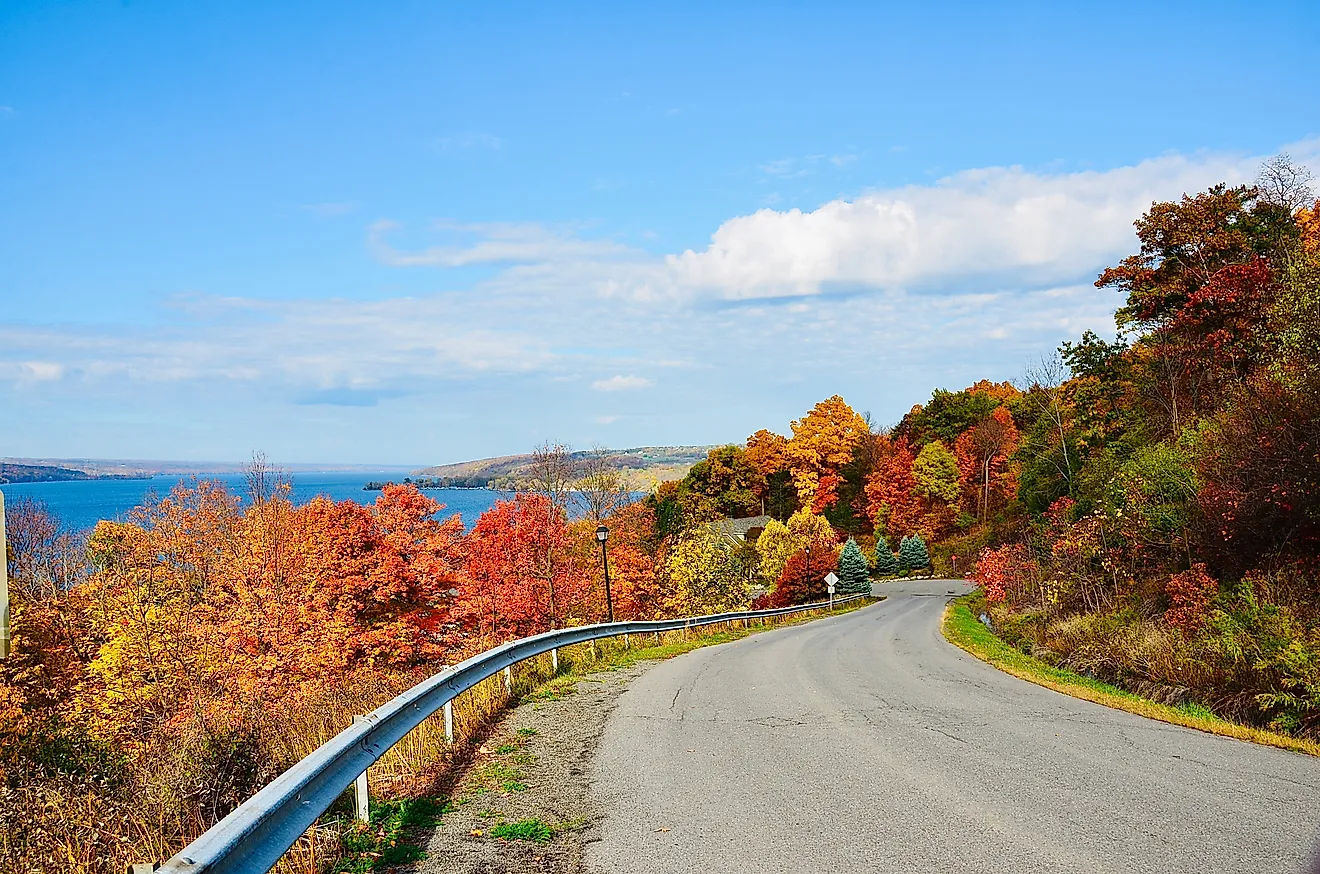
The road climbs from around 5,000 feet at Red Lodge to nearly 11,000, which takes you through several complete ecosystems in about an hour.
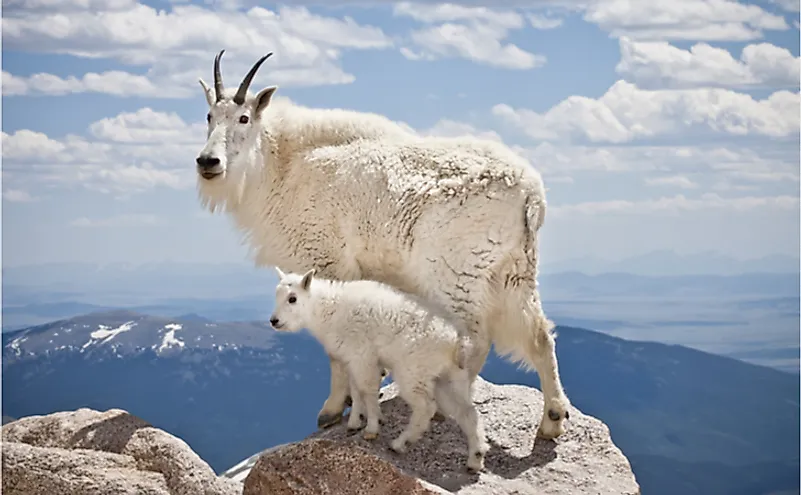
Above the treeline it opens into alpine tundra scattered with glacial lakes, some still partly frozen in midsummer. More than twenty peaks above 12,000 feet are visible from the pavement. There are 13 National Forest campgrounds along the corridor, and the wildlife list runs to mountain goats, moose, elk, marmots, mule deer, black bear, grizzly and wolf.
It runs alongside the Absaroka-Beartooth Wilderness of the northern Rocky Mountains, through three national forests, Custer, Gallatin and Shoshone, and delivers you to Yellowstone's quietest entrance.
Sixty Of The Sixty-Eight Miles Are A Historic District

In 2014, sixty of the road's sixty-eight miles were added to the National Register of Historic Places as the Red Lodge to Cooke City Approach Road Historic District.
The road dates to the mid-1930s and opened to automobile traffic in 1937, built as a Depression-era approach route to Yellowstone. Which raises the obvious question about the other eight miles, and the answer is the unglamorous one: they were rebuilt or realigned later and no longer qualify as historic.
The Roads That Lose
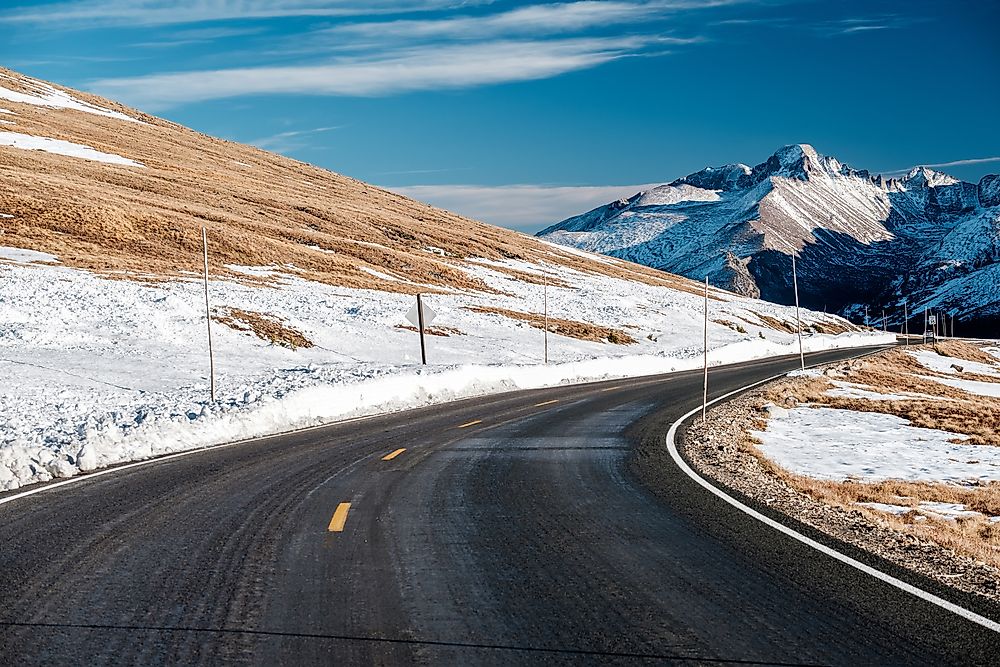
Trail Ridge Road, which crosses Rocky Mountain National Park in Colorado, is the usual runner-up at 48 miles, and it beats the Beartooth on altitude, topping 12,183 feet as the highest continuous paved road in North America. It is twenty miles shorter.

Going-to-the-Sun Road in Glacier National Park runs about 50 miles and is spectacular, and still loses. The Million Dollar Highway over Red Mountain Pass is roughly 25 miles, which is not in the conversation on length and very much is on nerve.
Mount Blue Sky, formerly Mount Evans, holds the elevation record for a paved road in North America at 14,130 feet, over a route of about 28 miles. Different contest.
Why Length Is The Better Question

Height is a single point on a map. You can drive to a 14,000-foot summit, take a photograph, and be back down in twenty minutes having experienced altitude rather than a mountain range.
Length is duration. Sixty-eight miles of switchbacks and tundra is a commitment, and it is the difference between visiting a high place and spending an afternoon inside one. That is why the Beartooth gets called the most beautiful drive in America and Mount Blue Sky, which is nearly 3,200 feet higher, does not.
Just check whether it is open. In June. Of any year.