6 Most Snake-Filled Bodies Of Water In Illinois
Illinois is home to roughly 40 species of snakes, and only four of them can hurt you. That math should be reassuring, except the four that can are all pit vipers, and they share the state's lakes, rivers, and wetlands with everyone who turns up for a summer swim. Snakes hit their stride in the warm months, moving between winter dens and summer feeding grounds in patterns predictable enough that biologists schedule road closures around them. For the snake enthusiast, that movement is the entire appeal. For the ophidiophobe, it reads more like a calendar of places to avoid. Either way, here are six Illinois bodies of water where the serpents gather.
The Four Venomous Snakes Of Illinois

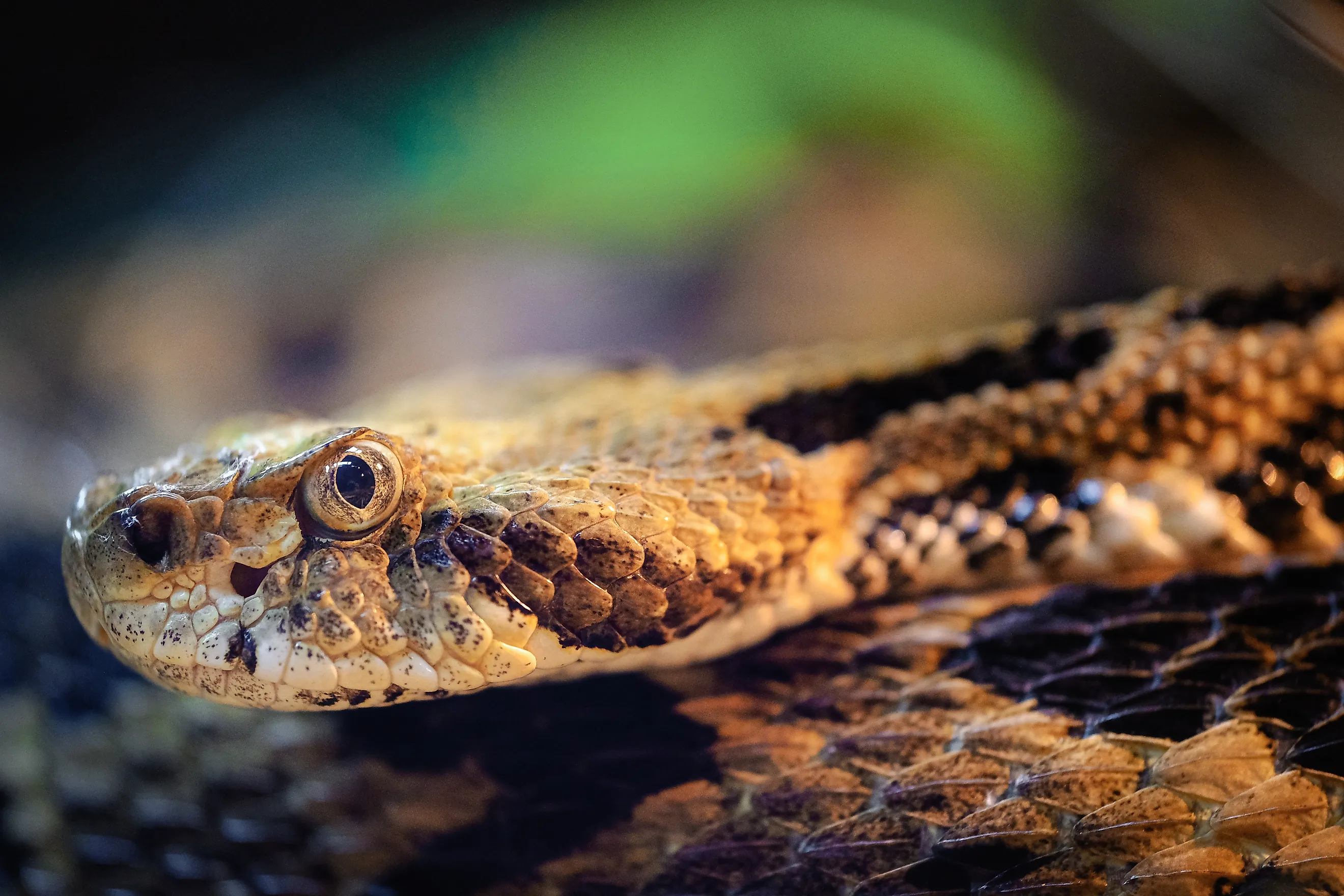
Before wading in, the four venomous species deserve a proper introduction, because telling them apart from their harmless look-alikes is a genuinely useful skill. The timber rattlesnake (Crotalus horridus), eastern copperhead (Agkistrodon contortrix), eastern massasauga (Sistrurus catenatus), and northern cottonmouth (Agkistrodon piscivorus) are all pit vipers. Each carries a triangular head, vertical cat-like pupils, hinged fangs, and a heat-sensing pit between the eye and nostril that picks up the body warmth of prey. The timber rattlesnake and copperhead range across much of the state's southern portion, while the massasauga hangs on in a few scattered wetland pockets and is the only one of the four also protected under the federal Endangered Species Act. The cottonmouth, the snake most people mean when they say "water moccasin," lives only at Illinois' southern tip, no farther north than Carbondale.
LaRue Swamp & Otter Pond

The LaRue Swamp Nature Preserve and the adjacent Otter Pond Research Natural Area sit inside Shawnee National Forest, on the Mississippi River floodplain at the southern tip of Illinois. This single refuge shelters roughly 90% of the state's native mammal species, about 66% of its amphibians, and, most relevant here, around 59% of its reptiles, including some 35 of Illinois' 40 native snakes.
Every spring and fall, dozens of snake species migrate between their winter dens in the limestone cliffs of the Pine Hills and their feeding grounds in the swamp below. The crossing happens along a gravel track officially named LaRue Road and known to nearly everyone else as Snake Road. To protect the migrants, the Forest Service shuts the 2.5-mile stretch to vehicles each spring (March 15 to May 15) and again each fall (September 1 to October 30), leaving it open only to people on foot. It is one of the only roads in the country closed specifically to let snakes cross, and the twice-yearly event pulls reptile watchers in from across the United States. Cottonmouths are the species walkers spot most, but a patient eye also turns up plain-bellied water snakes (Nerodia erythrogaster), rough green snakes (Opheodrys aestivus), western ribbon snakes (Thamnophis proximus), copperheads, and timber rattlesnakes, all crossing the same humble road.
Cedar Lake

Also within Shawnee National Forest, the 1,750-acre Cedar Lake draws anglers, paddlers, and summertime swimmers to its winding blue water, while the surrounding bluffs and forests keep hikers, bikers, and horseback riders busy. Many of Shawnee's 35-odd snake species inevitably end up near the lake. Strong swimmers like the common watersnake (Nerodia sipedon), plain-bellied watersnake, and diamond-backed watersnake (Nerodia rhombifer) are the ones visitors most expect to see in the water itself. On land, hikers regularly cross paths with the long but harmless gray ratsnake (Pantherophis spiloides) and the ever-present common garter snake (Thamnophis sirtalis).
Crab Orchard National Wildlife Refuge

Crab Orchard National Wildlife Refuge spreads across 44,000 acres of oak-hickory upland, bottomland hardwood forest, prairie, wetland, and the lake at its center. That patchwork of protected habitat supports a long list of wildlife and a calendar full of activities: boating, birding, hunting, fishing, camping, and picnicking, all available for a modest entrance fee, with several fee-free days scattered through the year. It is a working refuge that happens to be excellent snake country.
Visitors and the popular Illinois Snake Identification and Education community regularly report diamond-backed watersnakes, plain-bellied watersnakes, and ratsnakes around Crab Orchard. The Illinois Department of Natural Resources notes that the common watersnake is found statewide and shows a particular fondness for lakes and reservoirs, which makes the refuge's namesake lake a reliable place to find one basking near the shore.
Mississippi River

The Mississippi River traces the entire western edge of Illinois as it rolls south out of Minnesota toward the Gulf of Mexico, and where its current eases, snakes gather. In the state's northwest corner, across from eastern Iowa, Mississippi Palisades State Park is a good example. Its rocky cliffs double as communal denning sites for timber rattlesnakes, and human visitors can take in the same formations along a network of wooded trails leading to several panoramic overlooks. The park is also one of the few in Illinois that permits rock climbing, so it is worth checking your handholds before committing to one, lest you disturb a dozing pit viper.
Two hog-nosed snakes also turn up in this corner of the state: the eastern hog-nosed snake (Heterodon platirhinos) and the less common plains hog-nosed snake (Heterodon nasicus). Neither is much of a swimmer, but both favor the dry, sandy forest-edge habitat the park provides. When threatened, the eastern species flattens its neck, hisses theatrically, and may roll over and play dead, an act convincing enough to earn it the nicknames "puff adder" and "hissing viper" despite being entirely harmless.
Rend Lake

Southern Illinois' Rend Lake is another spot where tourism and steady snake populations overlap. The roughly 13-mile-long reservoir was created around 1970, when the U.S. Army Corps of Engineers dammed the Big Muddy River, and it has been a summer magnet for campers, boaters, anglers, and swimmers ever since. The calm water and dependable sun also suit semi-aquatic snakes. The midland watersnake, a subspecies of the common watersnake, is photographed here constantly and misidentified as a copperhead nearly as often. The confusion is forgivable: eastern copperheads genuinely do occur at Rend Lake, they swim well, and they share the watersnake's blotchy dorsal pattern. The stout, similarly patterned diamond-backed watersnake rounds out the cast of harmless snakes that get mistaken for something worse.
Fox River

Just west of Chicago, the Fox River threads through the Tri-Cities of St. Charles, Geneva, and Batavia, trailing multi-use paths and a near-continuous chain of parks. Here in Kane County, familiar species mix with a few newcomers. The common watersnake, common garter snake, and plains garter snake all keep a presence, joined by the lengthy fox snake (Pantherophis vulpinus), the small Dekay's brownsnake (Storeria dekayi), the boldly banded milk snake (Lampropeltis triangulum), the red-bellied snake (Storeria occipitomaculata), and the occasional queen snake (Regina septemvittata). Even the snake-averse should not skip the Fox Valley over this roster, because the riverside trails are some of the best in the region. The Fox River Trail near the historic Fabyan Windmill is as likely to turn up painted turtles and egg-laying snapping turtles as anything with no legs at all.
Sharing The Water In Illinois
Illinois sits where the forests and grasslands of the Midwest meet the waterways of the Great Lakes region, and that collision of ecosystems is exactly why 40 snake species can coexist in one state. Not all of them are thriving. Entering the 2020s, roughly a dozen native snakes were listed as threatened or endangered at the state level, the timber rattlesnake and the massasauga among them. The pressures are familiar: habitat loss and alteration, the illegal pet trade, and plain fear leading people to kill snakes on sight. Unsettling as they can be to share a shoreline with, these six lakes, rivers, and wetlands are healthier for having so many snakes in them, and a little caution about where you step or paddle is a small price for the privilege of watching them work.